NEW VIDEO: Watch my live reaction as I view the YouTube sensation "Animation vs. Math" by @alanthebecker for the first time...
Lots of you have been in touch about this so I'm trying something new with a 'reaction video'. Premieres today at 6pm (GMT+1).
https://t.co/3cvRKvzNpJ
How to reach the pinnacle of chess ability?
Question (from an IM): Can you explain the transition from an IM to a GM? I am stuck at approximately 2450 for many years and cannot reach GM title. What is needed to make this serious jump to GM?
This is a very good question and it is very often asked. I will address it more broadly as the process is the same to go from a club player to master, master to FIDE master, FIDE master to IM, IM to GM, and even GM to super GM and World Champion. (And the good news is after this IM followed my improvement roadmap reached 2570 and is now a GM.)
Unlike many others, I do not have a one size fits all training method for more serious players. There is no such thing as one size fits all chess ability. So why would we have the same training system for everyone? Every player is unique like our DNAs.
When I used to work with a new (2200+) student, there will be at least one 1 on 1 meeting to start out with. In that meeting, each student must give me his / her absolutely objective assessment of strengths and weaknesses. I would then offer my evaluation and the third assessment will come from a trusted strategist on my team.
It would be wonderful if all three of us can come to the same conclusion. It most cases, there will be differences. We will then thoroughly discuss it and come up with a general consensus. After that, we will prepare an improvement program specifically designed for that student.
The improvement process
There is no perfect player in the world, not Magnus Carlsen, Garry Kasparov, Bobby Fischer, Anatoly Karpov, not anyone. Everyone has strengths and weaknesses. Some are just better in hiding their weaknesses.
Therefore, knowing that, one has to understand what it takes to win or draw, and not lose. Each chess game has many phases which may or may not contribute to the results we want: Opening, middlegame, endgame, tactic, mental toughness, physical fitness, nerves, and many other factors.
So the situation is simple. If a player is 2400, he/she is not as good as others who are 2500 or 2600 and above. This is simply a fact. The next question is will the player be objective enough to understand his/her true weaknesses? One of the big reasons why many do not improve is they fail to be objective about themselves, or worse, not care about it.
If you look through the chess database, you can see countless weaker players losing to stronger players in absolutely equal positions (sometimes even better) because they lack something. Perhaps it is deficiencies in understanding the positions, weakness in tactic, bad nerves, bad endgame knowledge, etc.
Any player can review their own games to spot the true pattern of these weaknesses. Then focus on fixing these problems ASAP. Study random materials or random phases of the game will help, but not enough. Many are just so fixated with openings and they neglect all other parts of the game.
Another problem I see quite often is “CDS”, Chess Delusional Syndrome. Too many people are delusional with their chess abilities. Some think they are stronger than they actually are, or they think that they are training hard enough. They simply cannot be objective with their own assessments. Flattering yourself with false analysis will only make you feel good about yourself momentarily until you lose.
“CDS” is quite common with parents and / or family members. Many of them do not like coaches who will tell them the truth. They want coaches who will tell them what they want to hear about their children. I will never do this.
Coaches should be 100% honest and objective about their assessments and advices. We are not here to please the players or their families. We are here to help players, on and off the chess board, by teaching them the right things and helping them fix their weaknesses.
By the way, this process works for all levels 😁
@FIDE_chess@ECUonline@WOMChess
NEW VIDEO: Why take a Maths exam in English, when you can do it in German?
Watch me struggle through the Abitur Mathematik Exam - taken by students leaving school in Germany at the age of 17 or 18.
Premieres at 5pm (GMT+1) - see you in the live chat!
https://t.co/0mX9n2frvf
🏴☠️Come aboard and set sail on our Discord pirate escapade!🦜
Two fearless pirate crews will clash ferociously in pursuit of a treasure – a bountiful hoard of Chess Universe VIP Memberships! Arrrr! Be prepared to face the challenges, matey!
https://t.co/g0DPprF4P9
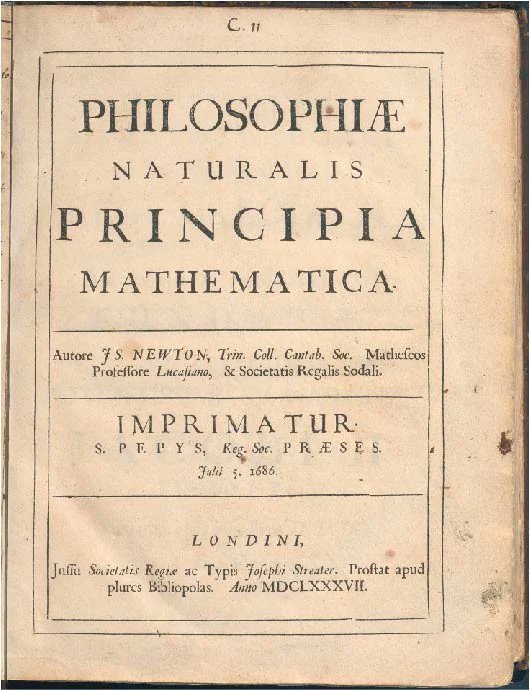
On this day in 1687, Sir Isaac Newton publishes Philosophiæ Naturalis Principia Mathematica (Mathematical Principles of Natural Philosophy), one of the most significant works in the history of science.
The Principia*states Newton's laws of motion, forming the foundation of classical mechanics; Newton's law of universal gravitation; and a derivation of Johannes Kepler's laws of planetary motion (which Kepler had first obtained empirically).
Some dos and don’ts in chess for beginners and novice
*** General ***
These are the rules of thumb to be applied throughout the entire game.
• After every move by your opponent, ask yourself these questions:
1. Can I capture any of my opponent’s pieces to gain material?
2. What does my opponent want to do?
a) Am I in check? b) Does my opponent want to capture any of my pieces? c) Is my opponent threatening a tactical maneuver (i.e., fork, pin, etc.)?
• Simplify the position by trading pieces when you are ahead in material.
• Avoid doubling your pawns (placing two pawns on the same file).
• Always keep your pawns connected.
• Occupy open file(s) with your rook(s).
• Do not trade a bishop for a knight unless the position is closed (with many pawns and no open lines), or unless you gain some kind of advantage from the exchange.
• Avoid staying in pins.
• Keep your pieces on protected squares as much as possible.
*** In the Opening ***
Here are some things to look for in the beginning of the game.
• Control the CENTER (start out by putting at least one center pawn in the center).
• Develop your pieces so that they can attack the center as much as possible.
• Put your king in safety quickly by CASTLING.
• Don’t move the same piece twice (unless necessary; i.e., moving away from an attack or recapturing, etc.).
• Don’t move your queen out early (usually only after both knights and bishops are developed and the king is safe).
• Connect your rooks by moving out all pieces between them.
*** In the Middlegame ***
Below are some of things to look for after you have developed all your pieces.
• Look for targets or weaknesses in your opponent’s position.
• Make plans based on the targets and your opponent’s position.
• When you have an attack going on the opponent’s king, avoid trading queens.
• Keep your king safe, usually behind two or three pawns and near the corner.
• Gain a space advantage.
*** In the endgame ***
Here are some things to look for after several pieces (usually including the queens) have been exchanged.
• Try to bring your king toward the center and in play. In the endgame, contrary to the earlier parts of the game, the king should be an active participant, at times even in the attack.
• Try to create passed pawns.
• If you have a passed pawn, advance it. Try to promote your passed pawn to a Queen (most of the time).
• If your opponent has a passed pawn, make sure you can stop it before it reaches the promotion square (or at least make a counter plan).
Many more tips can be found in my best-selling chess instructional books (World Champion’s Guide to Chess, Chess Tactic for Champions, Learn Chess the Right Way 5-volume series), etc. They are aimed for beginners to intermediate players. They are also perfect for parents and teachers to introduce chess to young players. If you cannot afford it, try your local libraries. I am sure there are many good chess books there.
@FIDE_chess@ECUonline@WOMChess