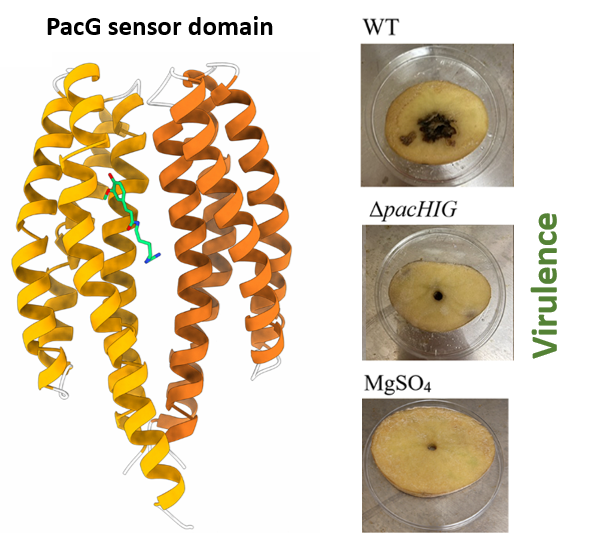
Chemotaxis to plant defense compounds in phytopathogens. Pathogen attack triggers the release of defense compounds by plants. Bacteria move chemotactically to these compounds.
Nice collaboration with Ashleigh Holmes, @Gavirius, @Miguel_Matilla
https://t.co/W2QJkykNIl
I am truly honoured by my election as Fellow of the European Academy of Microbiology. This is the perfect occasion to say THANKS to all colleagues, collaborators, PhD students, post-docs and technicians who have made this possible.
https://t.co/AWAQoc0ZYE
Our new study shows that a phytopathogenic bacterium uses distinct receptors to detect plant defence compounds released upon infection, revealing an important role for chemotaxis in plant virulence. @KrellLaboratory@Gavirius@BlastMeetings@CSICdivulga
https://t.co/RmniBCmMg3
This is the first report of chemotaxis to feruloylagmatine and p-coumaroylagmatine, two well-known plant defense compounds. Both compounds bind to the PacG chemoreceptor inducing chemoattraction.
Chemotaxis to plant defense compounds in phytopathogens. Pathogen attack triggers the release of defense compounds by plants. Bacteria move chemotactically to these compounds.
Nice collaboration with Ashleigh Holmes, @Gavirius, @Miguel_Matilla
https://t.co/W2QJkykNIl
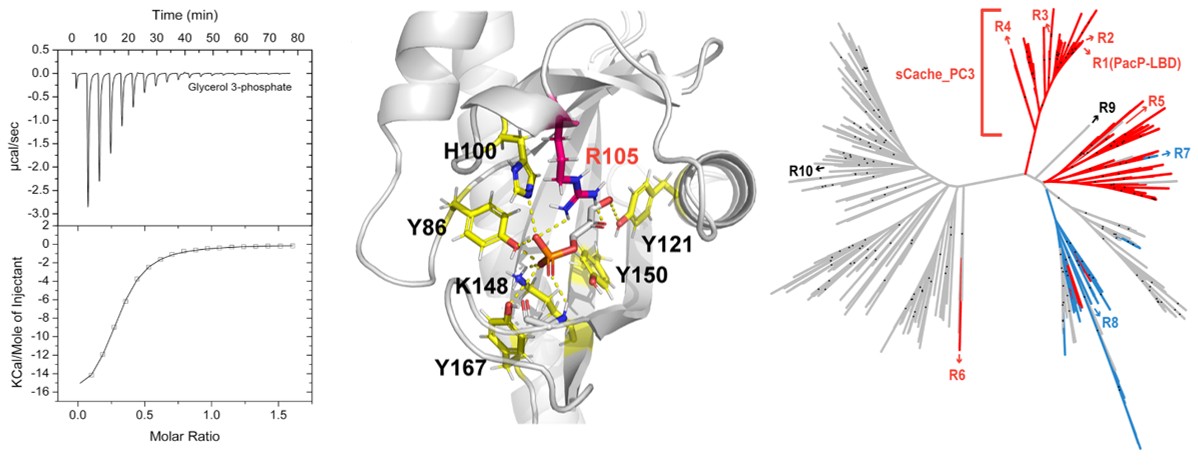
Our study in @GenomeBiology reveals a new chemoreceptor family sensing phosphorylated C3 compounds. Found mainly in phytobacteria, it guides bacteria toward stressed plants. @KrellLaboratory@zhulinlab@CSIC@BlastMeetings
https://t.co/EbusPaik9X
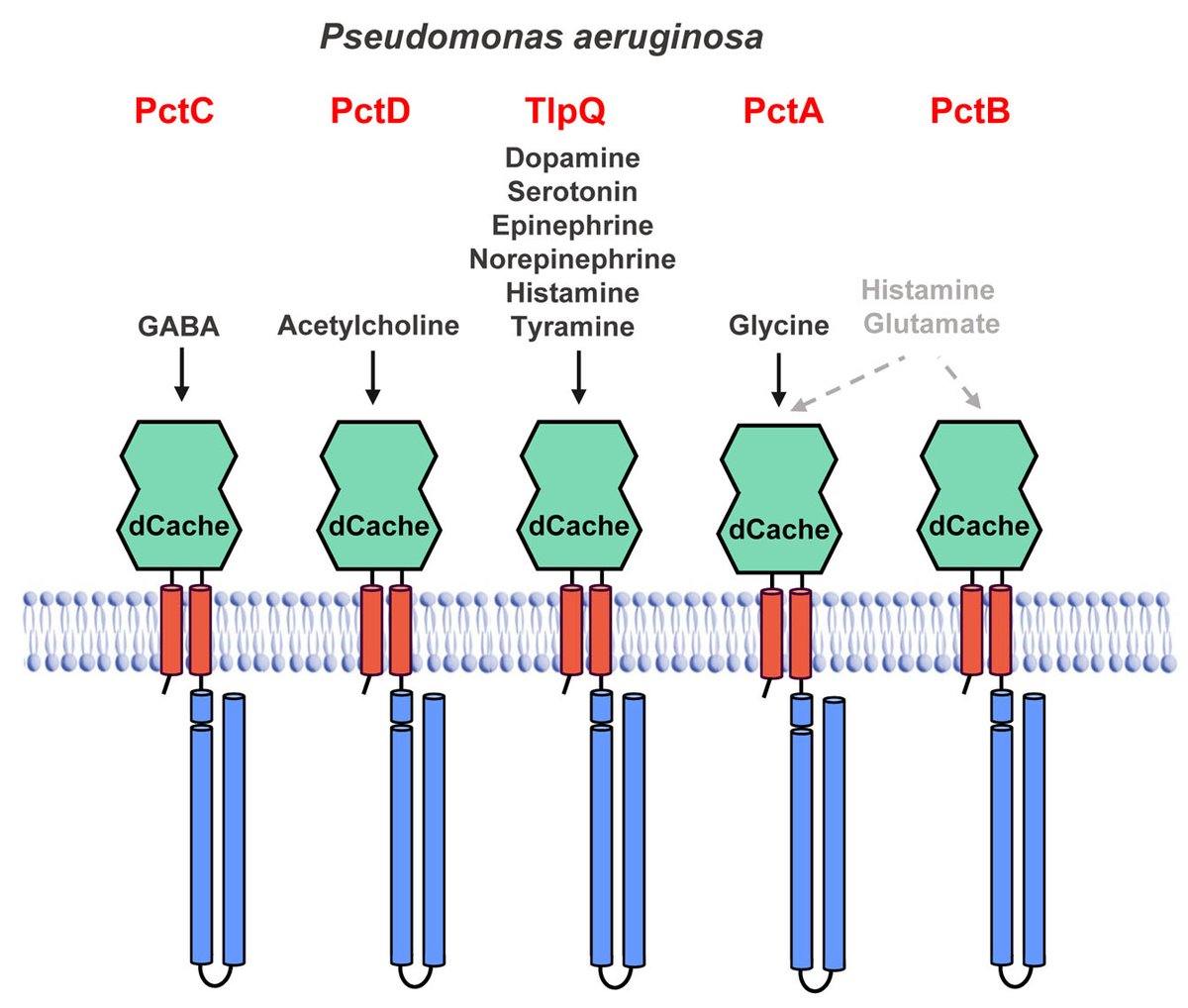
Which chemicals motile bacteria sense in the human gut? Great collaboration with @zhulinlab and @BangeBalcony, and congratulations to @wency13419273 and @EkaterinaJalomo!
Specificities of chemosensory receptors in the human gut microbiota | PNAS https://t.co/TYqcpmmBOY
How bacteria recognise stressed plants: Chemoreceptor family in plant-associated bacteria responds preferentially to the plant signal molecule glycerol 3-phosphate. Another nice collaboration with @zhulinlab@miguel_matilla@GenomeBiology https://t.co/QDdZuVbZbD