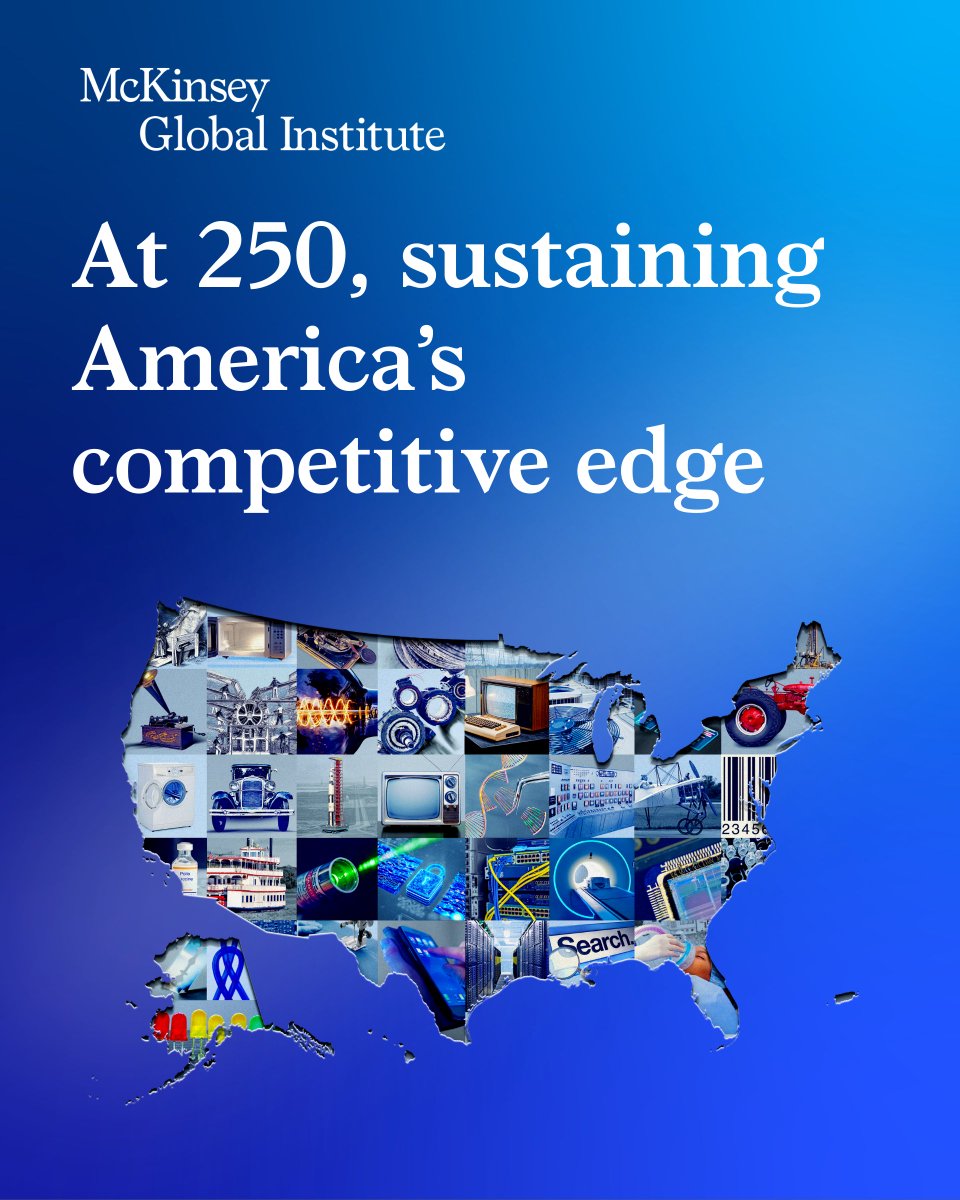
At 250, the US is the world’s most competitive economy, generating 26% of global GDP. But as the country transitions from the digital era to a new chapter, can this edge be sustained?
MGI’s latest report explores five overarching prerequisites for US competitiveness in a new era: https://t.co/UnmFWMvUsQ
Introducing Kiro, an all-new agentic IDE that has a chance to transform how developers build software.
Let me highlight three key innovations that make Kiro special:
1 - Kiro introduces spec-driven development, helping developers express their intent clearly through natural language specifications and architecture diagrams for complex features. This comprehensive context helps Kiro’s AI agents deliver better results with fewer iterations.
2 - Kiro features intelligent agent hooks that automatically handle critical but time-consuming tasks like generating documentation, writing tests, and optimizing performance. These hooks work in the background, triggered by events like saving files or making commits. It’s like having an experienced developer constantly reviewing your work and handling the maintenance tasks that often get delayed.
3 - Kiro provides a purpose-built interface that adapts to how developers work. Whether you prefer chat interactions or working with specifications, Kiro supports your workflow while keeping you in control of the development process.
Kiro is really good at "vibe coding" but goes well beyond that. While other AI coding assistants might help you prototype quickly, Kiro helps you take those prototypes all the way to production by following a mature, structured development process out of the box. This means developers can spend less time on boilerplate code and more time where it matters most – innovating and building solutions that customers will love.
Starting today, Kiro is available for free during preview and supports most popular programming languages.
Here’s how to get started with @kirodotdev today: https://t.co/Ne5m2Nh4wC
Excited to see how developers use Kiro, and to work with the developer community to continue to shape Kiro moving forward.
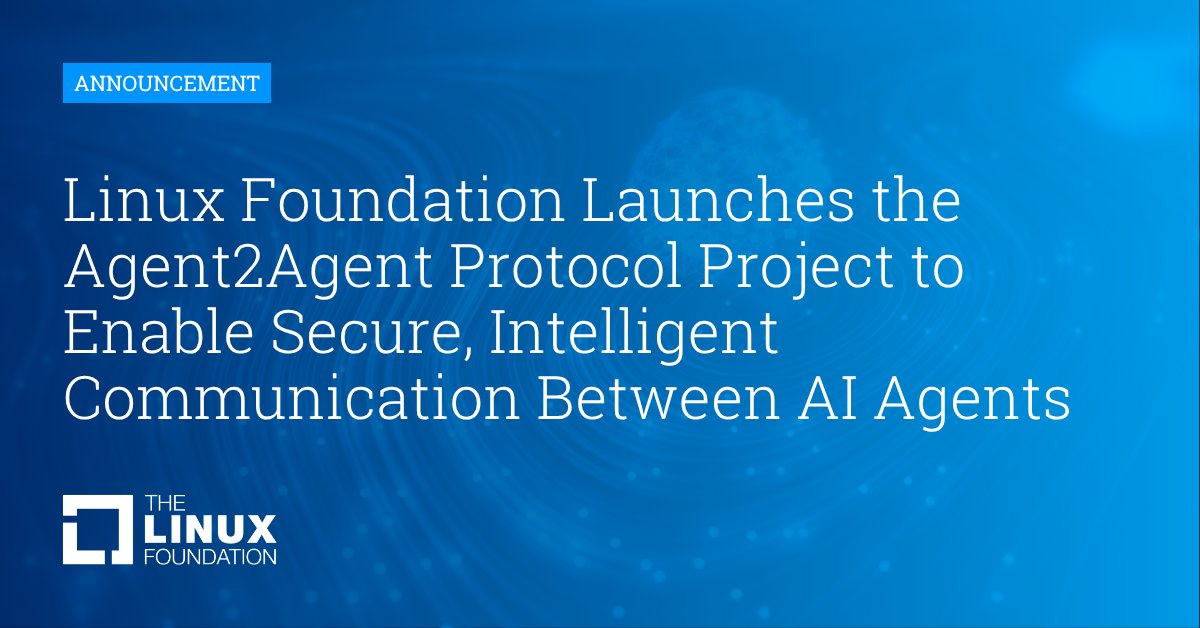
Breaking news 📢 The Linux Foundation launched the Agent2Agent Protocol project at #OSSummit!
Created by @Google, A2A enables secure, open communication between AI agents across vendors, platforms and frameworks to improve modularity, mitigate vendor lock-in and accelerate innovation.
More on the growing collaborative ecosystem here: https://t.co/IVwqo1PMxW
OpenAI, Google, and Anthropic just dropped the guides on:
- Prompt Engineering
- Building effective Agents
- AI in Business
- 601 AI use cases
and so much more...
9 best guides you don’t want to miss:
Our new, open Agent2Agent (A2A) protocol will allow AI agents to communicate with each other, securely exchange information, and coordinate actions on top of various enterprise platforms or applications.
Here's how it works → https://t.co/u8QeUIcMCQ
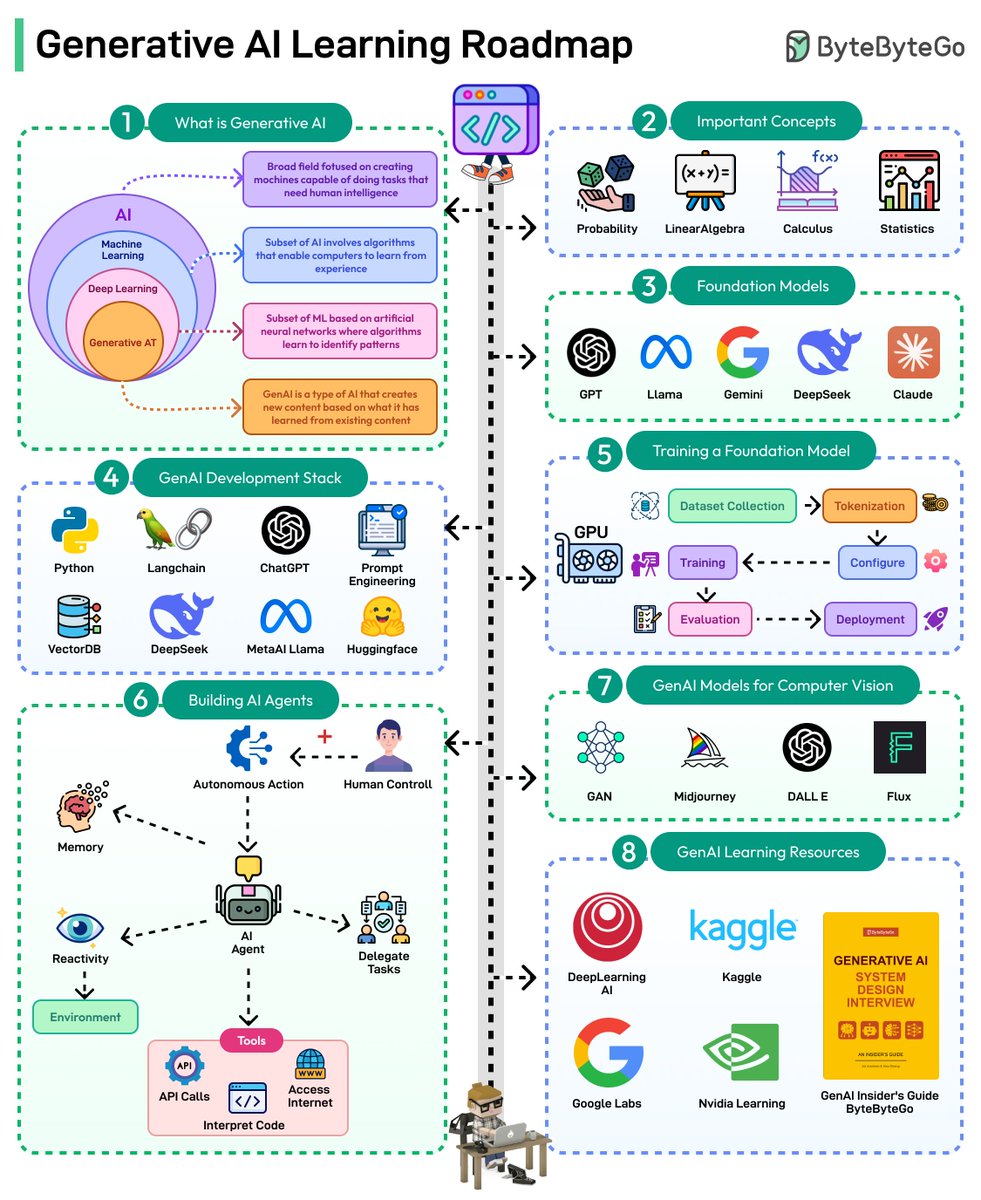
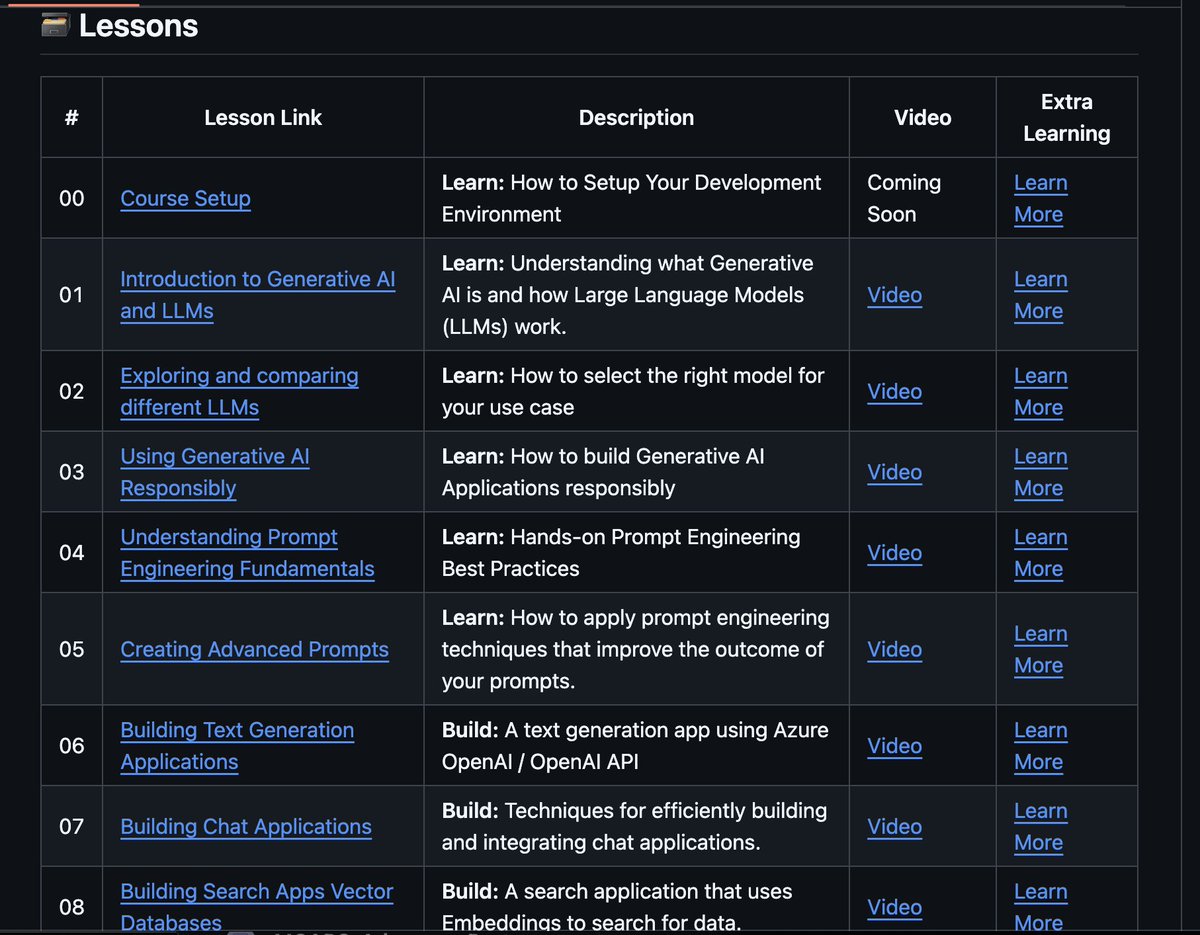
🚨 BREAKING: Microsoft just dropped an 18-episode series called "Generative AI for Beginners".
Ideal for beginners, developers, and AI enthusiasts looking to build a solid foundation.
Here’s a breakdown (Save this👇):🧵
Introducing Azure AI Foundry Labs: your hub for AI research and experiments from Microsoft. Discover new models, frameworks, and tools to solve complex problems and help shape the future of AI: https://t.co/F81nyILorx
Introducing kro (pronounced “crow”)!
Kube Resource Orchestrator is a new #OpenSource project from Google Cloud, AWS, and Azure that simplifies K8s deployments, allowing you to group apps and their dependencies as a single, easily consumable resource → https://t.co/vlN5evajk3
🚨BREAKING: China DEFEATED Silicon Valley.
Alibaba just launched "Qwen" another most powerful AI model.
Qwen2.5 beats DeepSeek, OpenAI and Google.
Here's why it's a game-changer & why the US government should be worried:🧵
Got 21 days to allocate to learning GenAI?
Here is a FREE 21 lesson course that teachs you how to start building Generative AI applications.
https://t.co/qh67OJQnk1
Announcing The Stargate Project
The Stargate Project is a new company which intends to invest $500 billion over the next four years building new AI infrastructure for OpenAI in the United States. We will begin deploying $100 billion immediately. This infrastructure will secure American leadership in AI, create hundreds of thousands of American jobs, and generate massive economic benefit for the entire world. This project will not only support the re-industrialization of the United States but also provide a strategic capability to protect the national security of America and its allies.
The initial equity funders in Stargate are SoftBank, OpenAI, Oracle, and MGX. SoftBank and OpenAI are the lead partners for Stargate, with SoftBank having financial responsibility and OpenAI having operational responsibility. Masayoshi Son will be the chairman.
Arm, Microsoft, NVIDIA, Oracle, and OpenAI are the key initial technology partners. The buildout is currently underway, starting in Texas, and we are evaluating potential sites across the country for more campuses as we finalize definitive agreements.
As part of Stargate, Oracle, NVIDIA, and OpenAI will closely collaborate to build and operate this computing system. This builds on a deep collaboration between OpenAI and NVIDIA going back to 2016 and a newer partnership between OpenAI and Oracle.
This also builds on the existing OpenAI partnership with Microsoft. OpenAI will continue to increase its consumption of Azure as OpenAI continues its work with Microsoft with this additional compute to train leading models and deliver great products and services.
All of us look forward to continuing to build and develop AI—and in particular AGI—for the benefit of all of humanity. We believe that this new step is critical on the path, and will enable creative people to figure out how to use AI to elevate humanity.
We are excited to announce the launch of LF India, which will foster open collaboration for Indian open source developers, enterprises, government organizations, and community.
View the full announcement: https://t.co/PxFleT6z5Y
#opensource#linux#india
Another day in our AI-vent calendar: Open for a no-cost course on MLOps for #generativeAI!
Learn all about the unique challenges faced by MLOps teams when deploying and managing gen AI models. Then, explore how (cont) https://t.co/UeHYn5LvsL
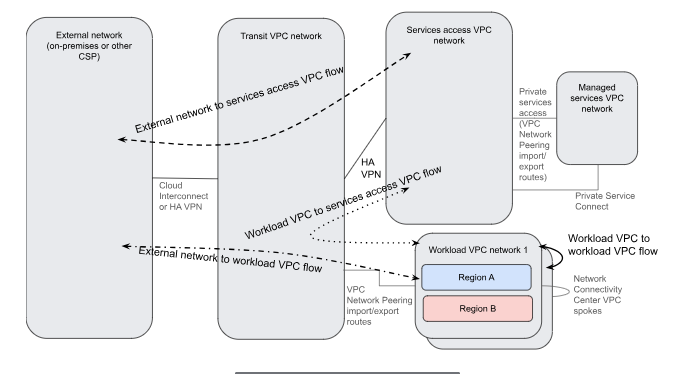
ATTN network admins who build network connectivity + cloud architects who plan how workloads are deployed:
This document provides a reference architecture that you can use to deploy a Cross-Cloud Network hub-and-spoke network topology in Google Cloud → https://t.co/vcS5cPagO3