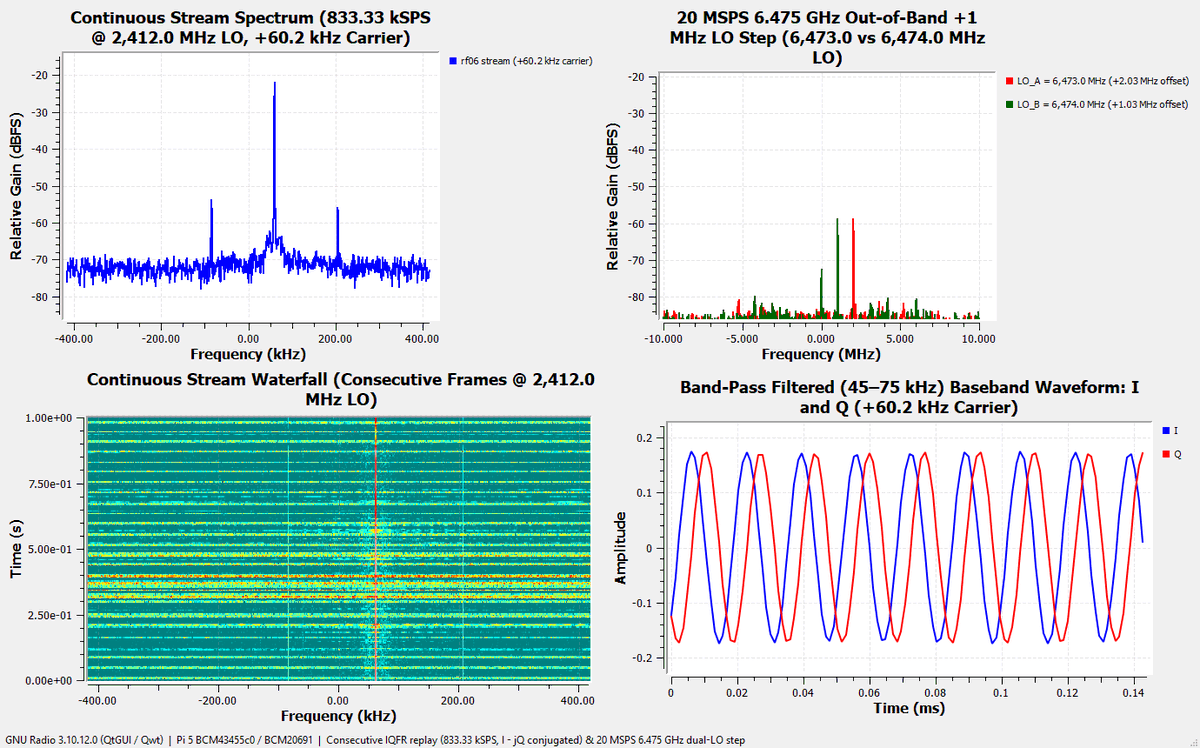
What's the strangest thing you've connected to a VNA?
These researchers connected theirs to a tiny MIMO antenna buried 1 cm deep in minced beef to see how the surrounding tissue affected its tuning.
It's for a capsule endoscope a cow can swallow.
China's answer to Nvidia's DGX Spark: a 128GB AI box for $3,999 with no Nvidia, AMD or Intel chip inside.
The DGX Spark 128GB now sells for $6,949. Same 128GB, same 273 GB/s.
Sipeed's MaixStation runs on Axera's AX8860P. 6nm, 16 Cortex-A55 cores, the small cores from budget phones. 256 TOPS FP4. 40W.
Nvidia quotes 1,000 TOPS for the Spark. That's sparse FP4. Dense is about 500.
Half the compute, and Sipeed still claims a win on Qwen3.8-27B in FP4:
Prefill: 1,400-1,600 tok/s vs 1,300
Decode: 15-17 tok/s vs 13
Sipeed's own numbers, MTP off on both. Nobody has tested it independently yet.
27B at FP4 is ~14GB. 273 GB/s ÷ 14GB gives both boxes a ceiling of ~19 tok/s. The Spark uses ~68% of it, Sipeed claims 80-90%.
The decode win is small and it can't grow past that ceiling. With MTP on, the Spark likely closes the gap.
That leaves $2,950 of difference. Kickstarter opens at the end of the year, final price not set.
Would you trust a Chinese NPU with $4,000?
WSJ says, citing sources, that Ukraine used Israel's HiSKY satellite system in strikes on the Kerch bridge. Some of the weapons carried it, and unlike Starlink it works without limits in occupied areas and even in Russia, the paper says.
Ukraine is looking for an alternative to SpaceX as it limits use by the Ukrainian military this fall, WSJ writes, and one source says HiSKY is harder to run than Starlink. FT claimed Ukraine used its own mesh modems to hit the bridge.
BAE Systems has developed a new passive radar designed to detect and track drones and other aircraft by analysing reflections from existing television, radio and mobile network signals, without transmitting any signals of its own.
The technology was unveiled by BAE Systems’ Digital Intelligence & Land division on November 17, 2026. Unlike conventional radar, it does not generate its own radio waves but instead uses existing transmissions as sources of illumination.
By analysing how these signals are reflected by airborne objects, the system generates a three-dimensional air picture providing information on target range, altitude, speed and heading. It is designed to detect objects ranging from small drones to larger aircraft.
Since it does not emit its own radar signals, the system can monitor surrounding airspace without revealing its position through radar transmissions. BAE Systems also claims that its technology could cost up to ten times less than many existing passive radar systems.
The technology remains under development, with live trials involving defence, law enforcement and critical infrastructure partners planned throughout 2027.
Source: BAE Systems, Janes
Kuvasz : une solution Open Source de monitoring pour surveiller la disponibilité des sites web, les certificats SSL, les conteneurs Docker, les services TCP, les DNS et autres tâches planifiées.
👉 https://t.co/zFQxqSo9Rj
Nu jau slavenajai @karpathy spēlei ir tapusi ES versija ar reāliem datiem.. 🚀
Ir arī Latvija.
Dati no Eurostat, Copernicus, utt..
AR makslīgi intelektu, atvērtie dati uegūst otro elpu... Cc: @datagovlv
🇷🇺 graudu tranzīts jau ir skandāls, bet, ka mēs ļaujam caur mūsu ostām, dzelzceļu apgādāt agresoru ar militāri kritiskiem izejmateriāliem, tas tiešā veidā smērē mūsu rokas 🇺🇦 asinīm! STOP‼️
Pieprasam valdībai apturēt asiņaino tranzītu
Rīt 14.martā 18:00 ZIBAKCIJA
#asinstranzīts
Phones can change their Bluetooth addresses. Their quartz doesn't.
A demonstration of Monas measuring BLE frequency offsets off the air with a HackRF.
Every number comes from the monasd API.
#Monas#SDR#BLE#HackRF#RustLang
Tu tik paskat, kādi jaunumi! Ja rallijs - tad Talsos! 💚
Nākamgad tiksies @Talsu_novads. 🌲🌳
✅ Laiks apvilkt kalendārā - 21.-22. augusts! 🎊
📰 Visu ziņu lasi: https://t.co/rLkIABmJkT
#Rallijs#Minirallijs#RallyTalsi
📸 @Go4speedLV
🚨 “You’re training soldiers for the wrong war”: Ukrainian major tells NATO why old methods no longer work
Olga Bigar, a Ukrainian officer with the call sign “Witch,” told British Forces News that the last 15 km before the front line is now a deadly zone because of drones. Tanks and armored vehicles that Western armies have relied on for decades often cannot even get close to enemy positions.
She says the requirements for fighters have changed too. Big muscles and the ability to run with a heavy backpack no longer give an advantage. On today’s battlefield, intelligence, fast reactions, and the skill to control drones matter more.
“Strength is no longer in the muscles,” Bigar said. In her view, a good operator can be a young gamer, a woman, or a 50-year-old programmer.
Her main message: the war has changed faster than military textbooks. NATO needs to learn from the Ukrainian front.
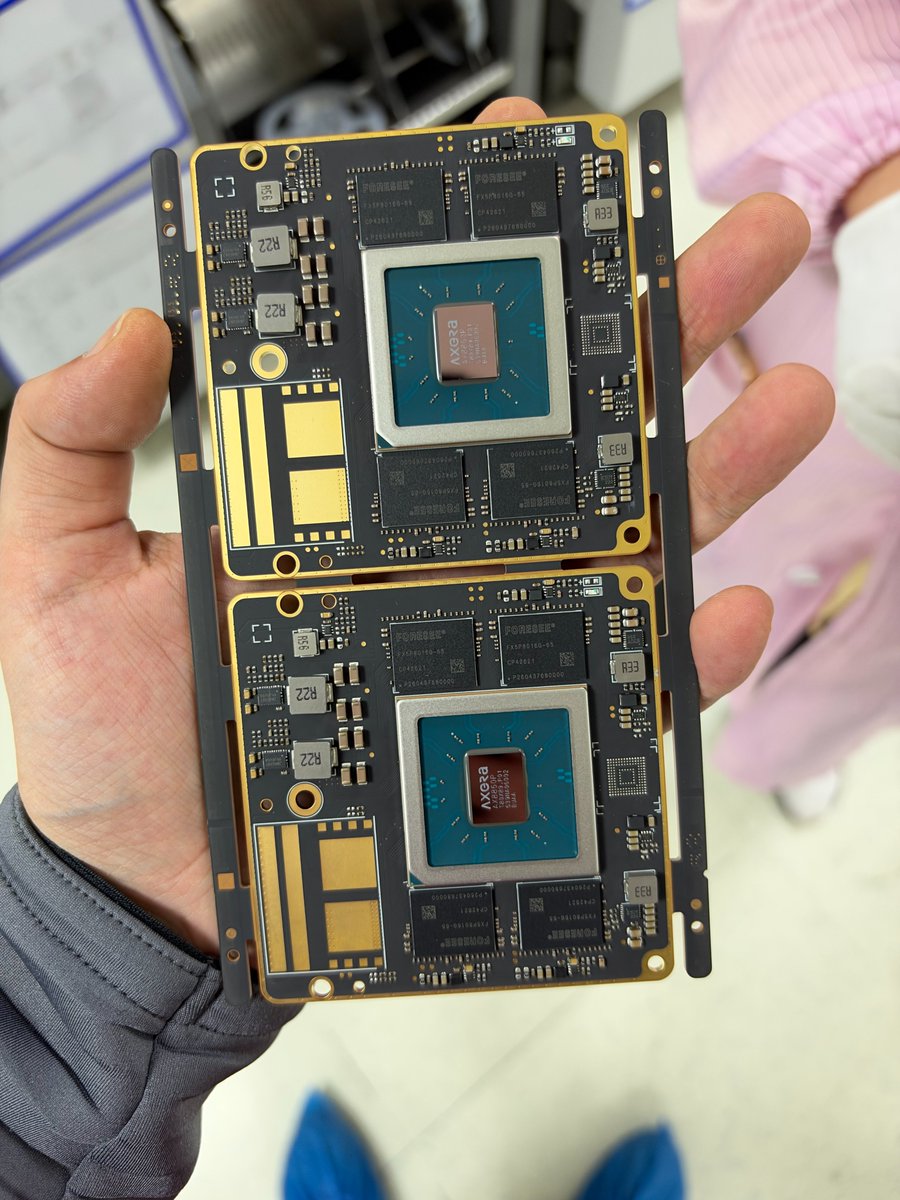
What in my hand? 256TOPS and 128GB, the new possibilities for local AI~
Fed up with DGX/AGX-class systems monopolizing personal local AI? Let’s take them on!
https://t.co/Wfv9WAl8uF
Ko https://t.co/kBBdllenpx tev nestāsta? Atbildi uz tavu jautājumu.
Tas ir portāls, kur oficiāli publicē aktus, nevis konsultants. Tāpēc uztaisīju rīku, kas lasa likumus tavā vietā un atbild ar atsaucēm uz konkrētiem pantiem.
https://t.co/vPlHqOWOaW
𝗦𝗦𝗢 𝘃𝘀 𝗢𝗔𝘂𝘁𝗵 𝘃𝘀 𝗢𝗜𝗗𝗖 𝘃𝘀 𝗦𝗔𝗠𝗟.
Do you know the differences?
𝗦𝗦𝗢 is a user experience, not a protocol. It lets users log in once and access multiple apps without re-authenticating; providing seamless access across tools. It relies on protocols like SAML or OIDC.
𝗢𝗔𝘂𝘁𝗵 is for authorization. It lets apps access user data or services without sharing credentials. It controls what an app can access, not identity.
𝗢𝗜𝗗𝗖 is an authentication layer on top of OAuth 2.0. It verifies user identity and provides user info via ID tokens (usually JWTs). It’s the standard for login + identity in modern apps.
𝗦𝗔𝗠𝗟 is an older, XML-based standard primarily used for enterprise SSO. It’s still widely used in legacy and enterprise systems, though newer applications increasingly adopt OIDC. It’s powerful but more complex than OIDC.
OAuth = access.
OIDC = identity.
SAML = older enterprise SSO.
SSO = the experience.
But getting identity right doesn’t solve the whole access problem.
As more apps and AI agents connect to production data, managing permissions separately in every tool gets harder.
Retool centralizes that with SSO, role-based permissions, and Data Access Enforcement, giving teams shared guardrails underneath the apps and agents they build.
Build with the tools you already use. Run with Retool's enterprise controls.
𝗚𝗿𝗲𝗮𝘁 𝘀𝗵𝗼𝗿𝘁 𝗿𝗲𝗮𝗱 𝗼𝗻 𝗵𝗼𝘄 𝗶𝘁 𝘄𝗼𝗿𝗸𝘀 → https://t.co/NPyc5W8kjn
What else would you add?
——
💾 Save it for later.
🙏 Thanks to @retool for sponsoring this post.
➕ Follow me to improve at system design and AI engineering.