When I first read Narnia with my son he was five. When we hit that line, "There I have another name. You must learn to know me by that name" he interrupted the reading and asked with excitement,
"Wait, Aslan is here but goes by another name?!"
I responded, "That is what it says!"
He asked, "who is it!?"
I said, "Think about what Aslan does in Narnia. Who does that on Earth?"
Almost panicked, his eyes darted back and forth in thought for almost 20 seconds.
Then he GASPED like a masters student getting their third theater degree and said, "Jesus!" and then punched the air a few dozen times.
When a boy wrote to C.S. Lewis, worried that he loved Aslan the lion more than he loved Jesus, Lewis told him something you would never expect...
Instead of saying the lion was just a character in a book, he told the boy he could not possibly love Aslan more than Jesus. Because Aslan is not a symbol for Christ: according to Lewis himself, Aslan IS Christ.
This is the thing most readers get wrong about Narnia. People call it an allegory, a tale where a lion stands in for Jesus the way a character might stand in for an idea.
Lewis rejected that completely...
In a letter he wrote: "If Aslan represented the immaterial Deity, he would be an allegorical figure." Instead, he explained, Aslan is the answer to a question: "What might Christ become like if there really were a world like Narnia, and He chose to be incarnate and die and rise again in that world as He actually has done in ours?"
The answer Lewis gave was a lion. And he explained exactly why: "Since Narnia is a world of Talking Beasts, I thought He would become a Talking Beast there, as He became a man here. I pictured Him becoming a lion," Lewis wrote, partly because the lion is the king of beasts, and partly because "Christ is called The Lion of Judah in the Bible."
Once you know this, the story of Narnia changes: the moment Aslan lays down his life on the Stone Table for a traitor, and rises again at dawn, is not like the story of Christ. To Lewis, it is that story, happening in another world. And it is why, in the final chapter of The Voyage of the Dawn Treader, Aslan tells the children this:
"I am in your world too. But there I have another name. You must learn to know me by that name. This was the very reason why you were brought to Narnia, that by knowing me here for a little, you may know me better there."
A Eulogy for Wendell Berry
Sitting on my printer are two sheets of paper. Slightly warm. I had just finished the final edits to a letter; a letter I was then going to hand transcribe to Mr. Wendell Berry of the Membership of Port Royal, Kentucky. I was going to mail it in the morning.
I never will. Wendell Berry has died on August 31, 2026.
How do you eulogize a man you have never met but who changed your life? The amount of Wendell Berry that was in my life this morning — his poetry, prose, and essays that litter my shelves and pile up by my bed — is unchanged. And yet everything has changed.
Why did I pick up my draft of that letter today? Why did I pick it up intent on completing it today? Of all possible days. A letter that will now sit on my printer. Forever.
Perhaps, just maybe, my soul felt another soul departing for a long journey. Perhaps, just maybe, my soul felt this soul that had changed my life slipping away and involuntarily reached out one last time (at least on this side of that far country).
To live in San Francisco and to love Wendell Berry is to be a member of a very small, very secretive club that is very bad at keeping secrets. We tell everyone, anyone who will listen and most of those who will not about our secret club. We proselytize relentlessly.
In a city built by those who pillage and run, more and more are realizing they would rather stick around and “settle, and love the life they have made and the place they have made it in.” (thank you Mr. Stegner). They want to root, but many don’t know what this looks like.
[Wendell Berry enters stage right]
Whenever I meet a fellow Berry-ite, we get to play my favorite game: which Wendell Berry did you meet first?
Did you meet Wendell Berry, the poet? The gentle, soft-spoken, dear man who loved his herons and the woods and the creeks and the dark. A man who bid us go to the trees and be still. This Wendell Berry needed neither food nor water nor sleep. He could sit in a wood and contemplate a heron fishing for an entire century and then spend a century more pondering the ripples the heron made in the pond as it fished.
And you could sit there with him. You could sit for as long as it took for your soul to slow down and your anxious thoughts to sleep. And then, if you dared, you could sit a bit longer to see what might happen next.
Or, perhaps you met Wendell Berry, the activist. Angry, fiery, unapologetic. Fierce, relentless, consistent, and firm. This Wendell Berry would not hesitate to smash the stocking frames if he believed the choice was between community or technological innovation. “I choose the health of the community. I would unhesitatingly destroy a machine before I would allow the machine to destroy my community.” This Wendell Berry was found in the sizzling pages of The Unsettling of America, which is so spicy it’ll burn your fingertips.
This Wendell Berry looked out at America in all her glory and progress and power after WWII and found her wanting. He castigated the pillagers, but called them to repentance. Forever the Mad Farmer, he could always be found standing on the porch, bending his sun-kissed face toward the bend in the road while he waited, hoped, and prayed for his prodigal country to return home.
Or, and finally, did you meet Wendell Berry, historian and member of Port William? This was the Wendell Berry I first met. This is the Wendell Berry that changed my life and, in time, introduced me to the rest of the WBs. This one was sad. Having lived a long life and one full of loss, he was not, curiously enough, full of regret. Not one bit.
He was full of sorrow as he watched his way of life and his people and his place die. It is still dying and will die yet still more. But in that sorrow, I saw joy. Not a little, but overflowing, like the rising flood waters overflowing Athey’s last harvest, a late night sing along at Jayber’s, a silent walk through The Nest Egg and of course, a little worter dranking party.
This Wendell Berry told a story of a long, slow dying. And yet The Membership still holds.
How do you sum up so rich an existence that was the many and varied lives of Wendell Berry.
You cannot.
You can simply keep sharing his stories. As you have been doing, so do.
Dear friends, if you have not read Wendell Berry, you are impoverished. But that can change. You can be changed. Start here at the end of one of my favorite poems of his and discover the beginning of a journey that will take you places I know not, but will surely involve a heron or three.
— — —
Found your hope, then, on the ground under your feet.
Your hope of Heaven, let it rest on the ground
Underfoot. Be it lighted by the light that falls
Freely upon it after the darkness of the nights
And the darkness of our ignorance and madness.
Let it be lighted also by the light that is within you,
Which is the light of imagination. By it you see
The likeness of people in other places to yourself
In your place. It lights invariably the need for care
Toward other people, other creatures, in other places
As you would ask them for care toward your place and you.
No place at last is better than the world. The world
Is no better than its places. Its places at last
Are no better than their people while their people
Continue in them. When the people make
Dark the light within them,
— From Sabbaths, VI (lovingly referred to by the worst secret club, A Poem on Hope)
— — —
Tend to your Place. Do not let the light dim.
Rest in peace to the wonderful Wendell Berry. His book, Jayber Crow, will always be one of my favorites.
“You have been given questions to which you cannot be given answers. You will have to live them out - perhaps a little at a time.'
And how long is that going to take?'
I don't know. As long as you live, perhaps.'
That could be a long time.'
I will tell you a further mystery,' he said. 'It may take longer.”
- Wendell Berry, Jayber Crow
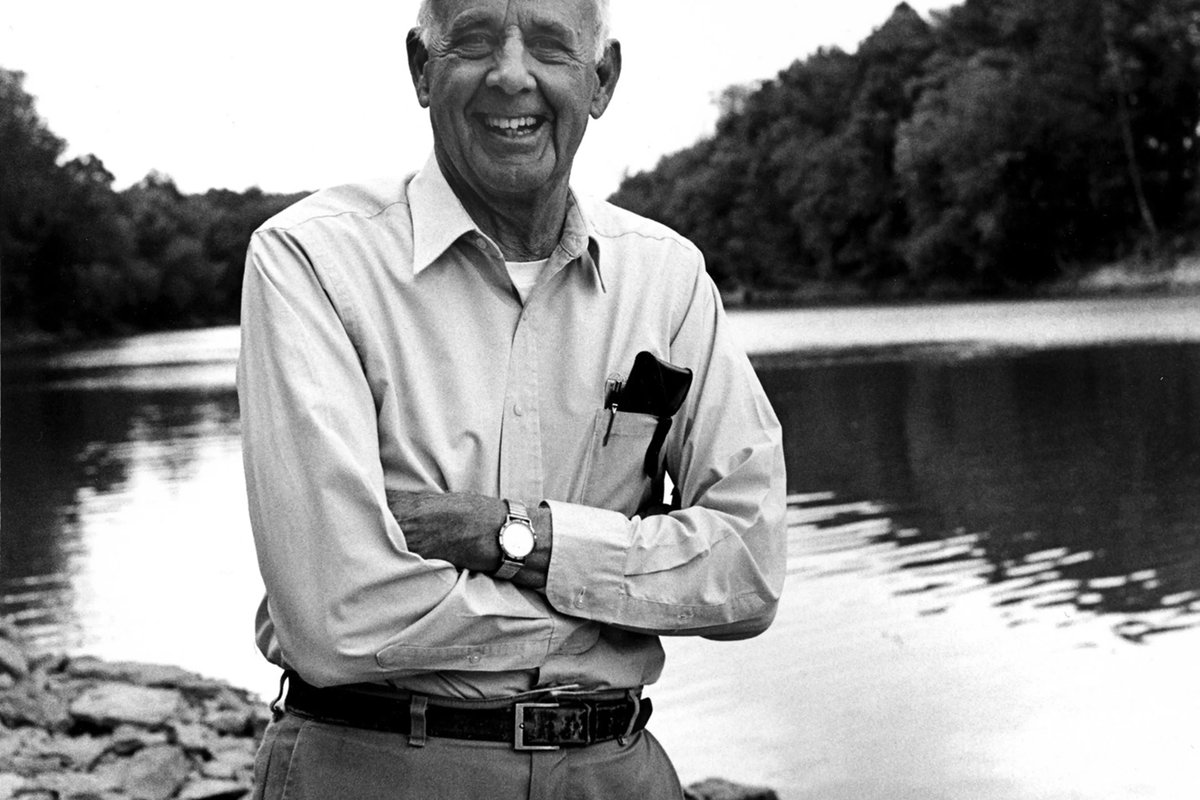
He is pictured below, as a young man in his cabin.
Reading a book in public is only performative to people that don’t read books. To a reader, every waiting room, park bench, and train carriage is another potential chapter.
I think about these kinds of things often. God created Adam and Eve as a man and a woman rather than as infants or toddlers. So, if he chose to, he could have created a mature universe. Or he could’ve reckoned day and night by a different measure rather than a 24 hour
period. Fact is, God can do anything anyway he wants to do it. I love how he leaves many things mysterious and humanly unexplainable. However he chose to accomplish it, he has my full confidence in him as creator of all, having created out of nothing by his powerful word.







![jaminjantz's tweet photo. A Eulogy for Wendell Berry
Sitting on my printer are two sheets of paper. Slightly warm. I had just finished the final edits to a letter; a letter I was then going to hand transcribe to Mr. Wendell Berry of the Membership of Port Royal, Kentucky. I was going to mail it in the morning.
I never will. Wendell Berry has died on August 31, 2026.
How do you eulogize a man you have never met but who changed your life? The amount of Wendell Berry that was in my life this morning — his poetry, prose, and essays that litter my shelves and pile up by my bed — is unchanged. And yet everything has changed.
Why did I pick up my draft of that letter today? Why did I pick it up intent on completing it today? Of all possible days. A letter that will now sit on my printer. Forever.
Perhaps, just maybe, my soul felt another soul departing for a long journey. Perhaps, just maybe, my soul felt this soul that had changed my life slipping away and involuntarily reached out one last time (at least on this side of that far country).
To live in San Francisco and to love Wendell Berry is to be a member of a very small, very secretive club that is very bad at keeping secrets. We tell everyone, anyone who will listen and most of those who will not about our secret club. We proselytize relentlessly.
In a city built by those who pillage and run, more and more are realizing they would rather stick around and “settle, and love the life they have made and the place they have made it in.” (thank you Mr. Stegner). They want to root, but many don’t know what this looks like.
[Wendell Berry enters stage right]
Whenever I meet a fellow Berry-ite, we get to play my favorite game: which Wendell Berry did you meet first?
Did you meet Wendell Berry, the poet? The gentle, soft-spoken, dear man who loved his herons and the woods and the creeks and the dark. A man who bid us go to the trees and be still. This Wendell Berry needed neither food nor water nor sleep. He could sit in a wood and contemplate a heron fishing for an entire century and then spend a century more pondering the ripples the heron made in the pond as it fished.
And you could sit there with him. You could sit for as long as it took for your soul to slow down and your anxious thoughts to sleep. And then, if you dared, you could sit a bit longer to see what might happen next.
Or, perhaps you met Wendell Berry, the activist. Angry, fiery, unapologetic. Fierce, relentless, consistent, and firm. This Wendell Berry would not hesitate to smash the stocking frames if he believed the choice was between community or technological innovation. “I choose the health of the community. I would unhesitatingly destroy a machine before I would allow the machine to destroy my community.” This Wendell Berry was found in the sizzling pages of The Unsettling of America, which is so spicy it’ll burn your fingertips.
This Wendell Berry looked out at America in all her glory and progress and power after WWII and found her wanting. He castigated the pillagers, but called them to repentance. Forever the Mad Farmer, he could always be found standing on the porch, bending his sun-kissed face toward the bend in the road while he waited, hoped, and prayed for his prodigal country to return home.
Or, and finally, did you meet Wendell Berry, historian and member of Port William? This was the Wendell Berry I first met. This is the Wendell Berry that changed my life and, in time, introduced me to the rest of the WBs. This one was sad. Having lived a long life and one full of loss, he was not, curiously enough, full of regret. Not one bit.
He was full of sorrow as he watched his way of life and his people and his place die. It is still dying and will die yet still more. But in that sorrow, I saw joy. Not a little, but overflowing, like the rising flood waters overflowing Athey’s last harvest, a late night sing along at Jayber’s, a silent walk through The Nest Egg and of course, a little worter dranking party.
This Wendell Berry told a story of a long, slow dying. And yet The Membership still holds.
How do you sum up so rich an existence that was the many and varied lives of Wendell Berry.
You cannot.
You can simply keep sharing his stories. As you have been doing, so do.
Dear friends, if you have not read Wendell Berry, you are impoverished. But that can change. You can be changed. Start here at the end of one of my favorite poems of his and discover the beginning of a journey that will take you places I know not, but will surely involve a heron or three.
— — —
Found your hope, then, on the ground under your feet.
Your hope of Heaven, let it rest on the ground
Underfoot. Be it lighted by the light that falls
Freely upon it after the darkness of the nights
And the darkness of our ignorance and madness.
Let it be lighted also by the light that is within you,
Which is the light of imagination. By it you see
The likeness of people in other places to yourself
In your place. It lights invariably the need for care
Toward other people, other creatures, in other places
As you would ask them for care toward your place and you.
No place at last is better than the world. The world
Is no better than its places. Its places at last
Are no better than their people while their people
Continue in them. When the people make
Dark the light within them,
— From Sabbaths, VI (lovingly referred to by the worst secret club, A Poem on Hope)
— — —
Tend to your Place. Do not let the light dim.](https://pbs.twimg.com/media/HRHS_oIbQAA4hbI.jpg)