Dr. Velumani in conversation with entrepreneur Ankur Gaba, who scaled Akiko Global Services from just 5 telecallers to a 100-strong team.
Tune in now
https://t.co/lIrALjFEFo @akiko_global@velumania
Thought provoking post by @deepigoyal ….worth reading for nuances presented.
We have a country conscious which hides unemployment and poverty by presenting data at aggregate ( i.e. celebrate 4th largest economy & most popular nations anthem etc rather than facing per capita metrics). Still inequality dispersion is no better than western world.
While it’s true that everything can and should be improved but at the same time any solution which offers employment and flexibility needs to be nurtured and not blocked.
Last one on this topic, and I have been holding this in myself for a while.
For centuries, class divides kept the labor of the poor invisible to the rich. Factory workers toiled behind walls, farmers in distant fields, domestic help in backrooms. The wealthy consumed the fruits of that labor without ever seeing the faces or the fatigue behind it. No direct encounter, no personal guilt.
The gig economy shattered that invisibility, at unprecedented scale.
Suddenly, the poor aren't hidden away. They're at your doorstep: the delivery partner handing over your ₹1000+ biryani, late-night groceries, or quick-commerce essentials. You see them in the rain, heat, traffic, often on borrowed bikes, working 8–10 hours for earnings that give them sustenance. You see their exhaustion, their polite smile masking frustration with life in general.
This is the first time in history at this scale that the working class and consuming class interact face-to-face, transaction after transaction. And that discomfort with our own selves is why we are uncomfortable about the gig economy. We want these people to look our part, so that the guilt we feel while taking orders from them feels less.
We aren't just debating economics. We are confronting guilt. That ₹800 order might equal their entire day's earnings after fuel, bike rent, and app cuts. We tip awkwardly, or avoid eye contact, because the inequality is no longer abstract. It's personal.
Pre-gig era, the rich could enjoy luxury without moral discomfort. Labor was out of sight. Now, every doorbell ring is a reminder of systemic inequality. That's why debates explode. It's not just policy. It's emotional reckoning. Some defend the system (“they choose it”), others demand change (“this isn't progress, its exploitation”).
And here’s the uncomfortable twist: the unsaid ask of clumsy ‘solutions’ isn’t dignity. It is about returning to invisibility.
Ban gig work and you don’t solve inequality. You remove livelihoods. These jobs don’t magically reappear as formal, protected employment the next day. They disappear, or they get pushed back into the informal economy where there are even fewer protections and even less accountability. Over-regulate it until the model breaks, and you achieve the same outcome through paperwork instead of slogans: the work evaporates, prices rise, demand collapses, and the people we claim to protect are the first to lose income.
And then what happens?
The rich get their old comfort back. Convenience returns without faces. Guilt dissolves. We go back to clean abstractions and moral posturing from a distance. The poor don’t become safer, they become invisible again: back in cash economies, back in backrooms, back in shadows where regulation rarely reaches and dignity isn’t even debated.
The gig economy just exposed the reality of inequality to the people who previously had the luxury of not seeing it. The doorbell is not the problem. The question is what we do after opening the door.
Visibility is the price of progress. We can either use this discomfort to build something better (which we keep doing continuously as delivery partners are our backbone), or we can ban and over-regulate our way back into ignorance. One of those choices improves lives. The other simply helps the consuming class feel virtuous in the dark.
"Dreams do come true! ✨ Had the incredible honor of meeting legendary *Subhash Ghai Ji* in his office over a cup of tea, sharing insights about Bollywood and cinema. His warmth and wisdom made it an unforgettable experience. Childhood dreams, check! ✅ #KumarAtulOfficial
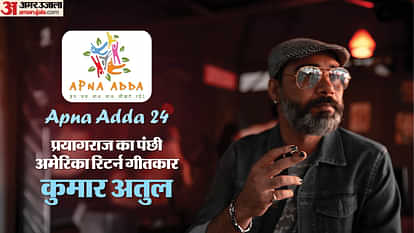
Today, my interview has been published in leading Hindi newspaper *Amar Ujala*, both in print and online! Feeling blessed to share my journey with you all,A huge thank you to *Pankaj Shukla* sir for this opportunity and appreciation. 🙏✨
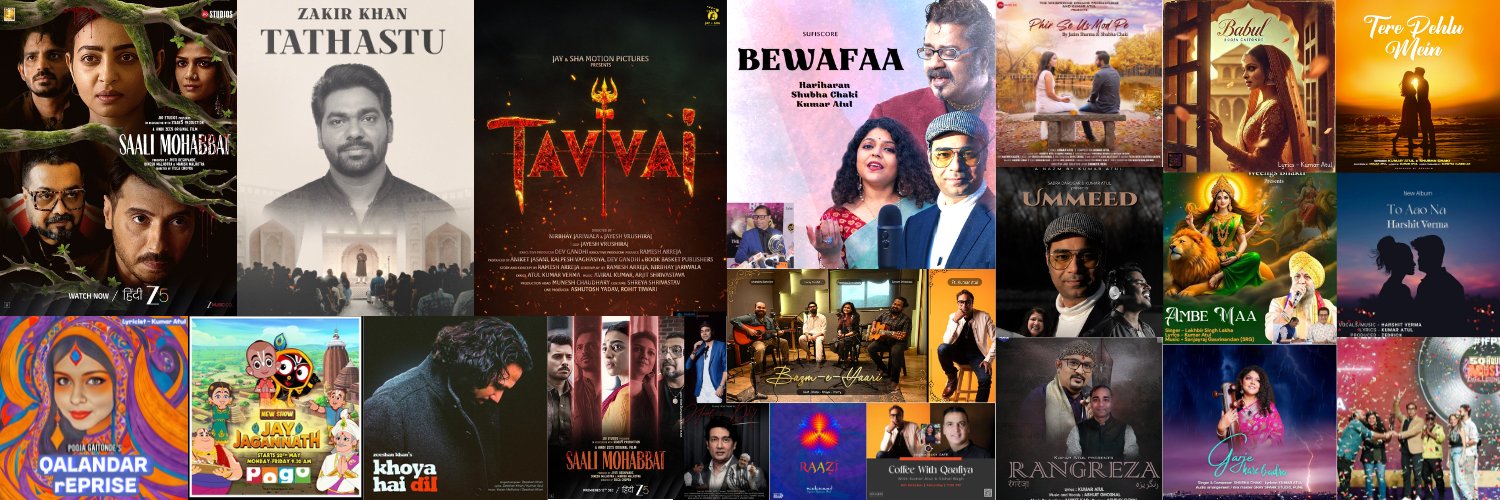
My next film ‘ONE FRIDAY NIGHT’ releases on JIO CINEMA on 28th July ’23, *ing Raveena Tandon, Milind Soman, Vidhi Chitalia, produced by JIO Studios, Jyoti Deshpande, ClickonRM, content alliances head (Jio): Shobha Sant.
@TandonRaveena@milindrunning#vidhichitalia#JioCinema #JioStudios #OneFridayNight
Not my own creation but had to share:
For the Hindi music / movie lovers / followers
There was
a romantic poet :
अभी ना जाओ
छोड़ कर कि
दिल अभी
भरा नहीं
🔸
There was
a philosophical poet :
मै
पल
दो पल का
शायर हूँ
🔹
There was
a regretful poet:
कभी कभी
मेरे दिल में
खयाल आता है
🔸
There was
a poet who was
a committed lover:
मेरे दिल में
आज क्या है
तू कहें तों
मैं बता दूँ
🔹
There was
a poet content with
his life:
मांग के
साथ
तुम्हारा
🔸
There was a poet
who compromised
his love for his lover :
चलो
इक बार
फिर से
अजनबी
बन जाए
हम दोनों
🔹
There was
a downcast poet :
जाने वो
कैसे लोग थे
जिनके
प्यार को
प्यार मिला
🔸
There was
a carefree poet :
मैं
जिंदगी का
साथ
निभाता चला
🔹
There was a
non-materialistic poet :
ये दुनिया
अगर
मिल भी जाए
तो क्या है
🔸
There was
a patriotic poet :
ये
देश है
वीर
जवानों का
🔹
There was
revolutionary poet :
जिन्हें
नाज़ है
हिंद पर
वो
कहाँ है
🔸
There was
pessimistic poet :
तंग
आ चुके है
कशमकश-ए-जिंदगी से
हम
🔹
There was
a peace-loving
humanitarian poet :
अल्ला
तेरो नाम
ईश्वर
तेरो नाम
🔸
There was
a secular poet :
तू
हिंदू
बनेगा
ना
मुसलमान
बनेगा
🔹
There was
a flirting poet :
ए मेरी
जोहराजबी
तुझे
मालूम नहीं
🔸
There was
a reminiscing poet :
जिंदगी भर
ना
भूलेगी
ये
बरसात की
रात
All these Poets had
ÖNE name :
#Saahir Ludhianvi !
Wishing him a wonderful 94th Birthday