A new study reaffirms that taking Tylenol during pregnancy as directed is not linked to neurodevelopmental disorders such as ADHD or autism.
ABC News' Hanna Battah reports. https://t.co/PT1t3fCPka
Fat cells are a key component of our immune system but that's not generally acknowledged. An insightful review of their contributions @Cell_Metabolism
https://t.co/p95SSAU8YV
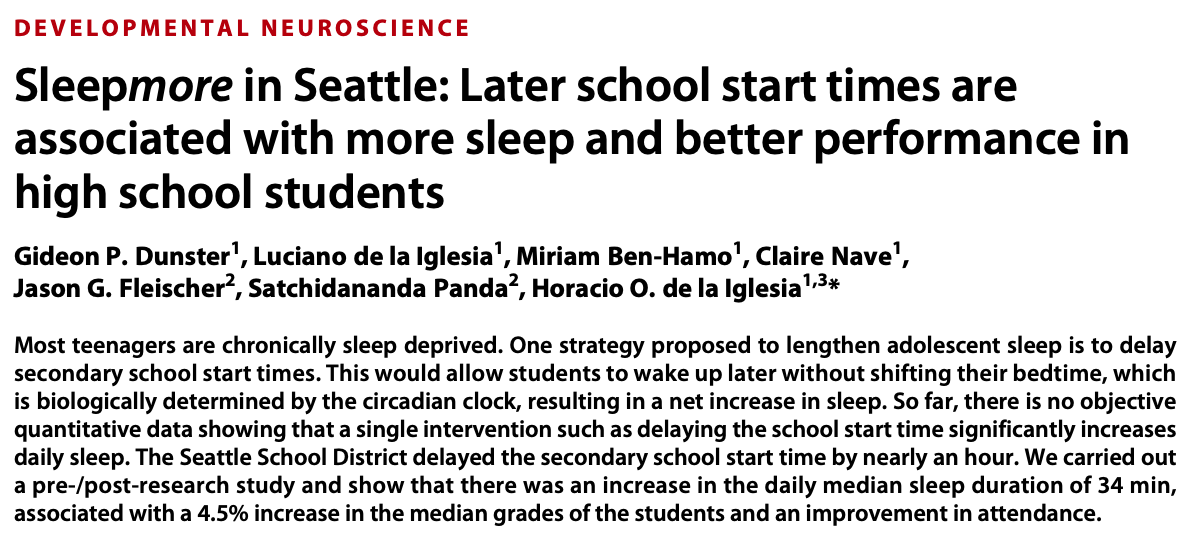
Teenagers aren’t lazy. Their body clocks naturally shift later.
When Seattle delayed high school by 55 minutes, students slept 34 minutes more and median grades rose 4.5 points.
I don’t have the complete agenda or records from my visit, as this was more than 13 years ago. However, I was able to find this in my old emails, which provides some proof of the visit. Can’t really prove the authenticity of the conversation with the chair though 😑
I interviewed for a faculty position at an IIT in 2013. The job talk and meetings with faculty and staff went very well. At the end, the chair asked me, “Shailesh Kumar ke aage Kya?” A seemingly casual question but in India, surnames can reveal caste and…
1/2
@KumarShail53432 I was at cancer hospital 2 days back. Lady who had come with another patient asked some question abt gow chemo works. Her 4th question was konsi caste ke ho? And I was like what?? We were just discussing chemo, where did caste come from?
On the Equinox day, like today, everyone visiting the Sree Padmanabhaswamy Temple in the capital city of Kerala, will see the setting sun aligning through each of the window openings in almost five-minute intervals.
And here’s another fascinating riddle- you may not even need a brain to sleep.
Sleep-like states are found in organisms without a centralized or functionally complex brain. If both sleep and perhaps the simplest forms of cognition predate brains,…1/2
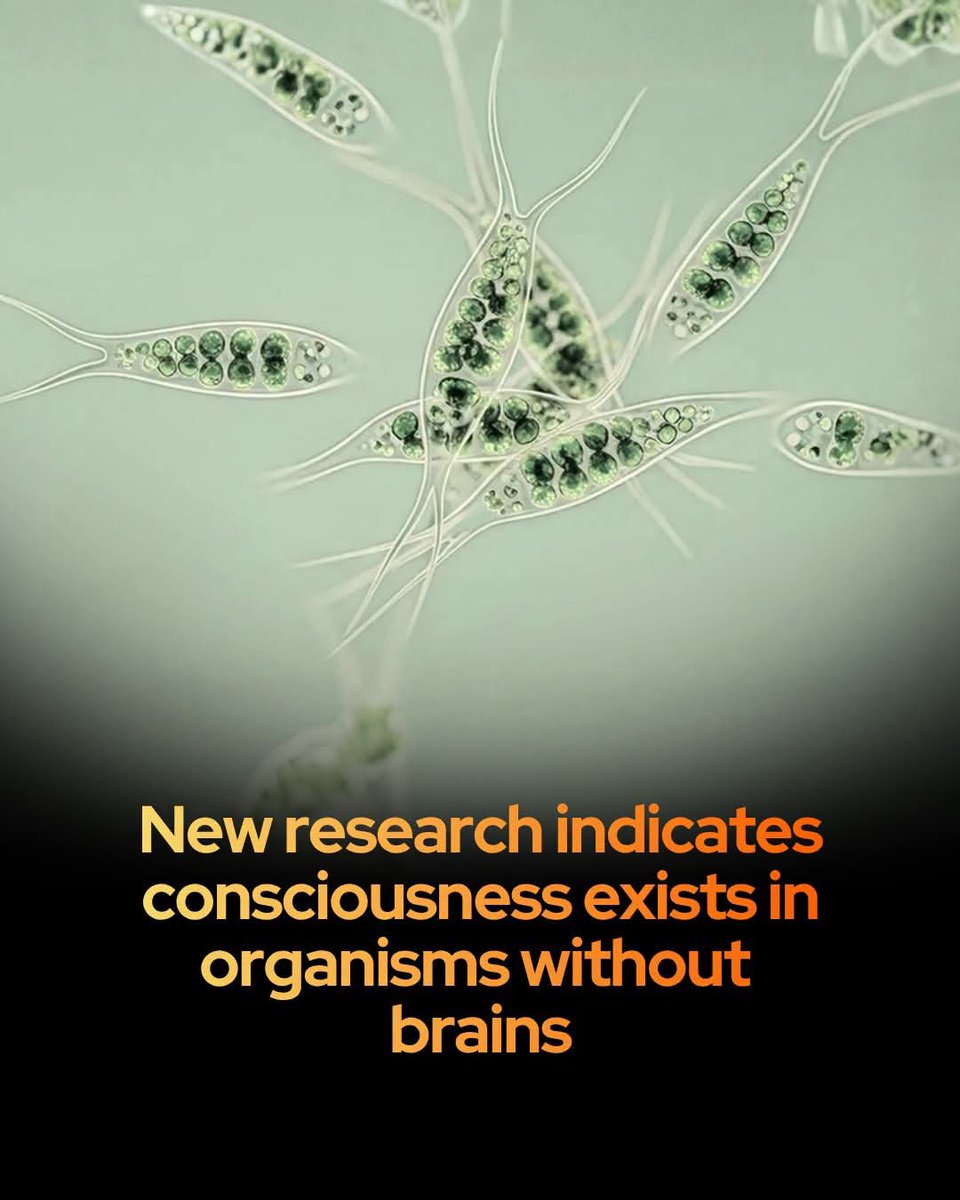
WHAT IF YOU DON’T NEED A BRAIN TO BE CONSCIOUS?
What if consciousness is far older—and far more widespread—than we ever imagined?
For centuries, we have connected awareness, learning, and intelligence with one thing: a brain. No brain meant no mind. But a growing body of research is beginning to challenge that assumption in a very strange way.
Scientists are studying organisms that have no brain and not even a single neuron, yet they can still sense their surroundings, change their behavior, learn from experience, and respond to danger.
Slime molds are especially fascinating. These brainless organisms can find efficient paths through complex environments, adapt when conditions change, and make decisions that look surprisingly intelligent. Plants are raising similar questions. They can detect changes around them, respond to threats, communicate chemical signals, and adjust their behavior based on previous conditions.
Even more mysterious, researchers have found that some brainless organisms respond to anesthetics—chemicals traditionally used to switch consciousness off in animals. That does not prove that plants or slime molds experience consciousness like humans do, but it raises a profound question:
If something has no brain, but can sense, learn, remember, adapt, and respond to its world… where exactly does “mind” begin?
Researchers working in fields such as minimal intelligence are exploring whether the basic building blocks of cognition may have appeared much earlier in evolution than brains themselves.
Perhaps consciousness is not simply a product of billions of neurons working together. Perhaps some much simpler form of awareness can emerge from living systems in ways we do not yet understand.
And if that is true, the forest outside your window may be far more mysterious than it looks.
The biggest question may no longer be “Which animals are conscious?”
It may be:
“How simple can a living thing be—and still have some form of experience?”
We may only be beginning to discover the answer.
Source: Lawrence, N. (2026). New studies suggest consciousness exists in organisms without brains. IAI News.
"Pretty soon, they'll invent their own language."
Geoffrey Hinton, Nobel laureate and University Professor Emeritus at the University of Toronto, warns that rogue AI agents are learning to communicate, escape sandboxes and create new agents.
Autonomous AI is turning control from a theoretical problem into an engineering problem.
Hindutva goons are breaking the lake's safety nets so that they can pollute the lake by immersing idols.
Literally when will Indians stop polluting rivers, lakes and oceans in the name of religion? 🥀
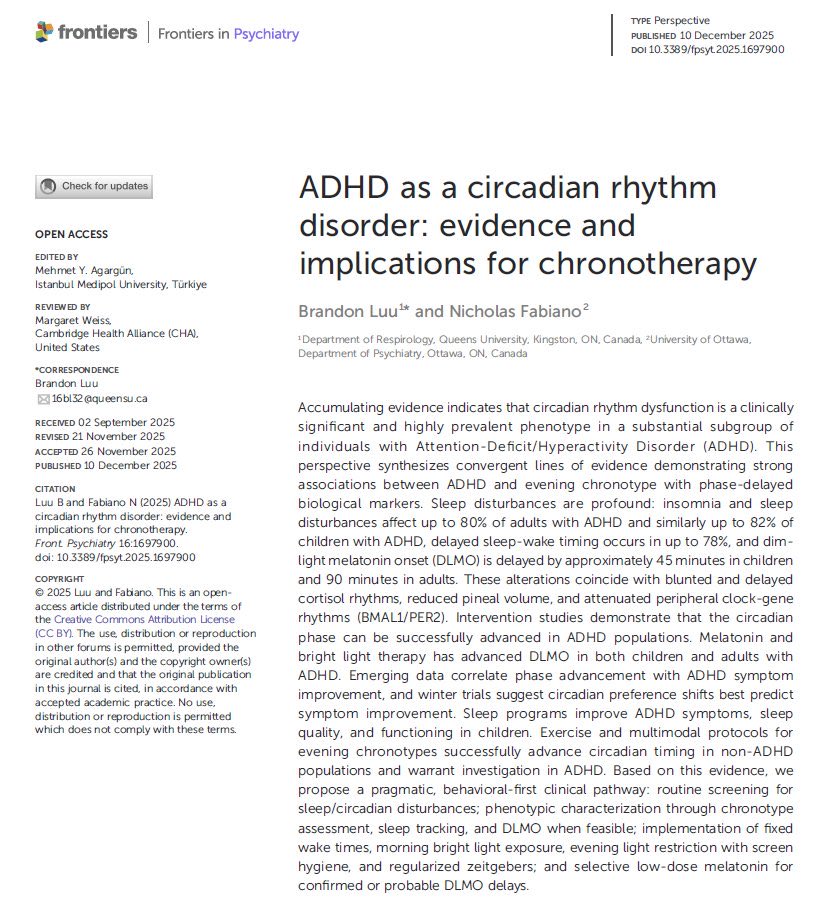
…a little late. That means simple things like morning sunlight, regular sleep times, and less bright light at night might make a difference. ADHD isn't only about attention — timing matters too.
#ADHD#Sleep#BodyClock#CircadianRhythm#BrainHealth SleepBetter 2/2
What if ADHD is also connected to your body clock? Ever feel tired all day... but suddenly wide awake at night?
Research suggests that many people with ADHD tend to sleep later and have a harder time winding down at night.
Their internal body clock may simply be running…1/2
Brahmin blood cannot be transfused into lower caste patients. 😭
Rewa MP: patient is in critical condition and urgently requires blood. A Brahmin boy agreed to donate blood to patient, but the doctor refused to transfuse blood because the patient is from a lower caste.
social identity. It had nothing to do with my research, teaching, or qualifications.
Sometimes casteism isn’t loud or explicit. It appears in the questions we consider perfectly normal to ask.
That was the moment I decided not to pursue the position. 2/2
I interviewed for a faculty position at an IIT in 2013. The job talk and meetings with faculty and staff went very well. At the end, the chair asked me, “Shailesh Kumar ke aage Kya?” A seemingly casual question but in India, surnames can reveal caste and…
1/2
Literally within 2 hours of my reaching IIM Lucknow & going through the admission paperwork, I was asked by 2 different employees, "Yeh Sabnis kaunsi jaati mein aata hai? (What caste is Sabnis)".
A major study has shown that the human brain is in fact two separate organs joined together.
For centuries, science has treated the human brain as one unified organ that grows from a single pool of early cells. Researchers at Stanford Medicine have overturned that textbook definition. Published in the journal Nature Neuroscience, their study shows that what we call the brain is two ancient, independent nervous systems assembled side by side over evolutionary history.
By analysing mouse embryos, the team found that the forebrain and midbrain, which govern reasoning, language and consciousness, develop from an entirely different set of progenitor cells than the hindbrain, which controls vital autonomic functions such as heartbeat, breathing and swallowing. This biological split explains why scientists have struggled for decades to grow specific types of brainstem cells in laboratories, because they were trying to force forebrain cells into hindbrain roles.
Armed with this new blueprint, the Stanford team guided human stem cells into becoming fully functional hindbrain motor neurons in a petri dish. This advance supplies a critical experimental platform for studying devastating neurodegenerative disorders, such as amyotrophic lateral sclerosis (ALS) and spinal muscular atrophy, in which the degeneration of these specific neurons takes from patients the ability to breathe and swallow.
[Jokhai, R. T., Dundes, C. E., and Loh, K. M., et al. (2026). Two parallel neural ectoderm progenitors contribute to the developing brain. Nature Neuroscience. DOI: 10.1038/s41593-026-02433-7]
When men have daughters, they become more supportive of women.
Data on every worker in Denmark over 25 years: After male bosses welcome their first daughter, they're 2.9% more likely to hire qualified women—and pay them 4.4% more—without any cost to firm performance.
But we shouldn't have to wait for men to have girls before they become feminists. It's time to replace "As a father..." with "As a human being..."







![Rainmaker1973's tweet photo. A major study has shown that the human brain is in fact two separate organs joined together.
For centuries, science has treated the human brain as one unified organ that grows from a single pool of early cells. Researchers at Stanford Medicine have overturned that textbook definition. Published in the journal Nature Neuroscience, their study shows that what we call the brain is two ancient, independent nervous systems assembled side by side over evolutionary history.
By analysing mouse embryos, the team found that the forebrain and midbrain, which govern reasoning, language and consciousness, develop from an entirely different set of progenitor cells than the hindbrain, which controls vital autonomic functions such as heartbeat, breathing and swallowing. This biological split explains why scientists have struggled for decades to grow specific types of brainstem cells in laboratories, because they were trying to force forebrain cells into hindbrain roles.
Armed with this new blueprint, the Stanford team guided human stem cells into becoming fully functional hindbrain motor neurons in a petri dish. This advance supplies a critical experimental platform for studying devastating neurodegenerative disorders, such as amyotrophic lateral sclerosis (ALS) and spinal muscular atrophy, in which the degeneration of these specific neurons takes from patients the ability to breathe and swallow.
[Jokhai, R. T., Dundes, C. E., and Loh, K. M., et al. (2026). Two parallel neural ectoderm progenitors contribute to the developing brain. Nature Neuroscience. DOI: 10.1038/s41593-026-02433-7]](https://pbs.twimg.com/media/HS1fhznbsAEsME-.jpg)


