My dad left my mom for another woman on Christmas Eve when I was eight years old. This left my mom with three boys to raise.
There was a small grocery store in our neighborhood owned by Mr. Thomas. My parents actually stopped at his store while bringing me home from the hospital and he weighed me on his butcher scales. When he heard that my dad had left, he set my mom up with a small charge account which she promptly paid on or paid off every payday. It allowed us kids to walk to the store and buy that baloney, milk, cat food or even cigarettes for my mom without having a penny in our pocket.
As I got older, my brother worked for Mr. Thomas. He found out that Mr. Thomas and his wife were "accidentally" losing some of my mom's charge slips, which were just pieces of paper in a file. I later realized that this could be why we got a toy for Christmas or a new pair of pants every now and then.
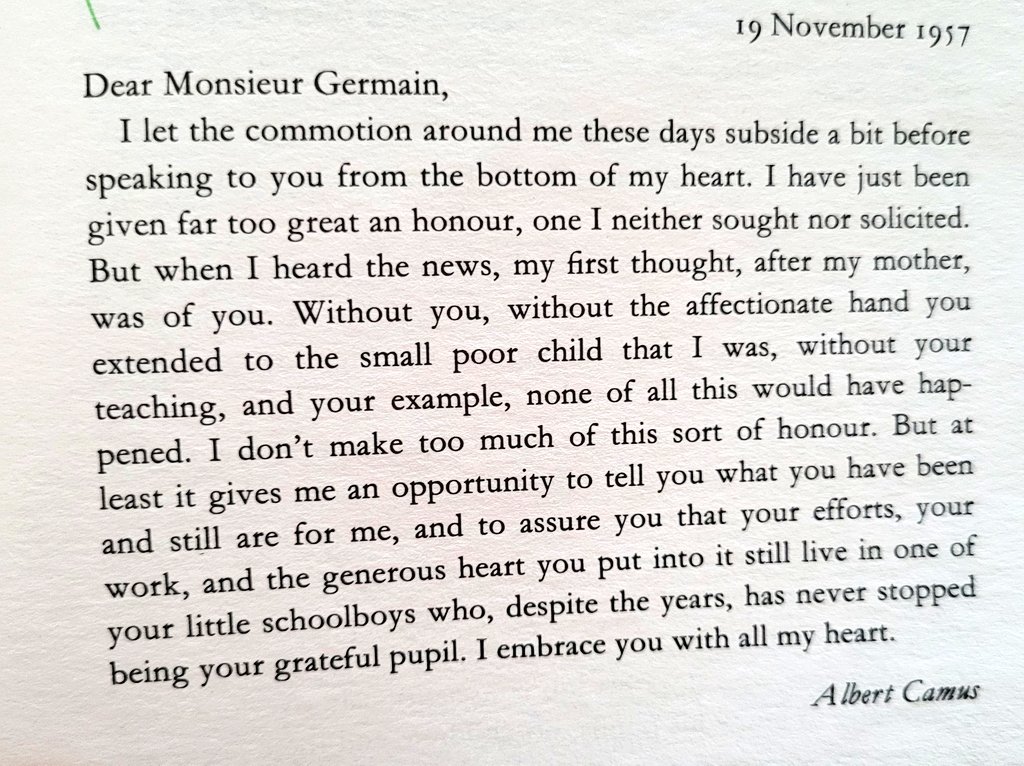
When I turned 19, I found out that Mr. Thomas was going to die soon. I made a point to go to his house and visit with him. I told him that I knew what he and his wife did to help my mom. He seemed embarrassed but humbly admitted to it. I walked over to his bed and hugged him for what seemed like several minutes. We were both crying at the end of it.
But I never got a chance to tell him how much of a foundation that set for me for the rest of my life.
I guess what I'm saying is that one kind action, one you have no idea is being observed, can change a person's life. And you don't even know it unless someone tells you.
That's it. End of story.
As a new Emergency Medicine attending 10 years ago I was asked to write about my insights into what it's like to be an ER Doctor. I just randomly came across it and after all these years I'm amazed by how much this all still rings true in my heart today. So I wanted to share it with you guys. Here's what I wrote:
MAKE THINGS HAPPEN, SAVE LIVES, ALLEVIATE SUFFERING
My Emergency Department is a battlefield. Volumes are high and the pace is fast. To succeed as an Emergency Physician I must be an expert of efficiency. I also must be an expert of triage. I am constantly triaging and re-triaging as things evolve. The ED is highly unpredictable. My entire shift I am on guard and ready for any emergency to come flying through the doors at any moment. In the meantime I am either taking care of or seeking out other emergencies. My job is not to be expert in all of medicine. My job is to be jack of all trades and master of diagnosing and treating what can and will kill you. If I cannot provide the definitive care you need, my job does not end until I have gotten you there.
The more I practice Emergency Medicine, the more I realize that what I do more than anything else is - make things happen. Cliff Reid (@cliffreid) delivered an excellent SMACC talk on making things happen in the resuscitation bay. (If you haven’t yet heard it I recommend you do). I’ve come to realize that this concept extends beyond the resus bay and pervades all aspects of my job.
So what does it mean to make things happen? Making things happen means putting my visions of what needs to happen into motion and making them reality.
In order to make things happen, I must first appreciate that my ED is equipped with an army of highly skilled staff that are the heart and soul of the department – and that without them I could make very little happen.
Making things happen means identifying a sick patient and getting them quickly moved to a critical bed; it means getting my suspected head bleed patient expeditiously to the CT scanner with least possible delay; it means mobilizing help to intervene on my flash pulmonary edema patient in hypertensive crisis and getting her on CPAP & Nitro immediately to pull her out of the water and prevent intubation; it means convincing my adamant patient who is ready to walk out the door but is clearly not well enough to go home not to sign out against medical advice, but rather to stay in the hospital where he/she is safe and taken care of; making things happen means advocating for my patients and convincing my consultants to take them emergently to the cath lab or operating room at 3 AM when it otherwise would not have happened until morning. Making things happen means constantly thinking two steps ahead. Making things happen is an art. I have learned that to excel in Emergency Medicine I must master the art of making things happen.
If my goal is to save lives, I must first recognize that a life needs to be saved – that is, I must be an expert at diagnosing life-threatening processes. The 75-year-old clutching his chest with tombstones on his ECG – that’s easy. The problem is that most of my patients are not truly sick. Some are here because they are afraid that they are sick, and just need reassurance. Some are here just for pain medications. Most of my patients are undifferentiated. Sickness is a spectrum. Truly sick patients often look sick, but often they do not. I must be expert at sifting through the crowd and identifying which patients are harboring a life-threatening diagnosis. This is not always an easy task, but it’s up to me to figure it out.
It’s my job to figure out that the 45-year-old gentleman who looks comfortable sitting up in bed watching television and texting on his phone has a Type A Aortic Dissection. If I simply get two sets of cardiac enzymes, repeat an ECG and discharge him home since these are normal – there is a good chance he will die. It’s my job to figure out that the 60-year-old lady with chest pain who was transferred to me for “NSTEMI” actually has a huge saddle pulmonary embolus. It’s not enough to just admit her to the hospital floor only for her to sit up there, decompensate, and have a bad outcome. I have to do better than that. In the Emergency Department, there are landmines scattered everywhere. It’s my job to find the landmines.
I can’t talk about saving lives without talking about Resuscitation. This is an entire topic in and of itself and I could write all day about it – but I won’t do that here. I will simply say that if I want to save lives, I must be an expert at Resuscitation. I believe that as an Emergency Physician, if I am not expert at Resuscitation – my purpose is lost and my mission is in vain. Resuscitation encapsulates those moments that matter most; the moments that often determine my patients’ fates, and define Emergency Medicine as a specialty. Resuscitation is the essence of Emergency Medicine.
In the end, Emergency Medicine is all about the patients. While patients are under my care, I consider them family. When I walk into a room, I shake hands with each patient and all their friends and family members who have come to support them. I look my patients in the eyes. I listen to them. I try my best to put myself in their shoes and empathize with them. I know that communication is vital and I make sure we are on the same page, and that all of their questions have been answered. I make a point to ensure that they know to let me know if they need anything. If my patients are not comfortable, I am not comfortable.
Some humble advice I have to offer for success in Emergency Medicine:
1. Never stop learning. There’s too much out there to know, and knowledge is the foundation for the care we provide. Your eyes won’t see what your mind doesn’t know. Never get complacent in your knowledge.
2. Trust your instincts. Gestalt is at the heart of what we do. Without it we are merely computers and robots. Gestalt trumps any clinical decision rule any day. Even if you don’t know exactly what’s wrong with your patient, but you have a feeling something bad is going on – trust it and pursue it.
3. Be decisive. I’ve seen too many times patients crash while “decisions were being made”. If you choose not to intervene that’s fine, but not intervening should never be the default decision, as a result of indecision. That is unacceptable. First do no harm, does not mean do nothing. Don’t fall victim to being more comfortable with the devil you know than the devil you don’t. Understand that sometimes not taking a risk can be extremely risky.
4. Learn to control your mind in stressful situations. Adrenalinization is normal. While it’s a natural reaction and will enhance your performance, too much will impair your thought process and technical skills. Learn to recognize when you’re becoming over-adrenalized, and learn whatever it is that works for you to be able to relax, stay calm, and temper your sympathetics.
5. Be cognizant of human factors. So much of what we do is psychological. Be aware of your susceptibility to cognitive bias. The key to conquering cognitive errors is to be aware of their existence.
6. Debrief after codes or tough cases and take time to reflect back after shifts. I do this routinely and I find it to be invaluable. Some of the greatest things I have picked up on have been via this process.
7. Learn Emergency Ultrasound.Believe me when I tell you that Emergency Ultrasound will transcend your practice. If you don’t learn EM ultrasound, at least learn the critical care stuff. If you don’t learn the critical care stuff, at least learn basic Echo – it has the greatest impact.
8. Follow up on your patients. I can’t express how much of my learning is through following up on my patients. If you don’t do it already – start! You will be amazed by how much you will learn.
9. Accept and embrace that some of your patients will have bad outcomes or die no matter what you do – but never, ever let this be an excuse to provide anything less than the best care you possibly can.
10. Be kind and compassionate. When it’s all said and done our patients may not remember details of their ED stay during what might very well have been the worst day of their lives – but they will remember how we made them feel.
CONFIDENCE trial: In persons with chronic kidney disease and type 2 diabetes, combination therapy with finerenone and empagliflozin led to a greater reduction in the urinary albumin-to-creatinine ratio than either drug alone. Full trial results and Research Summary: https://t.co/4Gf0LboOCp
so much of adulthood is just grieving in secret. grieving ex lovers, grieving dead friendships, grieving your parents sinking into old age, grieving the person you thought you'd grow into. grieving cities you never got to live in. grieving parts of you that couldn't survive.
I met @tito_mboweni this time 11 years ago. We were in the same class of the @RockefellerFdn Bellagio Center Fellowship, Oct 2013, which means that for a month we lived on the grounds of the Center’s grand Villa Serbelloni, on the picturesque edge of Lake Como.
I was a young-ish man (a 31 yo writer), and he was a much older ‘big man’ - not in the way he carried himself but instead in what he’d been up to/achieved: had served as Nelson Mandela’s Minister of Labour (in his 30s), first black Governor of South Africa’s Reserve Bank, and was at the time we met serving as an Adviser to Goldman Sachs International. I was in awe. Like: this man fought apartheid, endured exile, worked with Mandela. Wow.
Also turned out we were both @uniofeastanglia alumni.
On the day I sent the tweet below, he either wanted something different from Fellowship food (lovely Italian food btw, with copious helpings of olive oil :-) ), or needed to buy something (I can’t recall exactly which) and invited me to join him to on the walk to the little village at the bottom of the hill. And that’s how we ended up in this bar.
Where he charmed the Italian bar-tender into opening his finest bottle, on the house. That was Comrade - charmer and raconteur, a man who’d seen life and who knew things, yet carried no big-man airs.
After Bellagio we stayed in occasional touch, via email and Twitter at first, and later by Whatsapp. I don’t think we ever saw in person again. There was an almost-breakfast in Cape Town in Feb 2015, but circumstances conspired last-minute against it.
I like to think I inspired him somewhat to take Twitter more seriously. I used to have a bigger Twitter following than him, and from the start he’d marvel at my follower numbers. Over the years he’d send me messages about my Twitter following and his struggle to keep up. And then one day he overtook me, and sent a message saying it “boggles the mind” how it happened 😀
The very first DM I sent to him was on Oct 8, 2013, days after we met — a tutorial about how to use the @ button, and how it was better to click ‘reply’ than typing out a new tweet. He went quickly from that newbie to becoming a Twitter overlord. A few months after my ‘tutorial’, a message from him: “I fell into a twar the other day. Not a good idea!”
(Twar meaning Twitter-War 😂)
He’d go on get into the occasional Twitter wahala. More interestingly, he become a food influencer on these streets, constantly oppressing us with his love for cooking and grilling.
He was very interested in Nigeria, always asking questions about our affairs - the Chibok girls, the 2015 elections, the suspension of SLS, July 2015 rumors that I might be going into govt 😀
He clearly loved good writing, and reading. He once mentioned reading something by a Nigerian journalist, and said: “You guys can write hey…”
Songezo Zibi has just written about his irrepressible habit of handing out reading assignments. I once emailed to ask an off-the-record question for an article I was writing. He replied with a list of 3 books to look for and read.
Sometime in 2016, I asked him about the memoir he was working on in Bellagio. He said he was on Page 200. Five years later — he was Finance Minister at the time — I asked again about the memoir. “On Page 200!” he replied. I didn’t realize I’d heard that exact line before, and so I didn’t ask any questions. Now I wish I’d asked. Was he kidding? Was it his way of hinting at ‘writers block’?
I hope that his family have access to that manuscript, and that one day soon it’ll be published in some form. No doubt going to be a unique take on South Africa and the world. This was a man who went from the ANC trenches to the corridors of power and never lost his humility or sense of fun/humor or connectedness to reality.
Rest in Peace and Power, Comrade Tito! And thank you for the long-distance friendship!
“It’s something incredible. Back then, nobody could imagine that this baby would be who he is now — and you could not have known that Messi would become who he became, either."
https://t.co/lCQKYEqlSl