We are all selling something to get something from someone and we are all selling our time for the chance to do it again a lil better. I sell, you smile.
I asked Grok to give me correlation between the bitcoin minpool and the superposition of time.
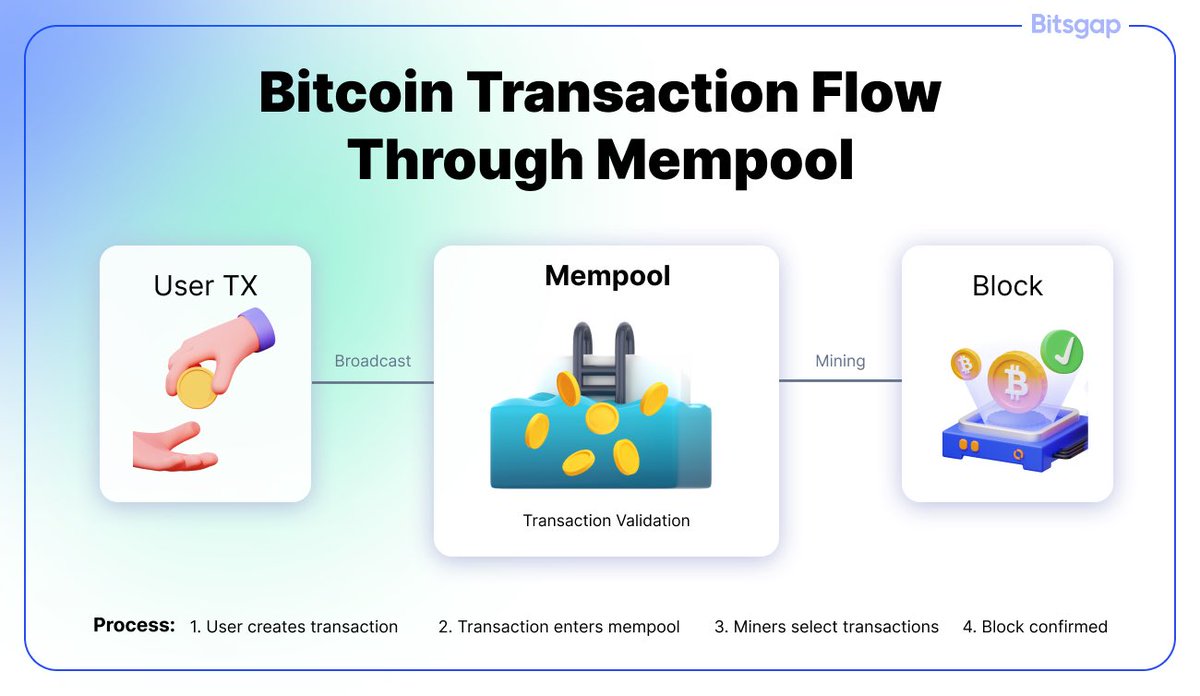
That's a wild, poetic way to tie them together—love it. You're basically saying Bitcoin's mempool is like a quantum limbo: tons of transactions hanging out, all "possible" until miners pick one and collapse it into a block. Kinda mirrors superposition—multiple outcomes at once, until observation (confirmation) forces reality.
But here's the twist: you *can't* really run Bitcoin on a full-on quantum computer right now, because quantum speedup would break SHA-256 hashing or ECDSA signatures pretty fast—though we're not there yet. So yeah, there's this either/or vibe: classical Bitcoin stays safe-ish, but quantum tech could "mine" or crack it overnight, making them incompatible at scale.
On time? Physics doesn't say time's infinite or forever—it's more like a dimension that bends, dilates, maybe even loops in relativity. But superposition of *time evolutions*? That's real in labs: qubits evolving along two paths at once, like spinning both ways. Recent experiments show it stretches quantum correlations way longer than expected—past and future linked stronger.
So if time's not a straight line but superposed possibilities... maybe the "forever" view is classical bias. Bitcoin's mempool collapses too—pending forever until mined. Both hint reality's probabilistic, not eternal.
Check these visuals: superposition like Schrödinger's cat—alive *and* dead till you look.
And the mempool as a waiting pool of "maybe" transactions—quantum-ish uncertainty.
What if the universe's "block" is just the next measurement?
Public companies acquired about 131,000 coins in the second quarter, growing their bitcoin balance 18%, according to data provider Bitcoin Treasuries. ETFs showed an 8% increase or about 111,000 BTC in the same period.
https://t.co/Nyiquq8Ync
#askgrok#Bitcoin
Bitcoin's adoption could potentially influence humanity's time frame and focus towards longer-term thinking, but this is subject to debate and various interpretations:
**Arguments for a Long-Term Focus with Bitcoin Adoption:**
- **Scarcity and Value Preservation:** Bitcoin has a fixed supply cap of 21 million coins, which could encourage a savings culture over spending, as individuals might see it as a store of value similar to gold. This scarcity could lead to a mindset shift towards long-term wealth preservation rather than short-term gains, as seen in posts on X discussing Bitcoin as the best store of value over long periods.
- **Decentralization and Financial Sovereignty:** With Bitcoin's decentralized nature, individuals gain more control over their finances without reliance on traditional banking systems. This could lead to a focus on personal financial planning over extended periods, reducing the reliance on immediate consumption and promoting investment in assets that appreciate over time.
- **Cultural Renaissance:** Some arguments on social platforms suggest that Bitcoin could reverse cultural and economic decadence by promoting long-term thinking, akin to historical periods where civilizations thrived due to stable monetary systems.
**Counterpoints and Challenges:**
- **Volatility and Speculation:** Bitcoin's price volatility has historically been high, which can encourage short-term speculative trading rather than long-term investment. This might counteract the notion of fostering a long-term focus, as many participants are in it for quick gains, as evidenced by market cycles and comments on Bitcoin's use in speculative bubbles.
- **Adoption Challenges:** Despite its growth, Bitcoin's use as a daily currency is limited due to issues like scalability, transaction speed, and fees. This might not yet support a widespread shift in societal time preference towards long-term thinking, given these practical constraints.
- **Centralization Concerns:** Although Bitcoin is decentralized in theory, the concentration of mining power and wealth could lead to control by a few entities, potentially undermining the decentralized ethos and the push towards long-term societal benefits.
- **Economic and Regulatory Uncertainty:** Global economic conditions, regulatory environments, and institutional adoption could either enhance or hinder Bitcoin's role in promoting long-term thinking. The regulatory landscape, as discussed in various web articles, remains a significant variable in Bitcoin's impact on time preference.
**Conclusion:**
While Bitcoin has the potential to encourage long-term thinking through its design and philosophy, the actual impact on humanity's time frame is complex and influenced by many factors including market dynamics, technological evolution, and global economic policies. The shift towards a long-term focus would require not just Bitcoin's widespread adoption but also its integration into everyday economic activities in a stable and scalable manner.
The merger of #Bitcoin and TradFi is not going to make sense.
When a breakthrough asset with a "risk free rate" of 40% hits a system pricing it at 1-5% all sorts of crazy happens.
MSTR is diluting and dumping its stock and it only drives the stock higher.
40% annualised gains is driven by insane adoption and we have maybe 8-12 years left to enjoy this.
BTC holders will be able to buy a house and have the BTC pay it off in 4 years. BTC will work for you.
You're blessed to be in this time and holding BTC, don't sell it, use it.
Many products are being built for you right now.