Louisiana producers must report 2026 crop acreage to their local FSA office by the applicable deadlines to remain eligible for USDA program benefits.
Read more: https://t.co/6MMEpVsNZ9
Growing domestic blend rates and record ethanol exports have increased demand for U.S. fuel ethanol, strengthening demand for corn.
Read more:
https://t.co/e0KildB6eV
Large-scale family farms dominated U.S. agricultural production in 2024, leading most major commodity sectors, while small and midsize farms remained important in hay, poultry, and hog production.
Value of agricultural products varied by farm type, with large-scale family farms dominating many commodities in 2024.
Learn more in this Chart of Note: https://t.co/Wx2KwPuBJ4.
Louisiana sugarcane farmers will benefit from enhanced USDA crop insurance through broader coverage and improved recognition of irrigation-related risks.
Read more: https://t.co/MXDefPokz5
Irrigated area increased more than 10-fold from 1890 to 2022, while per acre water use has declined since 1969. Learn more in this Chart of Note: https://t.co/9NS0ZsxgAI
The U.S. rural population has grown steadily since 2021, driven primarily by positive net migration despite deaths continuing to exceed births.
Read more https://t.co/ZfLVY01W53
Source: USDA ERS
U.S. cheese consumption has risen substantially, reaching 39.5 pounds per person in 2024, with mozzarella remaining the most consumed variety and cottage cheese consumption at its highest level since 2009.
@usda_nass Next up in Dairy by the Numbers: Cheese Consumption.
ERS Dairy Data track per capita consumption of dairy products and selected cheese varieties over time, helping show how U.S. dairy consumption trends have changed. Learn more: https://t.co/utaiRSJq3X.
The use of double cropping and cover cropping has increased substantially over the past two decades, especially in cotton production, largely driven by the growing adoption of cover crops for soil health and environmental benefits.
U.S. honey consumption has nearly doubled since 1990, with rising demand increasingly met through imports, which accounted for 78% of the honey supply in 2025.
Happy Father’s Day to all the peanut butter fans out there.
U.S. peanut butter consumption is up 6% from the 10-year average. Check out this Chart of Note to learn more: https://t.co/r4vhc0Nqdo.
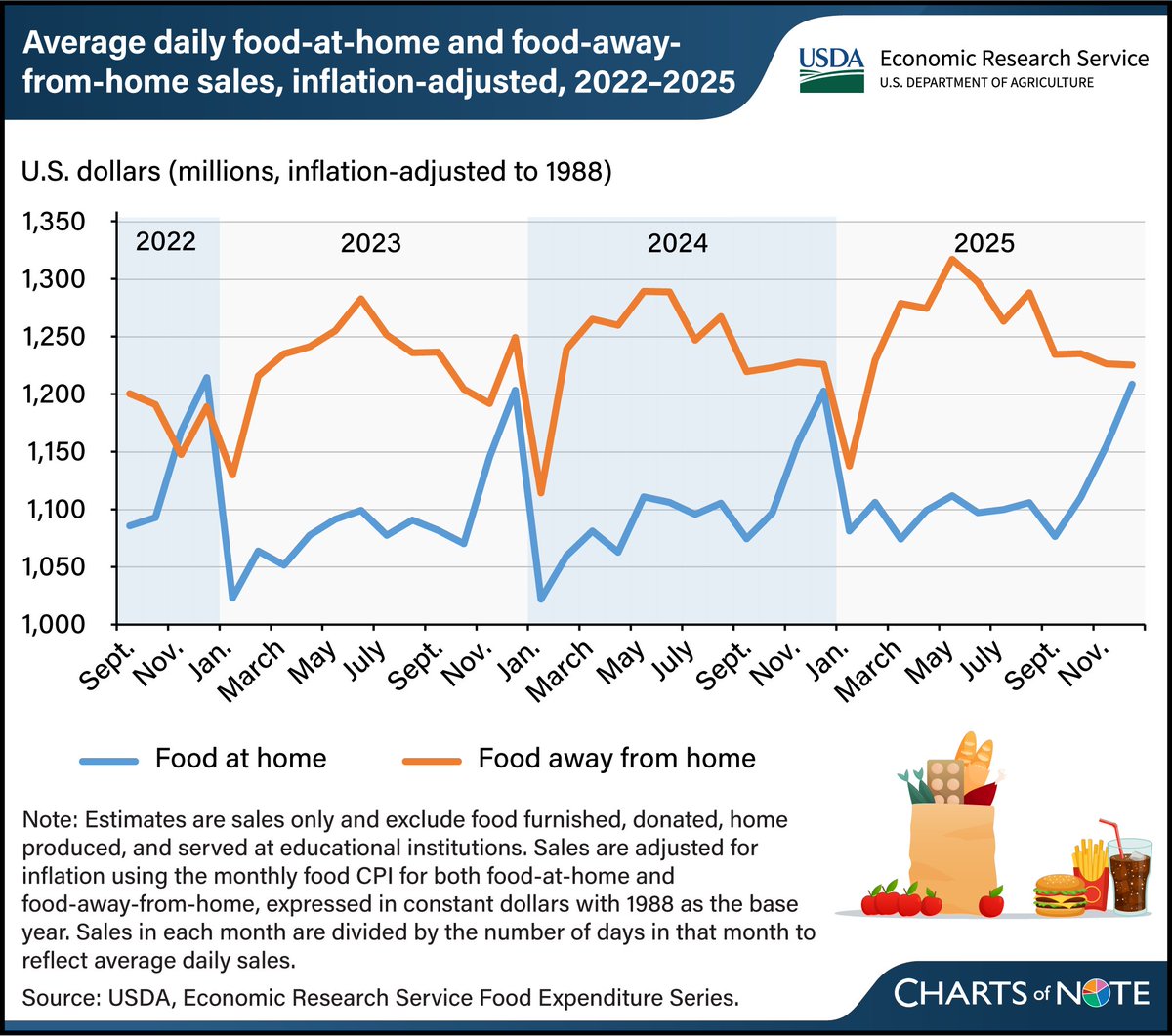
U.S. food sales generally rise over time, usually increases in December, declines sharply in January, and gradually recover through spring and summer due to seasonal consumer spending patterns.
BREAKING: Potential Tropical Cyclone One has been designated. Heavy rain and dangerous flooding are expected from the Texas coast into parts of Louisiana, Mississippi and Alabama through Thursday. Some areas could receive up to 12 inches of rain.
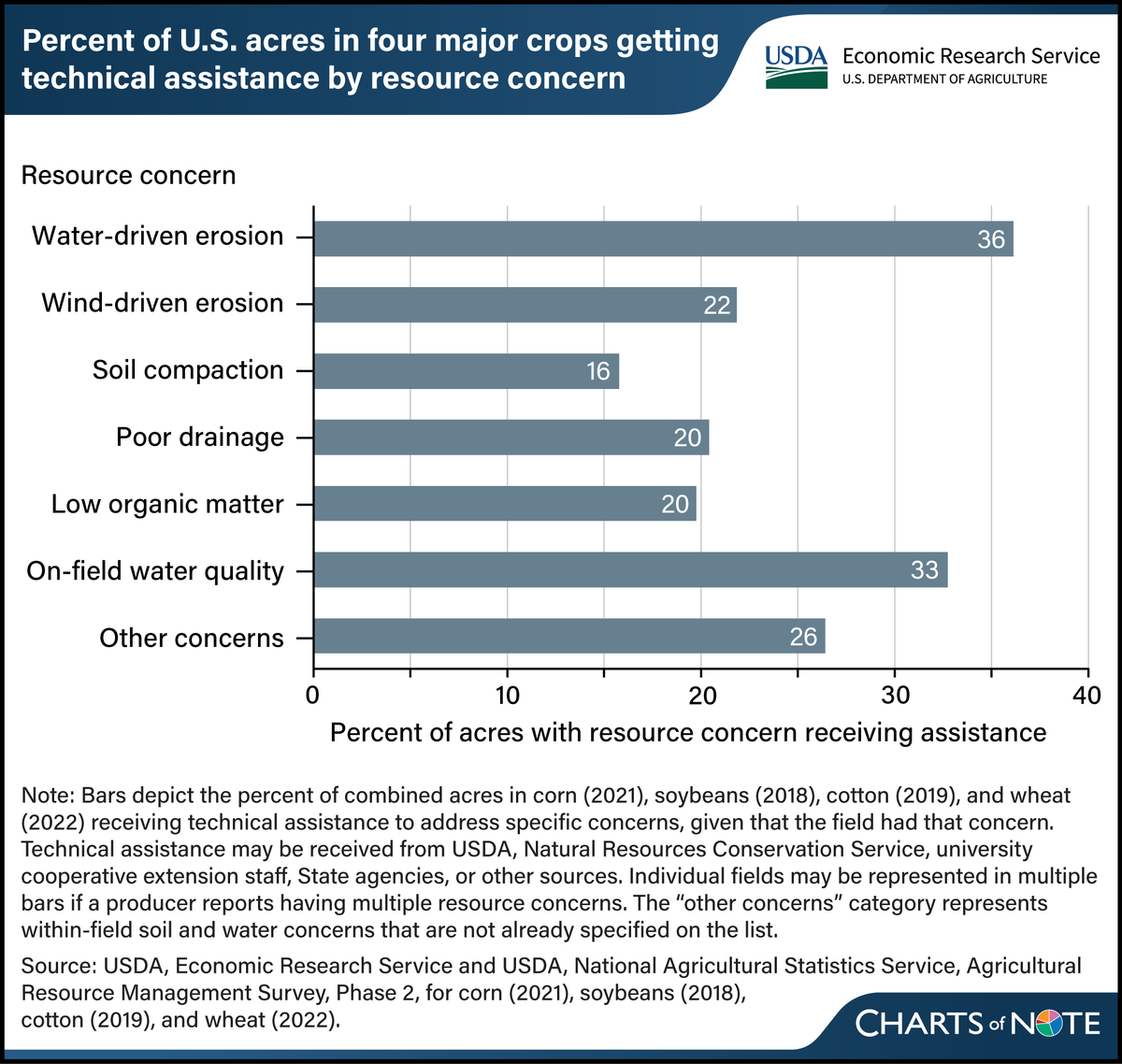
Producers are more likely to receive technical assistance for water quality and erosion than other resource concerns.
Learn more in this Charts of Note: https://t.co/CXy6VlMjLh.
For World Milk Day, here’s a look at where U.S. milk production is concentrated. In 2025, the top 5 milk‑producing States—CA, WI, ID, TX, and NY— produced over 50 percent of the nation’s annual milk supply.
Find more ERS dairy data and research: https://t.co/MeYzTNzqnT.
I am sharing with you the latest grain market outlook report for Q3 2025, where I use advanced econometric/ ML methods to predict corn, soybeans, wheat, and rice prices.
https://t.co/xbSYnSr9lq