Welcome to Class.
Course Title: Tinubunomics 402 - Total Financial Autonomy of a Subnational - Lagos As A Case Study.
Topic - Fiscal Federalism aka How To Efficiently and Effectively Run A Government With No Money from Abuja.
Lecturer - Professor Emeritus Bola Tinubu.
@FajiAdekunle@MasterBolaji@ennyola0015@Walexaj Ade, Oye....in Yoruba land means GRACE, DISCIPLINED, REFINED, PROPER....none you exhibited. Argue your point, lets learn or understand you. Not abusive manners.
@Mobola_A_Star@BZahruddeen@MasterBolaji@ennyola0015@Walexaj Your answer to him should have been straight and short. Fuel subsidy removal saved Nigeria. The extra funding for states; Bonus. If Nigeria were a person or enterprise, she would be dead now, without the removal. Even as we speak, fire and mountain is still playing hide and seek.
.@officialABAT this is what so many of your aids should be telling Nigerians for years. Even your ministers are kept quiet while someone/people outside your government keep doing their communication job for them for free. They just carry on as if they can't hear people like Dino using this as a campaign material against you and APC.
Egypt’s total debt is estimated at over $400 billion, with a GDP around $390 billion — debt-to-GDP above 100%.
South Africa’s debt is about $580 billion, with GDP around $420 billion — roughly 135% debt-to-GDP.
Nigeria’s total public debt is about $110 billion, with a GDP around $340 billion — roughly 35% debt-to-GDP.
Yet some people keep shouting that Nigeria is the “loan capital of the world.”
To them:
Loans are Haram.
Education is Haram.
Road construction is Haram.
Power projects are Haram.
Internet expansion is Haram.
Railway modernization is Haram.
Airport upgrades are Haram.
Seaport reforms are Haram.
Dams and agro-processing projects are Haram.
Solar energy expansion is Haram.
But the same people praise countries that borrowed far more aggressively to build infrastructure and grow their economies.
The difference between productive borrowing and reckless borrowing is simple: what the money is used for.
If loans are used to build roads, expand electricity, improve transport, increase internet access, modernize ports, support agriculture, and attract investment, those are long-term national assets.
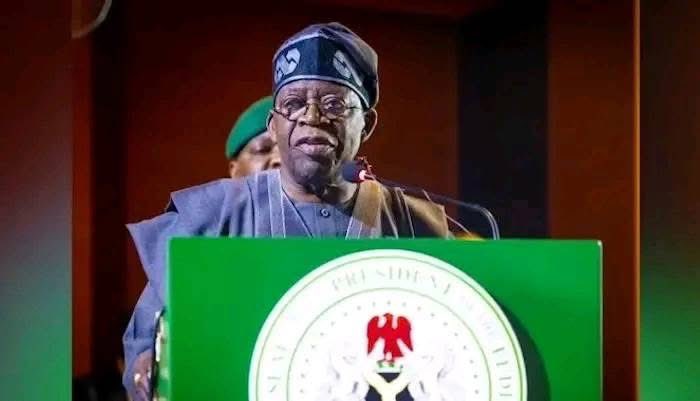
President Bola Ahmed Tinubu says the focus is on infrastructure that can improve productivity and economic growth across Nigeria.
Criticism is normal in democracy, but opposing every single project simply because of politics helps nobody.
Development is not the enemy.
Underdevelopment is.
Some people are no longer in any coven.
They are simply online 24/7 wailing against everything.
@HistoryLens9@muyimulty75@Cyberhalogen@BolajiOyepoju Amin. I pray this onto my family. A reform prayer that corrects my past imperfections, a reform though painful now, inshallah, would yield the results expected. Hopefully, Nigeria stays on this path after him.
I hope the next president would start a security reform agenda next.
@BolajiOyepoju@LeonardoOkojie In 10 year’s time, people will be enjoying the results of @officialABAT’s reforms of today
At that time, many will refuse to acknowledge how he took the bullet for us or would have forgotten it
If I’m still alive then, I’ll say prayers for him and pour libations for a great 9ja
THEY DID IT TO MKO. THEY DID IT TO JONATHAN. NOW IT’S TINUBU’S TURN.
by George Udom
Let’s stop pretending. What you’re seeing isn’t normal politics. It’s a war.
1993 FLASHBACK:
Sultan of Sokoto warned IBB: “Don’t let a Yoruba man become President.”
IBB told Prof. Omoruyi: “Yoruba act like Nigeria can’t move without them. Igbo should teach them a lesson.”
Result? June 12 was annulled.
Why? Ethnic fear, not competence.
2023 PLAYBOOK:
Same fear. Same desperation. Different target: Tinubu.
Why they want him out:
He’s not Obasanjo. He wasn’t handpicked by the North. He fought his way up.
Subsidy removal cut their illegal cash pipeline.
Oil bunkering, illegal mining, FX rackets, tax evasion — Tinubu is blocking it all.
He doesn’t take orders from any cabal.
So what are they doing?
COALITION. Media attacks. Paid protests. Misinformation. Religious + ethnic blackmail.
Same script they used on Jonathan when Yar’Adua died. Make the country ungovernable.
Truth: This isn’t about Tinubu’s perfection. It’s about control.
Old Nigeria vs New Nigeria.
Puppets vs Independent leaders.
Looter’s paradise vs Real reform.
If they remove Tinubu, they kill the idea that a Southern leader who isn’t a puppet can survive.
If they win, we go back to 1960. Same cabal. Same looting. Same backwardness.
No leader is perfect. But for the first time, the man in Aso Rock isn’t waiting for permission from anyone. That’s why they’re panicking.
Pain of reform is temporary. Return of the cabal is permanent.
Choose one!
#StandWithTinubu #NewNigeria #SayNoToCabal #June12Again
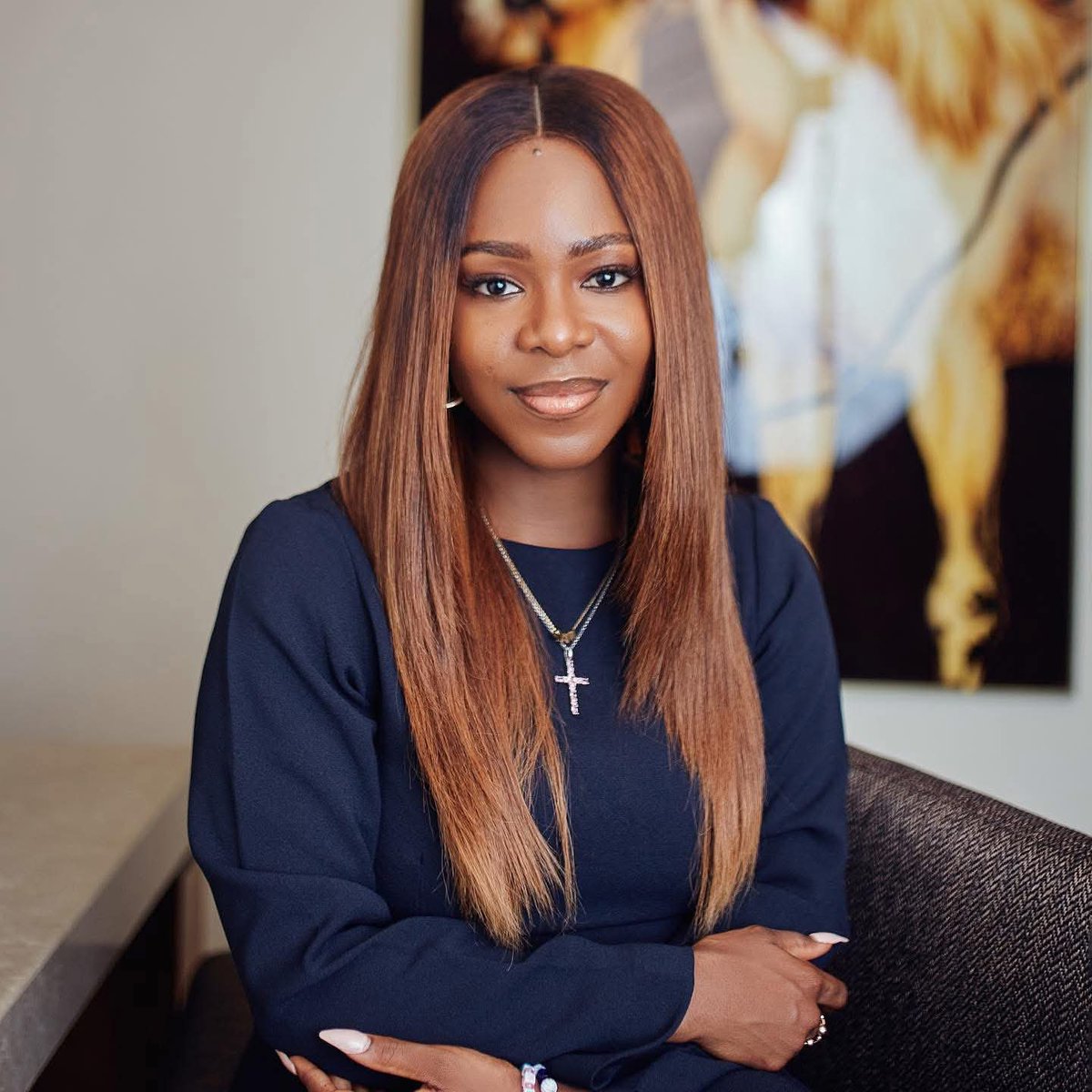
This is Dammy (Damilola) Feyide. She was in her 20s when she returned from the UK to Nigeria in 2017, ready to complete her NYSC and likely head back abroad. But today, the story is completely different.
What started as a one-year service term became a lifelong mission. One afternoon, a nudge from the Holy Spirit caused her to stop her car at a correctional center. She didn't see "criminals" or "street kids"; she saw a reflection of Jesus’ heart. She saw children with doctor-sized dreams living in paint-starved realities.
She started by giving money to children on the street and going to the correctional facility with gifts, but the Holy Spirit kept convincing her that there was more. That conviction led to the birth of Let It Shine Academy (LISA), a FREE boarding school for secondary school students in Lagos, Nigeria.
About 270 students are enrolled in her school. No tuition fee, no hostel fee, no feeding fee, no uniform fee, no textbook fee, everything is provided for free. A standard private secondary school for free in Lagos.
In a society where many children are pushed to the margins because of poverty, instability, family background, or lack of access, she chose to create a place where children can still dream, learn, grow, eat, create, think, and become who God wants them to be.
Today, LISA is a beacon of high-quality, completely free education. While the foundation is built on Christ’s love, the school is filled with children of all religions.
As I shared with my sisters Grow Her Faith Fellowship last week, faith isn’t a wall to keep people out; it’s a bridge that invites everyone in. When we serve, we don’t ask for a creed; we look for a need.
We often ask ourselves, "What is the meaning of life?" The answer isn't found in the degrees we earn or the titles we hold. The whole essence of man is to live for impact. We are stewards, not owners, of the grace we've been given. If your life doesn't leak hope into someone else’s darkness, are you truly living?
Impact isn't about having it all figured out. Dammy didn't have a background in education; she just had a "Yes" and a God who backs those He sends.
I love women who live beyond applause, who are not just building names, but building lives. Women who are not waiting for perfect conditions before they begin, women who understand that purpose is not always glamorous.
Dammy’s work reminds me again that impact is not about how many people know your name. It is about how many lives breathe better because you obeyed what was placed in your heart.
Education is one of the purest forms of impact. When you educate a child, you change their language, their exposure, their confidence, their options, their family story, and sometimes, the direction of an entire generation.
That is why I will always be drawn to people who build in this space, because clarity helps people see, education helps people rise, and impact helps people live better.
Dammy carries all three with conviction. I believe she deserves to be celebrated.
Today, I celebrate Damilola “Dammy” Feyide, for choosing to be a bridge between disadvantage and dignity, between “someone should do something” and “I will start where I am.”
May we never become so busy chasing visibility that we forget the beauty of living for impact, and may more women rise with the courage to build what they wish existed.
Let this be your stir to action: Stop waiting for the perfect timing or the full bank account. Go where the burden is, go where the heart breaks. Just as Dammy shows us, you won't know how deep the well of Grace is until you start pouring it out for others.
Dear Dammy, keep living purposefully and intentionally; the heavens are documenting your impact.
Tolu lope Ajayi
#impact #freeschool #nigeria #education #Bugatti
@DougNiv@financeinafrica I understand why: you aren't Nigerian. Let me explain: In Nigeria, many costs were historically passed to the government without consideration of how they would be paid. "It has oil" was the handwavey explanation used. They treated it like an infinite money glitch in video games.
EASY PLACES ARE FULL: What my Lebanese friend taught me about business in Nigeria
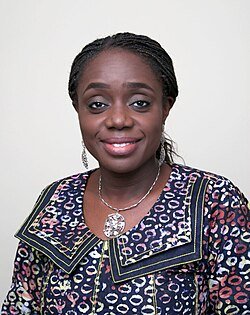
By Kemi Adeosun
Before you scroll off in anger: calm down. He is real. He has been in Nigeria longer than some of you reading this have been alive. His children go to school here. His grandchildren may well be buried here. The Lebanese community in Nigerian business is not a rumour, not a colonial hangover awaiting apology, and not going anywhere. They are woven into the fabric of commerce in this country. So pour yourself something cold and read on.
I will not name him — that was the price of the conversation, and I paid it gladly. As part of my work on Nidacity, I put together a board of advisers and concluded it would not be honest or representative without input from the Lebanese business community. So I assured him he would only ever be identified as ‘my Lebanese friend,’ and in exchange he gave me something rare: the kind of unhurried candour that only becomes available when a man is not managing his reputation. I had expected the usual litany: the generators, the customs officials, the phone calls from people whose names you never quite catch. I thought I knew what he was going to say. I was wrong.
Intentionality
His family did not end up in Nigeria by accident or desperation. They chose it. After careful study conducted over generations — cousins sent ahead like scouts, findings reported back, sectors analysed for structural need. The question was never “Is Nigeria easy?”
“We don’t come to easy places. Have you been to Lebanon?” he said. “Easy places are full. We look for places where there is need and where many are too fearful to take on.”
A conscious decision, renewed deliberately, to believe in the upside of a place that some investors treat as a risk footnote. Compare that to the Nigerian entrepreneurs I have encountered who entered sectors because they fell into them — because an official had briefly left a door open. Circumstantial businesses, built not on a view but on an accident. There is nothing wrong with opportunism. But it is not the same as intentionality, and in a market as volatile as Nigeria’s, the difference reveals itself quickly.
Preparation and Optimism — Held Together
I have watched enough foreign investors arrive in Nigeria with optimism, survive the first six months on momentum, and then — somewhere around the fourteenth week a container sat in Apapa, or a promised approval went quiet — curdle into bitterness. Undone not by a single disaster but by the accumulated weight of friction.
My friend’s answer was almost offhand. Before any member of his network opens a business in Nigeria, there is a period of what he called “mental loading” — an acceptance, in advance, of the specific costs Nigeria will impose. The generator will fail. The duty will change. The official will need to be managed. These are not surprises to be absorbed; they are variables to be budgeted.
“When it happens,” he said, “we are not shocked. Shocked people make bad decisions.”
But here is where it gets interesting. You might assume that a community which prepares for friction would develop a siege mentality. The opposite is true. The mental preparation does not produce pessimism — it liberates optimism. Because the difficulties have already been priced in, he is free to focus entirely on the upside.
“The problems here are the opportunities. Every broken thing is a business waiting to be built. We just have to decide we are staying long enough to build it.”
Two hundred million people with needs the formal economy has consistently failed to meet is not a crisis. It is an unserved market. Most people who fail in Nigeria fail not because Nigeria defeated them, but because they were surprised by the Nigeria that actually exists. Pre-acceptance of the cost is what turns friction from a shock into a schedule.
Nigeria Is Not Lebanon
Lebanon’s economy has contracted by more than 38 per cent since 2019. The pound has lost over 98 per cent of its value. Banks are effectively insolvent, having accumulated losses north of $72 billion, with depositors locked out of their own savings for years. The country defaulted on its sovereign debt in 2020 — the first time in its history. The economy that was $54 billion in 2018 was worth around $28 billion in 2024.
I asked him, as carefully as I could: is the loyalty to Nigeria strategic, or is it simply that going home is no longer an option?
“Nigeria is not our consolation prize. Lebanon happened to Lebanon because Lebanon had no size to absorb the shocks. Nigeria can always absorb the shock. That is the asset you people keep undervaluing.”
Lebanon’s commercial model depended on openness — the banking sector, tourism, remittances, regional transit. When those foundations cracked together, there was nothing structural underneath. Nigeria’s famous problems — its infrastructure gaps, its institutional friction — are also, viewed from the right angle, the moat. They keep out the faint-hearted and make the businesses built here difficult to displace. “Lebanon has no moat,” he said. “Anybody can come in and anybody can leave. That is why everybody left.”
The Money Never Goes to the Bank
Then I made the mistake of mentioning banks. His expression shifted in a way that only good manners prevented from becoming a laugh.
His community does not put its money in banks. Not as a cultural quirk but as a lesson paid for by people they knew personally — depositors who worked forty years and could not withdraw their own savings from a machine on the street. So they use banks as transaction rails, nothing more. The actual capital circulates within the network.
“We lend to each other. If my cousin needs capital, I give it to him. If I need to bridge a gap, someone gives it to me. We know each other. We know who is good for it.”
I told him Nigerians would recognise that — ajo, esusu, the thousand small arrangements by which money moves between people who trust each other more than they trust institutions. He shook his head gently. Correctively.
“You call it helping. We don’t see it that way. Helping is emotional. What we do is structural. If I put my money in a bank and the bank fails, I have nothing. If I put my money in my nephew and his business fails, I know where he lives. I know his father. That relationship is the security. The bank was never the security — it was just the place we pretended the security lived.”
The $72 billion locked behind Lebanese bank counters belonged largely to people who trusted the institution over the network. The people who kept their capital in the family, in the cousin’s trading account and the nephew’s warehouse, lost far less. Not because they were lucky. Because they had decided, long before the crisis, that trust was the only bank that does not fail.
This is not a piece about why foreigners understand Nigeria better than Nigerians do. Indeed my work interviewing Nigerian entrepreneurs suggests otherwise. There are Nigerians putting serious capital to work in Nigeria and making money. The Lebanese community did not invent discipline or patience or long-term thinking. What they have done is systematise it — intentionality over accident, preparation over surprise, the network over the institution, and a generational commitment that outlasts any single political weather change.
The good news is that what is transmitted can be learned. It is the decision, made in advance and renewed daily, to stay.
-Adeosun is a former Minister of Finance of the Federal Republic of Nigeria and former Commissioner for Finance of Ogun State. She is the founder of https://t.co/11EREMkIXS.
#KemKem
@Enimez You are wrong, local government should now create cottage industries (SMEs) to help boost our productivity. This should bring our purchasing power at par with local goods.
Gains from these SMEs should enable them provide socal services to their communities. So local govt it is.
@osunsinatolu The economy is looking for its equilibrium within a real competitive market economy. We are yet to get to our new marco base.
With a productive economy, the changes would have been felt faster. We now need to allocate more funds to create a cheaper credit system for production.
Parallel Government? I fail to see the threat.
Go ahead. Form your own National Assembly. Present and fund your own budgets.
While at it, conjure parallel governors and state assemblies. And do not be deterred - you can break ground and commission your own State House within the timeframe.
If Aso Rock carries no vacancy for the official residence of your counterfeit First Family, a valley will do.
Build your own ports. Control your own customs. Airports follow the same logic.
But this - this you must take more seriously than all else: form your own security architecture. Police. Armed Forces. At minimum, we can then jointly confront these blood-soaked terrorists who seem, curiously, to share a soft spot for the opposition.
So kindly proceed, brother. Form your parallel government.
Our prayers go with you - and warm regards to the one among you who has already talked himself into custody. It appears he won't be alone for too long.
We do not caution a child from manifesting leprosy, if he can bear the exile of the deep forest.
Good Evening, Severally.
@AppTayo@Montero1016 Please figure out the differences in ignorance, foolishness and stupidity. I hope this is ignorance. However if you honestly believe what you wrote, then this is stupidity.
A simple Google search could have prevented this statement. Politics aside, facts matter.
@DeeOneAyekooto To analyze a political situation, one needs to understand play(s) involved. American presidents pivot to international plays when in trouble domestically. Check his polls ranking. Greenland needs congressional approval, can he get it?
The Man Tinubu is a living legend…. Many may not understand now…. But history will remember him as one…
Next year is going to be very heated…. When the tax laws come into effect, Arewa North will swell and burst in anger… and one would wonder... why are they angry at a tax law that rewards hardworking people and regions.... what is the audacity that makes them believe they are entitled to exploit the south in the Name of Nigeria and who else besides Tinubu is bold enough to tackle this injustice that existed long before we were born......
The real foundation of Nigeria was built on exploitation of the south by the North… The amalgamation of 1914 was done to exploit the south for the North…. The South ran on a surplus while the North ran on a deficit… it was being financed directly from the British treasury….
The amalgamation made it possible for the South to pay for the deficit of the North…. Since 1914 till date, the country has been structured that way… for Arewa North to exploit the south. .. Arewa sees this as a form of Jizya tax conquest over the south.
At independence…. Major federal taxes came from corporation tax… mining and customs…. The North had no weight in federal revenues….
During he oil boom, most revenues came from crude oil… major beneficiaries were also the North…. They owned the oil wells… in the 1980s…. Arewa North took over the printing and distribution of currency… Babangida took the CBN from under the ministry of finance and handed it over to Arewa… the family that held it on trust was the Dasuki royal family… ( direct descendants of Usman Dan Fodio)… up until Jonathan’s presidency, the Dasuki family controlled the printing of bank notes in Nigeria…. They controlled the Nigeria printing and minting company
A new tax system in 1999 was designed to exploit the south and give major allocation from corporation taxes, mining, ports and crude to the North based on landmass and bogus census numbers.
Tinubu administration changed a big part of this reckless exploitation… hardworking businessmen with certain thresholds are exempted from paying taxes…. States where major business activities are going on can now retain more benefits for their states…. And regions that choose to keep their children on the streets as beggars while they wait for federal allocation can no longer act as false princes living on the sweat of others in the name of ‘One Nigeria’
This is what pains the North….. The sage called them a ‘slow but sure Deadweight on the South’…. They are upset that they will now be forced to work hard like the south to make their states productive or embrace poverty with no windfall from Abuja to finance lazy unproductive leadership.
That is what it is all about… Let us put our weight behind Tinubu… he is gradually building a functional country where no one is born to rule or exploit…. We are advocating for more tax laws that would liberate the crude oil in Niger Delta… Give the owners of oil their revenues…. It does not belong to all Nigerians.
@OurFavOnlineDoc No state should even call betting haram in the first place if we are to follow our constitution to the letter.
Every state in Nigeria is a secular state, we don't have any Islamic, Christianity e.t.c states, and no state has an official religion.
We need to call a spade a spade.
We are a special breed of people who pray to God to bring down the pharaohs,and when he brings them down to face their Karma,we treat them as victims,then rush to rescue them and crown them as our redeemers.Some people claiming to be witch hunted today were the ones who witch hunted others yesterday.Your prayers crushed them and now you are repacking them as your saviors.Thats why God doesn’t answer all prayers because you can’t handle the consequences.