@libdemdaisy Do not break the link - it acts as a price incentive for investment in renewables - which is what is needed longer term!
For the poorest in society, who need support, it should be done via the benefits system.
🚨 🚨 ‼️ 🔥 Channel 4 has uncovered that Nigel Farage has a county court judgment against him for almost £10,000.
A Reform UK spokesperson confirmed Farage was unaware of the judgment until Channel 4 brought it to his attention.
🔥 Another financial embarrassment layered on top of £5m Thai crypto donor saga, the £1.4m cash house questions, the shifting explanations, and the Parliamentary Standards inquiry.
This is the package. Dodgy money, dodgy judgments, zero transparency.
#ReformUK
While Farage pockets millions as a "reward" for Brexit, the rest of us are left with soaring energy bills, political chaos and a broken economy.
He only cares about himself and his wealthy donors. It is up to all of us to make sure he never becomes prime minister.
Rejoining the EU will deliver what Brexit failed to deliver
Life in Britain will improve as trade is freed up, food will become cheaper and more varied again. More opportunities for Brits to travel, work study across the EU - and our pets too will get their passports back.
People are saying that Nigel Farage has asked Elon Musk to ban people from X for sharing this clip of him attacking his crony Robert Jenrick.
Surely free speech champion Nigel Farage isn't that petty? But just in case, THIS is the video that you mustn't download or share
@Helen_Whately There a bloke in London,
three wives, multiple children (won’t say how many),
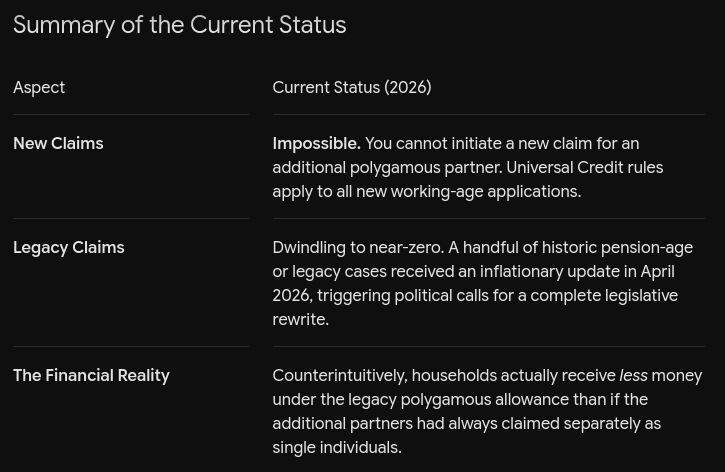
incredibly the taxpayer is giving him £115k/ year for life,
that’s after he’s caused so much damage in his neighbourhood
Disgrace
Recently moved to Oxfordshire in a vast house, from Downing Street
@Helen_Whately This is a lie. And you know it.
No-one in the UK can claim for a second wife, or any other wives.
This is why Tories are on the brink of extinction. Because we see your lies now.
@queens_parents 1 My 3 children’s school run was initially on foot, later by bus.
Family car use at weekends didn’t impact congestion like the rush hour does.
2 If 10% of commuters go by bike many roads would de-clog, like they do at half term.
3 delivery e-bikes use less fuel than cars/vans
@ToryVote_@KemiBadenoch The LibDems believe in the market - but not in the case of obvious monopolies like the odious water companies privatised by @Conservatives
When he resigned he said it was because he was being prevented from making the changes needed to bring down immigration.
He is now claiming that he made the changes that brought down immigration.
Both can’t be true.
The big city working class can no longer just go to the football on a whim.
.
But the big city spreadsheet class can just go to the Rugby League and have a massive double pint of industrial bitter at ten minutes notice if they live next door and it's sunny.
.
Broken Britain?
In a single afternoon on May 22, 1941, the Royal Navy lost two cruisers and a destroyer off the coast of Crete to German dive bombers. The fleet commander was urged to withdraw what was left.
His reply has been quoted ever since, but the situation that produced it is less well known. By the morning of the 22nd, the German airborne invasion of Crete was four days old and on the brink of failure. Of the seven thousand paratroopers Kurt Student had dropped on the first day, roughly half were already dead. The Germans had taken huge losses trying to capture Maleme airfield in the west of the island. Without an airfield, no reinforcements could land. Without reinforcements, the invasion would collapse.
What the Germans needed was a seaborne convoy of mountain troops, heavy weapons, and ammunition. Two such convoys were assembled in Greek ports and put to sea under Italian destroyer escort, hoping to slip across the Aegean to Crete.
The Royal Navy intercepted the first convoy on the night of May 21. In a confused action in the dark, British cruisers and destroyers tore through a fleet of small Greek caïques crammed with German soldiers. Roughly three hundred Germans drowned. The convoy was destroyed.
But by morning the Royal Navy was south of Crete in clear daylight, within range of the Luftwaffe's Fliegerkorps VIII, the most experienced and lethal dive-bomber force in the world. And the British ships were running low on anti-aircraft ammunition because they had spent most of it sinking the convoy.
The Stukas came in waves. The cruiser Gloucester took two direct hits and capsized, taking 722 men with her. The cruiser Fiji was hit by a single bomb that ruptured her hull. She sank slowly, with most of her crew getting off, but 241 men were lost. The destroyer Greyhound was bombed and went down in fifteen minutes. The battleships Warspite and Valiant were both damaged, Warspite badly enough that she had to go to the United States for repairs.
By nightfall on May 22, Admiral Andrew Cunningham, commanding the Mediterranean Fleet from Alexandria, was looking at a casualty list that included two cruisers, a destroyer, two damaged battleships, and roughly fifteen hundred dead British sailors. The army on Crete was asking for naval evacuation. The army on Crete also had thirty two thousand troops on it.
Cunningham's staff, looking at what the Luftwaffe had done in a single afternoon, urged him not to commit the rest of the fleet. He could not protect transports from Stukas in daylight. Anything he sent into the waters north of Crete would be sunk. The navy had taken enough.
Cunningham listened, and then he gave the order that is still quoted at Dartmouth Naval College.
"It takes the Navy three years to build a ship," he said. "It would take three hundred years to build a tradition. The evacuation will continue."
The fleet went back. Between May 28 and June 1, the Royal Navy evacuated 16,500 men from the south coast of Crete under continuous air attack. They lost three more cruisers and six more destroyers doing it. Thousands of British soldiers were left behind and became prisoners. But the navy did not abandon the army.
The German victory at Crete was so expensive that Hitler never authorized another major airborne operation for the rest of the war. The paratroopers had taken the island, but the airborne arm as a strategic weapon was effectively destroyed in the process.
Cunningham's decision was not a calculation about morale. It was a statement about what kind of institution the Royal Navy was, made in the moment when the institution was being tested. He was sixty years old. He had spent forty four years at sea. He understood, in a way that staff officers in London did not, that an institution that abandoned its soldiers in 1941 would still be remembered for it in 2041.
Three hundred years to build a tradition. Eighty five years ago today, the bill came due, and Cunningham paid it.