INSTEAD OF WATCHING AN HOUR OF NETFLIX TONIGHT.
This 1 hour Stanford lecture by Joel Peterson will teach you more about negotiation and getting what you want than most people learn in years.
Bookmark it and give it an hour, no matter what.
🗂️ Here’s the complete ⚗️DistillED series on Rosenshine’s Principles of Instruction — ten editions filled with practical insights, tools, and resources for evidence-informed teaching. Please share with colleagues and fellow educators in your network. Enjoy!
1. Daily Review 💭https://t.co/SLYmmMTzqN
2. Small Steps 👣https://t.co/Ix7ZT9Z1DI
3. Ask a Large Number of Questions 🗣️
https://t.co/Oim0iSV5yd
4. Provide Models for Difficult Tasks🗼
https://t.co/uPd8NXWQsj
5. Guide Student Practice 🪜
https://t.co/eybs3y3pm1
6. Check for Student Understanding ✅
https://t.co/zMLxATtOOb
7. Obtain a High Success Rate 📈
https://t.co/MvbZeJC2Ic
8. Provide Scaffolds for Difficult Tasks 🧱
https://t.co/smaH0pXe8O
9. Require and Monitor Independent Practice ✍️
https://t.co/S7UNIJb9I4
10. Weekly and Monthly Review 🗓️
https://t.co/vZDWMULRJp
Very promising study on how 5 rounds of repeated reading can scaffold at- and above-grade level content to build, fluency, stamina, and more:
https://t.co/JDkF5GMEO2
I would love to see this approach used with a knowledge-building curriculum, rather than random passages.
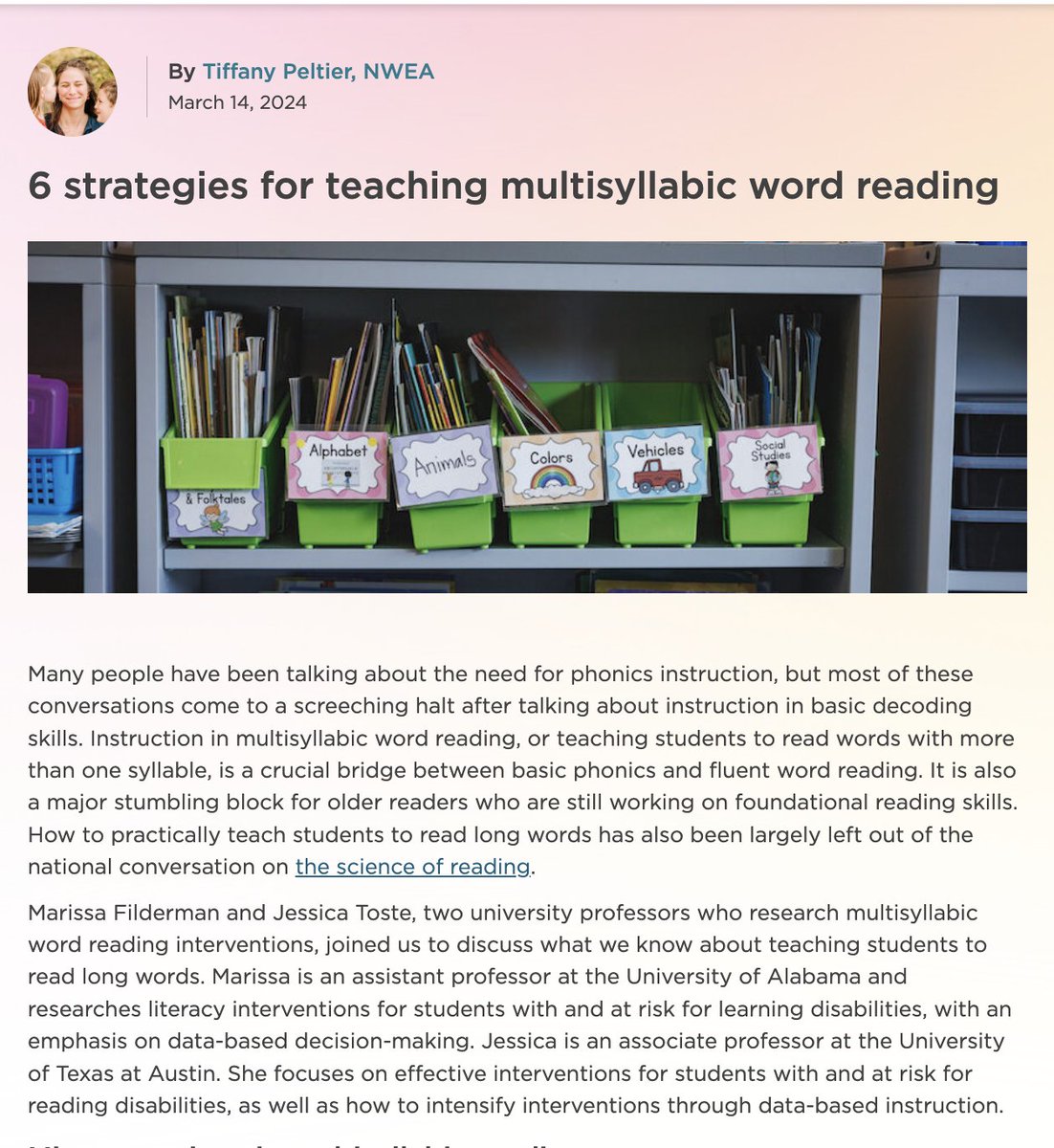
🚀 This October, we're laser-focused on multisyllabic word reading!
As we gear up, check out this post by Tiffany Peltier and NWEA featuring six practical strategies for making multisyllabic word reading instruction effective and engaging.
https://t.co/7wu8o9SoJT
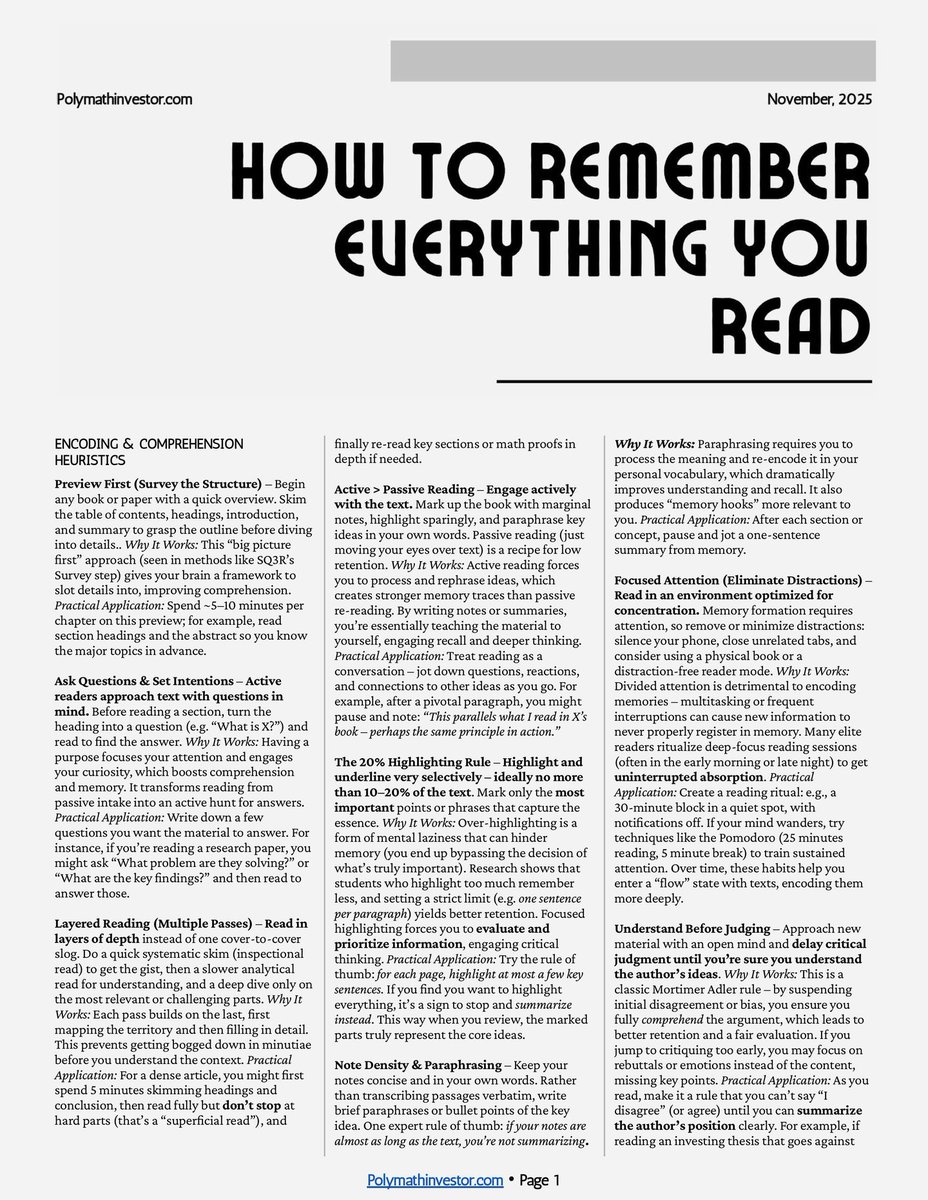
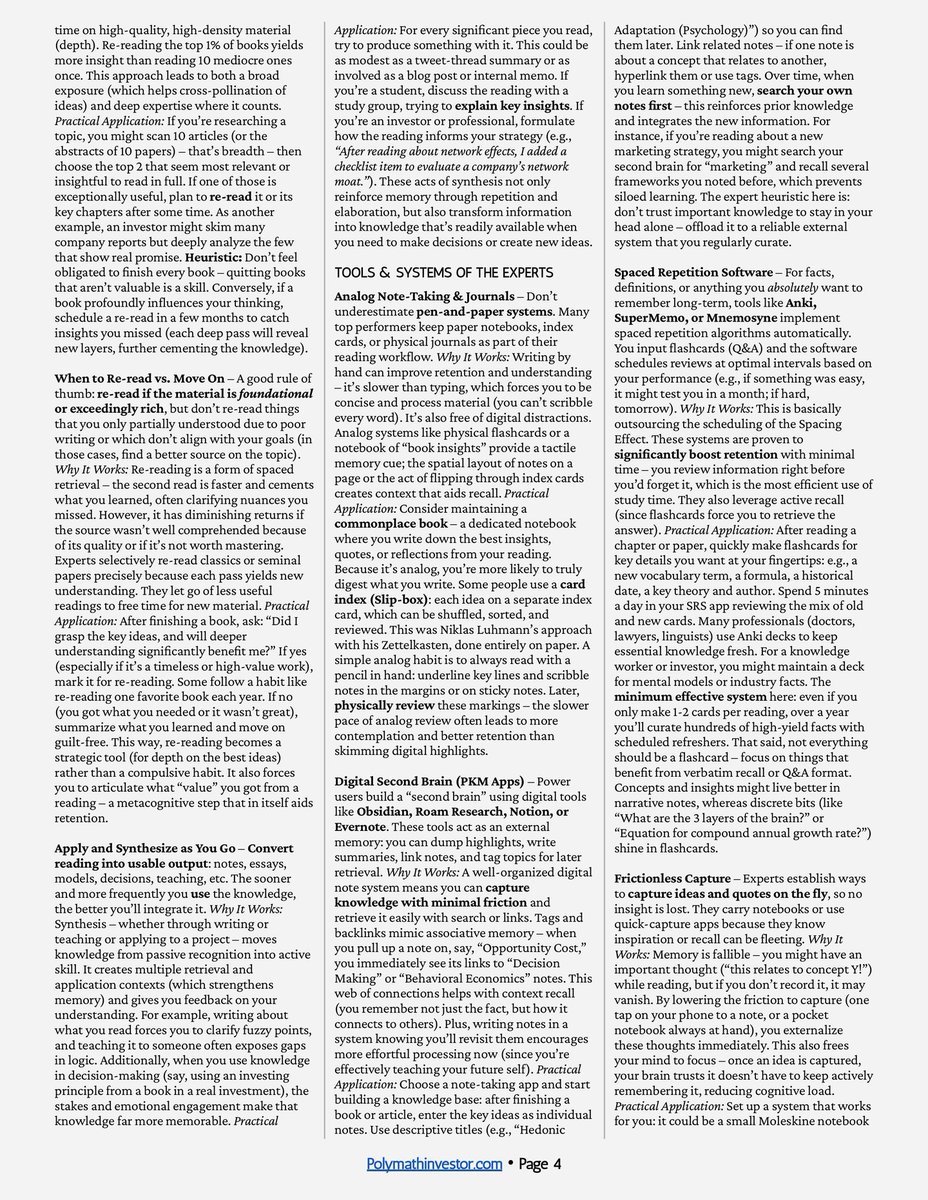
Everything school taught you about learning is wrong.
Highlighting and re-reading are a total waste of time.
True learning comes through practices like retrieval, elaboration, and interleaving.
9 habits that will help you learn like a true scholar:
Our democracy is not self-executing. It depends on us all as citizens, regardless of our political affiliations, to stand up and fight for the core values that have made this country the envy of the world.
There is no such thing as a "visual learner."
While students may have learning style *preferences* (e.g., visual vs. verbal), they do not actually learn better when receiving information via their preferred learning style.
This has been empirically tested over and over again. But despite having countless stakes driven through the heart, the myth continues to rise up from the grave like an unkillable zombie. It is the educational equivalent of astrology.
To get ahead of the a common follow-up confusion:
Q: "But math topic XYZ clicked for me when I saw an image/diagram!"
A: What you're thinking of is matching instructional design to the content, not matching teaching style to the learner.
Lots of math topics benefit from images/diagrams regardless of what the learner might claim is their learning style.
Yes, an image/diagram may help you learn a particular math topic. That doesn't mean you are a visual learner.
What it means is that the particular information being taught is effectively communicated through an image/diagram. For everybody, not just for you.
What you're experiencing is that you learn better when the instructional design is properly tailored to the information being taught.
From the bottom-left reference in the screenshot, "How Learning Happens" by @P_A_Kirschner and @C_Hendrick:
"How do you explain to a pupil in an auditory way how crimson red and brick red look? Or how do you kinaesthetically explain how a blackbird sings? In other words, it's actually the subject matter and the learning goal that should determine how one teaches and not a preference or a non-existent learning style."
🚨Retrieval practice is where I began my cognitive science journey. It has evolved into one of my most carefully planned and intentionally implemented practices. Here’s how I do it. https://t.co/c1Nqe2MmXg
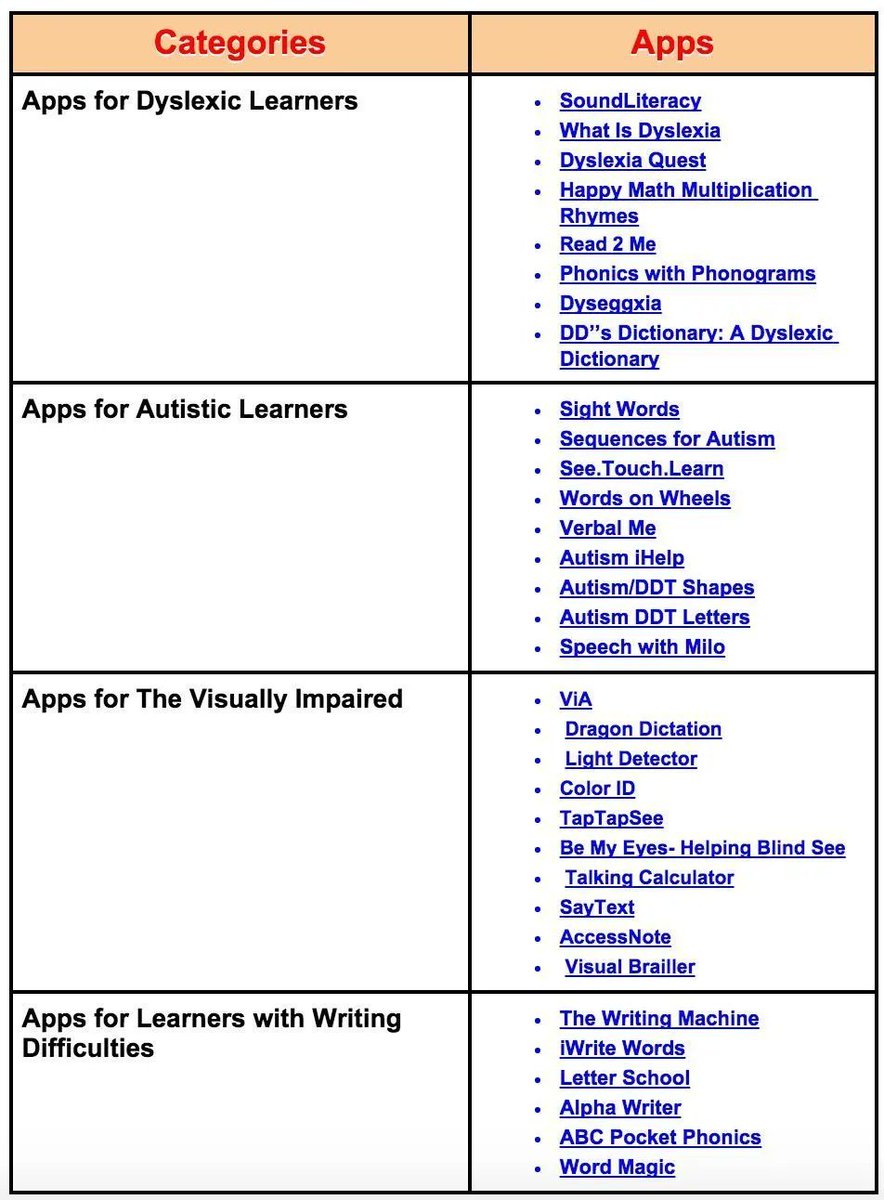
More useful apps - the language in the categories is a bit awkward but you find the name of the apps. The hyperlinks don't work but you can find them through https://t.co/nLSSNbmR8q or google.
Might be one of the best things I ever read on youth athletic development...this is coming from an Olympic lifting coach Don McCauley.
"I'm not going to spend a lot of time in this book writing about the developmental holes I believe most U.S. athletes have because of improper preparation for high level sports performance most have received. Let me state this. If you are a pre-teen or teenage athlete who competes in four or five sports per year or unending competitive seasons, you are in an abusive situation, not athletics. If you haven't taken or been given time to run through the woods or streets or alleys with your friends, jump up on rocks, jump rope, wrestle anyone that came by, skate backwards, play hop Scotch, bale hay or chop wood, climb trees, jump off a swing for height and distance, play dodge ball, climb over a fence, play Sandlot football and do back flips and cartwheels for fun, you haven't been properly prepared for high competition levels in true power sports." (Don McCauley: Power Trip)
How often do we talk about functions having useful outputs?
It's easy to "teach" functions without actually teaching what a function is for. This task might help.
#1001MathsBots
https://t.co/NiLafqbooy
MOST-READ! This year’s most popular ⚗️DistillED posts (so far):
🗣 THINKING ALOUD https://t.co/QT1CR6jKtX
📋 EXPLICIT INSTRUCTION https://t.co/KluBXXJWg1
⏳ WAIT TIME https://t.co/ZCQZEF0rkd
Three simple, effective ways to make learning stick. All with free resources to put evidence into action. Enjoy.