Have you been impacted by #pediatricstroke & want direct support? The IAPS Support Network provides support in a one-on-one format, away from social media. This group of peers is ready to share lived experiences and resources via phone, text, or email. https://t.co/3TI266PKr2
April is #StressAwarenessMonth and @StressMgtSoc have set up a 30 Day Challenge covering 'Regaining Connectivity, Certainty and Control'
Find out more here: https://t.co/PcL0KT8aUc
The Paediatric Neuropsychology Team will be joining the country at 11am today in a minutes silence for the key workers who have died from Covid-19. Thank you to all risking their lives to care for those in need. 👏👏
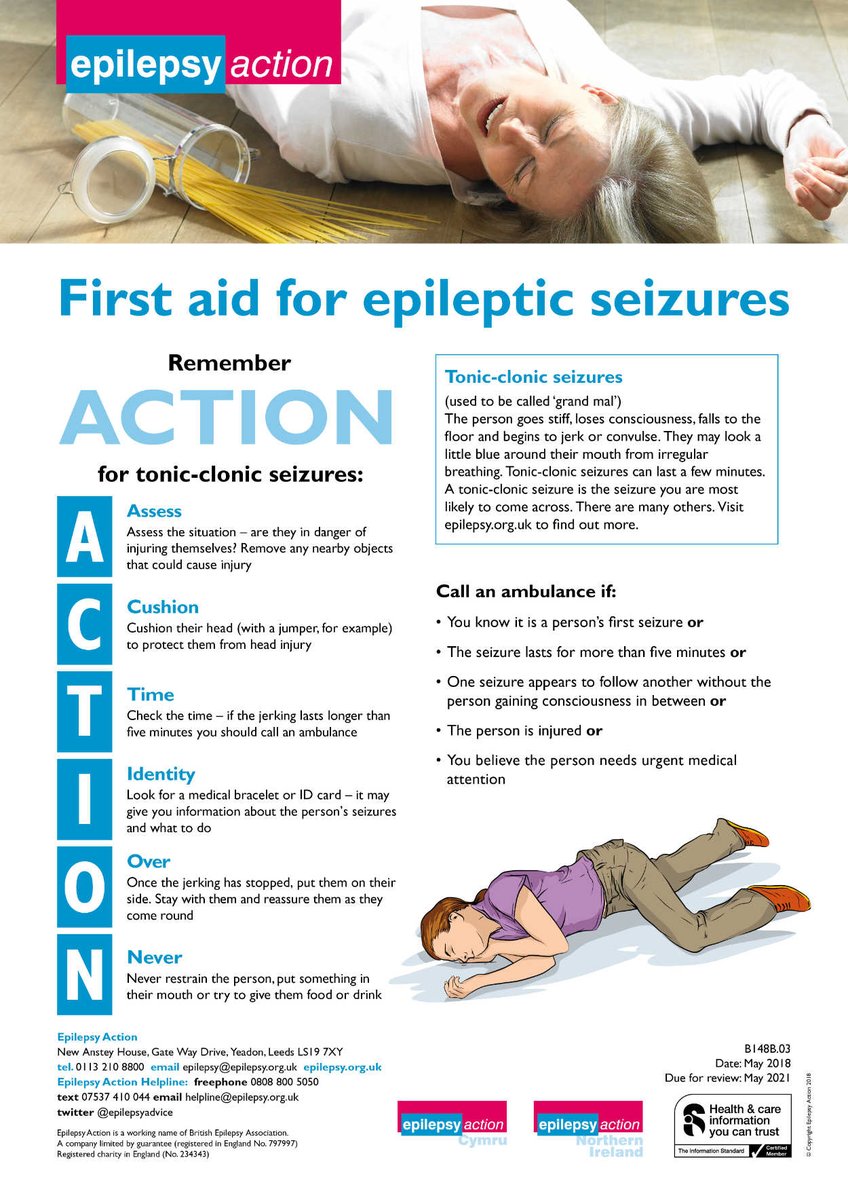
Yesterday was #EpilepsyAwarenessDay. 💜
During these uncertain times, it is particularly important we look after each other. Here's a first aid guide on tonic-clonic seizures to help.
For more information, visit https://t.co/HuiQDabbOD and https://t.co/8vchw3qLmu.
🎉🧠Dr Jenny Oddy of the @LTHpaedneurores team in collaboration with colleagues has published another paper! 🧠🎉
To read the paper which reviews interventions to improve outcomes in CYP with unresponsive wakefulness syndrome following ABI, see: https://t.co/yA0LMiIAyT
Our #FridayThoughts are to all the incredible young people who face epilepsy every day, who continue to be positive despite the challenges they face.
You guys are a true inspiration. Remember how strong and amazing you truly are!
#EpilepsyPositivity 💜
Fantastic and inspiring @SudepAction presentation at the Yorkshire Paediatric Epilepsy Clinical Network 2nd annual study day on 2nd December at Pinderfields Hospital.
For more information visit: https://t.co/A8VMzWpu09.
Epileptic seizures can occur due to excessive or synchronous neuronal activity in the brain.
There are many different types of epileptic seizures.
🧠 To find out more please follow the link below 🧠
https://t.co/EJemFz76ok
🧠 Brain Fact Friday 🧠
PANS (Paediatric Acute-onset Neuropsychiatric Syndrome) is a neuropsychiatric condition which is triggered by a misdirected immune response which results in an inflammation of a child's brain.
For more information, visit: https://t.co/SU0gNzNqlW
Children with a brain injury may seemingly recover but hidden challenges around word finding, sequencing, narrative skills and understanding ambiguous language can be deeply distressing without expert help, as @childrenstrust explain here
https://t.co/o72RIIGQLV
🧠 #Brain#FunFactFriday 📣
Deep Brain Stimulation (DBS) typically used in neurological disorders involving movement #Parkinsons#tremor#dystonia
https://t.co/W67XRPggSO
check out 'Light me up!' #DBS used to treat patients with traumatic brain injury https://t.co/7UAPZCSrv8
#PediatricStroke#FridayFact Did you know #stroke can happen to infants & unborn babies? See our fact sheet to learn what to look for...an early diagnosis can lead to a better outcome for these children. https://t.co/8dkgC3sFhv
If you're a carer for someone living with both epilepsy and a learning disability, our helpline team can support you with any questions or concerns you might have.
You can get in touch through social media, email, or freephone 0808 800 5050.
#LearningDisabilityWeek#LDWeek19
🎉🧠Dr Matthew Morrall of the @LTHPaedNeuroRes team in collaboration with colleagues at various centres has published another paper 🧠🎉
To read the paper which outlines the development of a cognitive test protocol for the SIOP Ependymoma II trial see: https://t.co/UXk6UsHHfP