Thread on $VSEC
The standalone business grew organic revenue 15% in Q1, well above the HSD industry rate. Due to transformative M&A, engine aftermarket is now >50% of revenue.
Comps trade >17.5x, at 17.5x my ‘28 EBITDA estimate of $500m we are looking at 60% upside | 20% IRR
Further, $VSEC hasn’t even begun to crack into the diesel Jet fuel powered engine market currently being used to power the AI ecosystem. Entry into the that market could provide an additional growth lever above my underwritten assumptions. Full write-up and price framing below:
New post: VSE Corp ($VSEC)
Pure-play aviation aftermarket compounder. 15% organic growth, margins inflecting from 16% to 20%+ due to M&A, and the stock is down 24% on deal digestion.
60% upside to ~$275 from $172 by YE 2028.
Full writeup 👇
https://t.co/wbY7m8M2i6
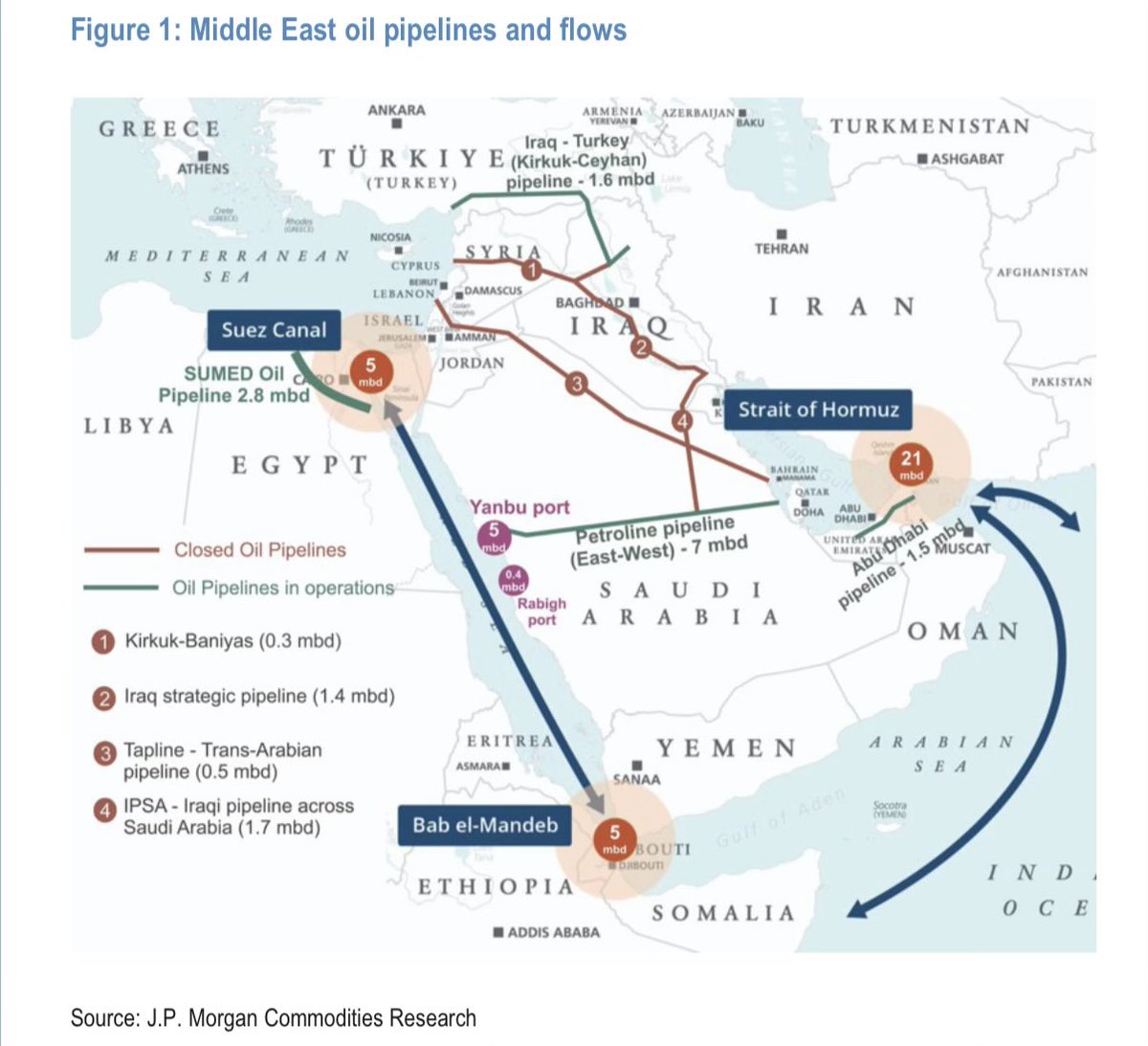
Our latest post in the normal spot. We detail our views on the Iran War after >10 hours of interviews with industry experts and a month of research. We see a few scenarios and 3 timely trades (for paid subscribers). Happy monitoring the situation!
Houthis entering the Iran conflict, moving the conflict to the Red Sea. JP Morgan commodities team says that 5m bpd additional is now at risk and this “could add $20/bbl to oil prices” basically overnight.
New post in the normal spot on a small-cap healthcare compounder: $PRVA
Asset-light physician enablement platform, no clinic capex, multi-payer, and a net-cash balance sheet. I think this can compound FCF per share >20% with a credible path to 70%+ upside
https://t.co/g3l9t5haFT
Great Q & clean setup for $PRVA. Stock likes it +10% to ~$25. Could have bought it @$21 last week.
‘26/‘27 setup:
$150m EBITDA in ‘26 +20% guide
$120m FCF 80% conv
>$185m EBITDA in ‘27
$150m FCF
$600m cash by YE ‘26 for M&A
At 25x / 30x FCF looking at $33.5 / $40 PTs w/o M&A
🦔 The EU is considering deploying its "Anti-Coercion Instrument" against the U.S. for the first time ever. This comes after Trump announced tariffs on eight European countries starting at 10% on Feb. 1 and rising to 25% by June 1, unless they agree to let the U.S. acquire Greenland.
The targeted countries: Denmark, Norway, Sweden, France, Germany, the U.K., the Netherlands, and Finland. These would stack on top of existing tariffs already at 10-15%.
The ACI is considered the EU's nuclear option. It could restrict U.S. suppliers from EU markets, block them from public contracts, impose export and import restrictions, and limit foreign direct investment. The EU is also reportedly contemplating €93 billion ($108 billion) in retaliatory tariffs. The European Parliament is expected to suspend work on last year's EU-U.S. trade deal.
My Take
Here's what makes this dangerous. The EU holds over $10 trillion in U.S. assets. $6 trillion in U.S. equities, $2 trillion in Treasuries, $2 trillion in corporate bonds, $225 billion in agency bonds. Deutsche Bank's global head of currency research is openly discussing the "weaponization of capital." That phrase alone tells you where this could go.
Most of these assets are held by private funds, not governments, so Europe can't simply order a selloff. But public sector funds like Norway's $2.1 trillion sovereign wealth fund could move. And as Deutsche Bank's Saravelos put it: "For all its military and economic strength, the US has one key weakness: it relies on others to pay its bills via large external deficits." If Europeans stop playing that part, the impact hits U.S. markets directly.
This probably doesn't escalate to financial warfare. But the fact that serious strategists are talking about it openly means it's now a tail risk that markets have to price. When allies start discussing selling your debt as leverage, the relationship has moved somewhere new.
Hedgie🤗
$VEEV is +12% from $218 -> $244 since we posted 3 days ago. Just made the full (paid) post free for all subscribers. Think there is a lot of re-rating to historic multiples left as the competitive narrative stabilizes. The new $2bn buyback helps too!
https://t.co/8UYnF0QIKy