Learning Designer|Scaling inclusive learning with a dash of social awareness|Storyboarding pro|Content Creator|Painting 🎨|Badminton🏸 battler|Sylvanist 🌲 🌴☘️
@cmohry@sumitamisra
मैं अपना पिछला अनुरोध फिर से साझा कर रही हूँ।
आशा है कि संबंधित अधिकारी इस मामले में नियमों के अनुसार जल्द उचित निर्णय लेंगे।
पूरी जानकारी संलग्न वीडियो में है। 🙏
It has been 8 months, and my Father's land mutation in Ambala Cantt is still pending.
Even after a formal memo from higher authorities, the concerned Anuj Patwari continues to delay the process by repeatedly asking me to “come tomorrow,” without providing any written reason or timeline.
This is not a delay. This is harassment.
@anilvijminister@ambala_dc1@cmohry
I request your urgent intervention.
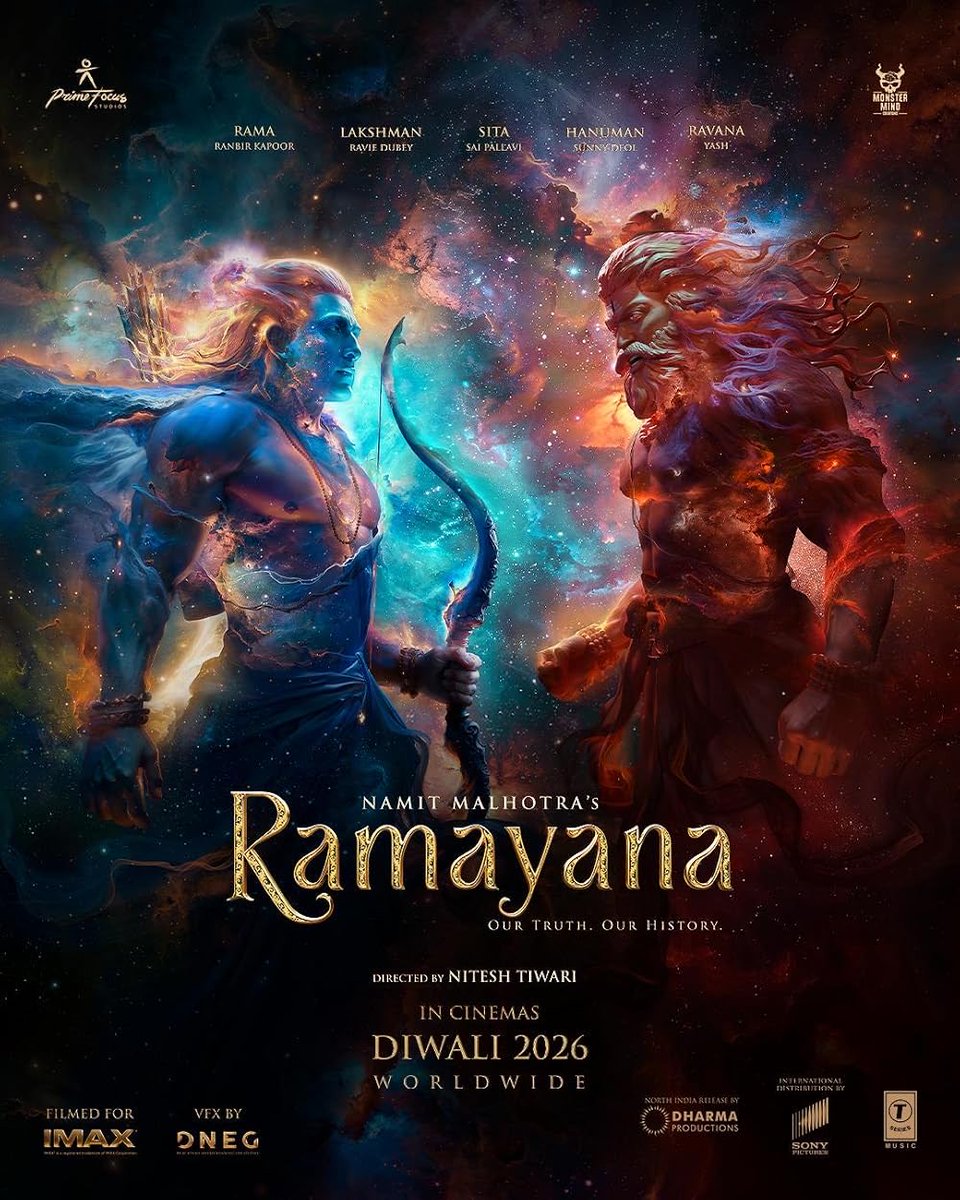
With Nitesh Tiwari’s Ramayana reaching audiences in countries like China, Japan, South Korea and Russia, I am concerned about young minds who may be watching our Indian epics for the first time.
From Mata Sita being shown as a warrior to changes in the portrayal of Ravana and Shurpanakha, along with the dialogues, costumes and music, several choices have raised serious questions. The filmmakers may refer to other versions of the Ramayana to explain these changes, but that does not mean every change is supported by scripture.
What concerns me even more is how Shri Rama’s character is presented. He is known as Maryada Purushottama not just because he remained calm during difficult times, but because of his kindness, sacrifices, sense of duty and love for his people. Showing him as serious all the time can take away the warmth and emotions that make his character so special. Even the love of Ayodhya’s people for Shri Rama becomes more meaningful when we see the bond he shared with them.
Beautiful visuals cannot make up for a rushed story, weak emotional connections or too much focus on other characters’ backstories. The Ramayana is not just about great battles and powerful characters. It teaches us about love, family, duty, sacrifice and the choices we make in difficult situations.
For people outside India who may know little about the Ramayana, this film could become their first understanding of our culture and beliefs. That is why it is important to clearly separate what our scriptures actually say from what filmmakers choose to add or change.
The real success of Ramayana should not be measured by how grand it looks on international screens, but by how well it helps people understand why Shri Rama is respected and why his story continues to inspire generations.
Jai Shree Ram 🙏🏻🙏🏻
#RamayanaPart1 #RamayanaMovie
Was Mata Sita really portrayed as a warrior in the original Ramayana?
The Adbhuta Ramayana depicts Sita as a fierce manifestation of Mahakali who destroys the thousand-headed Ravana. Although this Sanskrit text exists, its precise date and authorship remain historically unverified. Scholars generally consider it a later Ramayana tradition.
In contrast, the Valmiki Ramayana, traditionally attributed to Maharishi Valmiki and revered as the Adi Kavya, is the earliest surviving complete Sanskrit account of Rama’s story, supported by extensive manuscript scholarship.
And what does Valmiki’s Ramayana actually describe?
Mata Sita as a woman of extraordinary courage, wisdom, dignity and unwavering Dharma. But nowhere does it portray her as a combat-trained princess fighting battles or defeating Ravana. It is Shri Rama who defeats Ravana.
The Adbhuta Ramayana celebrates Sita’s divine Shakti. There is a fundamental difference between divine manifestation and military combat.
Modern interpretations are free to explore Sita’s character creatively, but they should not be presented as faithful representations of Valmiki’s original narrative.
Potraying Mata Sita as a combat-trained warrior is a creative reinterpretation, not a portrayal established by the Valmiki Ramayana. Citing the Adbhuta Ramayana does not change what Valmiki’s text actually says. Creative liberty is acceptable; misrepresenting its scriptural basis is not.
My concern has never been about children seeing Mata Sita as powerful, because her strength has always been an essential part of her character. What concerns me is portraying her as a military-trained warrior without explaining the scriptural basis, which could leave young audiences questioning why she did not fight Ravana during her abduction, why she remained in captivity and why Shri Rama had to wage a war to rescue her. Such portrayals can create confusion about her decisions and the deeper meaning of the epic, especially among children encountering the Ramayana for the first time. Mata Sita’s greatness lies in her courage, wisdom, dignity and unwavering commitment to dharma, and her strength does not need to be redefined through battlefield combat to make her relevant to today’s generation.
@KTGupta3 Ofcourse no doubt about it …she was Shatarani , courageous, intelligent, emotionally string woman whose strength is expressed through her decisions, moral convictions and resistance to injustice….
Yes adapted from various sources but Director must know what they should not destroy the ethnicity of our scriptures… these versions were written later by various authors as per their tradition and interpretation and what they want to convey to their communities….and accordingly they make changes…
You have raised a very important point, and this is exactly what concerns me too. When a film spends so much time building Ravana’s character but fails to give equal depth to Shri Rama’s life, compassion and connection with ordinary people, it risks missing the very essence of the Ramayana….
Bala Kanda, Sarga 66, Verse 26:
यद्यस्य धनुषो रामः कुर्यादारोपणं मुने।
सुतामयोनिजां सीतां दद्यां दाशरथेरहम्॥
Which means King Janaka declares that if Rama can lift and string the bow, he will give his daughter Sita to him in marriage.
Bala Kanda, Sarga 67:
Shri Rama lifts, strings and breaks Shiva's bow.
And question is raised against feminist because you think all 300 versions are correct!!!!
Also, Valmiki Ramayan was written by Maharishi Valmiki the Contemporary of Shri Ram whereas the one you are talking about is re-authored version from 16th century. You must know every author pours their way of understanding and interpretations….so question is not about feminism ..it’s about what kind cultural roots are we building for future generations…
There is derived version of Valmiki Ramayana that is Adbhuta Ramayana that shows Maa Sita as Maa Kali who killed Ravana instead of Rama where it is extracted version and who has written …no one knows …infact this book came into existence in 1917 …post which Amish Tripathi wrote a book on her in 2017 as Warrior of Mithila … these are just fictions written by authors not proved facts…
@pjn55527 Yes!!!! Specially in the era where everything is glorified and everything is accessible for our children through the world of internet but they make their choice what to read and what not to…
You are looking at the film from your perspective, while I am looking at it through the lens of our spiritual and cultural values, which are already losing their place in younger generations.
My concern is not how much screen time Ravana gets, but how his character is presented and what impression it leaves on young minds. There is a difference between explaining a villain’s story and glorifying him. Imagine a generation growing up admiring Ravana as its hero while failing to understand why Shri Rama is revered.
Cinema has the power to shape perceptions, especially among children who may never have read the original epic. If distorted portrayals become their first introduction to the Ramayana, those impressions may stay with them for years.
Today is Amla Navami, also known as Akshaya Navami! 🌿🙏
Have you ever wondered why Indian culture considers a tree worthy of worship?
Celebrated on Kartik Shukla Navami, this sacred occasion honours the Amla tree (Indian gooseberry), traditionally associated with Lord Vishnu. Devotees offer water, prayers and perform circumambulation around the tree.
Akshaya means “that which does not diminish,” reflecting the belief that acts of devotion and charity performed on this day carry enduring spiritual merit.
The significance of this tradition becomes even more meaningful when we consider our relationship with nature.
Sadhguru describes trees as our closest relatives, reminding us that the air we breathe, the food we eat and the very substance of our bodies are inseparable from the natural world.
Seen in this light, worshipping a tree is not merely an expression of religious faith. It can also be a conscious acknowledgement of the life that sustains our own.
The Amla tree holds a special place in this relationship. Its fruit has been valued for generations in Ayurveda and Indian food traditions, while its sacred association reflects the reverence Indian culture has long held for nature.
Happy Amla Navami! 🌿🙏
@cmohry@sumitamisra
मैं अपना पिछला अनुरोध फिर से साझा कर रही हूँ।
आशा है कि संबंधित अधिकारी इस मामले में नियमों के अनुसार जल्द उचित निर्णय लेंगे।
पूरी जानकारी संलग्न वीडियो में है। 🙏
It has been 8 months, and my Father's land mutation in Ambala Cantt is still pending.
Even after a formal memo from higher authorities, the concerned Anuj Patwari continues to delay the process by repeatedly asking me to “come tomorrow,” without providing any written reason or timeline.
This is not a delay. This is harassment.
@anilvijminister@ambala_dc1@cmohry
I request your urgent intervention.
Shiva Shiva Shiva 🙏
I have seen pictures of Mahadeva at @ishafoundation.
But as I reached there, I felt so peaceful.
Because if you see, Mahadev look so calm.
I took my own time to grasp the essence of it.
Greenery everywhere, full of wind. Have been informed that @SadhguruJV got the plantation done around the area.
Thanks to @gargiuvacha ji for inviting me 🙏