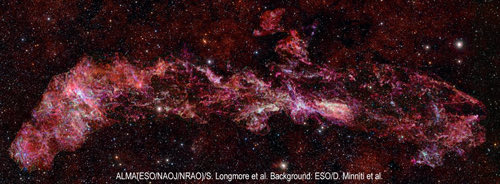
En el centro de la Vía Láctea existe una maraña de filamentos gigantes de gas frío
Laura Colzi (CAB) nos cuenta cómo el radiotelescopio ALMA ha revelado la química oculta del corazón de nuestra galaxia.
Podcast Hablando con Científicos https://t.co/ekTKroYbTa @cienciaes@L_Colzi
🚀🏆 El 17 de marzo participé en la ceremonia de entrega de las #becas de doctorado y posdoctorado de la @FundlaCaixa del 2025. Un reconocimiento a 💯 @BecariosFLC que buscamos cambiar el futuro que viene.
1/📣¡Es el día! Ya está todo listo para la ceremonia de entrega de #Becas de investigación 2025 de la @FundlaCaixa.
Hoy celebramos el talento que abre puertas y oportunidades y nos acerca a un nuevo mundo por descubrir. 🌍
🔴Sigue este hilo para conocer los momentos más destacados: 👇
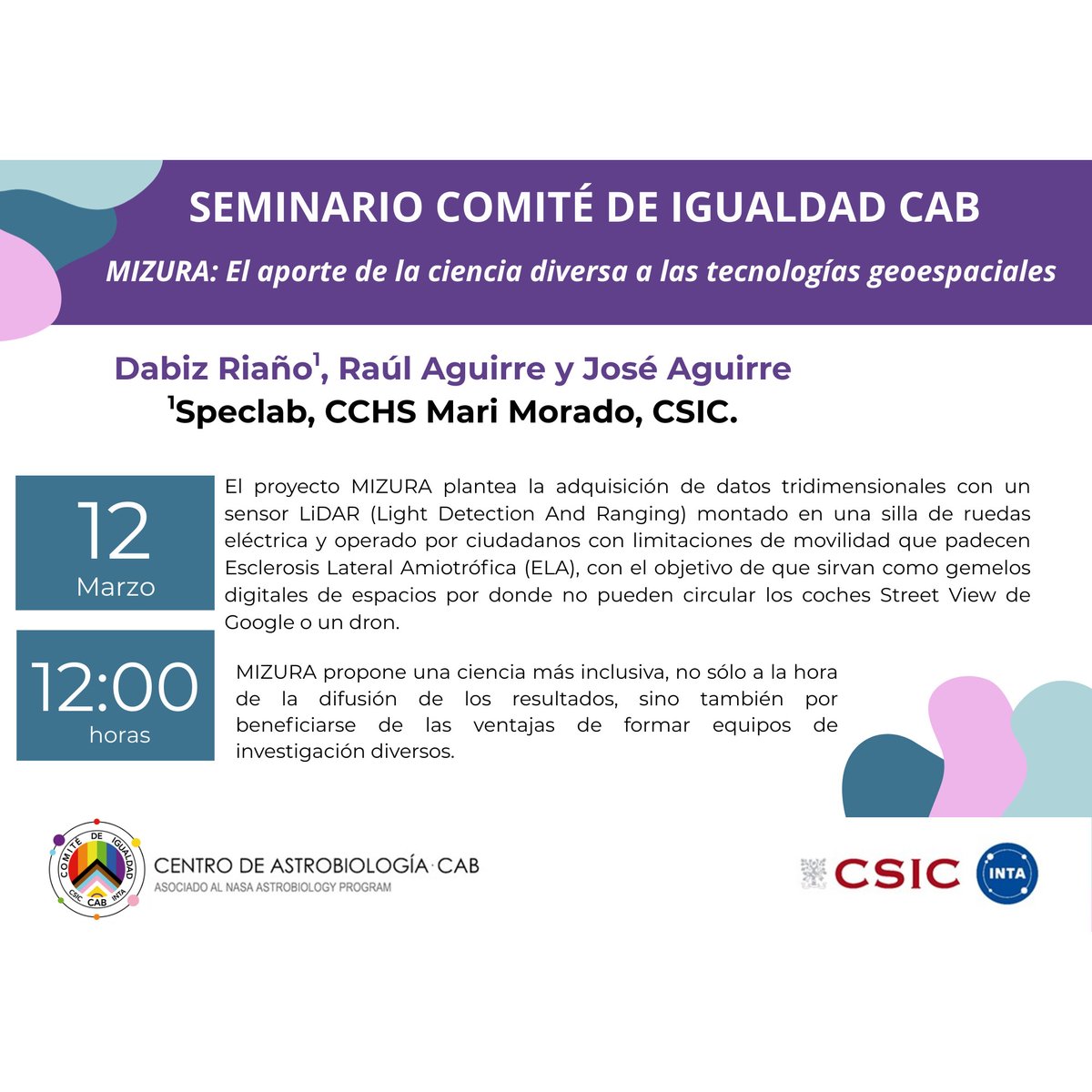
SEMINARIO DEL COMITE DE IGUALDAD DEL CAB:
MIZURA: El aporte de la ciencia diversa a las tecnologías geoespaciales.
Dabiz Riaño', RaúI Aguirre y José Aguirre
'Speclab, CCHS Mari Morado, CSIC.
A new study has provided compelling evidence that Earth, shortly after its formation, was initially dry and lifeless, lacking the essential building blocks for life, such as water and organic compounds.
Using precise measurements of the radioactive decay of manganese-53 into chromium-53 in meteorites and terrestrial rocks, the researchers determined that Earth's basic chemical composition was established within roughly three million years after the Solar System formed.
This finding supports the Giant Impact Hypothesis: Earth’s Moon formed when a Mars-sized body, dubbed Theia, collided with our planet about 4.5 billion years ago.
Crucially, Theia appears to have originated farther out in the Solar System and carried volatile elements, including water and carbon-rich compounds, that Earth lacked at the time.
Therefore, it seems that Earth’s habitability, and ultimately the emergence of life, was not a straightforward outcome of gradual development but rather hinged on this dramatic, chance impact.
👉 https://t.co/nAMjae8yYX
1/ 🚀 It’s time to take the lead and bet on your future.
We’re looking for 4⃣0⃣ researchers ready to tackle big STEM challenges in Spain or Portugal.
Apply now for a postdoctoral Junior Leader #fellowships.
🗓️ Open until 25/09.⬇️
https://t.co/wxzwZZEXdE
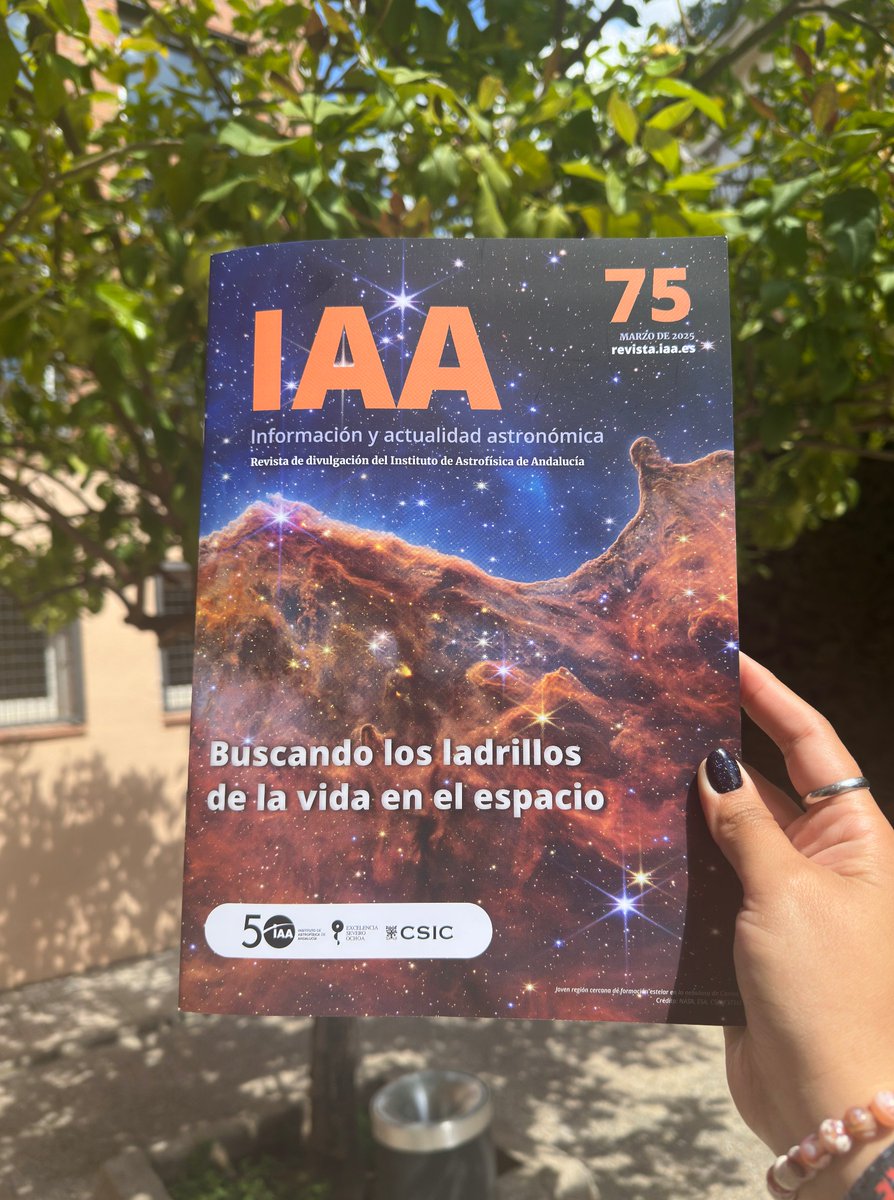
Ya tenemos en el centro el número 75 de nuestra Revista IAA 🥳🥳
👉Podéis adquirir una copia física en el centro o leerlo en la web
🔗 https://t.co/qXflih6ZS6
🚀 Discovery of dimethyl sulfide (DMS) in the interstellar medium: Is it a good biosignature? New press release from @C_Astrobiologia@CSIC with insights from @ryvendel
🔗 https://t.co/nG5168yprG
📢 We are thrilled to present you the #laCaixaFoundFellows selected in the Postdoctoral Junior Leader 2025 call!
40 researchers ready to lead the next step in their research career. How far will they go? 🚀
Meet them!
[1/5] 👇
Ayer, dia 11 de Febrero de 2025, celebramos en el @C_Astrobiologia el dia de la Mujer y la Niña en la Ciencia. Con tal motivo la Agencia EFE publicó
https://t.co/VT1wW2Snul con Ester Lazaro y Laura Colzi
Ha sido un placer ser entrevistada por EFE y hablar del rol de las las mujeres en la ciencia (y no solo). 👩💻👩🔬👩🚀🌌It was a pleasure to be interviewed by EFE to talk about the role of women in science (and not only). #WomenInScience#11febbraio#11FebreroESP
🚨NEW RESULT!🚨 Check out our new paper: Colzi et al. (2024), A&A in press, arXiv:2408.17141
@L_Colzi@MiguelSanzNovo@ryvendel
We have found for the first time the presence of a candidate prestellar cluster towards G+0.693-0.027 in the Galactic centre!
https://t.co/rLpZyqZkk9
En mi grupo estamos buscando un candidato/a para realizar el doctorado con un contrato FPI asociado al proyecto "Explorando los límites entre la extinción y la adaptación en replicadores experimentales". Los interesados no dudéis en escribirme ([email protected])
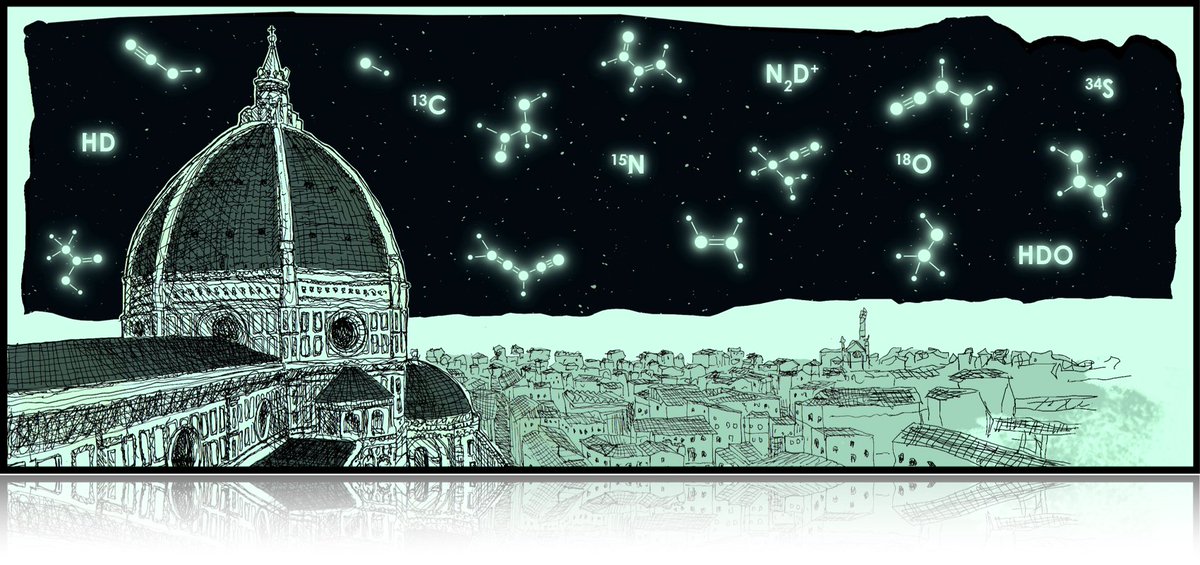
I am pleased to announce the second edition of the conference "Fractionation of isotopes in space II: from the Solar System to galaxies" that will be held on November 4-7 2024 in Florence, Italy.
Submit an abstract now: https://t.co/OsclIrG0Ns
I am pleased to announce the second edition of the conference "Fractionation of isotopes in space II: from the Solar System to galaxies" that will be held on November 4-7 2024 in Florence, Italy.
Submit an abstract now: https://t.co/OsclIrG0Ns
NEXT EAI SEMINAR
"The Pathway to Prebiotic Chemistry: molecular precursors from space"
Víctor M. Rivilla
Centro de Astrobiología (CAB, CSIC-INTA), Madrid, Spain
Tuesday, 7th May 16:00 CEST (UTC + 02:00)
Trailer: https://t.co/4peMNLQIxz
Zoom: https://t.co/2FdPtxQOZs
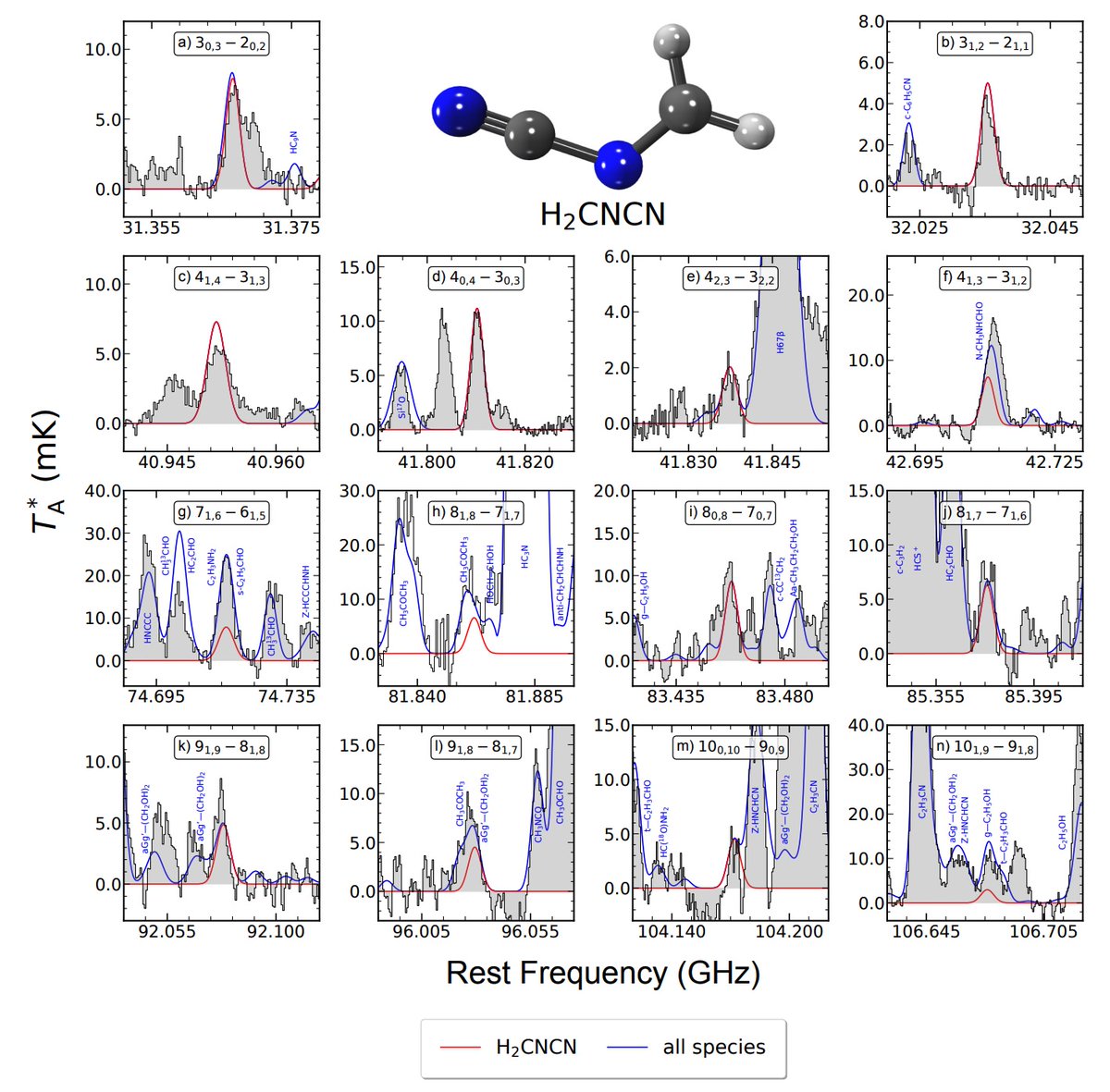
🚨NEW RESULT!🚨 In a recent work led by @DavidSAstro99 we have detected for the first time in space the molecule H2CNCN (N-cyanomethanimine), the stable dimer of HCN of highest energy, and the most complex interstellar molecule containing the prebiotically relevant NCN backbone.