🎉 Congrats to Ege Kavalali, who has been elected a Fellow of the @aaas. He was recognized for his contributions to understanding synaptic signaling and neurotransmission in the central nervous system. Join us in congratulating him! 👉 https://t.co/DHKYGip66D
ORIENTAL MEVO trial shows a benefit of EVT but the devil is in the details. The benefit was seen those with NIHSS 8 or more. Note that M3 occlusions did not benefit from EVT. #ISC26
Wondering what’s been going on in the Music Cognition Lab? Check out our latest newsletter! Community engagement updates, research studies for all ages, and even an end of year matching gift opportunity! 🎵🎉 https://t.co/WzkazMeOcb
#MondayTip
📊Pooled INTERACT data
✅Intensive BP lowering improves recovery in ICH
⏱️When started <3h (cutoff: 2.6h)➡️reduces haematoma growth
☝️Greatest benefit in mild–moderate ICH (ICH score)
🚨Early treatment improves outcomes👉supports CODE-ICH systems & future trial design
Today, the New England Journal of Medicine published what may be a landmark moment: doctors used customized gene editing inside a living baby to treat a deadly genetic disease called carbamoyl-phosphate synthetase 1 (CPS1) deficiency. Is it time to prepare for a world where we don’t just treat genetic diseases, we rewrite their story? Will gene editing change the future of medicine?
Key Points for the Public:
- Think of it as the first real-life genetic fire rescue; editing a baby’s DNA to prevent brain damage and death.
- They used a tool called base editing, that is considered a precise cousin of CRISPR.
- The authors corrected a disease-causing mutation in the liver using lipid nanoparticles.
- You may recognize lipid nanoparticles as the same delivery technology used in mRNA COVID vaccines.
- Their treatment was "tailor-made for a single patient."
- The personalized gene-editing drug called k-abe was made in under 6 months (incredible!).
- The single infant they used it on had a rare and fatal genetic disorder.
- So far, the treatment has been safe and effective though followup has not been very long.
- The infant tolerated more protein, required fewer medications, and recovered from infections without ammonia spikes (known to be bad for the brain).
My take: This isn’t science fiction anymore, gene editing can be performed in real-time. Gene editing is moving beyond sickle cell. Lipid nanoparticle delivery facilitates re-dosing, making it safer and more flexible. What does this mean for the future? Neurogenetic diseases could be next in line? Could we start moving into rare brain conditions in children or even adult-onset disorders like Huntington’s or inherited forms of Parkinson’s? What was cool about this study was moving from diagnosis to therapy, in just months. The platforms like this one seem to be scalable. Many diseases could share delivery systems with only the guiding RNA changing. Ethics and oversight will be critical. Safety, long-term monitoring, and clear boundaries (e.g., no germline edits) must be built into the future of this therapy. Could this change the arc of progression for many diseases? We hope this technology and approach will move from lethal newborn disorders to slowly progressive neurologic conditions. Has gene editing moved past the dream stage? Is it time to prepare for a world where we don’t just treat genetic diseases, we rewrite their story? https://t.co/1jHOp6ziiB #GeneEditing #CRISPR #Neurology #RareDisease #BaseEditing #PrecisionMedicine #NEJM #Parkinsons #Neurogenetics @ParkinsonDotOrg@FixelInstitute
Another great @VUMCDiscoveries Stroke Symposium @schrag_matthew !!! Dr. Eliza Miller was an amazing speaker and I learned so much more about stroke in pregnancy ! Shoutout to my mentee on his awesome poster!
I am honored + humbled to have been elected as a 2024 Fellow of the American Association for the Advancement of Science. @AAAS Fellows are distinguished scientists, engineers, + innovators across the globe. It is a privilege be part of such an illustrious group.
I am honored + humbled to have been elected as a 2024 Fellow of the American Association for the Advancement of Science. @AAAS Fellows are distinguished scientists, engineers, + innovators across the globe. It is a privilege be part of such an illustrious group.
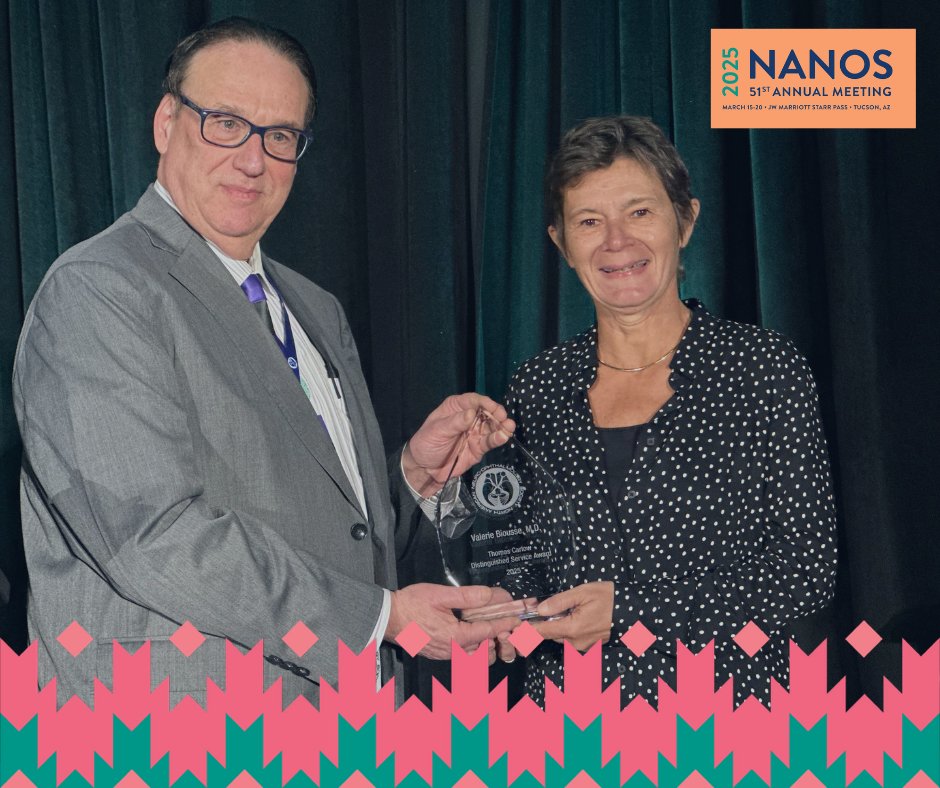
Today at NANOS 2025, NANOS Board Member, Larry Frohman, MD presented the prestigious Thomas Carlow Distinguished Service Award to the incomparable (and legendary) Valerie Biousse, MD to a standing ovation.
#nanos#nanos2025#nanosconnect#nanosannualmeeting
It is with great pleasure that we anoint another chair from our division--please join us in congratulating *THE* Pooja Khatri on her new position as Chair of Neurology at Yale! Thank u for everything that u continue to do for us and for our patients!!! 🥳🥰
Minimally Invasive Surgery for Spontaneous ICH: Meta‐Analysis of High‐Quality Randomized Clinical Trials
Over 3000 pts in 14 high quality trials
MIS wins!
Nice work @chriskellnerMD and all!
https://t.co/vZCe9ccSSW
Does prior treatment with IV thrombolysis lead to improved outcome after stroke #thrombectomy?
Yes! Says this big meta-analysis.
The authors said “we did not establish non-inferiority” of prior lysis
I think that means prior lysis is better 🤔
https://t.co/Y2rfybOXg3
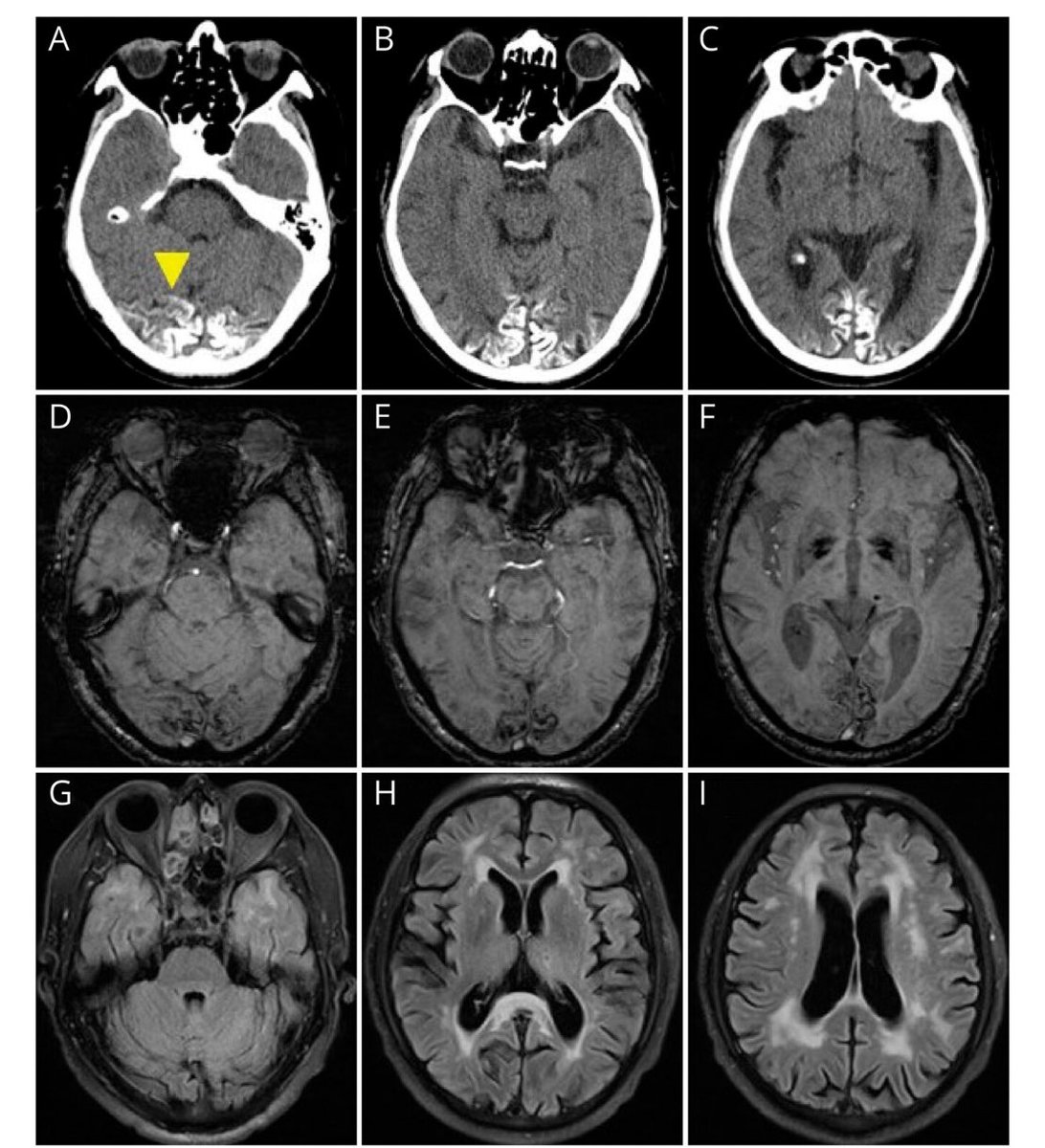
Have you ever seen a case of autosomal dominant Alzheimer’s w/ ribbon like cortical calcifications? Wang and colleagues show us a case in @GreenJournal.
Key Points:
- The person had ‘recurrent headaches for 20 years, walking instability for 8 years, and memory loss and personality changes for 5 years.’
- 2 years ago, had postural tremors.
- Mini-Mental State Examination = 18, Montreal Cognitive Assessment = 8
- Calcifications in the bilateral occipital cortex and also presence of symmetrical white matter hyperintensities on FLAIR imaging.
-There was a c.A2059C (p.K687Q) heterozygous pathogenic variant in the APP gene.
- The finding of ‘ribbon’ cortical calcifications on CT was the imaging characteristic the authors sought to share!
https://t.co/r6uJHpR9Sj #alzheimer