🧠 Paving the way for new approaches to brain regeneration!
What if the brain could repair itself in new ways?
🔬 Advancing research. Fostering collaboration. Exploring new possibilities for brain repair.
Discover more about our work at https://t.co/56uo39kWh0
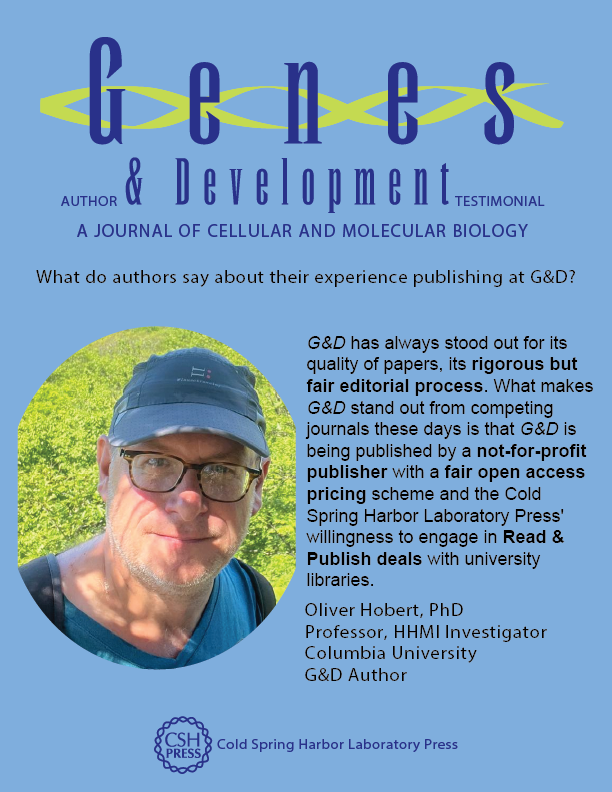
🎙️ G&D Voices: Author Oliver Hobert 🎙️
What sets G&D apart? Here is what G&D author, Oliver Hobert had to say!
Learn more here:
➡️ https://t.co/5JlAG312Gg
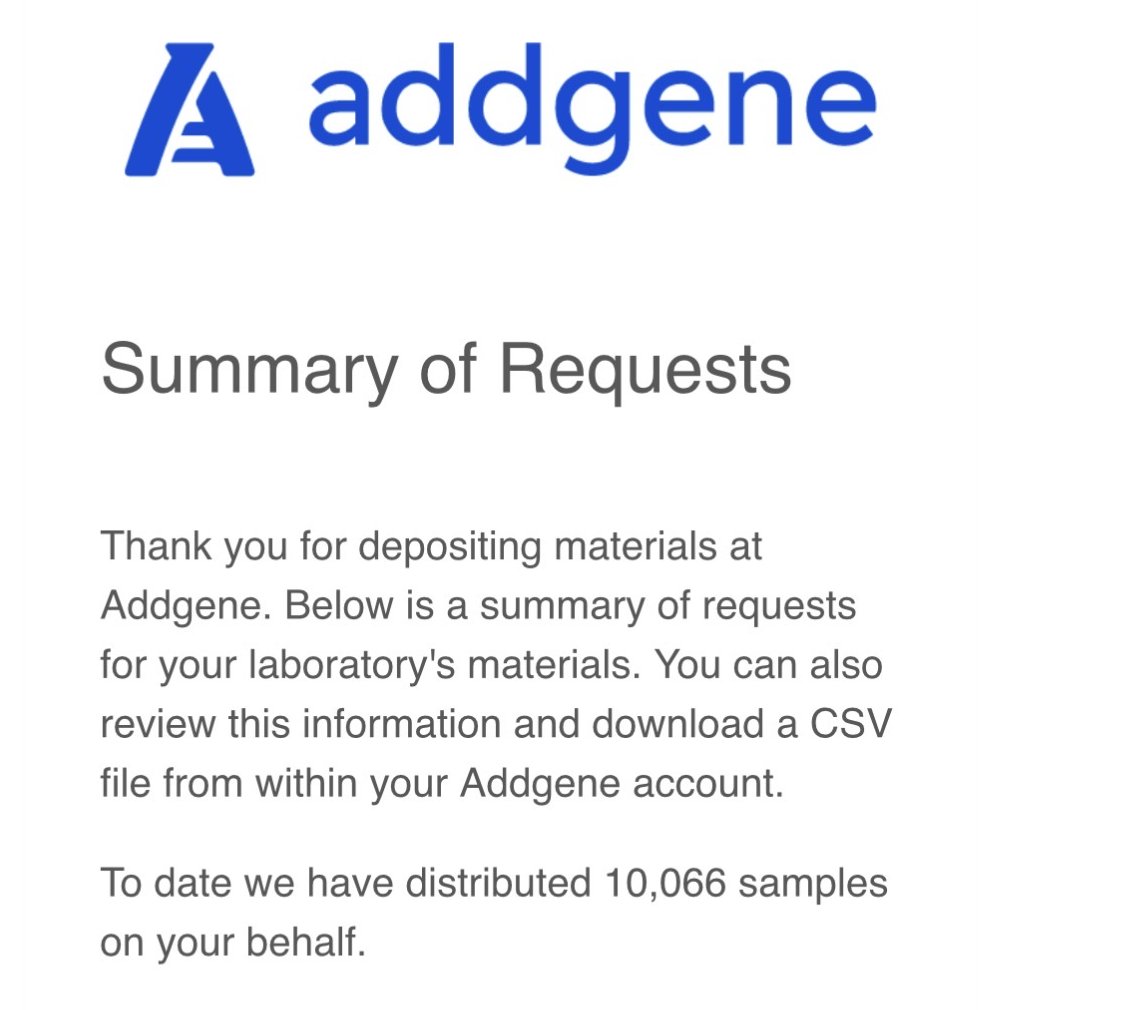
A milestone in our commitment to open science: Addgene has now distributed more than 10,000 plasmid samples from our lab worldwide: from the original dCas9, CRISPRi and CRISPRa tools pioneered by our group to CRISPR-GO and CRISPR-TO.
Grateful to everyone who developed and shared these tools and to @Addgene for making them accessible to the global research community!
As a REGENERAR member, Hovione was proudly represented at #CRS2026 with an oral presentation by Patrícia and a poster by Andreia Pereira & Susana Ramos, showcasing innovative approaches to drug delivery and CRISPR/Cas9 nanoparticle development.
I am happy to share the good news of a new Publication from our lab. Many thanks to Maxi, the Team and the great collaborators!!!
Manipulation of protein translation and stem cell self-renewal by CRISPR activation of rRNA transcription | Science https://t.co/wWYNMqrE4d
1/2 The Immunity by Design: In Vivo Immune Cell Engineering Conference will have a dedicated @scilifelab session with Tina Catela Ivkovic (Center for Translational Genomics), Mikael Mattsson (Drug Discovery and Development), and Anahita Bakochi (BioMS).
🧠 How can #CRISPR treat #Brain disorders? Professor Stefan Stricker from LMU's Biomedical Center Munich is part of the REGENERAR project, exploring gene-editing for #Diseases like #Alzheimer’s & #Stroke.
🎥 Watch his interview and learn more here 👉 https://t.co/x2UmDUguy8
More rRNA-more protein-more possibilities. A major advance in ribosome biology. A CRISPR-based strategy (TAPIR) boosts rRNA transcription, enhances protein synthesis, and promotes neural stem cell self-renewal. @ScienceMagazine#CRISPR#RNA#StemCells https://t.co/YbvqSOPX1L
Last week, the project consortium gathered at Hovione’s facilities in Lisbon for a two-day meeting dedicated to collaboration, progress review, and planning the next steps.
Photo credit: Hovione
Ich spreche in zwei Wochen in dieser wunderbaren allgemeinenverständlichen Vortragsreihe über unsere Forschung!
Vor Ort und Online !
https://t.co/50AVXYp2QU
🚨 @DKFZ Postdoctoral Fellowships 2025 — Postdoc opening (Mall Lab)
Work at the interface of neurodevelopment, epigenetic repression & cancer neuroscience.
Apply: https://t.co/NZTUn2cMLy
#Postdoc#Plasticity#Neurodegeneration#CancerNeuroscience
This meeting looks very interesting, so don't miss the abstract submission deadline. Suzhou is indeed a beautiful location. I was there in April for the CSHA transposon meeting, as you can see my photo visiting Yogita's (from @JakobssonLab ) poster used as a cover image here 😅
This goes to all of you, who are interested in cell fate and reprogramming !
If you want to present your research among an incredible line-up, please register soon!
https://t.co/nRQdh5zp0Y
1/2 The interview series "Reprogramming Stars" featured in Cellular Reprogramming, highlights the work of leaders in the field by introducing them and their science in exciting talks. @CellRepJrnl