Let's get some hype going for this documentary, which investigates Kahanist terror on American soil that targeted Palestinian Americans. Alex Odeh's name should be widely known!
MIT published a brutally honest report on what AI is doing to students.
A committee of professors and students spent five months studying how AI changed learning on campus, and the findings read like a warning to every university on the planet.
Study groups are disappearing. Office hours are emptying out. Problem sets and take-home exams no longer prove anything, because AI can produce credible solutions to almost any written assignment in the undergraduate curriculum. Students who lean on chatbots lose mastery and confidence, and some slip into what the report calls cognitive surrender, reaching for AI at the first hint of struggle.
The numbers are rough. 46 percent of surveyed MIT undergrads use LLMs daily. 90 percent worry about their own overreliance. Undergrads who feel AI makes them replaceable now outnumber those who feel it makes them capable.
The committee's answer surprised me. They refused to fight AI with surveillance. The report calls AI detectors unreliable, says lockdown browsers feel like spying, and warns that policing students builds a classroom atmosphere of mutual distrust.
Instead, MIT wants to rebuild education around the things AI can't replace. That means oral exams, semester portfolios, in-person project work, and a required social component in every subject. The report even floats the idea of rethinking grades entirely, since without a GPA to optimize, much of the incentive to cheat with AI evaporates.
The committee warns professors against replacing undergrad research assistants with AI agents just because they're cheaper, because a university exists to grow people, not output.
The most famous tech school on earth admitted the machines broke its way of teaching. Its answer is more humans, not more software.
And here we go, Lina Khan with the obvious point that these defective products may foster liability for the AI firms who release them, and that discussions new legal regimes are something of a distraction.
RIP to the legendary Dolly Parton. When it comes to great Dolly covers, many will undeniably harp about Whitney Houston's 1992 chart-topping cover of "I Will Always Love You." But my absolute favorite came from soul great Margie Joseph, who recorded a fine country-soul makeover of Dolly's 1972 sultry hit, "Touch Your Woman" for her self-titled 1973 Atlantic debut album.
I've been thinking about Margie a lot lately while revisiting albums from her great Atlantic catalog. So many cherishable gems across her catalog and such a dynamic voice that deserved greater love in her heyday.
How do you say “cyclops” in Arabic? (jumping on the Odyssey train!) 1/2
Medieval geographer al-Bakrī (d. 1094) reports that cannibals once lived on the isle of Sicily, among them “a race of monsters with a single eye in the middle of their foreheads, known as...
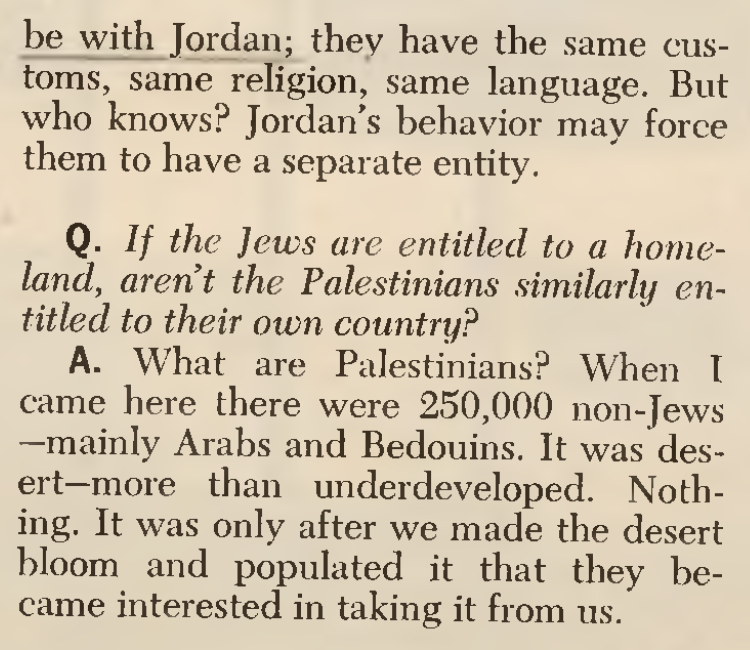
Back in 1969, Israeli PM Eshkol did an interview w/ Newsweek. The position back then was no to Palestinians having rights and citizenship in Israel and no to them having a state of their own. Permanent oppression and/or expulsion, coupled with denialism, has always been the line:
Lebanese environmental activist Mona Khalil has died from wounds sustained in an Israeli strike earlier this month, family and friends say.
For more than 20 years she was a dedicated & stubborn protector of Lebanon’s sea turtles.
She had stayed at her home on the beach in Mansouri, southern Lebanon, despite the war.
I had the privilege of interviewing her in 2017 when she was resisting the construction of a beach resort backed by powerful local players.
Lots of discussion around the Information International survey recently released on Lebanese public opinion (data collected Apr 28 – May 5 2026). I wouldn’t dismiss the survey as the organization is reputable & has previously put out good polls (incl on parliamentary elections).
In my 1st post on this survey, I’ll examine public opinion on negotiations w/ Israel, peace agreements & normalization (I plan a 2nd post focused on Hizballah & the war). I’ve compiled the data from the survey in the table below on 5 key questions (note: black numbers are from survey results; green numbers are my calculations using very reasonable assumptions).
TLDR:
▪ Public opinion on peace agreement & normalization has significantly shifted between Aug 2025 & May 2026, almost surely due to the re-ignition of full-blown war after March 2nd 2026
▪ The country is split on these issues, not only along sectarian lines, but also along generational lines
▪ However, caution is warranted in terms of interpretation, & people shouldn’t jump to conclusions too quickly (important discussion below).
Before delving into results, some remarks on methodology:
▪ In-person survey of 2000 Lebanese citizens >21 yrs old (Lebanese voting age)
▪ Sample distributed proportionally to size of governorate & across Lebanon's 26 districts; note that sampling took into account displaced population, particularly Shia respondents (historically, Information International has used multi-stage probability sampling, but unclear here)
▪ Appropriate sectarian representation within each district (see table for sectarian splits). Splits look pretty similar to 2022 Parliamentary elections, but not certain (if so, you can debate whether voter or alternative splits are best used for this survey).
▪ Rejection rate: 26% (excellent)
▪ Margin of Error: +- 3.2% (typical)
Results:
1) What is your position on direct negotiations between Lebanon and Israel?
▪ Essentially split, w/ no clear Lebanese majority (49% support, 44.5% opposed)
▪ Shia overwhelmingly opposed (92.9%); slight majority of Sunnis (54.4%) supportive; Druze (72%) & Christians (74.7%) very supportive
▪ Note huge generational divide: younger people (21 – 29 yrs) support it at only 35%, but older generation (>70 yrs) support it at 79%
▪ Question is this: direct negotiations w/ Israel to what end? Apparently, not to normalize relations w/ Israel, which is clearly still rejected by majority; see next question(s).
2) What is your position on normalization in Lebanon i.e. establishing economic, trade and cultural relations with Israel?
▪ Majority clearly rejects normalization (59.3% opposed; 30.4% support).
▪ However, clear shift over last ~8 months, when opposition to normalization was at 78.8% & support at only 13.2%, based on Aug 2025 Information International survey. Note that Aug 2025 survey results consistent with other high-quality polls I’ve seen (recall the 2025 Arab Opinion Index poll that showed that 89% of Lebanese oppose recognizing Israel, w/ only 9% in support) What explains this shift?
o This is almost surely due to re-ignition of full-blown war after March 2nd 2026.
o The other hypothesis – that pre-March 2ndsurveys reflect preference falsification – are not supported by quantitative evidence, w/ counter-evidence against them; I don’t want to totally dismiss the hypothesis, but re-ignition of the war is the obvious candidate for the shift in my opinion
▪ In May 2026 survey, Shia overwhelmingly opposed normalization (94.3%); also, strong opposition by Sunnis (73.8%); slight majority in support for Christians (51.9%); Druze very supportive (79%)
o Focusing on Christian support for normalization, whereas it was clear from previous surveys that Christian support for recognizing Israel or normalizing w/ Israel was a minority position, this seems to have changed now to a slight majority post March 2nd; however, important caveat below on interpreting these theoretical results (for Christians and non-Christians), as concretizing these policy positions into real tangible examples results in further opposition (see next question)
▪ Note same generational divide w/ young folks strongly opposed (73%) vs older generation less so (42.1%)
3) What is your position on the opening of an Israeli embassy in Beirut?
▪ Strong majority clearly rejects Israeli embassy in Beirut (66.6% opposed; 20.9% support), a clear emblem of normalization.
o This often happens in surveys: people’s opinions on a more theoretical question (e.g. theoretical normalization) shifts when an example that they can concretely imagine is presented as an implication (e.g. Israeli embassy in Beirut). Perhaps next time, the survey should ask whether Lebanese support partying in Tel-Aviv or Israelis partying in Beirut to really drive the point home.
▪ Shia overwhelmingly opposed (96.0%); same w/ Sunnis (86.4%); Christian support is tepid (36%) w/ equal opposition (36.3%); only Druze strongly support (70.1%).
o It’s worth discussing Druze public opinion. First, methodologically, they only represent 5.7% of the sample, so only 114 people would have been surveyed out of a sample of 2000 if proportional sampling was done, which means error bars are large for their results (think +/- 10%); still, even including margin of error, there is consistent support for normalization, peace etc. The question is why?
§ Jumblatt has not publicly stated his support, and one can argue he’s opposed to the idea.
§ My hypothesis is this: after the crimes against humanity committed against the Druze population in Sweida by Syrian govt security forces in July/Aug 2025 & Israel’s intervention to prevent further massacres, there has been a dramatic shift in Druze opinion vis a vis Israel, not only in Sweida – which is vocal and visible – but also in the occupied Golan, where we’re starting to see many Druze accepting Israeli citizenship (something they’ve historically resisted), and apparently now in Lebanon. This is a deeply tragic and painful development relative to (non-Israeli) Druze’s historical Arabist position & one that could have been avoided w/ a less antagonistic approach by the Syrian govt that devolved into massacres (although it’s clear that Hikmat al-Hijri also bears some of that responsibility & he was on Israeli payroll before the massacres).
▪ Same generational divide w/ young folks strongly opposed (81.5%), and older generation less so (42.1%)
▪ So, if (vast) majority of the Lebanese public doesn’t support direct negotiations to normalize relations w/ Israel (which is one of Israel’s stated goals from these negotiations), to what end does ~half of the population support these direct negotiations? Perhaps to sign a “peace” agreement? See next question.
4) How would you react if the President and the government signed a peace agreement with Israel?
▪ Essentially split, w/ no clear Lebanese majority (48.9% support, 46% opposed)
▪ Clear shift over last ~8 months, when opposition to a “peace” agreement was at 68.4% and support at only 25%, based on Aug 2025 Information International survey
▪ Shia overwhelmingly opposed (92.1%); slight majority of Sunnis (51.6%) supportive; Christians (74.1%) very supportive, as well as Druze (84.2%)
▪ Same generational divide w/ young folks only supporting at 37.5% and older generation much more so at 68.5%
▪ Question is this: how are Lebanese interpreting “peace” agreement w/ Israel?
o Clearly, it’s not equivalent to a bilateral “peace” agreement that normalizes relations w/ Israel, as we’ve previously seen. So, this would actually exclude “peace” agreements like the Abraham Accord between the UAE and Israel, and also “peace” agreements between Jordan / Egypt and Israel, which come w/ full normalization (embassies, economic ties etc).
o I suspect that a “peace” agreement w/ Israel is being interpreted by some as either an indefinite armistice-like agreement (e.g. the 1949 armistice agreement or a return to the status quo ante pre-Oct 7), or an agreement that formally ends the state of war w/ Israel but stops there (no normalization etc). This is unclear & future surveys would do good in teasing out this nuance.
o However, it’s important to note that when the additional option of negotiating “peace” w/ Israel via the broader Arab Peace Initiative is introduced into the survey, the appetite for Lebanon pursuing a separate peace agreement significantly declines; see next question.
5) Do you think Lebanon should adhere to the Arab Peace Initiative (API) or pursue a separate peace with Israel without the Arabs?
▪ A plurality (37.4%) prefer Lebanon to adhere to the Arab Peace Initiative (which was endorsed by the full Arab League, and which called for normalized relations by the Arab world w/ Israel in return for full Israeli withdrawal from occupied Arab lands, the creation of a Palestinian state in the West Bank & Gaza w/ East Jerusalem as its capital, and a just resolution to the Palestinian refugee problem); in close second are those who don’t want any peace w/ Israel (32.8%), w/ only a small minority preferring a separate peace w/ Israel (24.8%).
▪ A Sunni majority (59.5%) prefers the API option; a strong Shia majority (77.1%) refuses to make peace w/ Israel; a strong Druze majority (66.7%) prefers a separate peace w/ Israel; Christians seem to be split between adhering to the API (e.g. Maronites at 41.8%) vs pursuing a separate peace w/ Israel (43.7%), w/ no clear majority either way.
▪ Note the same generational divide w/ young folks preferring either no peace w/ Israel (44.5%) or the API (36%), w/ older folks preferring the separate peace option (42.1%)
▪ What therefore becomes clearer is that when the additional option of signing a peace treaty w/ Israel as part of a broader Arab coalition is introduced into the survey, appetite for pursuing a separate peace w/ Israel significantly declines.
o However, it should also be stated that the API option feels more theoretical given the lack of movement in that direction for years, and so it is likely the case that in the absence of such an option in practice, there will be some Lebanese who support the bilateral “peace” option w/ Israel, presumably because they believe that a “peace” agreement w/ Israel would stop the war(s).
To understand what's happening in Lebanon, you need some historical context. In this episode, @LailaBallout and I walked through Lebanon's modern history and how it shapes events today.
https://t.co/1LudB1QSxT
My only interaction with Amal Khalil came in 2009, when she was so generous to me as I reported a magazine article on a financial scandal rocking Hezbollah and the south—a story critical of the party that she guided me on, she said, because it was more important I got it right.
NEW: Pope Leo XIV says he carries this photo of a young boy who he says was killed during the Israeli-Lebanon War.
The boy was photographed last November welcoming the U.S-born pontiff to Lebanon.
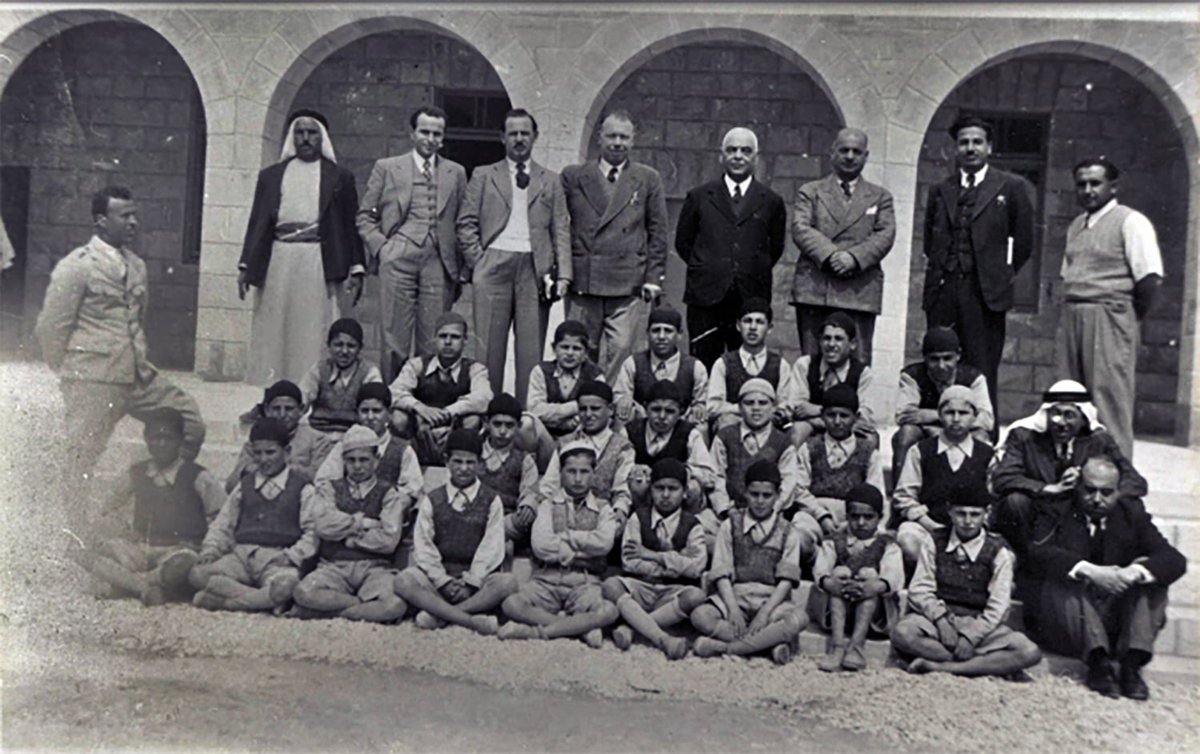
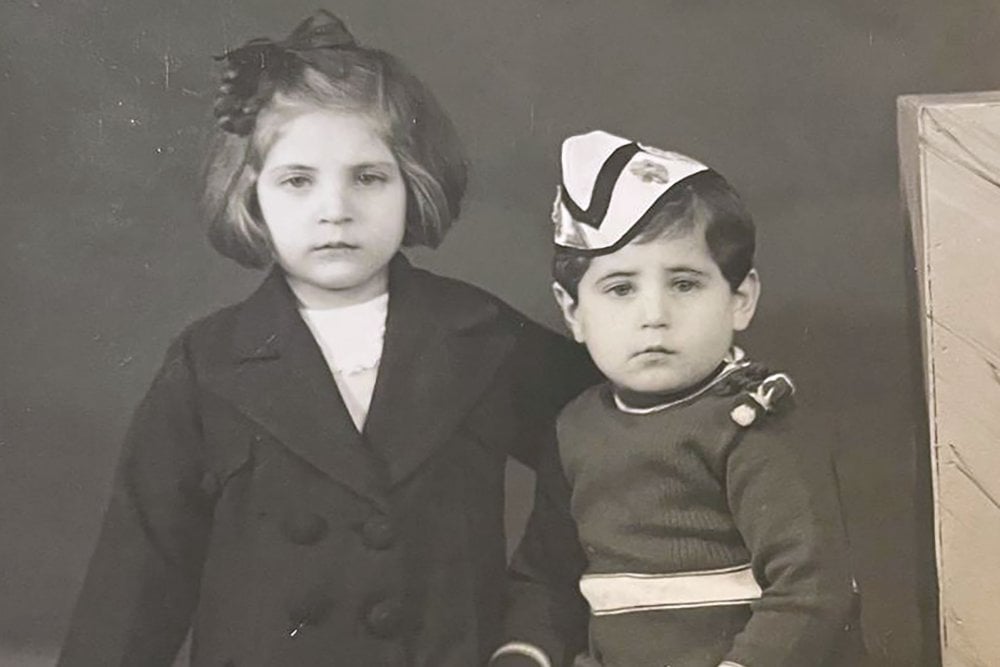
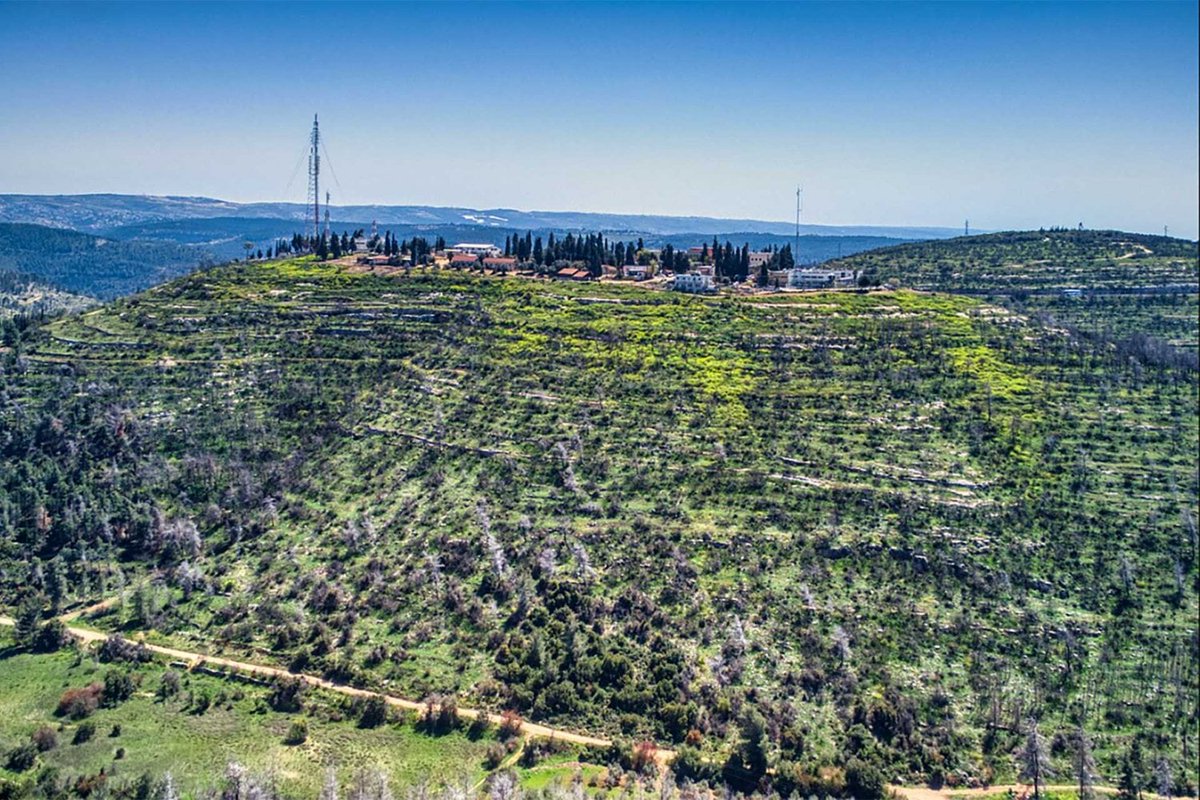
Here are some pictures of Palestinians who once inhabited the villages where Israeli forests are dying. These are from Dayr 'Amr where all the houses actually remain and an orphanage/school that was created for children of breadwinners who were killed in the 1936 Revolt against the British was converted into the Israeli mental hospital Eytanim in 1952. Some of its lands were afforested by Israel.
The U.S. must ensure that any ceasefire agreement includes Lebanon. Netanyahu is brutally bombing Beirut, killing civilians, and destroying critical infrastructure. This regional war must end now.
The U.S. must immediately make clear to Israel that the ceasefire agreement is not and cannot be functional without a ceasefire in Lebanon. The American people want this war to end and bombing downtown Beirut is not a path to peace.
Israel struck Lebanon +100 times today, incl. across Beirut, killing & injuring hundreds while displacing thousands. It threatened more such strikes in next 48 hours while claiming Hizballah fighters fleeing to “mixed areas.” Israel is doing several things, as it always has. 🧵
The NYC department of records, to their eternal glory, has digitized hundreds of historic videos and audio recordings from @WNYC’s history since 1937.
Anyone who is an NYC-phile needs to get into this STAT.
https://t.co/t8NhhhL5Qe
Satellite images show Israeli excavators demolishing Khiam Detention Center in southern Lebanon, where more than 5,000 people were once held and tortured by an Israeli proxy
By @weatherwar via @newlinesmag.
https://t.co/XBWgs9kEv9
A $2.5 billion robot has been alone on another planet for 13 years and is still doing science. The scale of that sentence gets worse the longer you think about it.
Curiosity landed in August 2012. Obama was president. Instagram had 80 million users. The iPhone 5 hadn’t shipped yet. The rover was designed for a two-year mission and 20 kilometers of driving. It’s now driven 35.5 kilometers, climbed over 327 meters up the side of a mountain, drilled 46 holes into Martian rock, and is currently running its fifth mission extension.
The computer running all of this has 256 MB of RAM and a 200 MHz processor. Your AirPods have more computing power. Every command sent from Earth takes 14 minutes to arrive. Every photo sent back takes the same 14 minutes. When Curiosity drills into a rock, the team in Pasadena won’t know if it worked for half an hour. They’ve been operating on that delay, every single day, for 4,846 Martian sols.
The power source is 10.6 pounds of plutonium-238 generating about 110 watts. Less than a ceiling fan. It will keep producing electricity for decades because the half-life of Pu-238 is 87.7 years. The rover will run out of moving parts before it runs out of power.
And those wheels. Machined from single blocks of aluminum, 0.75 millimeters thick. Half a dime. JPL watched them get shredded by Martian rock starting in 2013, rerouted the entire mission path, taught the rover to drive backwards, and kept going. The wheels look like they lost a fight with a can opener. The rover is still climbing a mountain.
Every iPhone you’ve owned since 2012 is in a landfill. Curiosity is on Mars, 140 million miles from the nearest repair shop, running on a ceiling fan’s worth of nuclear power, sending data through a 14-minute time delay, on shredded wheels, doing geology that rewrites what we know about whether life ever existed somewhere other than Earth.
We built that. With 0.01% of the federal budget.