#CSTEP, along with the Department of Science, Technology and Environment, Government of Puducherry, released the Climate Risk Assessment Tool (CRAT) on 21 April in Puducherry.
The event witnessed an engaging panel discussion with Thiru. K Kalamegam (Environmental Engineer, Department of Science, Technology and Environment, Government of Puducherry), Thiru. Raghavendra Rao (Director, India Health Fund, Tata Trusts), Dr M Nandhivarman (Secretary-General, Association for Promoting Sustainability in Campuses and Community, Puducherry), and Dr Anushiya J (Research Scientist, CSTEP).
The discussion ranged from the impacts of #climatechange on physical and mental health to effective climate science communication and the community perceptions of tools such as CRAT.
The tool was launched by Dr Yasam Lakshmi Narayana Reddy, IAS, Special Secretary–cum–Director (Science, Technology and Environment), Government of Puducherry.
CRAT is one of the first tools in India that employs the Intergovernmental Panel on Climate Change (IPCC) Assessment Report 5 risk framework.
CRAT offers users the ability to visualise the risks of droughts, heatwaves, sea level rise, and floods of multiple return periods across the four regions of Puducherry. The tool assesses risks to seven key sectors in Puducherry UT—agriculture, livestock, fisheries, urban, tourism, health, and water.
Users can toggle between historical and future time periods to visualise the probability of occurrence and spatial extent of hazards, the exposure of important assets across all seven sectors, and the inherent vulnerability of these sectors. Finally, users can combine all the above components to visualise the climate risk for each region.
The tool will be particularly useful to various line departments in the Government of Puducherry, academicians, planners, and interested citizens, facilitating risk-informed adaptation planning within each sector.
To access the tool, head on to https://t.co/1vLoMLik90
For a more in-depth analysis of the results from the climate risk assessment, refer to the report https://t.co/wEwgBD6ea0.
#CSTEP’s Urban Greenprints report outlines a strategic and scalable roadmap for integrating nature-based solutions (#NbS) into #urban planning in #Chennai and #Mangaluru.
Key highlights of the study:
● A cost–benefit analysis identified intensive green rooftops and permeable pavements as key NbS strategies for Chennai and Mangaluru.
● Inclusive governance, stronger policies, and sustained funding are needed to move from isolated initiatives to a more resilient and sustainable urban development model.
● A decision matrix will help urban planners prioritise NbS interventions at the ward level.
● The roadmap is designed to be scalable and replicable for other #coastal cities.
By mainstreaming NbS into planning processes, cities can address both #environmental and #infrastructural vulnerabilities while creating healthier, more livable urban spaces.
Link to study: https://t.co/8KuDcweQUJ
#NatureForCoastalCities #CoastalResilience #PolicyForClimate #SustainableCities #FutureReady #NbSImplementation
#CSTEP researcher Lakshmi Menon was quoted on the benefits of and need for #green infrastructure in this #article covering CSTEP's 'Urban Greenprints' #report and its findings by @the_hindu https://t.co/9LELfY71JZ
Report: https://t.co/vxXFJNGS0D
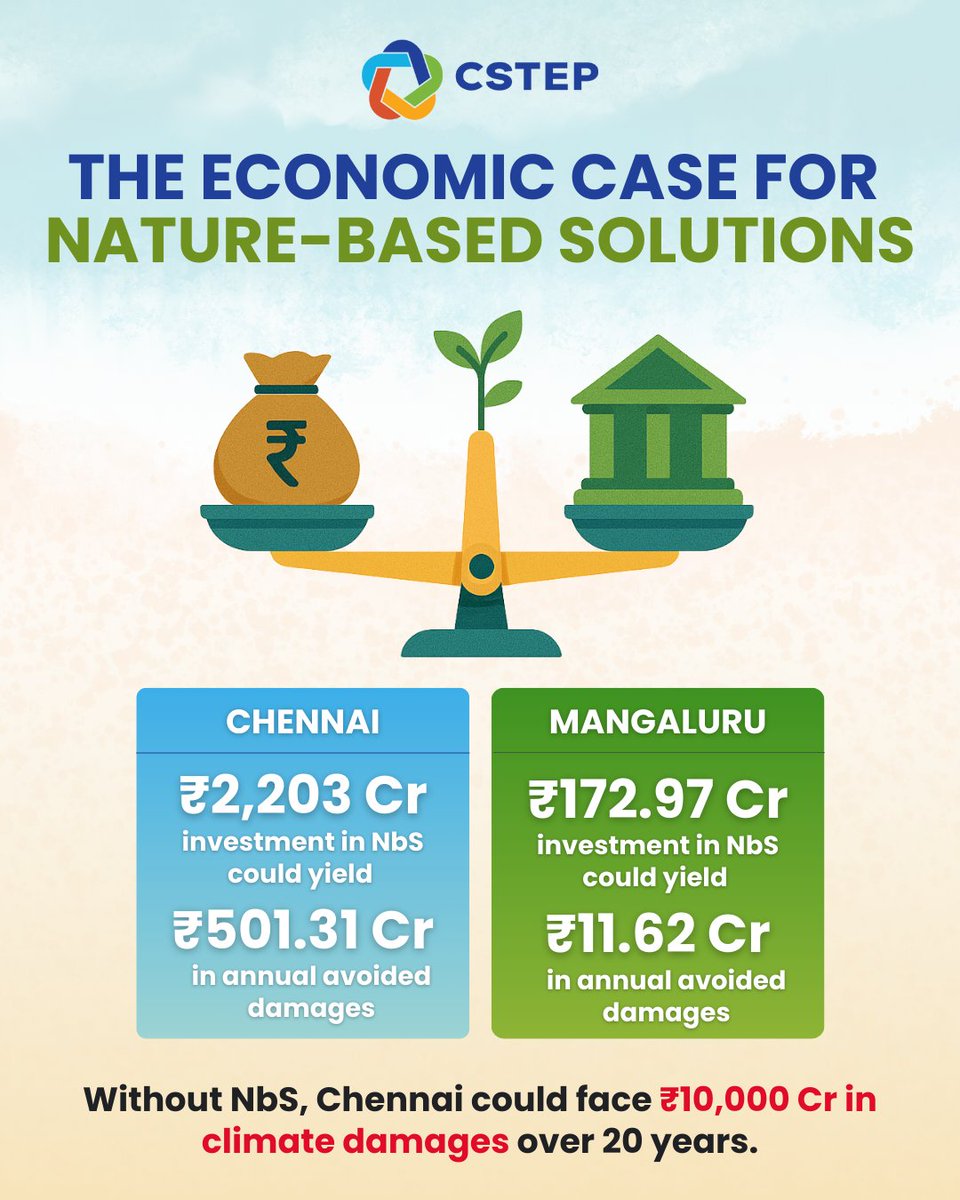
#CSTEP’s latest report, Urban Greenprints, reveals a compelling cost–benefit story for investing in Nature-based Solutions (NbS) in select wards of two Indian coastal cities.
🔹 Chennai: An investment of ₹2,203 Cr in NbS could yield ₹501.31 Cr* annually in avoided climate-related damages, translating to a payback period of just 4 years.
🔹 Mangaluru: With an investment of ₹172.97 Cr, the city could prevent damages worth ₹11.62 Cr* annually, reaching break even in 15 years.
Without NbS, Chennai alone may face up to ₹10,000 Cr in climate damages over the next 20 years.
As climate risks intensify, investing in green infrastructure isn't just environmentally sound—it’s economically essential.
*The suggested interventions are based on conservative estimates of cost and time, and the actual benefits may be greater.
#NatureForCoastalCities #CoastalResilience #GreenEconomy #NatureInvestments #ClimateResilience #NbSImpact
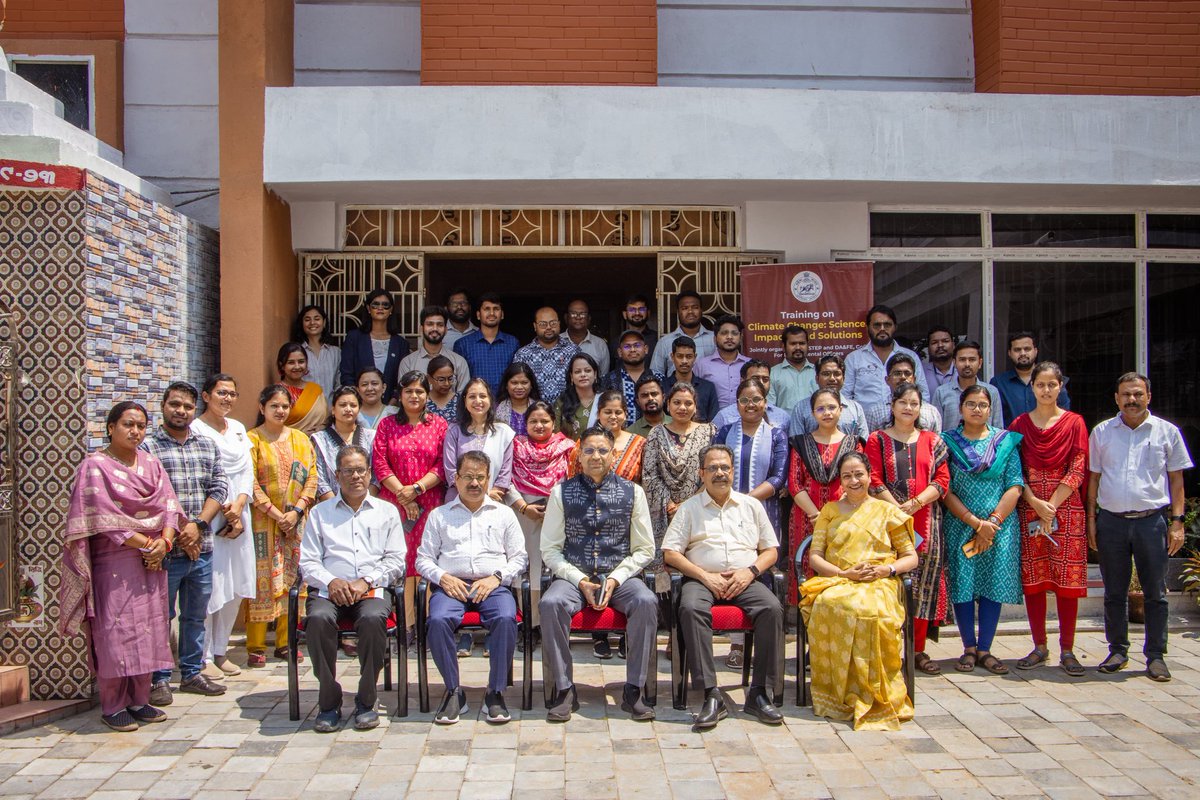
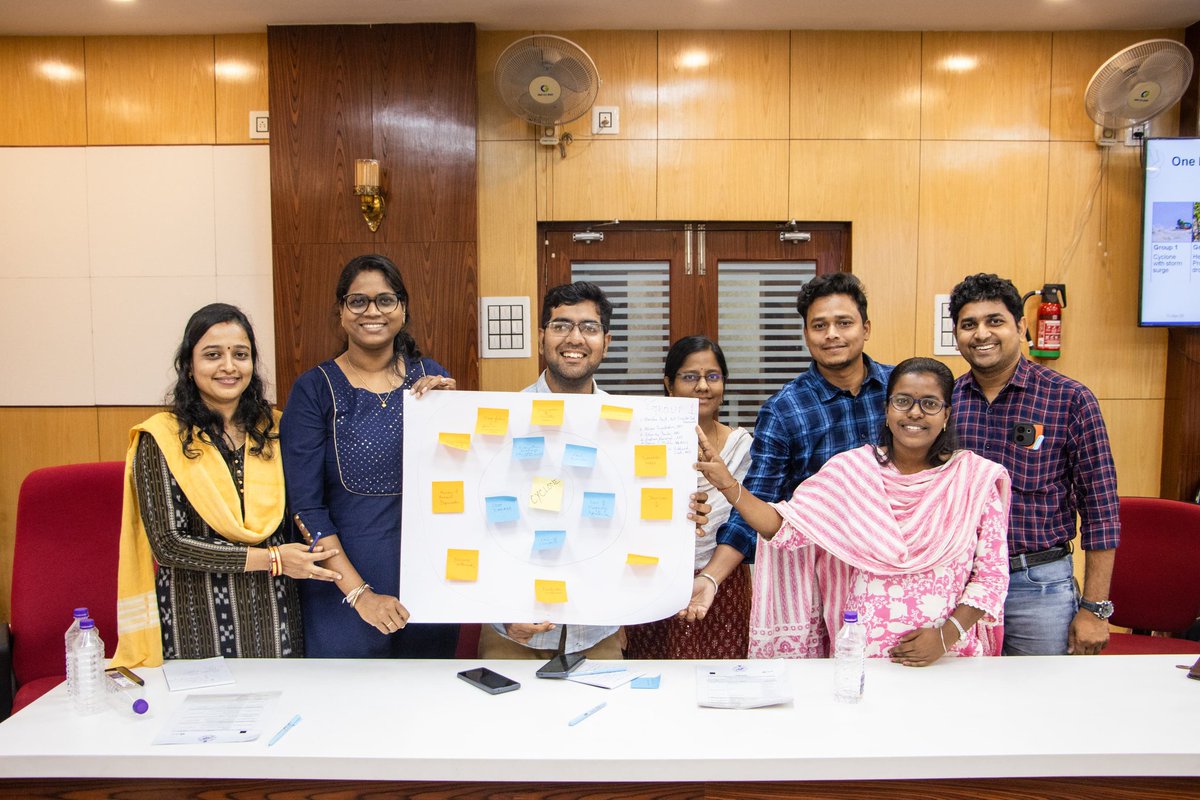
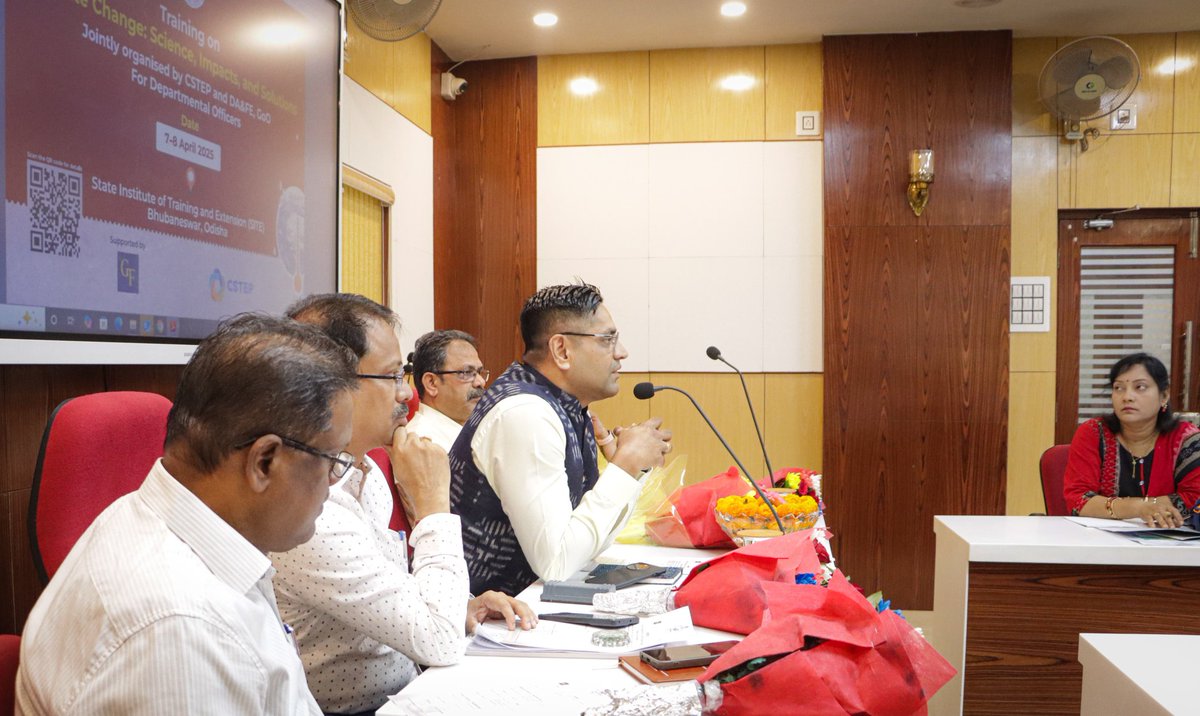
A training on “#ClimateChange: Science, Impacts & Solutions” was held from Apr 7–12 by @CSTEP & Govt of #Odisha. Officers from Agriculture, Horticulture & SC&WD Directorates across all districts attended 2-day sessions over 6 days. #ClimateAction@KVSinghDeo1@arvindpadhee
Musings
My approach of deciding whether to "settle down" with someone has changed so much since my 20s. Back then, if I was organically meeting a person, I had to feel a spark, have engaging conversations on day 1 & wanted to walk back home feeling the day ended too soon!
(1/n)
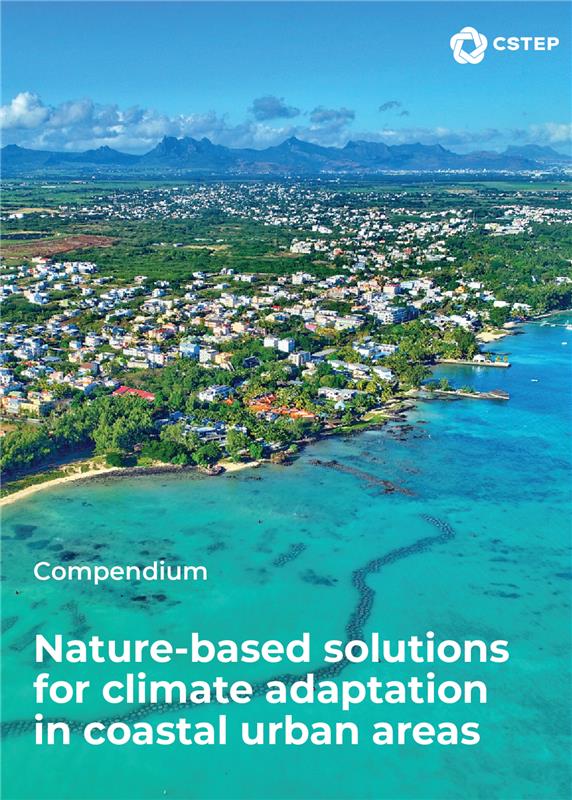
#CSTEP is pleased to release its first-ever compendium on Nature-based Solutions (NbS) for Coastal Urban Areas
From real-world case studies to innovative funding mechanisms, this guide can help address climate and environmental challenges in coastal urban regions.
Read now and discover how NbS can transform our cities for the better!
#ClimateChange #SustainableCities #NbSForResilience #UrbanEcosystems
https://t.co/IxLJIXXl7D
#CSTEP’s new study on the ‘Scope for Deep #Decarbonising the MSME Manufacturing Sector’ featured in an article by @AmarUjalaNews
https://t.co/m8LNlkYJrv
As knowledge partners for @asia_climate’s 3rd Annual Climate Conference, #CSTEP researchers @LakshMen91 and @Kanchan_Kargwal organised a workshop on enhancing NGO capacity in Climate Adaptation Programmes
At @asia_climate’s 3rd #ClimateConference, @indukmurthy was a panellist on ‘Bridging Climate Science and Action: The Essential Role of Capacity Building in Climate Adaptation’ session, moderated by Koushik Yanamandram (Climate Asia) & conceived by @Kanchan_Kargwal & @LakshMen91
#CSTEP is hosting an interactive #workshop tailored for stakeholders in environmental initiatives from or around #Bengaluru as part of @asia_climate's annual conference.
Register here: https://t.co/bUP2PiHy62
#CSTEP researchers @Kanchan_Kargwal and @LakshMen91 share insights and learnings from their engagement with CSOs, in the second blog of a two-part series published on @Medium
https://t.co/Yr6icldMVr