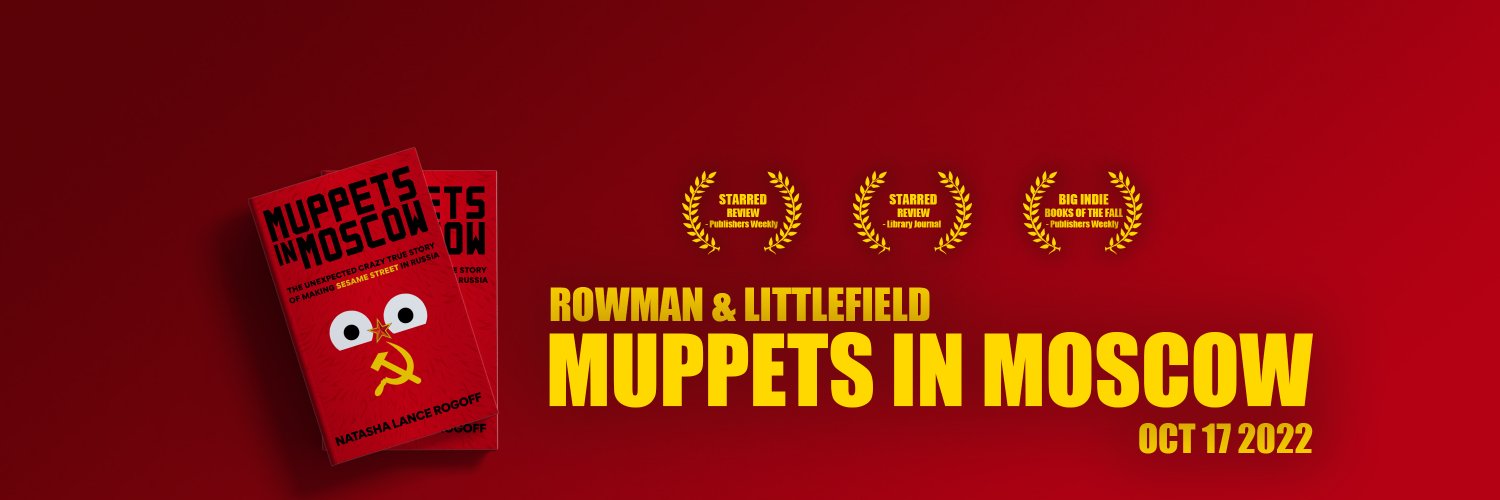
My brilliant friend @LanceRogoff is having her riveting memoir of taking Sesame Street to Moscow in the early post-communist period in Russia turned into a movie- with a mega writer on board. Muppets meet oligarchs in an extra extraordinary era in Moscow https://t.co/aedLP8MlvL
@BBCNewsnight Listen to Zoe who is brillant economist and social observer. She, like many other wise folks working in the Ai are making personal sacrifices to share their concerns about the potential future dangers of Ai without the necessary guardrails and regulations put in place.
“We don’t have a grasp of what AI does to people’s psychology, what it does to them sociologically…”
AI researcher Zoe Hitzig explains why she resigned from OpenAI
#Newsnight
Gripping nonfiction reads that I swear by:
Muppets in Moscow - the story of bringing Sesame Street to Russia
No More Tears: The Dark Secrets of Johnson & Johnson - alarming exposé
Unscripted - dramatic history of Viacom/CBS/Paramount
Trust me! Try something new!!
The Dark Side of the Earth by Mikhail Zygar (@zygaro) urges us to confront the narratives we’ve accepted about Russia and rethink how we face oppression today. Now on sale, learn about why he wrote this book and order now: https://t.co/zvj3NRZ2Iv
I’ve avoided playing for a very long time due to my uncontrollable chess addiction, but that was the price of admission for the famous Botez chess podcast https://t.co/GyW3LRLOHA, featuring the brilliant and charismatic Alexandra Botez.
The Supreme Court has ruled that President Trump can only fire Federal Reserve officials for “just cause”. Does “just cause I want to” count? @realDonaldTrump
Thank you Kristalina Georgieva @KGeorgieva for the vibrant conversation and really appreciate the many IMF Staff and board members who found time in their busy day to attend.
In 2013, a trio of UMass scholars, using selective citation and polemic misrepresentation, “proved” that high debt matters little for growth by finding an error in an early conference paper. Yet the full published 2012 paper reached the same conclusions and had no errors.
If the United States were to face a debt crisis over the next four to five years, it likely will be very good for crypto assets, if not immediately then in the long run. This will be true whether a US debt crisis morphs into inflation, financial repression, partial default or some combination of the three. That crypto assets might be a good choice for investors who seek diversification does not mean that US policymakers should turn a blind eye to the significant vulnerabilities a poorly-regulated crypto industry can create for tax policy or law enforcement, as my recent book Our Dollar, Your Problem discusses along with possible approaches to mitigating the problem.
Almost a decade ago I was the Harvard economist that said that bitcoin was more likely to be worth $100 than 100k. What did I miss? I was far too optimistic about the US coming to its senses about sensible cryptocurrency regulation; why would policymakers want to facilitate tax evasion and illegal activities? Second, I did not appreciate how Bitcoin would compete with fiat currencies to serve as the transactions medium of choice in the twenty-trillion dollar global underground economy. This demand puts a floor on its price, as I discuss at length in my new book Our Dollar, Your Problem. Third, I did not anticipate a situation where regulators, and especially the regulator in chief, would be able to brazenly hold hundreds of millions (if not billions) of dollars in cryptocurrencies seemingly without consequence given the blatant conflict of interest.
https://t.co/bK0Twhy5aK