🗣️Social interactions are embedded throughout the workshop w/practices like conferring, peer revision, & opportunities to share & celebrate throughout the writing process.
🔗Read to find out how research supports the social aspects of writing: https://t.co/m7YgruNjG0 #TWTBlog
What if teachers were subjected to the kind of rewards-based classroom-management system (including a behavior chart) that's commonly used to control students? This thread describes the eye-opening results of a brief, informal experiment: https://t.co/gl6qSsBY2M
“This product helps improve your students’ reading scores, but it may make them hate reading forever.” Yong Zhao explains the disturbing side effects of many supposedly "evidence-based" educational policies.
Book: https://t.co/pyXwDrzA0C.
Article: https://t.co/dp9zfuQd8d
Some colleagues have pushed back on this piece, indicating that no one anywhere says that reading is done with a phonics-only approach, or as some have said, even a, "phonics first" approach. My experience working in schools across the U.S. these past few years, let alone in previous iterations of a phonics push such as when the National Panel report and A National at Risk were released, has been different. Teachers and supervisors with whom I've worked have indicated that phonics-heavy curriculum is being purchased (with teachers told to maintain fidelity to the program and to remove supplemental materials not aligned or included with the new programs from their classrooms), to limit classroom focus on wide and frequent reading from personal interest, choice novels and picture books in favor of more teacher-directed, phonics-heavy approaches, and to level the books in their book bins, which is a deeply uncomfortable and ineffective practice. In addition, many classroom teachers and reading instructors are being directed to emphasize phonics over most other elements of reading instruction, and when a student struggles in reading, it's a series of phonics-focused lessons that must be applied over other choices. Yes, I know this is anecdotal, but it exists. It's not an over-the-top, phonics-or-die approach in all places, of course, but decades of rock solid research and other effective practices in elements of reading instruction are being impugned and shelved, with most of the reading "eggs" placed in one basket, phonics - and seemingly done to be politically expedient in some places, not pedagogically sound or completely vetted under full research scrutiny. As the article declares, phonics is of critical importance, but not as the sole, instructional diet, or even the most prime for every single student in that diet, and we are doing a disservice when turning all these other helpful elements into conspiratorial monsters. Some of the biggest concerns for those of us struggling with the Science of Reading hype-train is expressed in this segment of the article: "While teaching reading instruction has always been plagued by controversy (Pearson, 2004), the science of reading has presented exaggerated, misleading, and at worse false statements promoted in the media by a small group of scholars, educational activists, publishers, and journalists. Policy makers and publishers are attracted to these simplified arguments which propose solutions that can be mandated, packaged, and sold to schools. We are particularly concerned about the indiscriminate implementation of unwarranted and under-researched practices that have been espoused by science of reading advocates (Hanford, 2018; Paige, 2020; Spear-Swerling, 2019), including: Directive and/or scripted lessons that tell teachers what to say and do within predetermined and paced lesson sequences, An exclusive focus on phonemic awareness and phonics, Denials that children and adults use multiple sources of information when they read, Decodable texts that do not engage multiple aspects of reading, Specialized forms of reading instruction designed for particular groups of children that are promoted as appropriate for all children, Mandating “structured literacy” programs despite a lack of clear empirical evidence, and Privileging the interests of politicians and publishers over children."
🖋️ Dive into the world of information writing! Discover common challenges and effective solutions in this #TWTPod episode.
Plug in your🎧 & dive into this episode on your favorite podcasting platform or at https://t.co/8S5bgj9R2d
Yep, that’s correct. Giving a kid a zero is adding a -6 on a scale of 1-4 (60-100). If you must “average” your grades, put in a 50 for the egregious crime the child committed by not completing something. That’s the “F” that makes mathematical sense. Read Doug Reeves
@JoshKunnath The problem with 0-100% grading scale is each assignment in and of itself is weighted incorrectly. What does 80% mean? 65%? 70%? A 0% is actually weighted 6 times more than every other grade. If it is meant to represent learning, the average grades do not represent that above.
“The more intensely interested a teacher is in a student’s thinking, the more interested the student becomes in his or her own thinking.” Eleanor Duckworth #LearnWithIM
"teaching is being reduced to a science, neglecting the art . . . Everything is a data point that can be tied back to a standard. . . . this sends the message that compliance is safer than creativity; teaching is more of a transaction. @talkswithteachers https://t.co/D7slrayREq
There’s no other way to look at it: the results of last night’s elections across the country broke decisively for libraries. EveryLibrary tracked 40 public library funding measures, and in 95% of them voters approved the requests, often by wide margins.
https://t.co/EBOqd79leX
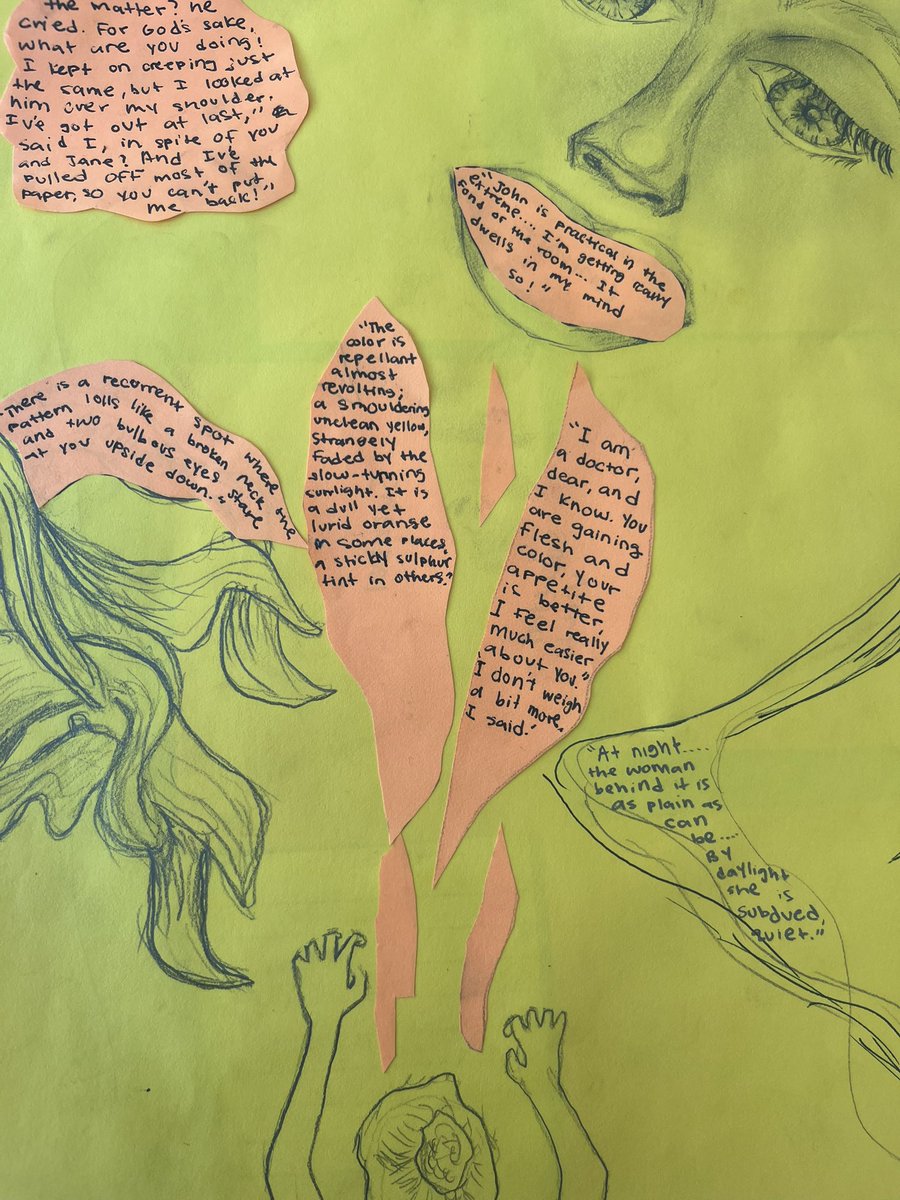
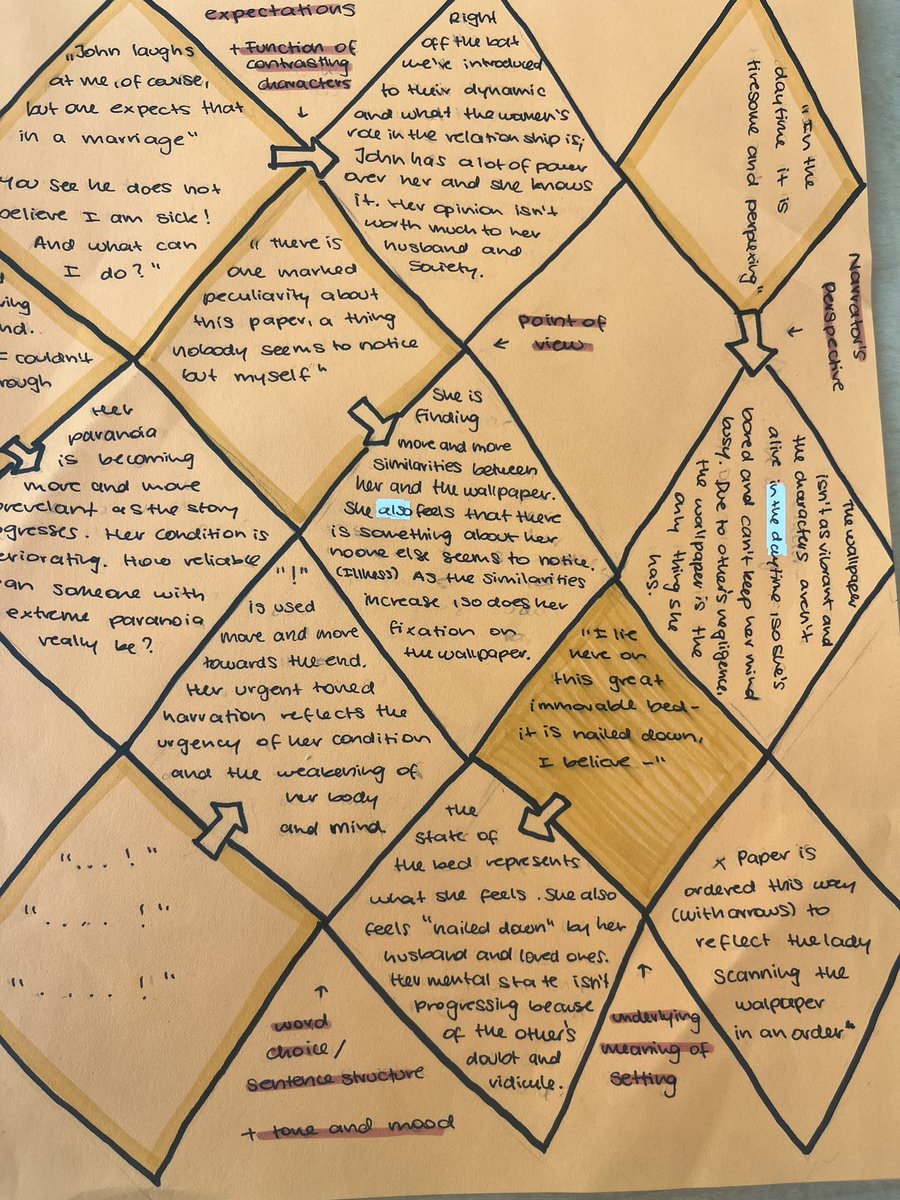
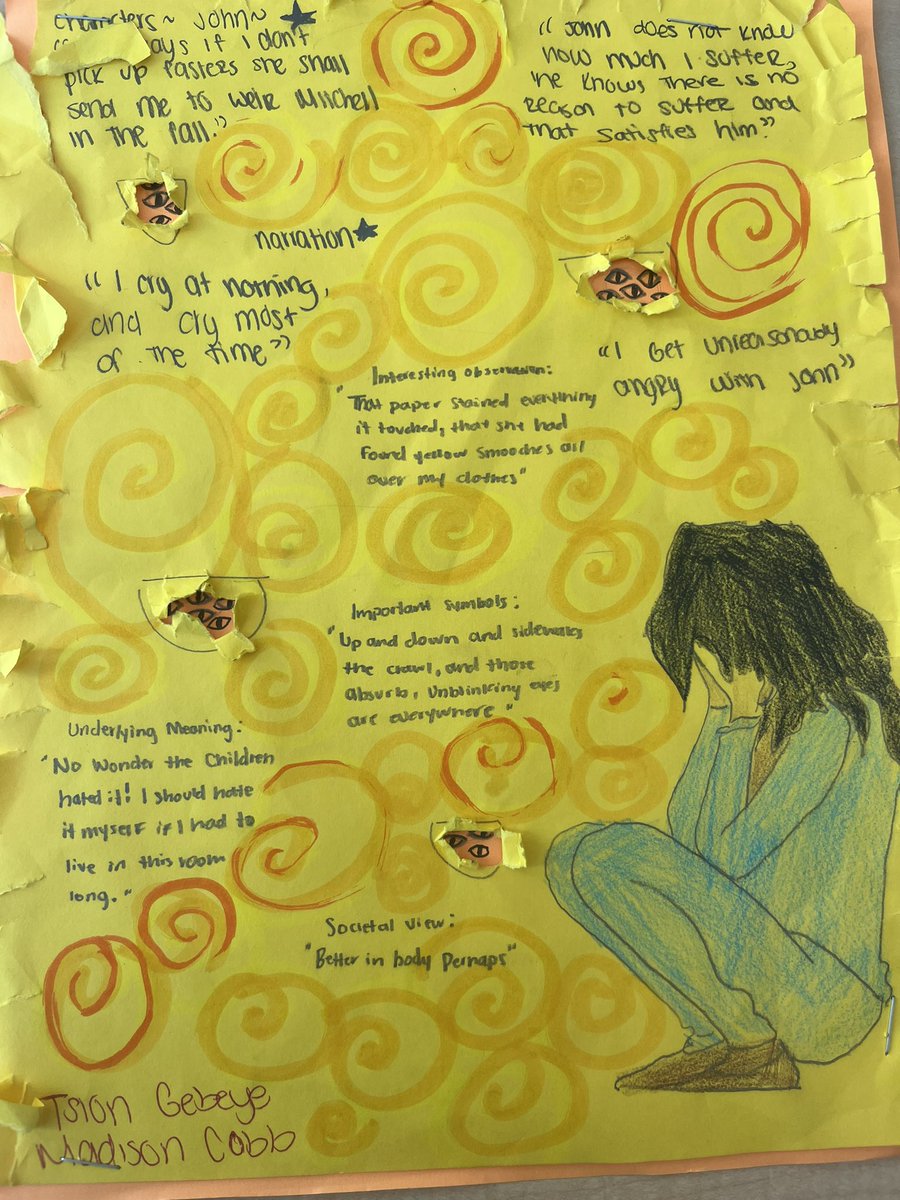
Love this idea of inviting kids to create synthesis pages like these! Such creativity here. This is something not valued by our standardized testing culture, but this type of analysis supports the development of some vitally important neural pathways. TY for sharing!
“The Yellow Wallpaper” analysis - the creation of the design slows students down allowing them time to process. I LOVE the conversations I’m hearing about this texts as students are working. #aplitchat
@MelanieMeehan1 loves thinking about ways to make writing important for students. Today on #TWTBlog, she shares how these initiatives unfold! https://t.co/UWjsAibNIX
My child’s school has organized a Book Fair by partnering with a local indie bookstore …I think it’s awesome! No Scholastic.
And every kid gets to pick one book that they want to read and will become a part of a classroom library (the school doesn’t have s school library, sad)
When a waiver process spreads over two school years, with numerous delays and changes,
when the rubric is created & shared after waivers were due,
it's not a process for innovation and differentiation.
It's a way to wear folx down until they give in to the status quo.
The problem with 20+mins on whole group phonics instruction - besides the further squish-out of Sci/SS, (even where "integrated" in the lit block, they're for sure not in the phonics part) - is everyone working on the same pattern whether they know or are ready for it or not.