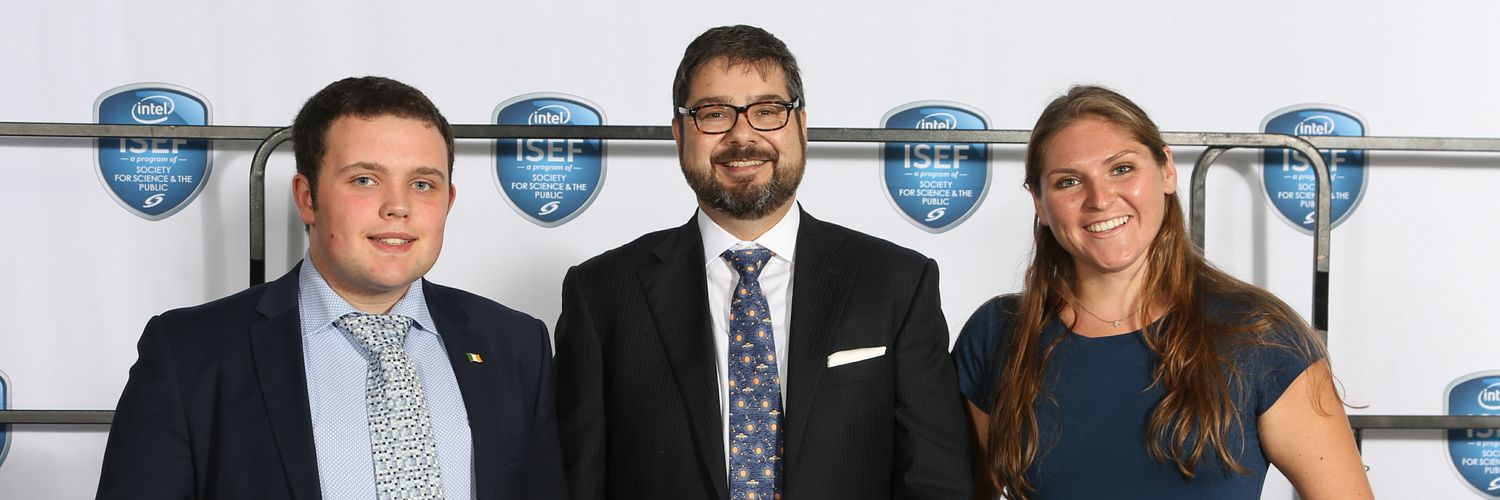
Delighted to announce that I've accepted the IMPRS fellowship at Heidelberg! 🥳 I'll use the fellowship to do my PhD with @AstroAndreas at @zah_hd and Brian Reville at MPIK on multiwavelength studies of strong stellar winds starting in September ✨💫🔭
In Episode 77.5, we take astro[sound]bites to three continents and timezones as we welcome our new co-host, Cormac (@LarkinCormac), based in Europe. We discuss what we're most excited about for this season and also prepare for the trickiest timezone combination ever attempted.
We're very excited to announce our new co-host, Cormac Larkin! He's a PhD student at the Astronomisches-Rechen Institut and Max Planck Institute for Nuclear Physics in Heidelberg, Germany where he researches massive stars and combines stellar wind modelling with plasma theory.
-- We are looking for (invited) speakers --
On July 11 2023, we are organizing an Early Career Astronomers day as part of the EAS in Krakow, Poland. We are looking for talks from early or senior astronomers on topics such as mental health, mentoring, jobs, presenting, DEI etc.
Interested in joining our hot star atmosphere group @zah_hd @UniHeidelberg? With you as a postdoc in our group, we would like to work towards a multi-dimensional treatment of hot star winds. Sounds great? Than take a look at the full job ad: https://t.co/XyRcdL67ln
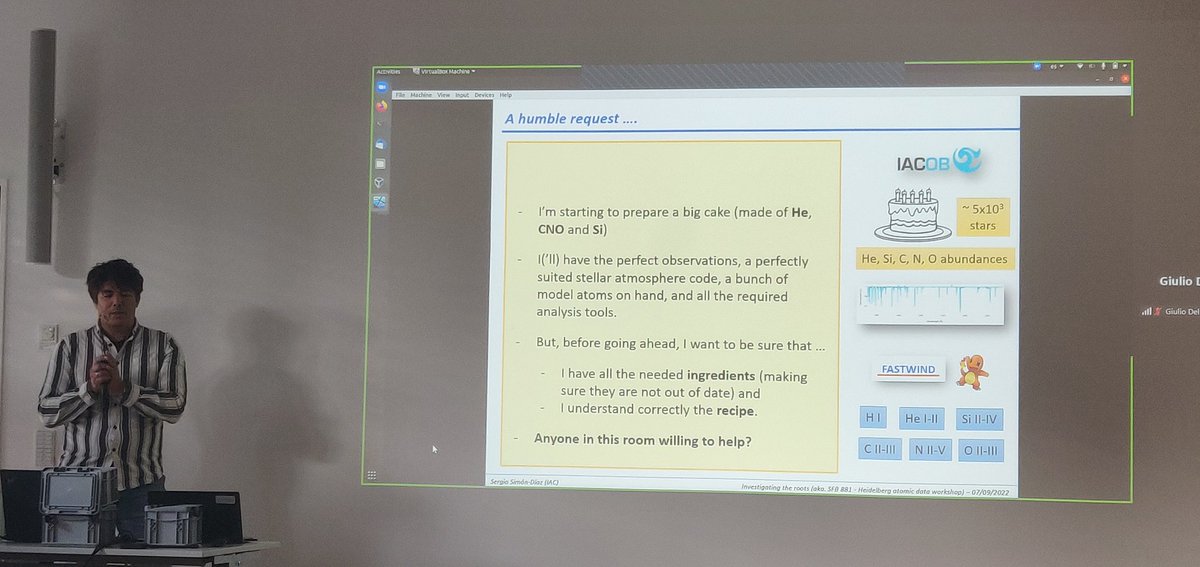
Our last talk of #astroatom comes from our astrophysical baker Sergio Simón-Díaz from the IAC talking about preparations and first results from the IACOB survey
Day 2 of the Atomic Data Workshop @UniHeidelberg is kicked off by Stefan Shippers from Uni Gießen telling us about laboratory measurements of atomic data ⚛️ @sfb881@dfg_public
Day 2 of the Atomic Data Workshop @UniHeidelberg is kicked off by Stefan Shippers from Uni Gießen telling us about laboratory measurements of atomic data ⚛️ @sfb881@dfg_public