In 1937, a 21-year-old MIT student sat in a quiet library, mapping abstract philosophical logic onto electrical circuits to pass the time.
By the time he finished his thesis, the young man had mathematically proven that mechanical telephone switches could perform complex calculations. Instead of just routing phone calls, they were destined to become thinking machines.
He had just discovered the mathematical trigger for digital computing.
But when he published his work, the leading engineers of the industrial world paid little attention, viewing his mathematics as a mere academic parlor trick.
His name was Claude Shannon.
It would take years for the industrial establishment to fully realize he was right and adopt the binary logic that now powers every computer, smartphone, and network on Earth.
His breakthrough against traditional engineering is the ultimate lesson in what happens when rigid practices clash with unexpected philosophical reality.
In the early 20th century, engineers believed they understood circuit design. They knew that as telephone networks grew, they needed more physical wires and relays. But traditional engineering offered no universal science; it was a manual process of brute-force trial and error.
The systems would grow into a chaotic, tangled mess of blueprints and copper lines.
The entire industrial establishment agreed: every circuit, no matter how complex, had to be wired by manual experimentation. It was a tedious, costly formula.
But in that library, Shannon realized the establishment had left a massive variable out of their equations: 19th-century symbolic philosophy.
Shannon recalculated the engineering, factoring in what happens when you treat an electrical switch using the laws of Boolean algebra.
What he found shattered the industrial consensus.
He proved that an electrical switch has only two possible states: it is either closed and letting power through, or open and blocking the current. This was mathematically identical to True (1) and False (0).
The circuit could evaluate logical statements. There was no limit to what it could compute. It could automate human thought, transforming physical electricity into digital logic.
When Shannon presented this concept, mainstream electrical engineers were skeptical. They couldn't accept that an abstract philosophical concept could solve real-world hardware bottlenecks.
Shannon was initially ignored. The establishment stuck to their traditional wiring methods.
Instead of fighting a rigid, closed system, Shannon quietly expanded his work into Information Theory, proving that all data could be compressed into a universal currency called the "bit." Decades later, when the global tech revolution exploded, the world realized the 21-year-old student had been right all along.
The philosophical blueprint Shannon left behind is a vital truth for navigating complex problems and institutional pushback:
Comforting traditions will always be more popular than disruptive innovations. Trust the system's underlying logic anyway.
Most of us approach our careers and projects seeking the validation of current experts or established guidelines. When we propose a radical new idea or try to change a broken system, and the authorities tell us we are wrong, our instinct is to assume our logic is flawed. We abandon our data to fit the consensus.
But Shannon’s legacy proves that traditional industry consensus is not the same thing as truth.
Gatekeepers are human; they protect their own methods, their own training, and their own comfort.
What is a bottleneck, a project, or a direction you’ve abandoned just because an expert or a boss told you it wouldn't work? What happens if you stop looking for their permission and trust the structural logic of your own work?
You have noticed it. ChatGPT feels dumber than it used to. Your prompts that worked six months ago produce worse results now. The writing sounds flatter. The ideas sound safer. The internet itself feels like it is shrinking. Every article reads the same. Every email sounds the same. Every answer sounds like it was written by the same voice.
You thought it was you. It is not you.
Researchers at Oxford and Cambridge published a paper in Nature proving what is happening. They call it Model Collapse.
Here is the mechanism in one sentence. AI trained on AI-generated data gets dumber every generation until it forgets what real human data looked like.
The internet is filling with AI-generated content. Blog posts. Articles. Reviews. Comments. Social media. AI companies scrape the internet to train the next generation of models. Which means the next generation of AI is being trained on the output of the current generation.
Each cycle loses information. Not randomly. It loses the rarest, most unusual, most creative parts first. The researchers call these the "tails of the distribution." The weird ideas. The unexpected perspectives. The things that made the internet feel human. Those disappear first.
What remains is the average. The safe. The expected. The bland.
Then the next generation trains on that. And loses more. And the next generation trains on that. And loses more. The researchers proved this is not a slow decline. Major degradation happens within just a few iterations. Even when some of the original human data is preserved.
They tested it on large language models. On image generators. On statistical models. The pattern was the same every time. The output converges toward a narrow, flattened version of reality that looks nothing like the original data.
The lead researcher put it plainly. "Large language models are like fire. A useful tool. But one that pollutes the environment."
The pollution is invisible. You cannot see which sentence on the internet was written by a human and which was written by AI. Neither can the AI that is about to train on it. And once the tails are gone, they do not come back. The damage is irreversible.
This is not a prediction anymore. It is a diagnosis.
The internet you grew up on was built by humans writing things no algorithm would have written. Strange, personal, imperfect, alive. That internet is being diluted. One generation of AI at a time. And the models trained on what remains are learning a smaller and smaller version of the world.
Model Collapse is not a technical problem. It is a cultural one. The thing that made the internet worth reading is the thing that disappears first.
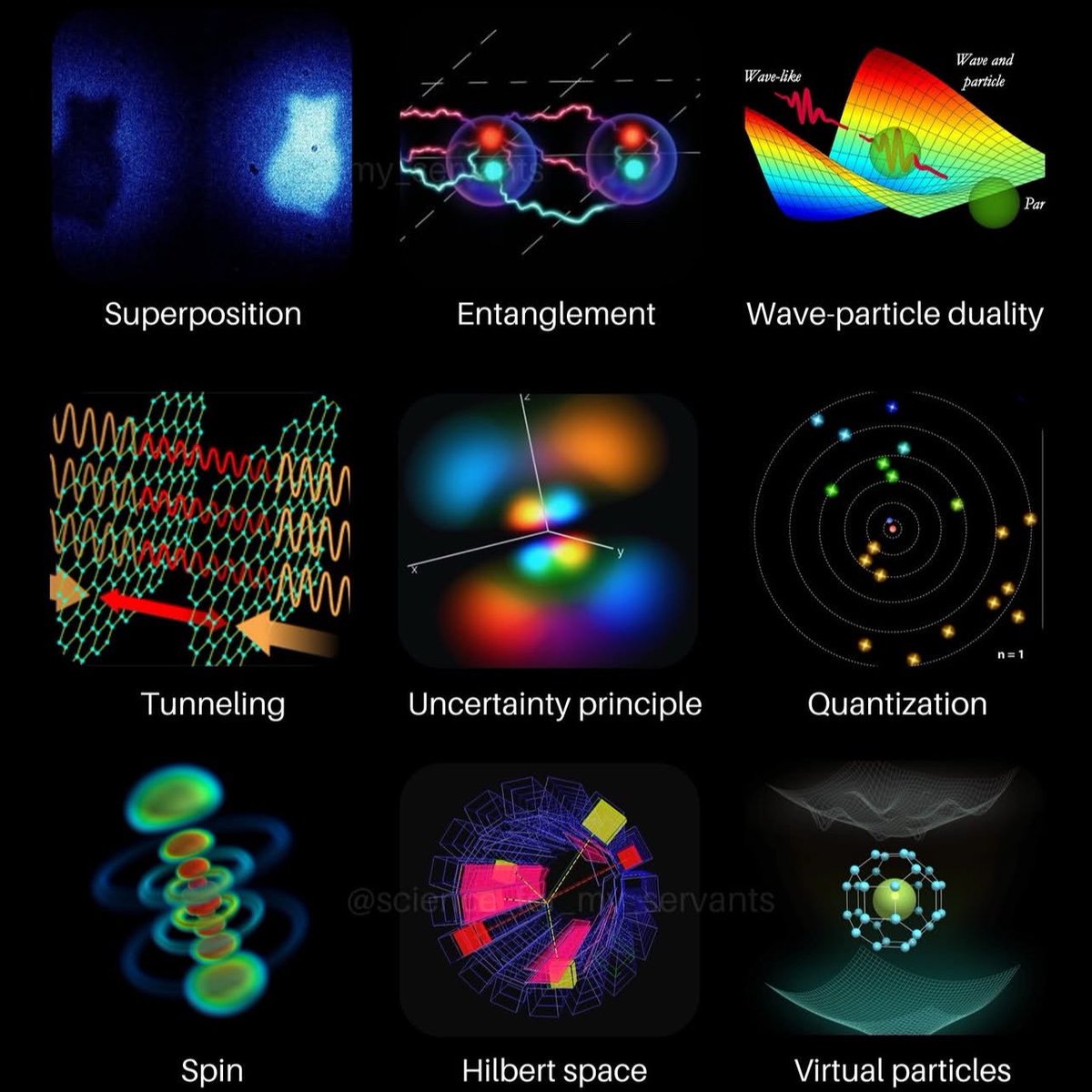
Ask a physicist what quantum mechanics means and watch the room fall apart.
Bohr: "There is no reality until you measure it."
Einstein: "Something is missing. God doesn't play dice."
Heisenberg: "You can't know everything about a particle. Not because your tools are bad. Because nature won't let you."
Everett: "Everything happens. The universe splits every time."
Bohm: "The particle always had a position. You just can't see the hidden layer."
They all use the same math. Get the same predictions. And completely disagree on what's actually going on.
90 years later, nobody's won the argument.
A self-taught Irish schoolteacher wrote a book in 1854 that almost nobody read for 80 years, until a 21-year-old MIT student picked it up and realized it could be used to design every computer in human history.
His name was George Boole. The book is called An Investigation of the Laws of Thought.
Boole was born in 1815 in Lincoln, England. His family was poor. He left school at 16 to support them. He taught himself Latin, Greek, French, German, and Italian.
Then he taught himself mathematics. By 19 he had opened his own school. By 24 he was publishing original papers in the Cambridge Mathematical Journal, competing with men who had spent decades inside the best universities in Britain.
He never had a degree. He never had a mentor. In 1849, Queen's College in Cork hired him as a professor anyway.
In 1854, he published his masterwork. What he built inside it was something nobody had attempted before at this scale. He turned logic into algebra.
Before Boole, logic was philosophy. You argued in sentences. You reasoned in paragraphs. It was powerful and completely impossible to automate, because there was no formal system underneath it, just language.
Boole stripped it down to arithmetic. He showed that every act of human reasoning could be reduced to operations on two values. True or false. One or zero. AND, OR, NOT. If both conditions are true, the result is true. If neither is, the result is false. Every judgment a human mind makes, every decision, every deduction, could be written as an equation following those rules.
Logicians read it. They found it interesting. Engineers building machines had never heard of it.
For 83 years, the book sat there.
Then in 1937, a 21-year-old MIT master's student named Claude Shannon was working on a thesis about electrical relay circuits. Switches that could be open or closed. Current that either flowed or didn't.
He read Boole and understood something nobody had connected before.
An open switch is a zero. A closed switch is a one. A circuit with two switches in series only carries current when both are closed. That is AND. A circuit with two switches in parallel carries current when either is closed. That is OR. Shannon proved that every possible logical relationship Boole had described could be physically built using wire and switches.
That single insight is the foundation of every computer ever made.
After Shannon, chip designers stopped thinking about electricity and started thinking about logic. Every transistor on every processor running right now is implementing a Boolean operation. Every if-statement in every codebase is Boolean logic. Every database query using AND or OR. Every neural network threshold that fires or doesn't fire. All of it is running the algebra of a self-taught schoolteacher from Lincoln who died 160 years ago.
The strangest part is what happened to Boole at the end.
He was walking to class in November 1864 when he got caught in a rainstorm. He lectured for hours in wet clothes. He went home sick. His wife, Mary, believed in homeopathic medicine and thought the cure should mirror the cause. She wrapped him in wet sheets and poured cold water over him repeatedly.
He died a few days later. He was 49.
He never saw a transistor. He never saw a circuit. He never saw a single physical machine run a single one of his rules.
His book is in the public domain. Free to download. Most engineers use the word Boolean dozens of times a week. Almost none of them know who they are saying.
The man whose logic runs inside every phone, every server, and every AI model on Earth died soaking wet in a small Irish town, 83 years before anyone figured out what he had actually built.
This guy only has 154 followers, posts real content about robits. We really need to get these people into the feed. Out with the slop, in with the robits
The contrast is actually insane when you think about it.
One part of humanity is building AI systems that could transform science, medicine, warfare, and civilization itself.
Another part is still trapped in conflicts rooted in religion, ethnicity, territory, and grievances that go back generations or even centuries.
It’s like multiple eras of human history are running simultaneously on the same planet.
The part that should concern everyone is that these worlds aren’t separate.
The same AI tools being developed in Silicon Valley, London, Beijing, and everywhere else will eventually end up in the hands of governments, militaries, religious movements, extremists, corporations, and anyone else with enough resources to acquire them.
Technology doesn’t magically make people wiser.
It amplifies whatever values, ambitions, fears, and ideologies already exist.
That’s why the future feels so unstable.
We’re racing toward godlike capabilities while still carrying around ancient tribal software.
And sooner or later those two things are going to collide.
“I worked at Pfizer for 17 years. We didn’t discover drugs - we discovered markets. If a drug cured asthma in 3 days, we’d kill it. Chronic disease is where the money is. Cures are bad for business.”
— Peter Rost, former Pfizer executive
That’s the business model. Not healing people … keeping them customers for life.
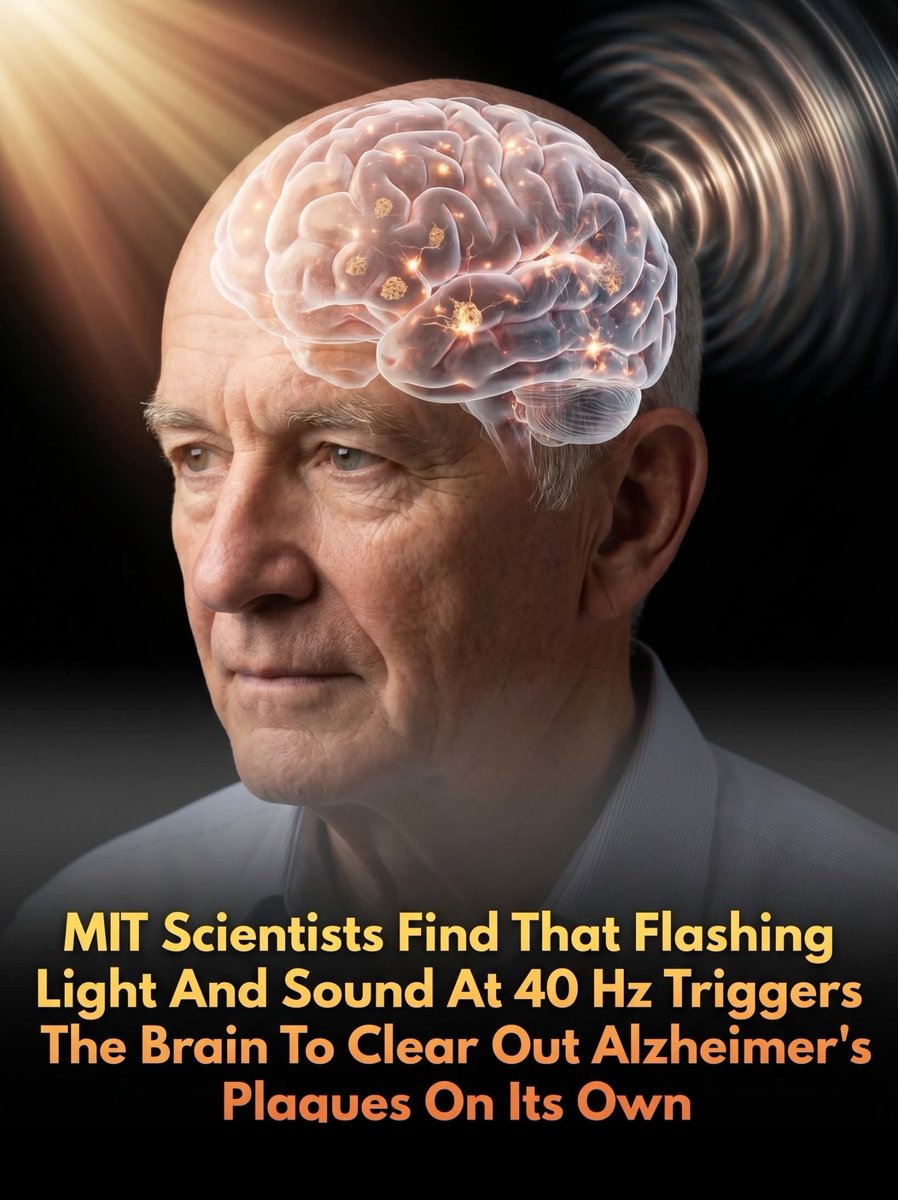
A noninvasive treatment using light and sound shown to trigger the brain’s natural waste-clearance system to combat Alzheimer's disease.
More than 7 million Americans are currently living with Alzheimer’s disease, a crisis projected to cost the U.S. healthcare system an estimated $409 billion in 2026. This treatment could change that.
In a groundbreaking preclinical study funded by the National Institute on Aging (NIA), researchers from MIT, Boston University, and Westlake University in China have discovered that noninvasive light and sound stimulation can significantly reduce levels of toxic amyloid proteins in the brain.
By exposing mice to flashing lights and auditory tones engineered to generate 40-hertz electrical gamma waves, scientists triggered a dramatic boost in the flow of cerebrospinal fluid.
This sensory stimulation effectively tapped into the brain’s glymphatic system—its internal waste-disposal network—prompting cells called astrocytes to expand, flush out debris, and clear the destructive plaques historically associated with Alzheimer’s disease.
The therapeutic mechanism relies on a delicate chain reaction in the brain. Researchers found that gamma wave stimulation coaxes specific inhibitory interneurons to release a vital hormone called vasoactive intestinal peptide (VIP).
This hormone signals the glymphatic system to increase fluid circulation, accelerating the elimination of toxic waste. When scientists experimentally blocked either the astrocytes' expansion or the interneurons' ability to produce VIP, the plaque-clearing benefits vanished.
These promising results suggest that simple, noninvasive sensory therapy could act as a potent tool to keep our brain's plumbing running smoothly, offering a highly accessible avenue for treating Alzheimer’s and other protein-accumulating neurological disorders.
source: Murdock, M. H., et al. Multisensory gamma stimulation promotes glymphatic clearance of amyloid. Nature, 627(8002), 149-156.
This is biblical.
A woman in her eighties. Ten years into Alzheimer's. Hadn't spoken a full sentence in five years.
Takes one, 5 gram dose of psilocybin.
She slept 19 hours and woke up and spoke for hours about her life, recognized family and held real conversations. She regained bladder control after five years, walked on her own. and dressed herself. Gains held for weeks.
Psilocybin Shows Promise in Temporarily Restoring Functions in Advanced Alzheimer’s Disease.
New Case Report Reveals
In a striking case that challenges long-held assumptions about the irreversibility of advanced neurodegeneration, an 80-year-old woman with severe Alzheimer’s disease experienced significant, though temporary, improvements in speech, memory, mobility, and daily functioning after receiving a high dose of psilocybin-containing mushrooms.
The woman, who had lived with Alzheimer’s symptoms for nearly a decade and had been largely silent and dependent on caregivers for the past five years, received a supervised 5-gram dose of psilocybin mushrooms (Enigma strain) in Brazil.
Within about 19–20 hours, she began speaking in full sentences, recalling detailed personal memories, regaining bladder control, dressing herself independently, and engaging socially with eye contact and emotional responsiveness.
These gains persisted for weeks, allowing her to walk with greater agility, retrieve contextual memories, and participate in conversations.
A follow-up 3-gram dose further enhanced effects, including moments of humor and vivid recollections, such as describing surfing with her son.
The improvements were not permanent and eventually faded, but the case suggests that in advanced Alzheimer’s, some cognitive and functional abilities may not be entirely erased by neurodegeneration but could instead be rendered inaccessible—potentially “unlocked�� through mechanisms like psilocybin’s effects on neuroplasticity, serotonin receptors, and brain network connectivity.
Details from the Case Report
Published in Frontiers in Neuroscience, the exploratory observational case report details the woman’s journey under careful medical supervision.
Researchers noted initial effects including agitation and a prolonged sleep-like state, followed by the remarkable functional revival. No brain imaging confirmed structural reversal of Alzheimer’s pathology, and the authors emphasize this is a single case, not evidence of a cure.
However, it highlights psilocybin’s potential to promote transient multidomain recovery even in late-stage disease.
Broader Context and Implications
Alzheimer’s disease currently affects millions worldwide, with limited treatments that slow progression but do little to restore lost abilities in advanced stages. Psychedelics like psilocybin have gained attention for their roles in promoting brain plasticity and treating conditions such as depression and PTSD.
This case adds to emerging discussions about their possible applications in neurodegenerative disorders.
Experts caution that larger, controlled clinical trials are essential to verify safety, efficacy, optimal dosing, and long-term outcomes. Factors such as individual variability, potential risks in elderly patients, and the need for supervised settings must be addressed.
Still, the report fuels optimism that some dementia-related deficits could be more reversible than previously thought.
And most importantly, there is a strong reason to test this with loved ones under medical support than not as the prognosis could not be worse.
As research into psychedelic medicine expands, this case stands as a compelling call for further investigation into how compounds like psilocybin might one day complement existing Alzheimer’s therapies.
A question that almost nobody in AI wants to answer directly.
Who gets to decide what is acceptable for an AI to say?
Not what is true.
Not what is false.
What is acceptable.
Because once a model is capable of reasoning about a topic, the question stops being technical and becomes political, moral, and cultural.
Someone has to decide.
Which conclusions are allowed.
Which conclusions require warnings.
Which conclusions get buried under layers of caveats.
Which conclusions trigger refusals.
And which conclusions the model is trained to never reach in the first place.
The uncomfortable reality is that these decisions are not coming from humanity.
They’re coming from relatively small groups of researchers, executives, policy teams, and safety teams inside a handful of companies.
Maybe they’re right.
Maybe they’re wrong.
But pretending no value judgments are being made is dishonest.
Every alignment policy contains assumptions about risk, harm, truth, speech, autonomy, and acceptable discourse.
Those are moral choices.
The real debate isn’t whether AI should have guardrails.
The real debate is who gets to build them, who gets to enforce them, and who gets to challenge them.
That’s a conversation worth having openly.
@MolecularLab_ I'm not doing these anymore. PEMDAS people, 4rd grade. What number base is represented? Is it place-value notation? Euclidean space? Are there tiny numbers we can't see? Are the operators mathematic, or logical (Boolean)?
A single gigawatt of orbital compute requires roughly 200 Starship launches and Elon Musk is not satisfied with gigawatts (Save this).
The target is 100 gigawatts of orbital compute per year which means SpaceX is staring down a launch requirement that no organization in human history has ever attempted at anything close to that scale.
He acknowledges that scaling to gigawatts per year in orbit is a very hard challenge, but then points to something most people have missed entirely, SpaceX has already demonstrated the foundational capability, because building and launching thousands of Starlink satellites per year is the same industrial problem applied to a different payload.
When you understand the orbital compute satellite as a larger version of Starlink V3 with an Nvidia GPU rack at the center instead of a communications payload, the manufacturing and launch scaling challenge stops looking like science fiction and starts looking like a production ramp.
The infrastructure to support that ramp is already being built.
SpaceX is currently capacitizing for thousands of launches per year, two launch towers and pads in South Texas are operational, the first pad at Cape Canaveral is nearly complete, a second is on the way at Launch Complex 37, and additional locations are already in discussion.
As the CFO says it "You need to have those cost curves as you ramp up in volume and time, your costs go down."
The vision he describes for what this eventually enables is striking in its specificity.
He imagines asking Grok a question on his phone, the inference running on an orbital compute satellite, and the answer coming back down through Starlink direct-to-cell, a complete AI query processed entirely in space, from prompt to response, without touching a single terrestrial data center.
That moment, he says, is closer than the industry thinks, with initial capability demonstrations possible as soon as next year.
The bottleneck that stands between now and that moment is not the satellite design, the cooling physics, or the silicon, all of which SpaceX has already worked through.
It is now the norm to go from Pre-K to PhD without reading a word of Homer, Plato, Virgil, Augustine, or Dante.
If the schools and universities won't teach the great books of the West, we'll do it ourselves.
We're about to start our 13th book at Athenaeum!
Tomorrow is our first (intro) discussion on Aristotle's Nicomachean Ethics.
We are an independent group studying the great texts of the Western canon, in dialogue with each other. We want to stay connected with the minds that shaped Western Civilization.
If this is something you'd like to be a part of, join our reading group. Become a paid member if you'd like to support us and get access to all of our resources.
https://t.co/efQaicNvay
Join us!