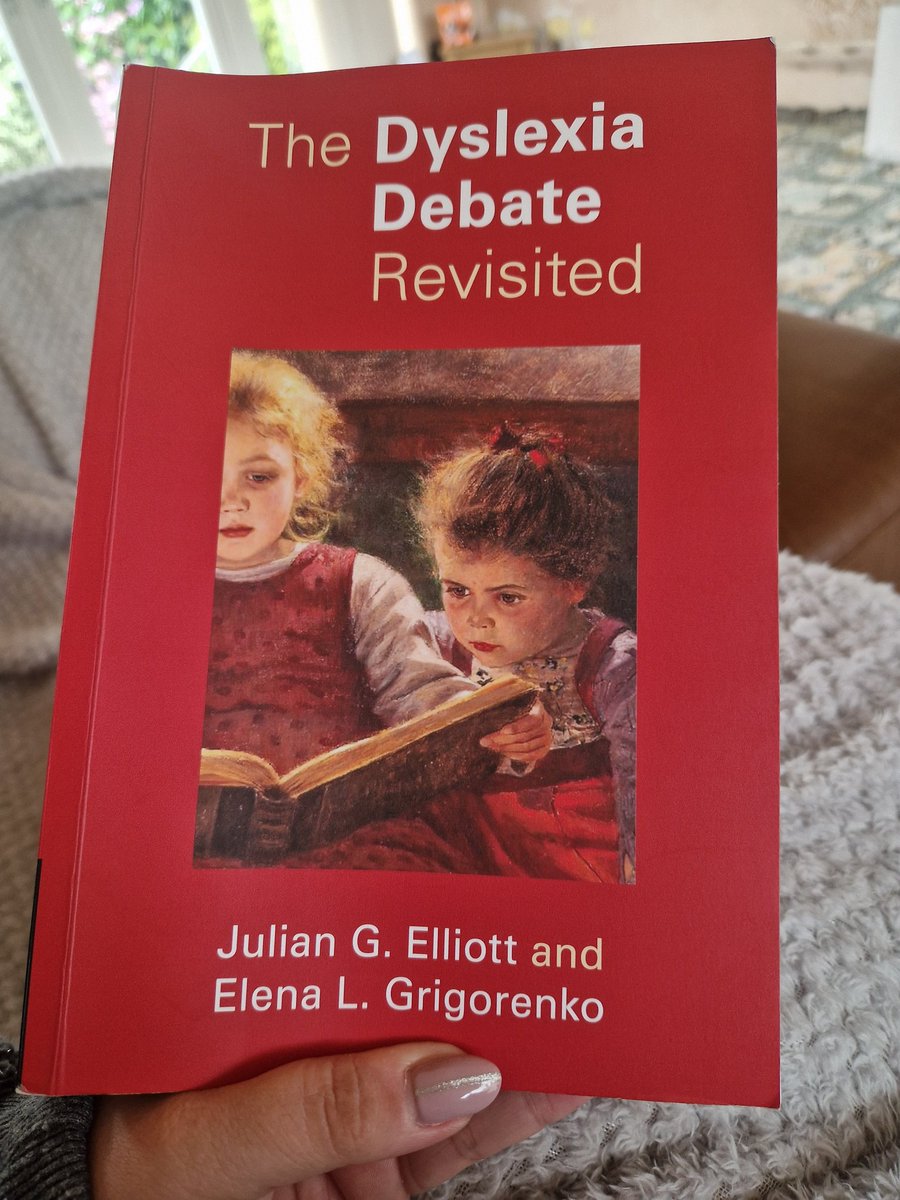
I'm reading this (below) whilst reflecting on how hard I find it to read these days! It's so hard to turn off 'the noise' and focus on the text in front of me. It feels heightened since the doctorate - perhaps a shift in purpose? Can anyone else relate?! 📚 #TwitterEPs
Here is the link to a recent interview I gave on the Educational Diagnosticians podcast following publication of “The Dyslexia Debate Revisited”. https://t.co/JCyeBfLezD.
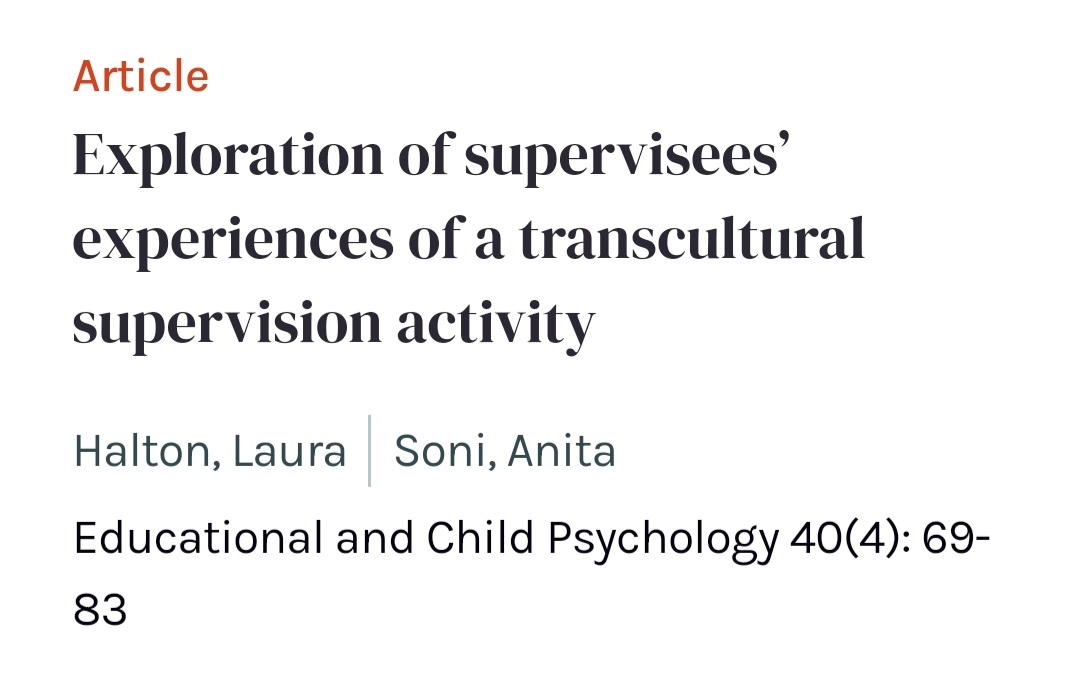
We are delighted to announce the publication of this Special Edition of Educational and Child Psychology on School Non-Attendance:
https://t.co/gc9fKT6x0d
A must-read for EPs & other professionals supporting children & young people who experience EBSNA.
#twittereps@BPSOfficial
There’s a huge divide which happens when I talk about behaviour points at school. Parents and young people tell me that behaviour points are given out for minor infractions, including uniform, missing equipment, going to the toilet in a lesson and being distracted. I have been sent screen shots of the apps which back this up as well as school behaviour policies which say that this is the case. Parents say that apps have made it very easy for schools to collate behaviour points in a way which was harder before, meaning that there is never a sense of those points being ‘cleared’, even once a punishment has been served.
This means that it’s possible to have extra end-of-year rewards and punishments for those behaviour points. Those with too many behaviour points don’t get to go on school trips, to attend end of term parties or go to the prom. End of year events are framed as rewards for good behaviour.
Some teachers on X/Twitter talk very differently. They talk about those children with lots of behaviour points or poor attendance as high risk, disruptive, causing safeguarding problems for everyone else. Children who could not be trusted to go on a school trip or be at the prom, and who would ruin it for everyone else. They say that this is a safety issue. From this perspective, the reward aspect of the event doesn’t seem to be so important. It’s just that some children shouldn’t be allowed to go on it and behaviour points tell them which those children are. It doesn’t matter what the behaviour points are for, nor why the child behaved in that way.
There are two competing narratives going on. One, favoured by some parents, is that end of year events are a reward and many children who could manage the event are excluded because they are deemed not to deserve the reward (and that this can have a negative long-term effect on how the child feels about school and themselves). The other, favoured by some teachers, is that some children simply aren’t safe at these events due to their behaviour and behaviour points and attendance are a way to identify those children.
These are really different ways of seeing the same situation and in particular the aims are different. In one case, the question might be, does making the end of term event a reward ‘work’? Does it improve behaviour and attendance? In the other case, there’s no question about that, because the point isn’t to improve behaviour of the excluded. It’s simply to safeguard the event for everyone else. ‘Working’ means the trip goes off without incident.
This difference between how teachers and parents see the situation makes any meaningful discussion difficult. They are literally talking about different things. One is about the effect of rewards and ending the school year on a downer, the other is about safeguarding and inclusion/exclusion.
Both are important and neither should be dismissed. Yet the conversations are so far apart that it doesn’t seem possible to meet anywhere near the middle.
@DrDanLake@Spectrum0Gaming Andy spoke at our NW EP Conference in December 23 and was fab. So are the resources on the website! Looking forward to seeing what comes next 😀
@psychedmum I have by incorporating (and referencing...!) @ProfLauraLundy's child participation feedback questionnaires - the different question templates work really well for scaling & open ended feedback 👍
We are so proud to share that our wonderful assistant, Ana, has received an invite (or two!) to train as an EP! 🎉 Whilst we will be sad to say "cheerio" in September, we look forward to welcoming you back in the future! 🥰✨️#ReachForTheStars#KnowsleyEPS#TwitterEPs
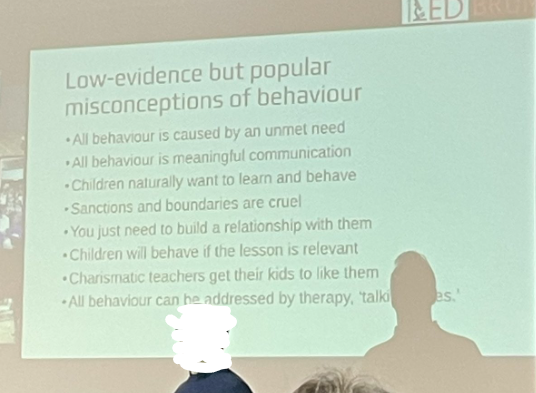
What meaningful communication is there in this slide? Unfortunately, not much at all.
There’s a problem with the assertion that these statements are ‘low evidence misconceptions’ and it’s this. It’s not defined here what ‘behaviour’ means. To a psychologist, behaviour means the way in which a person acts or conducts themselves. All of it. The way we walk, the way we smile, the way that we talk, how we play, what we do with our time – it’s all behaviour. Behaviour is the way in which we interact with the world. It is the result of an interplay between a person and their environment.
I suspect however that on this slide, ‘behaviour’ is a stand in for what Tom sees as ‘unacceptable behaviour’. This is often how the term ‘behaviour’ is used when referring to children. However, even ‘unacceptable behaviour’ is poorly defined. One of the features of high control school environments is that something others might see as just ‘behaviour’ is defined as ‘unacceptable behaviour’. Not tucking your shirt in, for example, or forgetting your ruler. Or childish behaviours such as running instead of walking or talking out of turn.
‘Unacceptable behaviour’ is in the eye of the beholder and context dependent. What is unacceptable in a high control school (talking in the corridors, not tracking the teacher with your eyes) will be completely acceptable in another school. The behaviour is the same, it’s how the adults respond which has changed.
When ‘behaviour’ is so poorly defined, it’s not possible to test hypotheses such as ‘All behaviour is meaningful communication’, or ‘All behaviour is caused by an unmet need’. These are clearly daft when ‘behaviour’ means not tucking your shirt in or being three minutes late for school.
Another possible definition for behaviour which Tom may be using (but hasn’t told us) is ‘not doing what adults say’. This is very far from the way which psychologists would understand ‘behaviour’ and is closer to ‘compliance’. If this is what he means, then again several of his statements are clearly nonsensical. It makes no sense to say ‘all children naturally want to behave’ if by ‘behaviour’ you really mean ‘be compliant. Of course they don’t, and why should they? ‘All non-compliance is meaningful communication’ – that doesn’t make much sense either, since non-compliance can be due to a number of reasons, including forgetfulness or factors beyond a person’s control.
The problem continues as we go down the list. ‘All children will behave if the lesson is relevant’ begs the question of what definition of ‘behaviour’ is being used – and we don’t know, because it hasn’t been defined. Does he mean ‘all children will be compliant’ – in which case, again it’s clearly nonsense. Humans aren’t naturally compliant with high control systems, but that is quite different to ‘behaving’. Or does he mean that they’ll all tuck their shirts in and remember their protactors? Again, the statement is meaningless.
Last point about behaviour and therapy. Many psychologists dislike being referred a ‘badly behaved’ child and being asked to ‘fix them’ with therapy. Particularly when ‘badly behaved’ really means ‘non-compliant’. Sometimes the rules children are being asked to comply with are unreasonable and developmentally inappropriate. No ethical therapist will set out to stop children behaving like children. No therapy will stop children making mistakes or untucking their shirts. Children show their distress through behaviour, yes, but even then therapy might not be appropriate. It might be better to ask why they are distressed and see if that can be changed.
Behaviour is an interaction between a person and their environment. With children, the first step for most psychologists is to look at the systems around them and to ask why the child is behaving the way that they are. This is best practice and evidence-based. That is because we do see a lot of behaviour – defined as the way in which a child acts - as communicating something, and it’s the adult’s job to figure out what. Is this an environment within which they are thriving? If not, how could that change?
If you don’t define what you mean by ‘behaviour’ then a list of statements about behaviour means nothing at all. Of course there is no evidence. It’s not possible to generate any. The statements are untestable, because we don’t have a shared understanding of what they mean.
If you are really interested in looking at the evidence, then you need to start out by defining what exactly you are talking about when you say ‘behaviour’. Otherwise we end up with a list of provocative soundbites with no substance at all.
Good for sharing on Twitter, but ultimately meaningless.
A great morning so far! Buzzing with lots of ideas about how we can introduce this to our schools. I'm hopeful for an opportunity to support organisational change and promote whole-school wellbeing 🙏 🙌
#twitterEPs#wellbeing#mentalhealth
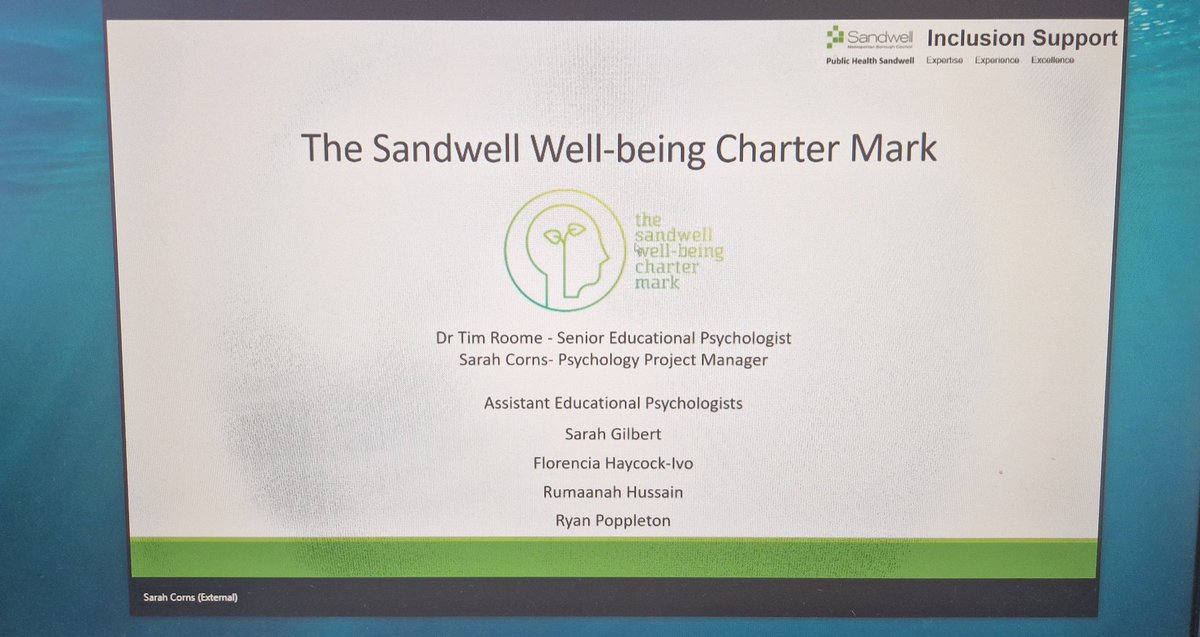
A day of training for two of our EPs today! The Sandwell Well-being Charter Mark focuses on supporting whole-school wellbeing 🌟 We're excited to see how this can benefit our schools 🙌
👏 Thank you @SandwellEdPsych#Knowsley#Wellbeing#TwitterEPs
⚠️ Trainee EPs! ⚠️ Come and join us for your 2nd and 3rd year of training 🙌 To find out more about the salaried position, see the link below ⬇️
https://t.co/5I34UUAkDt
#TwitterEPs#TEPs#TraineeEP
Come and join our fabulous team! 🌟 If you are looking for opportunities to develop ongoing relationships with cyp, families, school staff & LA colleagues, have a variety of work and further your CPD interests... click the link below #TwitterEPs! ⬇️🙌
https://t.co/QanbJNKrqA