Our new study on neurobiology of stress-driven food intake.
https://t.co/S8WiWaQh0i
In mice, PFC controls lateral hypothalamus through a multi-branched network. Stress causes differential plasticity across branches, priming the network to promote bingeing. #stresseating
We are hiring!
Project 2: We have a PhD position on stem cell treatment for recovery of dopamine system in Parkinson mouse model. Team effort with @vanessa_donega
Involves stem cell usage, fiber photometry, behavioral analysis.
Please distribute.
https://t.co/ZHSOHhZZ8M
We are hiring!
Project 1: We have a postdoc position on neural circuits through which early life risky play opportunities affect later life resilience in rats. Team effort with @HLesscher
Fiber photometry / Patch clamp / chemogen
Please distribute.
https://t.co/IXXrDRRILv
Excited to share a preprint for a project driven by the talented @IKoutlas! Two distinct ventral tegmental area neuronal ensembles, one for opioid reward one for social stress, are indispensable for stimulus-driven approach/avoidance behavior in mice.👇
https://t.co/fcYblLxDo6
We're excited to share a new preprint on how, in mice, stress-driven increased fat intake involves altered control by the prefrontal cortex over the lateral hypothalamus. 👇
https://t.co/7EnlemSpBC
This project was spearheaded by the talented duo @RogierPoorthuis and @Laura_spt
Check out our new preprint on NPY neurons regulating anxiety levels through modulation of Locus Coeruleus. 👇🏽 https://t.co/pthXqKD4Q3
A project largely conceived and driven by the very talented @dan_ai_lama
New #PhD position available! The candidate will work on #ALS at the @NeuroscienceT and Neurology departments of the @UMCUBrainCenter, under the supervision of @Kenna_K_P and Jan Veldink 🚀 Deadline is the 17th of January. #work#neuroscience
https://t.co/DuKPwxXzth
In case you missed out; Congrats to the @fjmeye lab of the @UMCUBrainCenter for their latest work @NatureComms 🎊🎊 See details at
https://t.co/Dc3jhxMehN
New research paper from the @fjmeye lab led by @IKoutlas and colleagues of our department sheds light into the properties of social stress-activated neurons in the ventral tegmental area 👏🏽🎊 #neuroscience#stressrelief
https://t.co/xPbScImanj
Happy to see our new story on stress-sensitive ventral tegmental area neurons out in open-access @FrontiersIn. Work driven by @IKoutlas and other (twitterless) team members!
👇
https://t.co/GgX03GGPYp
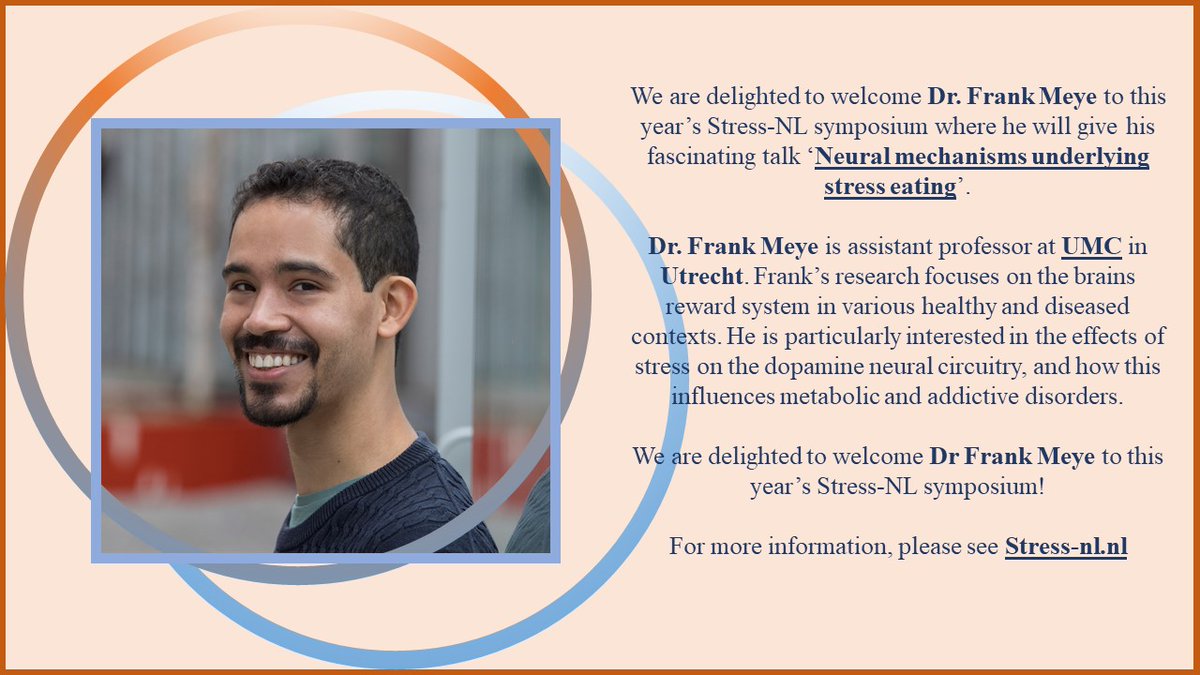
Kick starting our stellar speakers this week is Dr. Frank Meye @fjmeye presenting 'Neural mechanisms underlying stress eating' at the fast approaching @Stress_NL meeting. Register today at https://t.co/pUtlVhVG7J and 'for the love of science' activity! Its going to be inspiring🧠
We are recruiting young talent for two tenure track assistant professors positions!
You will be embedded in a highly vibrant, diverse and collaborative environment that is well connected both nationally and internationally.
Apply now! @UMCUBrainCenter
https://t.co/yUHUGeBoqh
Spread the news! We have two tenure track positions available in (1) molecular and cellular neurobiology and (2) human iPSC modelling.
For more info please contact @JeroenPasterk or @elly_hol! #tenuretrack#neuroscience#utrecht
We are seeking a PhD student to unravel effects of stress on neural circuits of reward. Candidates with affinity for (patch-clamp) electrophysiology are particularly encouraged to apply.
https://t.co/GCFBtYnNoF
Rob Malenka opening #NeuroFrance2019
"With social rejection growing worldwide, understanding social behavior and empathy is the most important research Neuroscientists can do." Very cool data on MDMA pro-social influence through 5-HT in NAc.
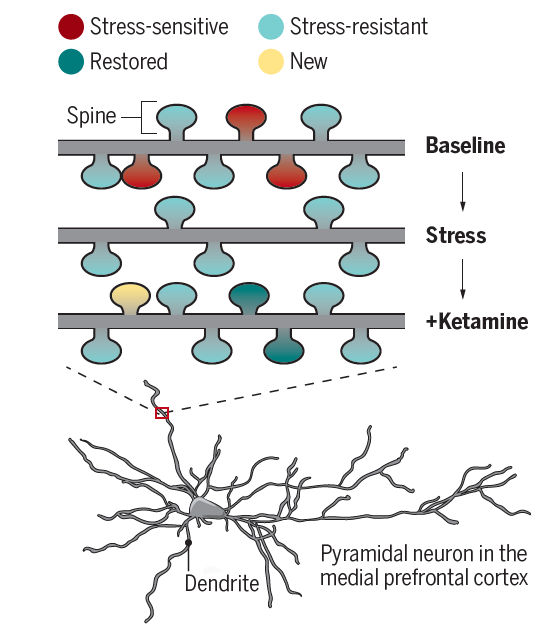
Impressive longitudinal analysis of ketamine antidepressant action in mPFC by @RachelModa, @_DrOctothorpe_ et al. https://t.co/xLKHm8qANX
Honored to have written a perspective on their foundational work https://t.co/ZoBPLqzYbj
@sciencemagazine@NIMHgov