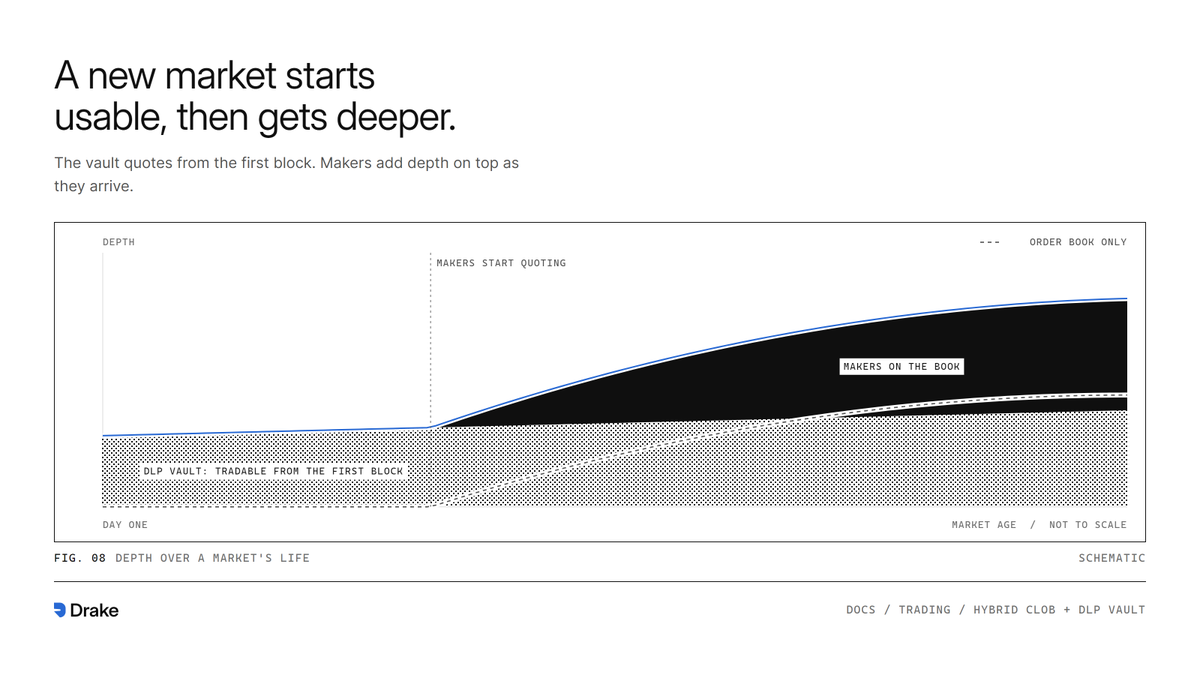
Drake can open a new market without waiting for makers.
What makes that work is a cap on how one-sided each market can get: net long versus short can't exceed 20% of that market's open interest cap. The DLP vault takes the other side of each market's net flow at the oracle price plus a spread, so its exposure is capped per market, as a share of the vault, alongside that market's own leverage and spreads.
Makers still matter. They quote on the book in front of the vault, fill first whenever they beat it, and tighten the market as they arrive.
Drake has opened five markets this way so far: BTC, ETH, SOL, MON and HYPE.
The vault can quote anything with a price feed though, and gold, oil and equities are next.
A fully onchain order book is only as good as the chain under it. That's why Drake runs on @monad.
On Drake, each market's order book is a contract. Matching runs inside the taker's transaction, every trade brings its own Pyth price update, and the contract checks the newest verified price before anything fills. Liquidations settle onchain too: Drake's liquidator submits them with a fresh price and the contract re-checks the position before closing it.
Every order placed or cancelled is a transaction, so the chain sets the limits of the exchange. What Monad has live today:
Fast blocks and fast finality. 300ms blocks, final in about 600ms, so orders, cancels and price updates settle quickly.
Room in every block. Asynchronous execution pipelines consensus and execution, and optimistic parallel execution runs independent transactions together, so a busy chain doesn't crowd the book out.
Big blocks that reach every validator fast. RaptorCast erasure-codes each block into chunks that validators relay to each other, so the leader's upload doesn't grow with the validator count.
Full EVM bytecode and RPC compatibility, so the contracts and tooling are standard.
Further out, Cadence, research from @category_xyz on a consensus design with multiple concurrent proposers, targets 100ms blocks and is designed so a transaction an honest proposer includes can't be censored or deferred while the network is healthy. Paired with the BTX encrypted mempool design, it is aimed at MEV. Neither is live yet.
https://t.co/b48DeFMOtG
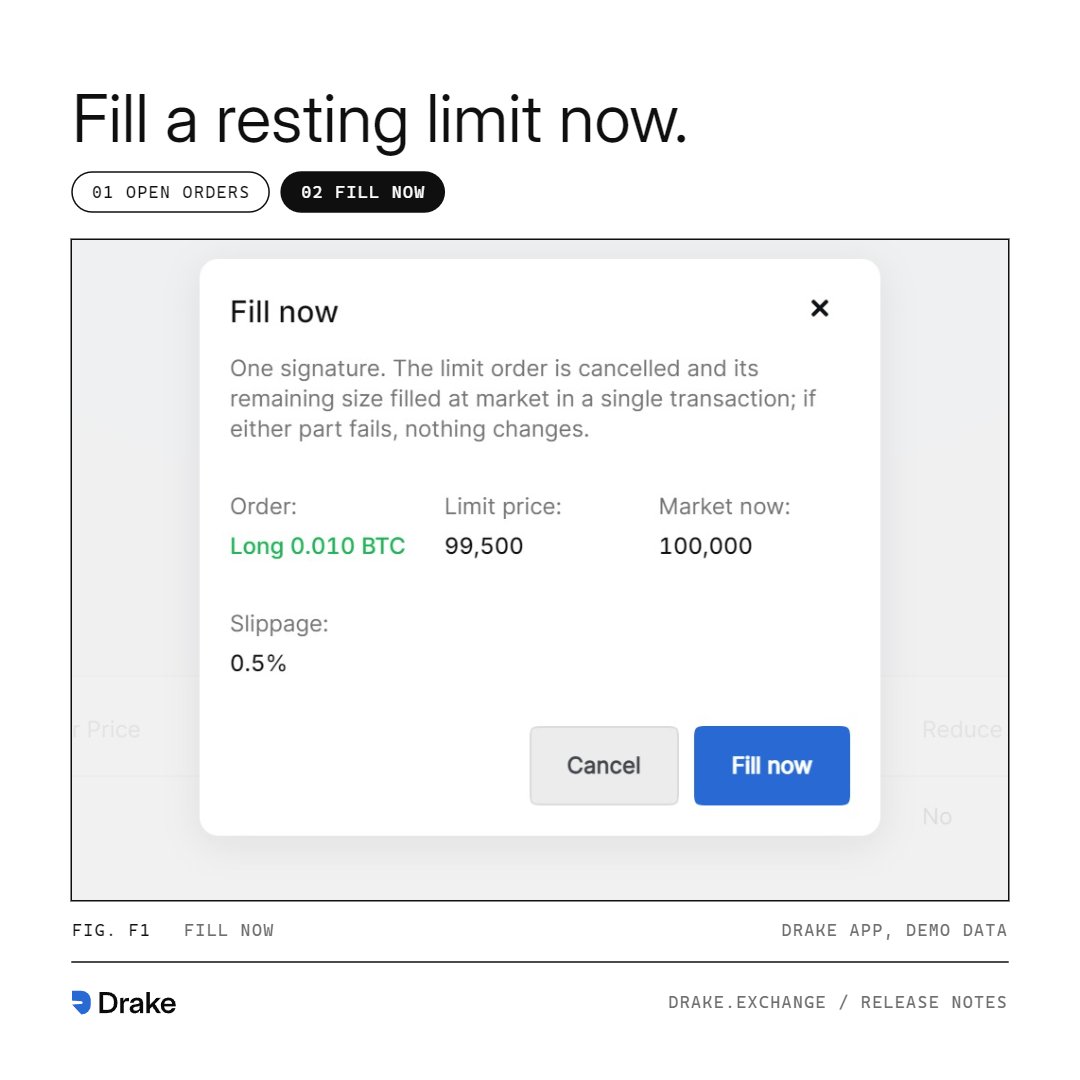
New on Drake: Fill now.
If price moves away from your resting limit, you can fill the rest of it at market in one transaction, straight from the orders table or the limit line on the chart. The cancel and the market fill go through together, so nothing can move in between.
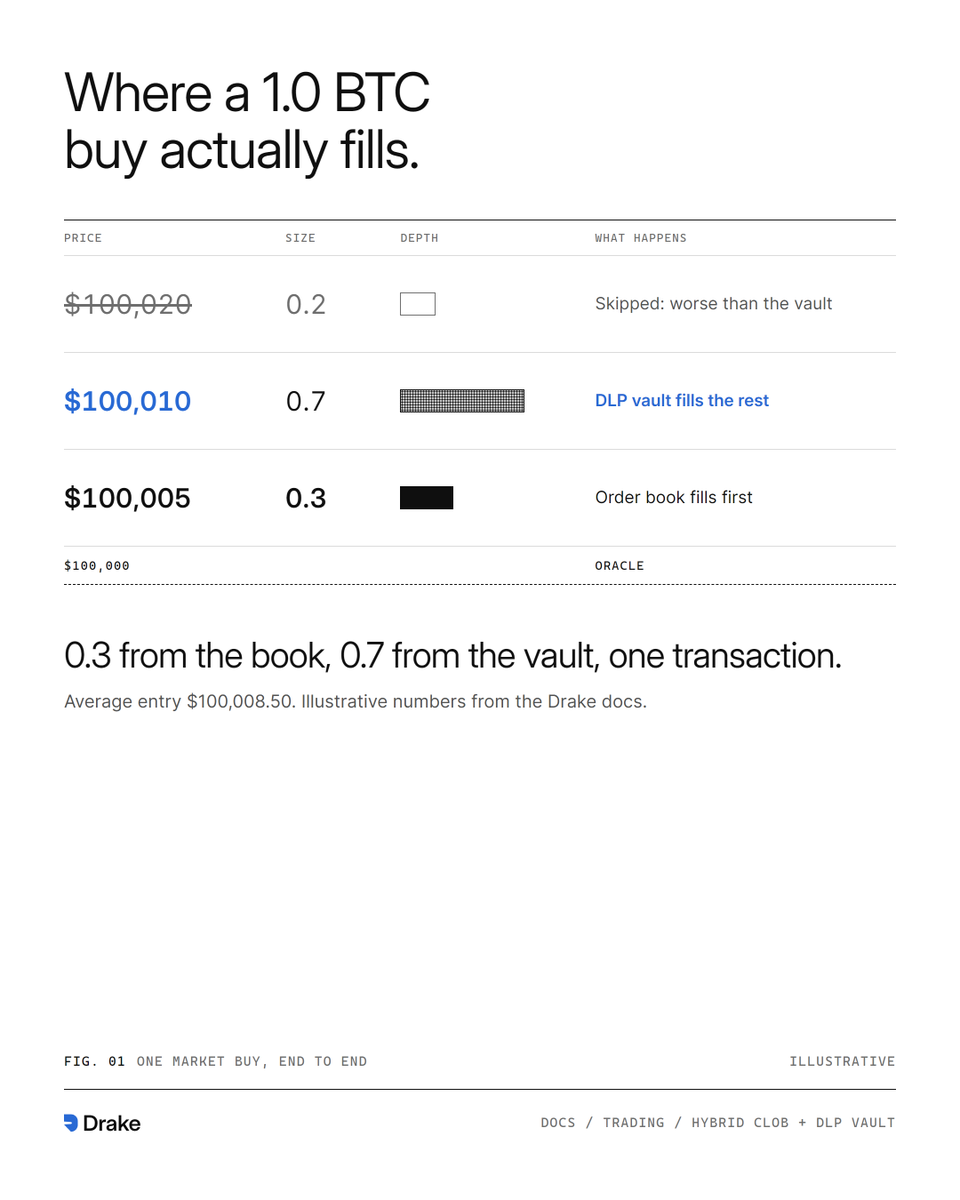
When you hit market buy on Drake, your order can fill from two places at once.
The order book first, wherever makers beat the vault's quote for your size. Then the DLP vault fills whatever's left at the oracle price plus a spread. Both legs, one transaction.
That order is on purpose. The vault prices by published rules, so a maker can work out exactly what it has to beat, and a quote that beats it fills before the vault fills any of it.
It's all or nothing. If the book and the vault together can't fill your whole size inside your slippage limit, the transaction reverts and you keep your margin.
September was a big month for us. Drake launched publicly on Sep 7, and we kept shipping the whole way through.
What's new on Drake:
- Chart lines: your entry, liquidation price, TP/SL and resting limits sit right on the chart, so you can see where you'd get stopped or liquidated at a glance
- One-transaction TP/SL edits: change your TP or SL from the positions table without having to cancel and re-place
- Fill now: if price moves away from your resting limit, fill the rest of it at market in one transaction, from the orders table or the limit line on the chart
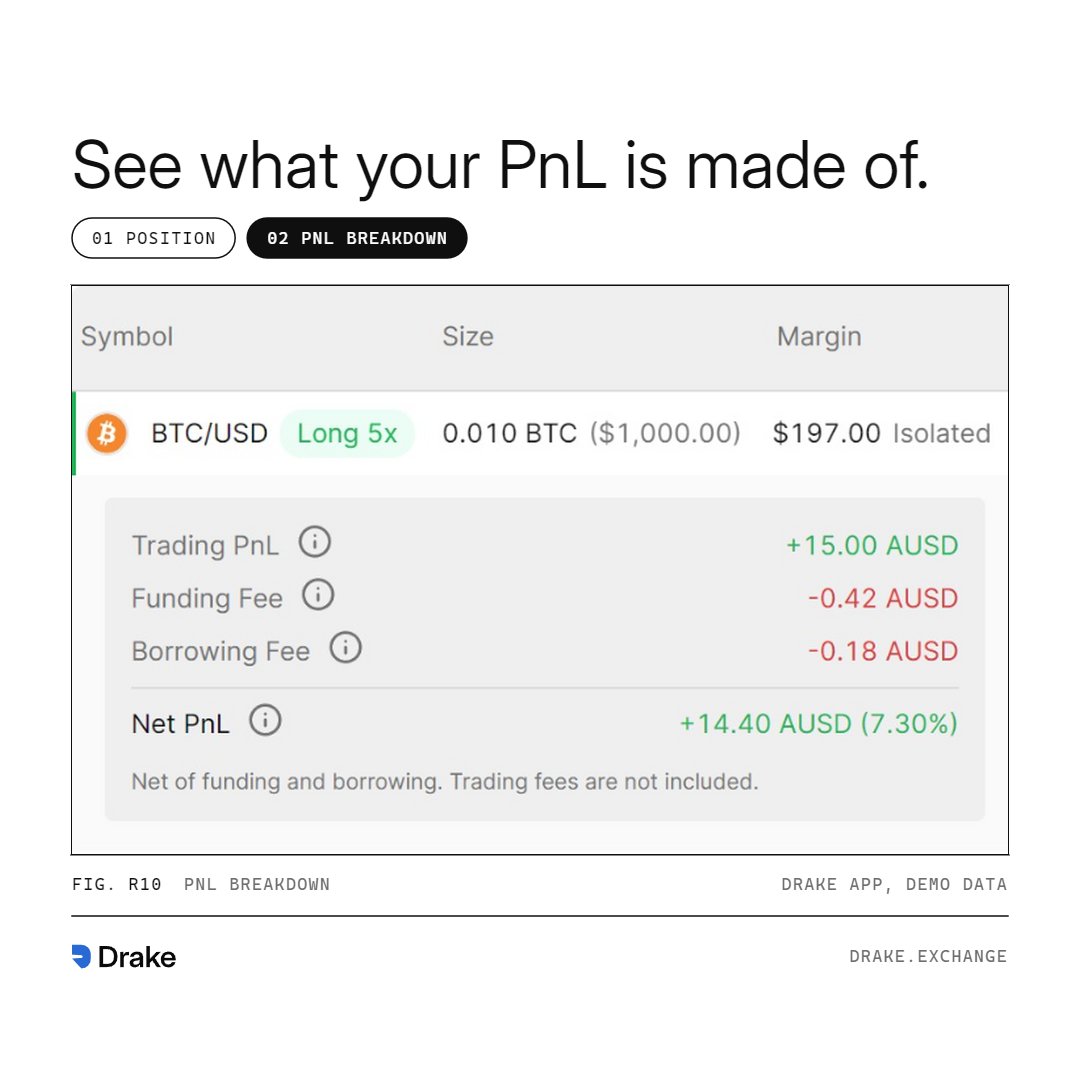
- PnL breakdown: every position splits into trading PnL, funding and borrowing, so you know what's moving the number
- Clear rejections: order history now shows why an order was rejected
- HYPE-AUSD: live since Sep 17, up to 5x
- Total OI and OI skew on the trade page, so you can see how a market is positioned before you trade
- Fees up front when you close: the close dialog shows funding and borrowing already deducted
- A monthly MON pool for traders and referrers, with its own MON and Points pages
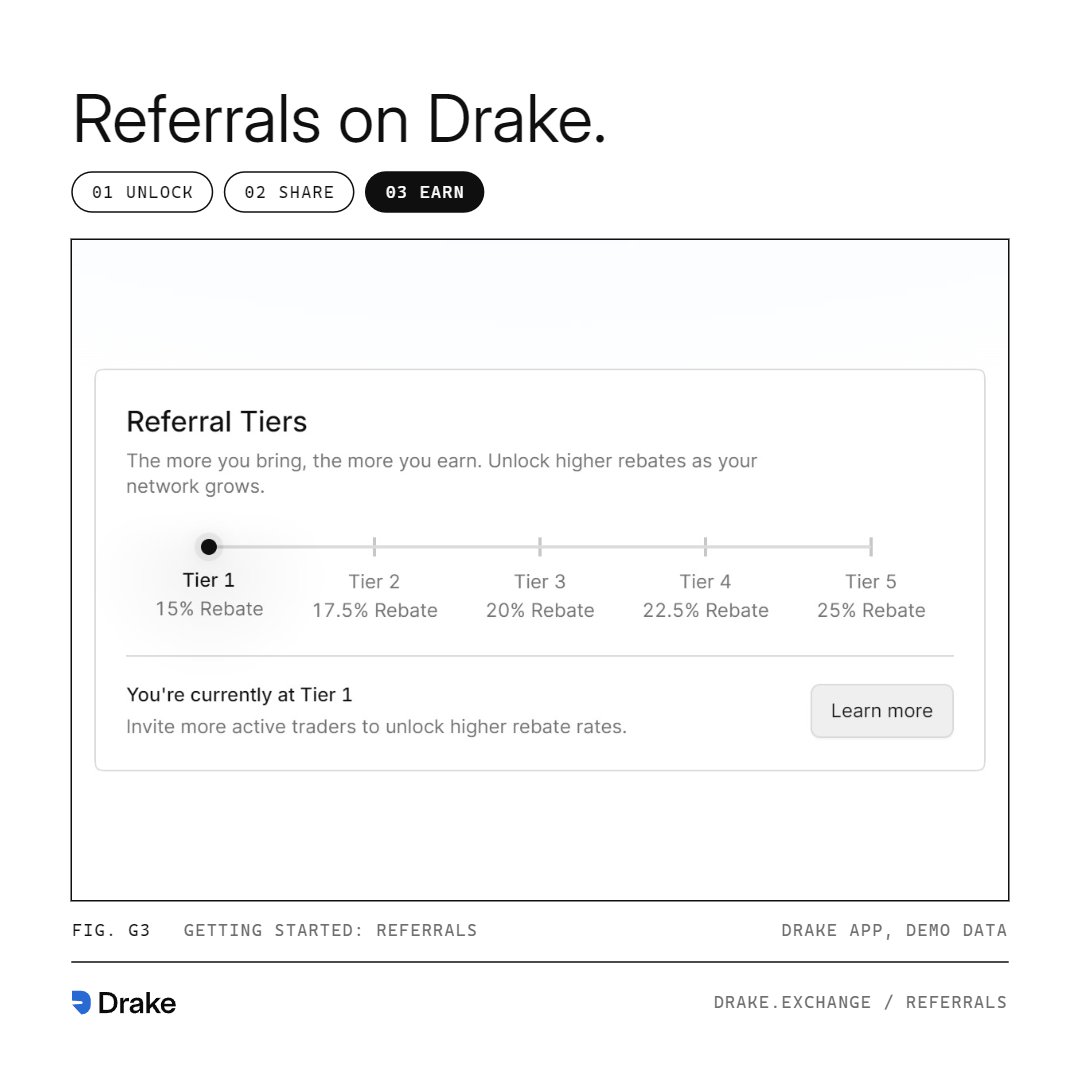
- A rebuilt referral page
- Custom PnL cards, plus leaderboard sorting and time ranges
I don't think the tokenization story is well understood - so let's break it down
Basically - the US Government is in vast, unprecedented amount of debt. And its long term debt is selling off a lot (40%+ over 5 years) - while Gold is up 140%. Gold has crossed US treasuries as the #1 asset held by other Central Banks.
The buyers for US debt - China, Japan and Europe are stepping away for different reasons. Geopolitical conflict. Currency related. Political difference.
The government is afraid of running out of buyers for its debt. And it's worried about the liquidity of markets. Historically, this concern is much worse when the Fed is hiking and there's high inflation. As typically the response to unstable debt markets is easing (buying debt).
Therefore, the US government is very incentivized to allow Stablecoins. Stablecoins hoover up US debt. Tether has different balance sheet behavior than banks and works closely with the US government.
Stablecoins used to be assumed to be criminal operations and were prosecuted by the USG. Now they're welcomed to Washington DC.
When you are worried about your reserve currency status, you also want to ensure the dollar is accepted in many places. So stablecoins not only serve as a buyer of US debt, but a promoter of the US dollar globally.
Enter CBDCs. Europeans see the US government promoting US dollar stablecoins as a matter of foreign policy. Visa and Mastercard going heavy in the space. And see Tether freezing Balances along with the DOJ and say, "We cannot have this. We don't want Trump to be able to use the US dollar in negotiations with us. Therefore we have to digitize our currency"
Europe and the UK also have fiscal and political problems. So the perverse incentive to digitize their currencies is not just to ensure 'monetary sovereignty' but also to potentially implement wealth taxes, or balance based transaction taxes. This is also the flip side of wide adoption of US dollar stables. We don't call it a CDBC, but its basically an extension of the government. Balances are frequently frozen. Other policies could be implemented under the left.
So rising global debt -> US support of stables -> pressure on Europe to do CBDCs to respond.
The US is then incentivized to grow the stablecoin market as fast as possible. Stablecoin's usage is primarily driven by speculation. Holding it as collateral for perpetual swaps. Keeping it on exchanges.
The problem: crypto doesn't have lots of good assets to trade. Bitcoin has been very volatile. Most altcoins collapsed. This slowed the growth of the Stablecoin market, which has basically flatlined year to date. Scott Bessent wanted us to be going at 40-50% CAGR not 0.
The question then, is how to create appealing speculative markets. The answer: on chain stocks, and prediction markets.
Big picture, if you want a lot of stablecoin balances. You need to have good things to trade. Over the past 6 months the 2x leveraged Micron ETF traded more than Bitcoin in dollar terms. Trade XYZ launched commodities, and stocks and commands a large % of volume on hyperliquid. Prediction markets are growing fast.
The losses incurred by retail investors in these markets are substantial. They are allowed for the same reason Casinos are allowed on Native American reservations. Necessary evil due to funding pressure and the geopolitical factors I described above.
This is, at a high level, why we are talking about crypto in the middle of a war with Iran. And why its' consuming the executive department's attention. The US Dollar is ultimately a matter of national security.
This is true regardless of whether Democrats or Republicans are in power. Both have debt and spending addictions. Both are reliant on the US Dollar.
But now zoom out: what do you have? You have a bunch of governments adopting digital ledger technology in the middle of a war. Freezing peoples balances. People don't want their balances frozen. They don't want it to be subjected to a wealth tax.
Enter Z Cash. Over the past 5 years, ZK technology has improved substantially allowing fast, private transactions. Orchard and Halo since 2022 evolved from something Niche to something usable. The EU tried to ban Monero. Exchanges delisted it. Its price increased.
Z Cash is open source. Vitalik is also prioritizing adoption of ZK technology on ETH. You can move ETH relatively privately on Railgun already - but real private transactions are on the roadmap.
ZK proofs can be accelerated by GPUs. Due to the AI boom, the number of people with access to GPUs and agents capable of accelerating proofs has skyrocketed. Not only can this technology facilitate private transactions but also proofs of reserves that allow trustless accounting for portfolios. This tech is commonly used at crypto exchanges to prove reserves, and algo stables such as Ethena.
Thus - it's not just that we are set to own a bunch of shielded Z cash, as a base asset. It's that you can swap anything on ETH privately. Including stables. Relatively soon. And you can do so for provable reserves.
Privacy is incredibly important for large institutions doing financial transactions. They're not concerned with the tax authorities, but rather front running. Slippage. And people hunting their positions or slow moving exits.
Many big institutions own multiple days of volume in equities that could drop the price 30%+ if the market sniffed out they were selling. And intervene in FX markets, routinely interacting with banks fined billions of dollars for illicitly trading ahead of their flows.
So a meaningful increase in tokenized trading volume inherently will require privacy. As real institutional counterparties require it. Retail is a great market and is less privacy sensitive, allowing initial growth. But for the big players to enter -- you need that.
It's not just trading desks that care about privacy. You cannot run corporate treasury functions publicly. People could sniff out that you're doing M&A, or figure out what you're doing -- giving up competitive positioning unnecessarily. At the same time blockchains can offer corporations major cost savings for finance functions. It's estimated - for example, that a properly implemented CBDC could save companies in Germany billions of dollars a year in corporate finance banking fees.
There are three basic approaches to Privacy. Z cash style. Private, permissionless neutral chain. Canton style: basically segregated databases that interact with each other on chain as little as possible with a permissioned validator set. And private blockchains - which simply deal with the issue by not having a public ledger or bolted on cryptocurrency people are tracking
The argument for a permissionless neutral chain (aka a cryptocurrency) winning is that
1. there's no real reason to trust a banking consortium (i.e. what Canton does)
2. governments hate each other and are only doing CBDCs out of geopolitical pressure in a realpolitik environment. we wouldn't be here if Trump wasn't antagonizing Europe and Canada wasn't talking about joining the EU
3. the tech exists, so why would you want a counterparty in between things if you don't have to
The world in which crypto loses would be that governments come to an accord about how to do this. China and the US maybe resolve differences. Nationalism subsides. And people say, "You know what, the externalities of all this gambling and absurd crypto shit are not really worth it - we should just have a consortium of nations and corporations for a global CBDC"
There is another world where crypto loses. The debt problems go away bc we enter an age of productivity and abundance. In my opinion, the reason AI people hate crypto so much natively is that crypto is a bet AGI isn't the economic Hail Mary it's marketed as.
regardless, we are in neither of those worlds right now. But crypto hasn't done great either. Why?
The big problem with crypto, from a valuation standpoint, is that it has never been clear how you pay for all the validators or miners without a block subsidy. And the only coherent way that happens is that on-chain volume, swaps, and trading 5-10xes.
The way that you get there is that high quality assets get tokenized and traded. But probably less understood is that an entire swathe of new assets hit the blockchain, and defi functions like borrowing and looping create carry trade and FX trading opportunities. So rather than pendle looping Ethena, you have looping with RWAs. This already exists to some extent in niche markets like Brazilian credit card debt (looped 28%+ APY) but is relatively tiny.
Just on this example, you might immediately say "that has huge FX risk", and you'd be right. Which brings a natural demand for FX hedging. Which will hit after you get internationalized RWAs on chain. Which will occur naturally after corporate finance functions hit CBDCs.
So you have a sort of promethean progression:
0. bitmex and native perp yield
1. weird crypto yield / credit risk [low quality pre FTX era]
2. ethena (systematized perp yield)
3. defi/aave/ pendle etc (levered yield)
4. on-chain stocks
5. on-chain perps
6. leveraged stock vs perp yield
< we are here >
7. private stock trading
8. institutional lending
9. direct corporate bond or equity issuance (USD)
10. CBDC facilitated corporate finance (EUR, GBP, NOK)
11. permissionless private fx swaps
<the promethean explosion>
12. looped international corporate fixed income
Note that the entire time I've talked so far, AI hasn't really been mentioned. AI makes all of this easier. The most concrete example is that the Norgesbank is vibe coding their CBDC with Claude. But more profoundly - eventually agents will be able to trade assets directly on chain.
investment management is becoming increasingly agentic already, with every major lab launching finance products. And banks rapidly adopting AI across workflows.
By the time you get to step 9 on the table above, there will likely be investable AI agents. Perhaps in gated jurisdiction. But there will be a new primitive of an agent with a verified balance, and business model that you can buy. The same way you'd buy a stock or subscribe to a vault, or hedge fund.
I think Step 9 (companies choosing to issue straight on chain) is therefore the most important thing to monitor given the sh1t show with Robinhood's CEO and AMC. Tokenized representations of stocks have major legal risk, and ADRs (American Depository Receipts) as an asset class have quite an ugly history of being banned or depegging (most recently YNDX just straight up went to 0 when Russia went into Ukraine). For you to get really clean on chain stocks, and fixed income that can be effectively looped for yield, you need the credit risk of the actual underlying legal structure to be very low.
You'll also want to see a proliferation of privacy and ZK accounting products take hold that interact with OTC trades, portfolio swaps, and FX as CBDCs come online. That's the boring bridge to the eventual wild future everyone was envisioning in 2023 where we have a bunch of Accelerando esque corporations existing entirely on chain, compounding capital and investing in their own training
The Track to Financial RSI is paved with Fomo, hyperliquid, gambling on Robinhood and seemingly irresponsible regulatory actions. At least, it seems mad until you consider the alternative. Illiquidity. And currency failure.
You can complain about Trump's ethics. You can stop Clarity. But the crazy train has already left the station. All aboard! It's not like you have a choice.
@Gyokeres_eth Check out @DrakeExchange, points and MON incentives are far less diluted with very similar CPM
Both campaigns just started so perfect time to start on Drake!
Darke introduces monad:native Reward Program, it’s very first $MON based incentives program.
Trade on Drake, and get access to a pool of $100k in $MON distributed over 4 weeks while earning Drake points.
As a reminder, we will distribute $100,000 in MON over 4 weeks.
The $MON will be distributed weekly, claimable every Monday.
The rewards are based on user activity across Drake: trading, providing liquidity, and referrals.