After watching that fiasco, I'm starting to think incompetent, biased refs/officials r better than the flopping, whining, & arguing that's allowed in the World Cup. If this's wut the world feels is appropriate sportsmanship & athleticism, they need to watch more NFL, NHL & PLL.
Reasons Why the Big Ten and SEC Are Naturally Drifting Apart
College athletics isn't moving towards a Power 2 structure, it is moving towards a Power 1 structure.
While the SEC and Big Ten have similar motivations -they are drifting apart due natural evolution.
Divergent Growth Strategies and Core Identities (Parallel Paths Toward Revenue/Super-Conference Goals but in Opposite Directions)
Geographic Footprint and National vs. Regional Reach
Big Ten: Aggressive coast-to-coast expansion has created a true nationwide brand spanning East Coast, Midwest, Pacific Northwest, and Los Angeles. They own 12 of the top 25 media markets. The only thing missing, outside of a presence inside Texas, is along I-95 (basically the southeast.
SEC: Expansion of Texas, Oklahoma kept the conference mainly regional. Their identity is rooted in compact Southern/Southeastern states. They did explore the idea of adding California and Stanford when USC and UCLA joined the Big Ten but they decided against. Thus, it was that moment when the Big Ten became the national conference the SEC stayed regional.
Academic and Institutional Priorities
Big Ten: Research-university model, 17 of 18 schools are AAU members; Big Ten Academic Alliance; Cancer Research Consitorium. They are akin to the Ivy League ethos.
SEC: Athletics-first focus (far fewer AAU members)
Brand Identity and Long-Term Focus
Big Ten: Diversified into a national powerhouse emphasizing multi-sport excellence, player development (portal/NIL), and coast-to-coast brand; resulting in a “Big Ten region” vs. “SEC region” irrelevant over time.
SEC: Football-first Southern identity; maximizes in-region talent and cultural
Media Strategy and Revenue Model
Big Ten: Diversified national exposure (Big Ten Network + Fox/CBS/NBC); higher per-school revenue projections from broader TV markets and NFL-style distribution.
SEC: Concentrated regional loyalty via SEC Network + ESPN partnership
Big Ten’s wealth (Fortune 500 companies, GDP $12.5T vs. SEC $8.4T; undergrad enrollment involves the Big Ten graduated hundreds of more students every year compared to the SEC. Far more living alumni in the Big Ten.
Philosophical and Governance Splits
I know for a fact that the SEC and Big Ten headquarters are not at war with eachother. I know this from some highly confidential sources. However, with that said, the conferences have their own views, their own goals, and their own desires and there are some things they just don't agree on and aren't going to come to agreement on.
When it comes to tampering, the Big Ten wants to allow for legal tampering. The SEC doesn't. The Big Ten wants to increase the revenue share cap. The SEC doesn't. The Big Ten schools use MMR to increase their revenue share/NIL pools. The SEC has some members that want to leave the NCAA and be with their own schools. The Big Ten, if they decide to go their own way will add some schools to bring with. The Big Ten wants to move forward with modern rules that are legal. The SEC wants to go back in time and try to cap income of athletes, cap the number of times an athlete can transfer. They want what worked for them back. This NIL era doesn't work for them like it does for the Big Ten.
The conferences pursue the same goals (revenue, blue-blood programs, super-conference power) but have chosen fundamentally different evolutionary paths:
Big Ten → national, academically aligned, diversified media/academic/athletic partnership; all-in on NIL
SEC → regional, athletics/football-first.
These structural differences - geography, academics, media, recruiting philosophy, governance vision are self-reinforcing and predate recent titles.
Championships amplify the narrative but are not the root cause of the drift; the drift was engineered by deliberate strategic choices and is now locked in by economics, demographics, and NIL-era rules.
The B1G and SEC are not the same, and the gap is structural, not cyclical.
Economic, demographic, and structural forces are accelerating the drift.
Financial Fracturing and Resource Disparities
Big Ten’s superior wealth raises the floor/ceiling; enables “what is your number” recruiting anywhere vs. SEC’s historical “McDonald’s bag” model.
Shrinking talent pool (U.S. fertility rate 1.57, high school enrollment drop ≈6% by 2031, fewer elite athletes) favors richest schools; Big Ten’s scale makes it harder for others to compete.
Historical foundation: Big Ten’s 303 NCAA/FBS titles; dynasty in wrestling, and other sports where champonship trophies are being hoisted up, along with Jim Delany’s expansions created self-reinforcing cycle.
Recruiting Models: Density vs. Reach
The below data is from @B1OBEY0ND . He has the research.
SEC: Regional talent monopoly (78–82% in-footprint overall; 85–90% for top-100 recruits); dense Southern pipelines (TX/GA/FL/LA/AL).
Big Ten: National talent aggregator (45–55% out-of-footprint overall; 55–65% for top-100); leverages expansion (CA, TX/FL pipelines, DMV, Polynesian) + NIL/portal + brand; signs 4–6× more elite out-of-footprint players.
Result: SEC fishes in a big lake; Big Ten fishes in an ocean - structural gap widening.
Broader College Sports Context Reinforcing Divergence
Big Ten’s 2025-26 “triple crown” (football, men’s & women’s basketball with three different schools) + dominance in wrestling, gymnastics, soccer (University of Washington) hockey, volleyball, lacrosse, etc., reflects multi-sport excellence funded by resources, not fluke.
NIL/transfer portal + revenue sharing expose and accelerate pre-existing advantages; Big Ten rotates national contenders across programs/sports.
Legal/governance shifts (antitrust scrutiny, consent decrees, potential collective bargaining) favor schools that can operate in a true free-market model - Big Ten’s diversified national footprint and wealth position it better than SEC’s regional model.
Long-term trajectory: Big Ten aims to make the national exposure, national footprint dominate college sports on/off the field.
In the end, the SEC, decades ago, chose sports first and regionality in recent years. The Big Ten, decades ago, chose academics and research and then sports. When McDonald's bags were no longer competitive against a check with 6 zeros on it and a number listed before the 6 zeros, the SEC way of doing things became obsolete and the owners of major corportions in the United States showed up with B's attached to their names.
The SEC and Big Ten are drifting apart simply due to natural evolution.
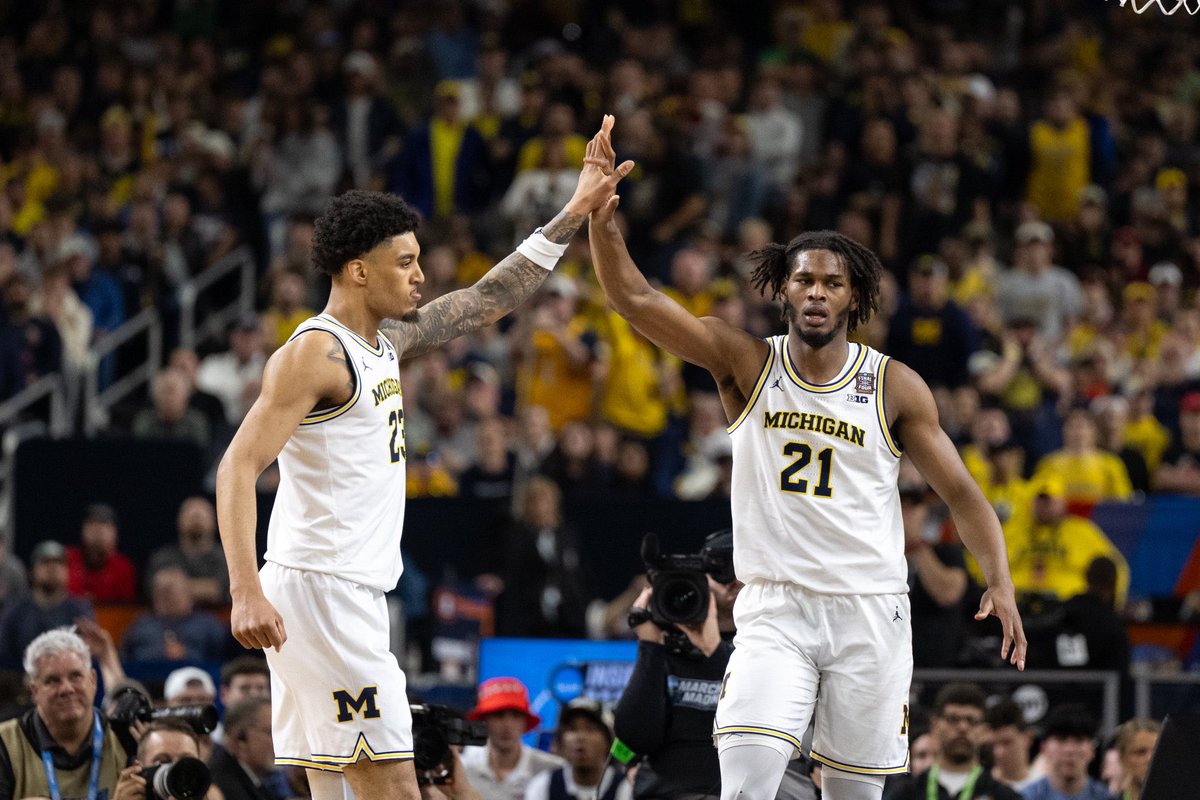
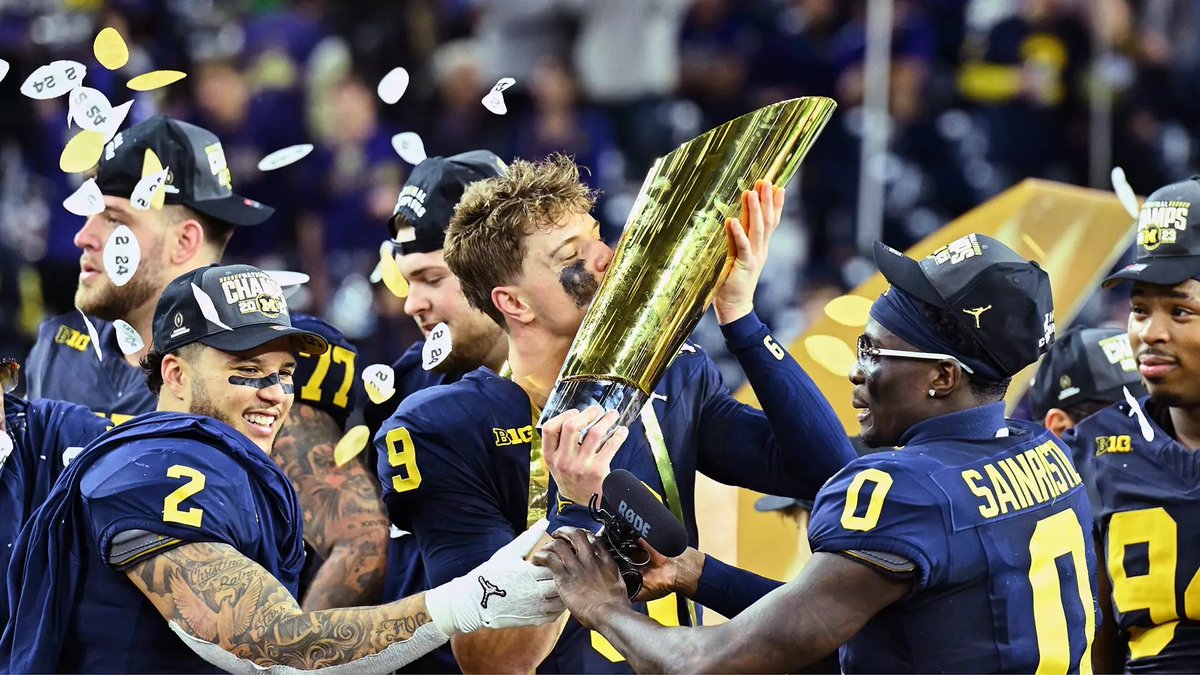
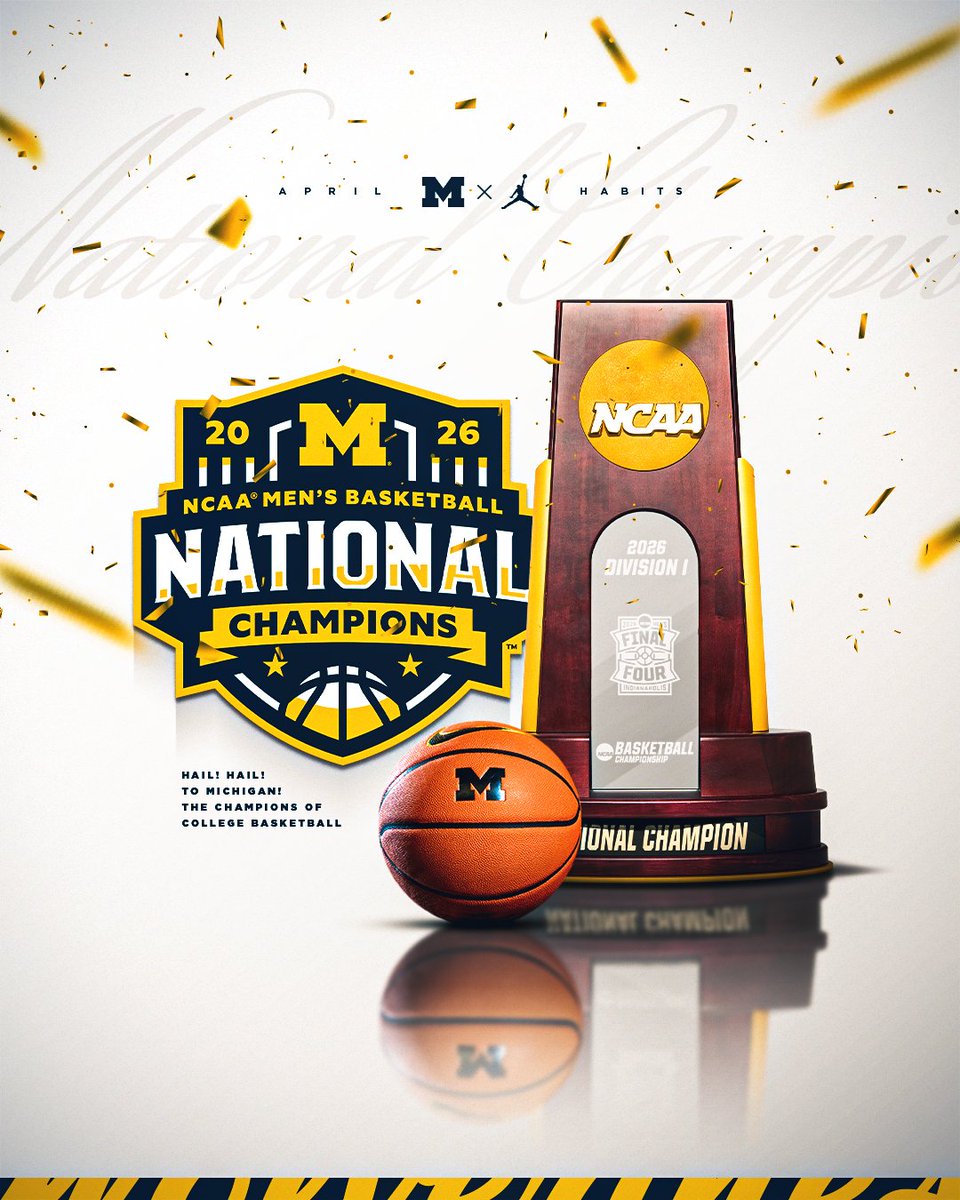
Michigan is the first D1 school ever to win multiple National Championships in Football (1948, 1997, 2023), Baseball (1953, 1962), and Men’s Basketball (1989, 2026).
@eurofounder My pole barn, custom garage, luxury bathroom, etc. disagree. All purchased with the proceeds from the stock options I earned at my last employer.
@menscoach1 Your points are flawed cuz they're based on your opinions, what you want, like, etc. I married someone that checks 1, 2, 3, & 6 and have never been happier. Compassion w/ a free spirit was EXACTLY what I needed. Good luck finding your dream. Maybe this formula will work for you.