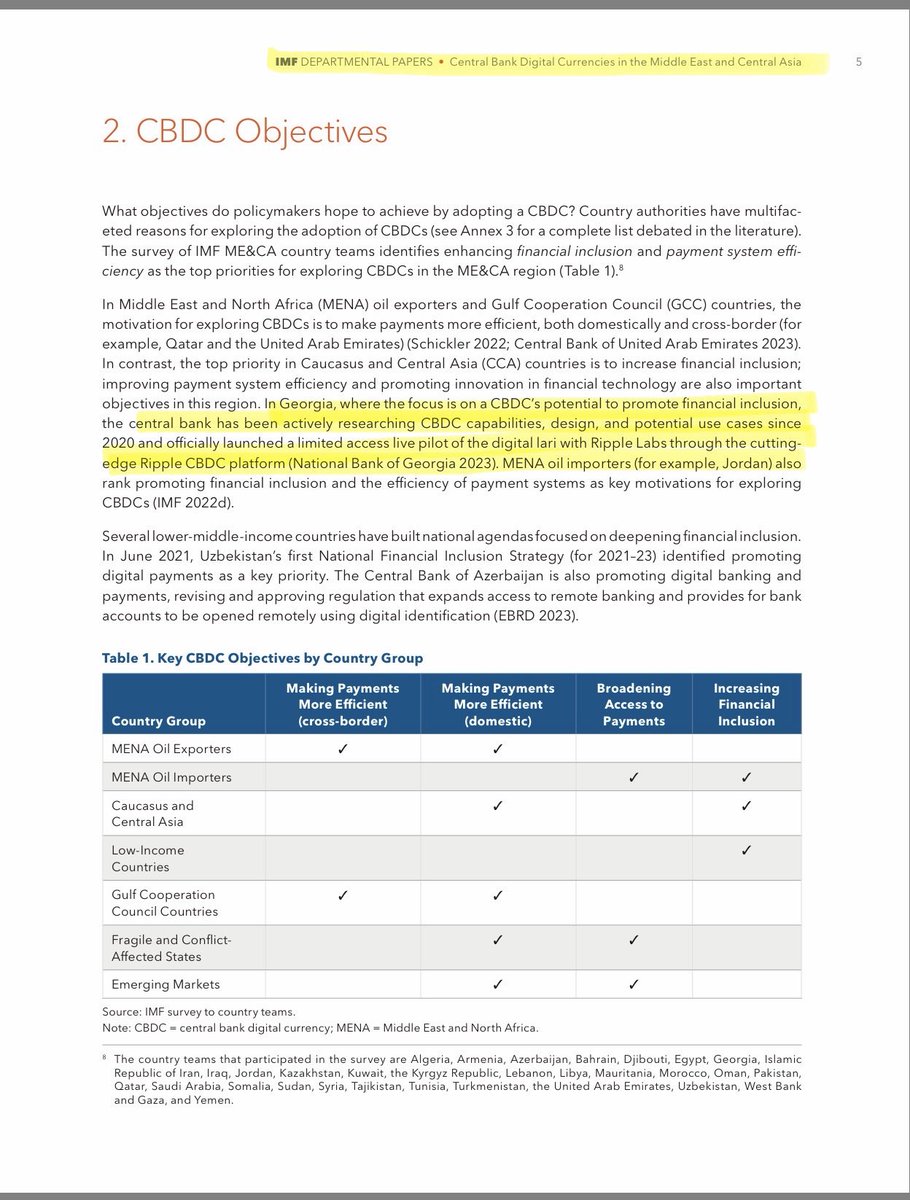
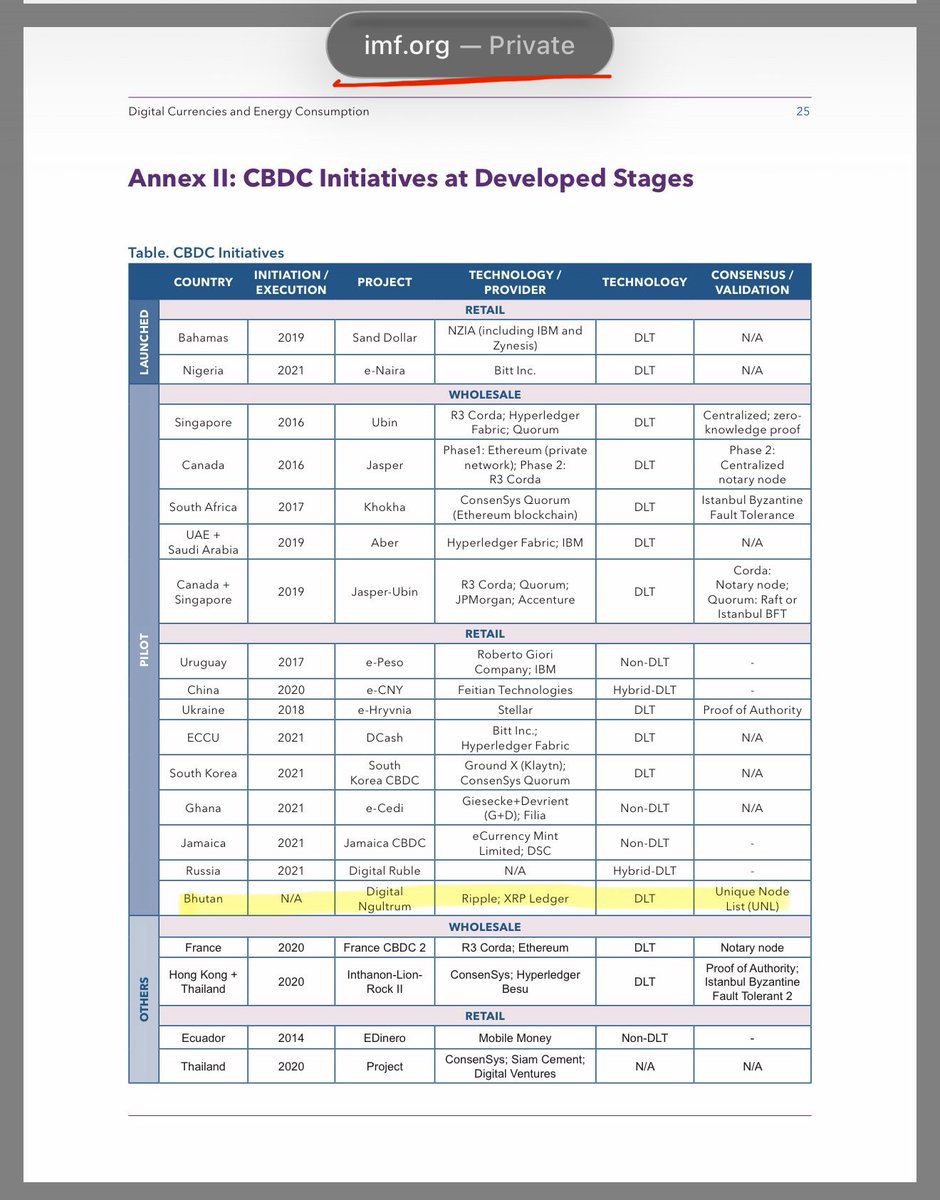
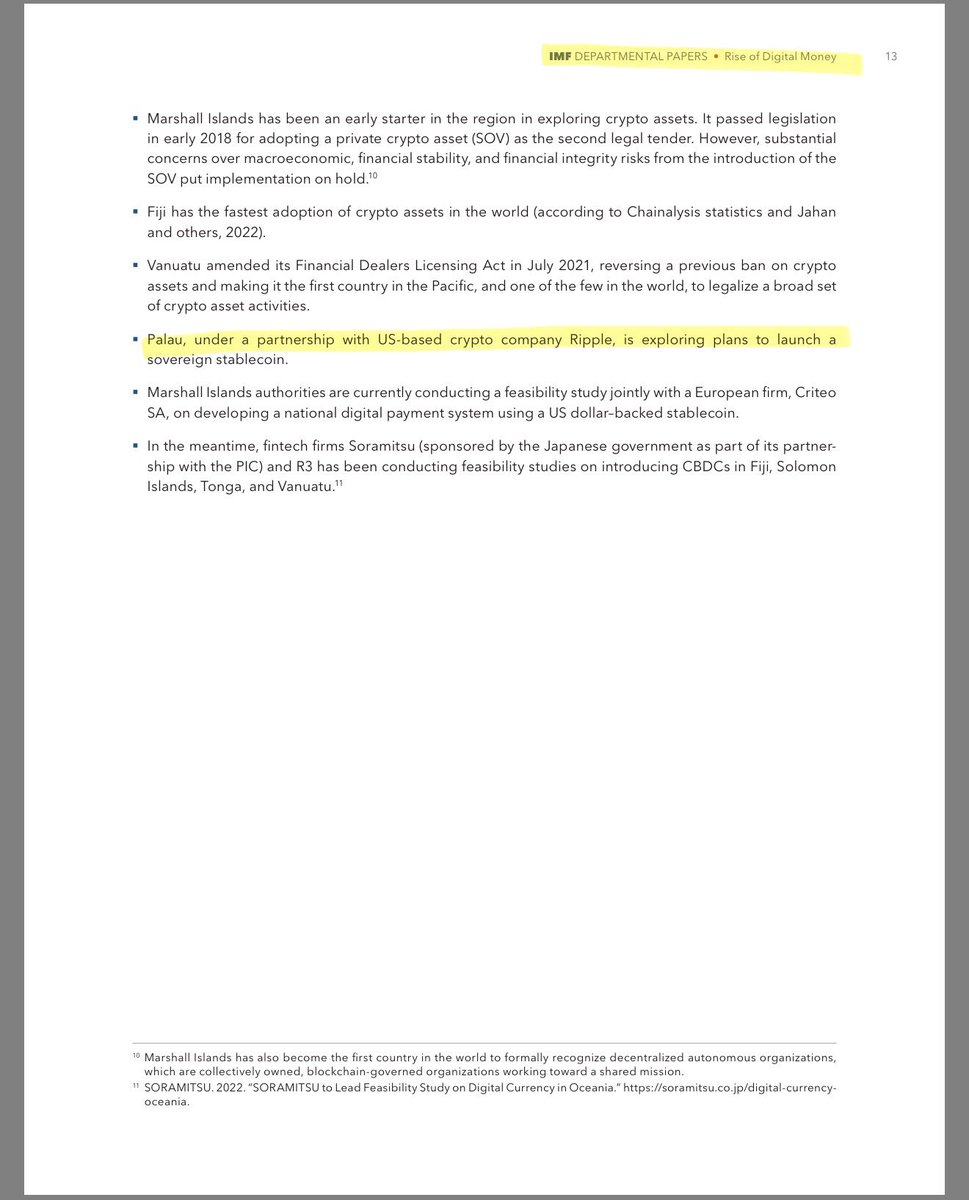
This is an amazing find from @SMQKEDQG
Ripple’s $XRP is far more likely to be deployed by central banks relating to EXOTIC CORRIDORS.
Where currencies are more illiquid and require bank capital to stagnate in nostro-vostro accounts idly.
The ones quoted below are in that bracket.
Likelihood is that in main currency pairs like USD-GBP that stablecoins will be used as default.
Axiology >> XRPL >> Pontes >> European Central Bank.
This is amazing news for the $XRP community.
But let’s not get too carried away just yet.
Axiology will be adopting the XRPL technology, but XRP won’t be being burned via central banks in Europe just yet.
https://t.co/yuhhRXFA4c
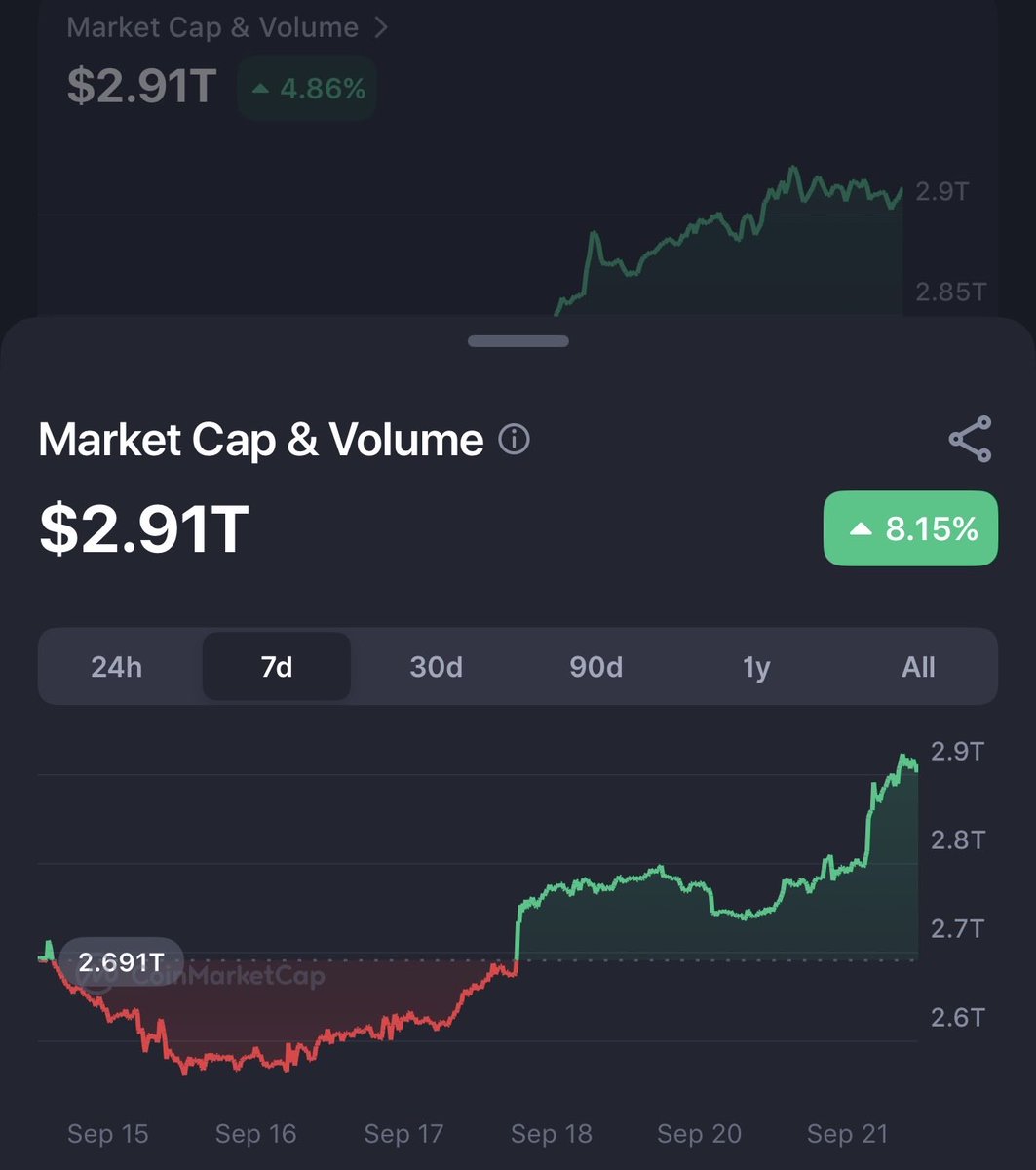
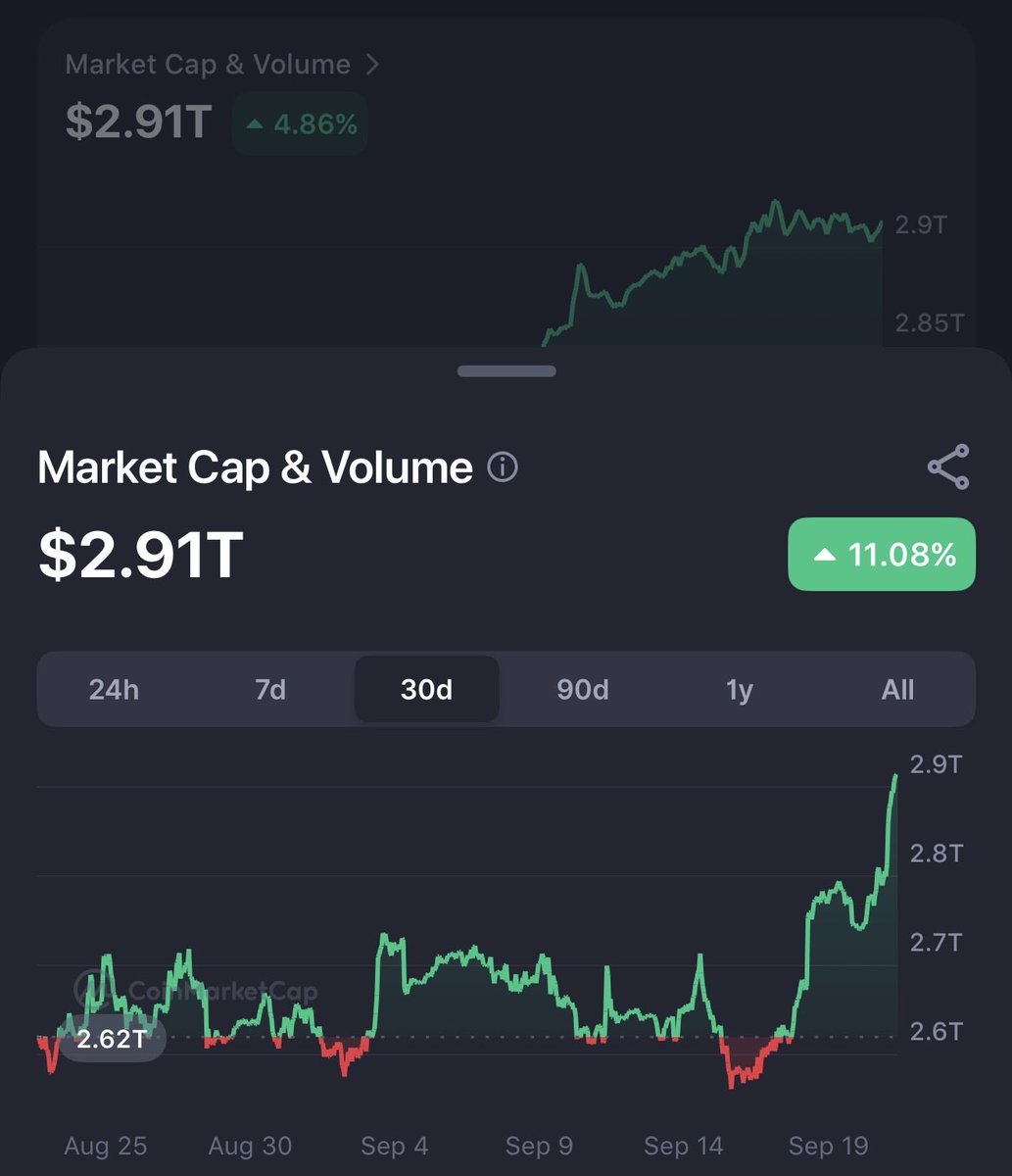
So we had a bull run this week.
And now we had a down day.
Prices dropped.
Everything’s in the red.
Are you feeling bad about that?
Then don’t be.
BILLIONS in digital assets have been bought this week.
After a big surge, you don’t think there’s going to be some profit taking?
Of course there will be.
Prices will drop a bit, leveraged positions get liquidated.
Happens in ALL MARKETS.
Just a bit more volatile in crypto as markets aren’t THICK ENOUGH just yet.
Let’s make no bones about it, prices will continue upward! 🚀🤩
Bitcoin’s SuperCycle
A supercycle is more than a long bull market. It is a structural re-rating, usually lasting at least five years, in which an asset’s role in the global economy changes so profoundly that the old valuation framework no longer applies.
Commodity supercycles emerge when a new source of demand meets constrained supply. China’s entry into the World Trade Organisation in 2001 is the modern example. China did not invent steel, copper, oil or coal. It unlocked a vast new market for them.
The commodities did not change. The market around them did.
Bitcoin may be approaching a similar institutional opening.
For most of its existence, Bitcoin has been a scarce global asset constrained by limited access to conventional capital. Banks faced legal uncertainty, pension funds faced custody and compliance hurdles, and corporations faced accounting and reputational risk. Bitcoin therefore traded largely as a speculative asset, driven by retail enthusiasm, specialist funds, liquidity cycles and the mechanical halving of its mining reward every 210,000 blocks.
That is beginning to change.
America is building the framework for a regulated digital financial system. The GENIUS Act creates federal rules for payment stablecoins. The SEC and CFTC are establishing clearer definitions and oversight for digital assets. Tokenised Treasuries, money-market funds, private credit, equities and other financial claims are moving onto blockchain rails.
The likely result is not the displacement of the dollar. It is the digitisation of dollar finance.
Stablecoins may become digital money, used for payments, settlement and collateral movement. Tokenised securities may become digital financial claims. Bitcoin can occupy a separate role, digital capital: scarce, liquid, portable and independent of any corporate or government issuer.
That is Michael Saylor’s central proposition. Bitcoin does not need to defeat stablecoins in payments. Stablecoins are better suited to daily transactions because they preserve dollar stability. Bitcoin’s opportunity is to become the reserve asset held beneath a growing system of digital money and digital credit.
This is where the supercycle argument becomes serious. A Bitcoin halving reduces new supply, but it does not create a supercycle. A supercycle needs a new marginal buyer.
China’s WTO accession created a new marginal buyer for commodities. Regulatory clarity, stablecoins, tokenised capital markets and institutional infrastructure could create one for Bitcoin: corporations, asset managers, insurers, pension funds, sovereign entities and global savings pools able to own, custody, finance and collateralise it at scale.
AI adds a further layer.
It is accelerating demand for data centres, power and machine-speed financial infrastructure. Bitcoin miners control power capacity, land, cooling and grid connections, assets increasingly valuable to the AI economy. More stable AI-related revenue could reduce forced Bitcoin sales by miners.
The key condition for a Bitcoin supercycle is not that Bitcoin itself changes. Its supply schedule, network and monetary rules remain the same. It is that the global financial system around Bitcoin changes, becoming more digital, tokenised, regulated and institutionally accessible.
The elements are now lining up: shrinking new supply, regulated digital dollars, tokenised markets, institutional access, AI infrastructure and Bitcoin-backed credit. None guarantees a straight line higher. But if these changes create a permanent new class of Bitcoin buyers, as China’s WTO entry created a vast new source of demand for commodities, Bitcoin could shift from a recurring halving trade to a genuine supercycle re-rating as the reserve capital of a digital financial system.
#Bitcoin $MSTR $STRC
Bring it on @MichaelSelig
We’re ready and waiting for take off 🚀
CFTC Chairman Selig says markets must prepare for 'mass tokenization' https://t.co/BfnLSJOG1o
I spoke with @GUnderground_TV on the US inflation problem:
“Last year, US money supply (Divisia M4) was growing at 5.4%/yr. Now it’s growing at 7.9%/yr. That is ABOVE Hanke’s Golden Growth Rate of 6%/yr, a rate consistent with hitting the US 2% inflation target. The inflation genie is out of the bottle and will stay out of the bottle.”
This is it!
$XRP is designed to be a tool for providing liquidity to others.
It’s not something for selling, but instead for allowing large financial institutions and enterprises to dial in and execute a large cross border payment.
Where your tokens form part of this transfer.
The exchange of this, is that you receive income.
Holding the tokens is literally a licence to print money to yourself.
@RealAllinCrypto@Ripple I’m liking this one Rupert.
I do also recall @LordBelgrave talking about a digital euro living on the XRPL.
On a post he did last year about being in a meeting.
At the Bank of England in London.
The stars are aligning!
Listen to the man.
I ship is sailing.
The train is leaving the station.
I too have put THOUSANDS OF HOURS of research into this asset $XRP.
It’s not going to bull run like other assets, or like previous crypto cycles.
It needs to have a VERY HIGH PRICE to serve financial institutions and avoid slippage and price volatility.
The more that money moves across EXOTIC CORRIDORS, the more $XRP will be used.
We’re talking large payments like $25,000,000 or $250,000,000 in value.
You know like the kinds that blue chip companies and household names need to make regularly across borders.
In high volume corridors $XRP will be used alongside $RLUSD.
Enterprises will be first as they have less regulation standing in the way.
Banks and assets managers will follow later due to compliance processes holding them back more.
Prices will soon be much higher, don’t miss out ✌️
🚨 XRP — SEPT. 21 🚨
The XRP ship may be leaving. 🚢
I spent 25 years trading on Wall Street and thousands of hours researching XRP. The market can create life-changing opportunities but you need to understand what you’re holding before the next major move.
📚 Learn. Research. Stay prepared.
Follow for more XRP updates.
🔄 Repost what’s coming next could be shocking.
#XRP #XRPCommunity #Crypto #Ripple
This is enough to send chills down your spine.
What could be coming?
What is Trump going to announce?
Must be major if they’re using the old style EBS thingey.
They were only ever used for emergency broadcasts…
@BankXRP What could it be!
Seriously caught my interest.
Better be a massive crypto framework or economic drop though.
Or I'm demanding my popcorn back! 🍿