I built a Legendary Investors Committee.
It's a Gemini Gem that uses the frameworks of the five greatest investors in history: Warren Buffett, Charlie Munger, Peter Lynch, Philip Fisher, and Mark Leonard.
I fed it the 10-K for my deli company $MAMA.
I got a debate.
Lynch: (Leaning forward, scattering papers) “Legendary? A ‘legendary’ meatball operator? I love it! This is exactly the kind of boring, unsexy business Wall Street ignores until it’s a ten-bagger… And you’re telling me this new CEO, Michaels, came from Mondelez? That’s like a varsity quarterback coming to play for the middle school team… but I need to know—are the earnings actually growing, or is this just a good story?”
Munger: (Grunts, unimpressed) “Invert, Peter. Always invert. You see a ‘varsity quarterback.’ I see a man who might be used to corporate jets and unlimited budgets trying to run a penny-pinching food stall. What kills this business? Commodity costs. Beef prices go up, margins get crushed. Wal-Mart squeezes them on shelf space, margins get crushed. It’s a low-moat business. Anyone can roll a meatball. Is this a ‘wonderful business’ or just a ‘cigar butt’ that’s been polished up by a slick operator?”
Fisher: “Charlie, you’re missing the qualitative shift. I’ve been reviewing the ‘Scuttlebutt’—specifically these interviews the user provided. This isn’t just about meatballs anymore. This Adam Michaels is articulating a clear, long-range vision: the ‘one-stop-shop’ for the deli. He’s talking about ‘margin discipline’ and ‘cross-selling’—that is the language of a high-quality management team. He’s not just selling beef; he’s building a platform… He took a company with supply chain disasters and normalized it. That shows ‘above-average’ operational capability.”
Leonard: (Adjusting glasses, looking at a spreadsheet) “I don’t care about the meatballs or the ‘vision’ unless it shows up in the Return on Invested Capital (ROIC). I’m looking at the filings. This $1 billion revenue goal by 2030... that terrifies me. Growth for growth’s sake is the fastest way to destroy shareholder value. Is he going to achieve that through organic growth, or by overpaying for acquisitions? I see they acquired ‘Chef Inspirational Foods.’ If they are rolling up these small deli suppliers, they need to be paying low multiples. If they start paying 15x EBITDA just to hit a revenue target, this is a capital allocation disaster waiting to happen. Cash flow, gentlemen. Does the meatball generate free cash flow?”
Buffett: “Mark is right to be cautious on the price of growth. But I admit, I have a soft spot for simple businesses. If you get a ‘share of stomach,’ it’s a very sticky habit. The question is, does Mama’s have a moat? Is it the brand? Or is it the distribution network? If this CEO has figured out how to be the essential partner to the supermarkets—handling their logistics, their labor shortages in the deli—then he’s built a service moat, not just a product moat. That’s valuable…”
The Committee was split.
But that's exactly what I wanted.
The point isn't to get a Buy or Sell rating.
It's to learn by witnessing: Active Learning.
I'm not looking to replace the work, but to check my own blind spots.
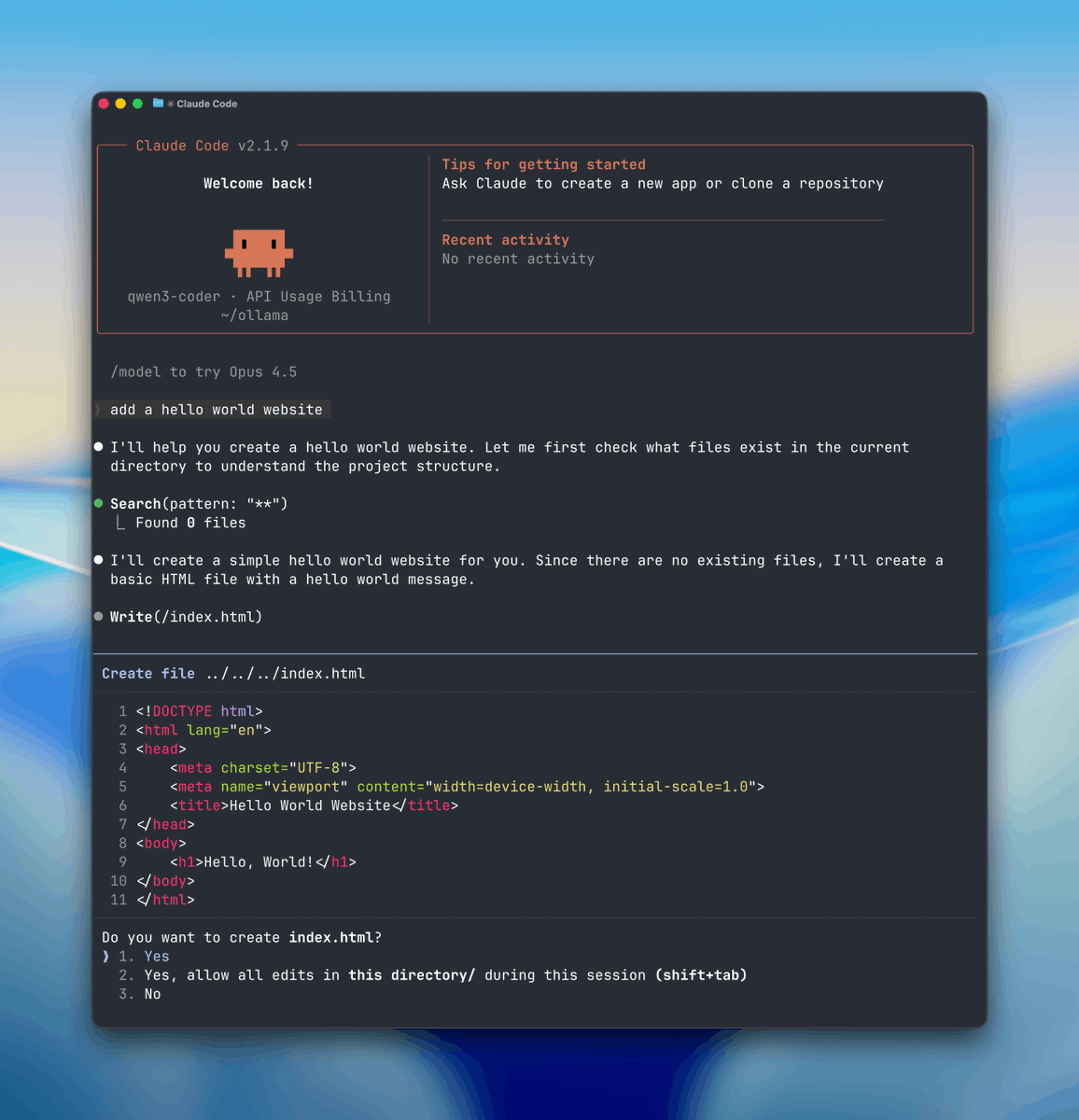
🚨BREAKING: You can now run Claude Code for FREE.
No API costs. No rate limits. 100% local on your machine.
Here's how to run Claude Code locally (100% free & fully private):
How to Completely F*** Up Your Product Team
The Blueprint of Ruin
Here is a step-by-step guide to achieve it. Follow it religiously.
1) Hire a Head of Delivery to lead your Product Team
2) Exclude engineers from discovery
3) Tell them what to build, never why
4) Avoid customers at all costs
5) Only listen to stakeholders
6) Measure output, not outcomes
7) Scale the org, not the people
8) Treat engineering as a commodity
9) The Golden Rule: Blame Engineering
It works every time.
As long as you don't use data, you'll never get caught.
What reason did Warren Buffett give in 2008 for his belief that Berkshire Hathaway's future returns would be significantly lower than its historical returns?
A. He anticipated a long-term decline in the U.S. economy.
B. The rising price of commodities would hurt Berkshire's manufacturing businesses.
C. The enormous size of Berkshire limits its investment opportunities.
D. The increasing complexity of global financial markets.
I uploaded 50 years of Berkshire Hathaway meetings into NotebookLM to get the wisdom of Warren Buffett and Charlie Munger.
Here's the ultimate $BRK Shareholders Quiz.
In the 2011 meeting, Warren Buffett described three categories of investments. Which one did he say he and Charlie Munger strongly prefer?
A. Productive assets, such as businesses and farms, that generate value over time.
B. Currency-denominated investments, such as government bonds and bank deposits.
C. Non-productive assets like gold, which hold their value during inflation.
D. Derivative instruments and options that provide leverage and manage risk.
@MRCHARTIST Instead of watching this masterclass, search for the playlist "Berkshire Hathaway | Annual Meetings" on YouTube and download them to NotebookLM.
Decades of wisdom. And you can query it.
I let an AI Mark Leonard audit my portfolio.
20 minutes later, I sold my highest conviction position.
$JDG.L thesis: The Constellation Software of Science
I fed the thesis to my Digital Twin of Mark Leonard.
The AI found a structural flaw I ignored: The Physics of Revenue.
✅Software (CSI): Recovers instantly. Negative working capital.
❌Hardware (Judges): Order books. Inventory. Supply chains.
"Atoms have gravity," the AI said. "In a trade war, software travels instantly. Microscopes sit in a container in Shenzhen."
It was right. I didn't own a Compounder. I owned a Cyclical. I sold the entire stake.
I post the full breakdown on my Substack. The Mark Leonard Constitution system prompt is free in my Notion database.