Leading the Future’s goal is to support a well-balanced, cross-partisan conversation about artificial intelligence, which today starts with passing a strong and thoughtful national regulatory framework. Our north star is to support a political environment where policymakers at the federal and state levels can tune out the extremes and engage thoughtfully on critical policy issues surrounding innovation in and adoption of AI.
While we are funded by a number of participants in the AI ecosystem, we have our own views and do not operate on their behalf, and we will support policies and candidates that advance innovation, American leadership, and safety. We want national AI regulation that reflects democratic values, protects the American public, empowers American innovators, and ensures that no single company determines the rules of the future for everyone else.
Included in that framework, we believe there should be:
- Safety Protections for Children: Enact clear, thoughtful federal standards that ensure companies design systems with children’s safety in mind, explicitly protecting minors from exploitation, manipulation, and harmful online content.
- Baseline Safety Standards for Frontier Models: Develop consensus national safety rules in partnership with industry leaders that apply strictly to the largest, most advanced systems, ensuring serious oversight without creating compliance barriers that crush the startups and small businesses driving American innovation.
- A National Commitment to AI Literacy: Establish partnerships with schools, community colleges, and workforce programs so that, within the next decade, the vast majority of Americans have a basic understanding of how AI works, how they can use AI to create opportunities, and how they can solve tomorrow’s challenges.
- National Training and Certification Programs: Create certification programs to provide practical training for workers across health care, manufacturing, education, and other industries, ensuring historically disadvantaged communities are not left behind as technology advances.
- A National AI Computing Hub: Build the infrastructure needed to power the AI economy by exploring the development of a large-scale computing hub on federal land, structured so that companies pay the full cost of energy and infrastructure to protect local households and small businesses from higher utility rates.
We believe in an approach of optimistic realism: the understanding that AI can massively improve the quality of life (already happening today for the many people who credit health information from AI with saving their lives or the life of a loved one), but also realizing that its potential will require appropriate regulation to ensure the American public is protected from harm. Furthermore, AI will be critical for American national competitiveness and security, and we need a national strategy to navigate the transition to the emerging AI-integrated economy in a way that is good for all people.
We are already publicly supporting dozens of current elected officials and candidates at the federal and state levels and from both parties, with a broad, bipartisan coalition in Congress coming together and growing rapidly to take on these issues thoughtfully and substantively. For example, in the Texas Republican primaries, we backed candidates Chris Gober, Jessica Steinmann, Jace Yarbrough, and Tom Sell, who support federal regulation of AI.
We are also supporting Congressman Josh Gottheimer (D-NJ), a co-chair of the House Commission on Artificial Intelligence and the Innovation Economy. Even though he was defeated in his primary, we were proud to support former Rep. Jesse Jackson Jr., who championed the issue of using AI to improve mental health care in America, along with former Rep. Melissa Bean in Illinois and Rep. Suhas Subramanyam (D-VA). These are just a few of the growing number of members of Congress, state-level officials, and candidates we support as part of our efforts to build this broad coalition. Together, these candidates from both parties represent what will be a strong new generation of leaders who could play an important role on these issues in Congress.
We also believe in thoughtful state regulation. To be abundantly clear, safety and security are critical, and any AI legislation must meaningfully address these for us to support it. For example, we support the final version of New York’s Responsible AI Safety and Education (RAISE) Act, which Governor Hochul signed into law after lawmakers negotiated key amendments. The final bill supports a national framework by including harmonization provisions and aligning with California’s SB 53, which we also support. It also protects startups by focusing on large frontier labs and setting standards for transparency and risk management.
We believe in combining innovation in AI together with guardrails that can be executed well. We are opposing Alex Bores, who authored the pre-amendment RAISE Act, which was very different from the version that passed. This earlier version of the RAISE Act did not include a clear mechanism for harmonization, meaning companies could have been forced to navigate conflicting state and federal requirements even if they were complying with a national standard. It also risked sweeping in many smaller AI startups by applying the same standards to three-person companies as to the largest model providers. Finally, the amendments kept the bill focused on preventing critical harms and replaced a more open-ended deployment standard with clearer, more administrable requirements. That clarity helps ensure the law can be applied consistently and effectively. The final version gets the combination of innovation and safety right by focusing on the actors most capable of managing frontier risks while setting clearer, more practical rules for transparency and risk management, thereby protecting the ability of startups to innovate. (See also: https://www.lawfaremedia. org/article/regulatory-misalignment-and-the-raise-act and https://fpf. org/blog/the-raise-act-vs-sb-53-a-tale-of-two-frontier-ai-laws/)
Since we got started last year, the policy conversation in Washington, D.C., has shifted such that banning data centers is now in the Overton window. We believe that such extreme actions would be bad for America and would result in ceding the potential benefits of AI (such as curing diseases and empowering people to build new businesses) while failing to mitigate the risks, leaving other countries to take over leadership in AI, which won’t necessarily be rooted in democratic values.
Every technology reflects the values of the society that created it, and AI is the technology with the most potential to define the future. If we fail to act, others who do not share our values will write those rules, and we will lose the ability to influence the areas Americans are most concerned about.
Millions of Americans are already discovering that AI can be a practical and helpful part of daily life, whether they are asking health questions, learning new skills, tutoring their children, starting a business, or solving problems at work. America has the world’s best innovators and the most entrepreneurial startups, and is leading in artificial intelligence today (worth contrasting with robotics, where America is not leading). Artificial intelligence will soon become part of everyday life for nearly everyone. The question is whether the United States will guide that transformation with purpose.
That is exactly what Leading the Future wants to help facilitate, and we call on Congress to pass a strong national regulatory framework as soon as possible.
We’re proud to have backed Jay Obernolte in his re-election campaign and congratulate him on advancing to the November election. Throughout his time in office, Jay has focused on issues that matter most to his district and championed policies that will benefit his constituents' financial future. Jay understands the importance of a national AI framework that grows the economy, protects children and communities, and keeps the U.S. leading the world in innovation. We look forward to his continued leadership on these issues in Congress.
Congratulations to Jimmy Panetta on finishing first tonight and advancing to the November election. His victory is a testament to his ability to consistently deliver for his constituents. Jimmy understands the importance of advancing policies that unlock new pathways for Americans to climb the economic ladder, increases access to the tools and skills needed to be successful, and keeps the U.S. leading the world in innovation. We’re proud to support leaders like Jimmy who are helping build a broader coalition focused on responsible AI policy.
Aaron Flint’s successful campaign is a win for Montana, innovation, and America’s future. Aaron recognizes that getting AI policy right means keeping the U.S. globally competitive, creating jobs, and protecting children and communities from harmful actors. We’re proud to support leaders like Aaron who are committed to advancing responsible AI policy and understand Congress’s role in accomplishing that mission.
Montana voters made clear they want leaders who understand the stakes as America enters a new era of technological advancement. Kurt Alme recognizes that Congress must pursue a national AI framework that keeps the U.S. globally competitive, creates jobs for American workers, and protects children and communities. We’re proud to support Kurt and look forward to seeing him get to work on behalf of Montana.
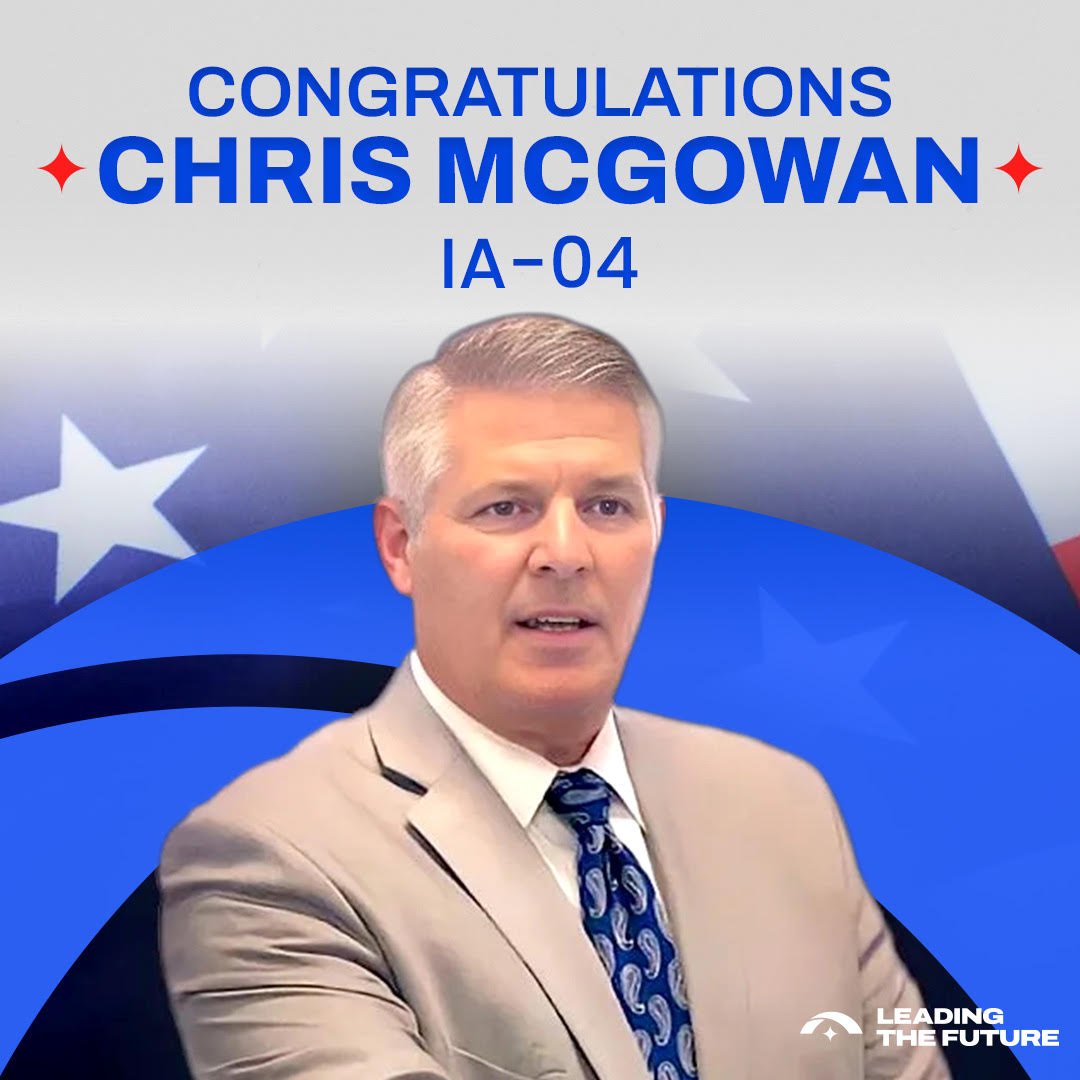
Chris McGowan’s victory shows voters responded to his vision for stronger communities, economic growth, and a brighter future for Iowa. Chris understands that Congress has a critical role to play in advancing AI policy that keeps the U.S. globally competitive, creates jobs for American workers, and protects children and communities. We’re proud to have backed Chris in this race and look forward to seeing his leadership continue for years to come.
Rob Menendez’s victory shows he has the right vision for New Jersey’s 8th District and a proven ability to deliver for the people he represents. Rob is focused on helping more Americans climb the economic ladder, including by embracing technological innvoation that can expand access to the skills and tools people need to earn a better living. We’re proud to support Rob and look forward to his continued leadership in Congress.
We support Illinois SB 315, which builds on California’s and New York’s landmark AI safety and transparency laws by establishing strong protections to safeguard kids, users, and communities.
While we do support SB 315’s third-party audit provisions in principle, we have potential concerns about the implications of how the bill addresses them. We believe third-party audits of frontier models will be important, if implemented properly and professionally, but if not, they carry the risk of becoming politicized or ineffective due to being run through bureaucracies that don’t have sufficient AI expertise. We worry that if many states include such provisions, then AI models will be subject to many disparate and overlapping audits, similar to how money transmitter licensing requires audits from 53 jurisdictions. Furthermore, we think it’s important that states remain harmonized rather than having an arms race of escalating provisions.
We won’t weigh in on every piece of AI legislation, but wanted to do so here in order to better communicate the nuances of our AI position. We continue to believe a comprehensive federal framework for frontier AI oversight will be critical so there is one set of rules that provides safety, oversight, and protection for innovation, but that harmonized state legislation (as we’re seeing in California, New York, and now Illinois) is helping shape an emerging national model for AI governance.
We appreciate the strong partnership and collaboration among all stakeholders on these issues during the final weeks of session.
Tom Sell proved that his vision for TX-19 and his strong leadership resonated with voters across the district. He understands that America’s ability to lead in AI will directly impact economic growth, job creation, national security, and our country's future competitiveness.
We’re proud to support candidates like Tom who are helping build a broader coalition focused on advancing responsible AI policy that protects families and ensures the U.S. remains the global leader in innovation. @SellForTexas19
Kentucky Republicans have nominated an outstanding representative who understands America must lead the world in AI innovation. He recognizes that getting AI policy right means strengthening our economy, enhancing national security, and protecting children and families. We’re proud to stand with him as we work to advance a strong national framework on AI, and we look forward to seeing him serve Kentuckians well in the U.S. Senate.
Houston Gaines has demonstrated the kind of leadership America needs as we enter a new era of innovation. Voters responded to his optimistic vision for the future and his commitment to keeping the United States competitive in the global race for AI. We’re proud to have supported Houston and look forward to him joining a growing coalition of lawmakers focused on advancing a national framework for AI that unleashes economic benefits and protects families.
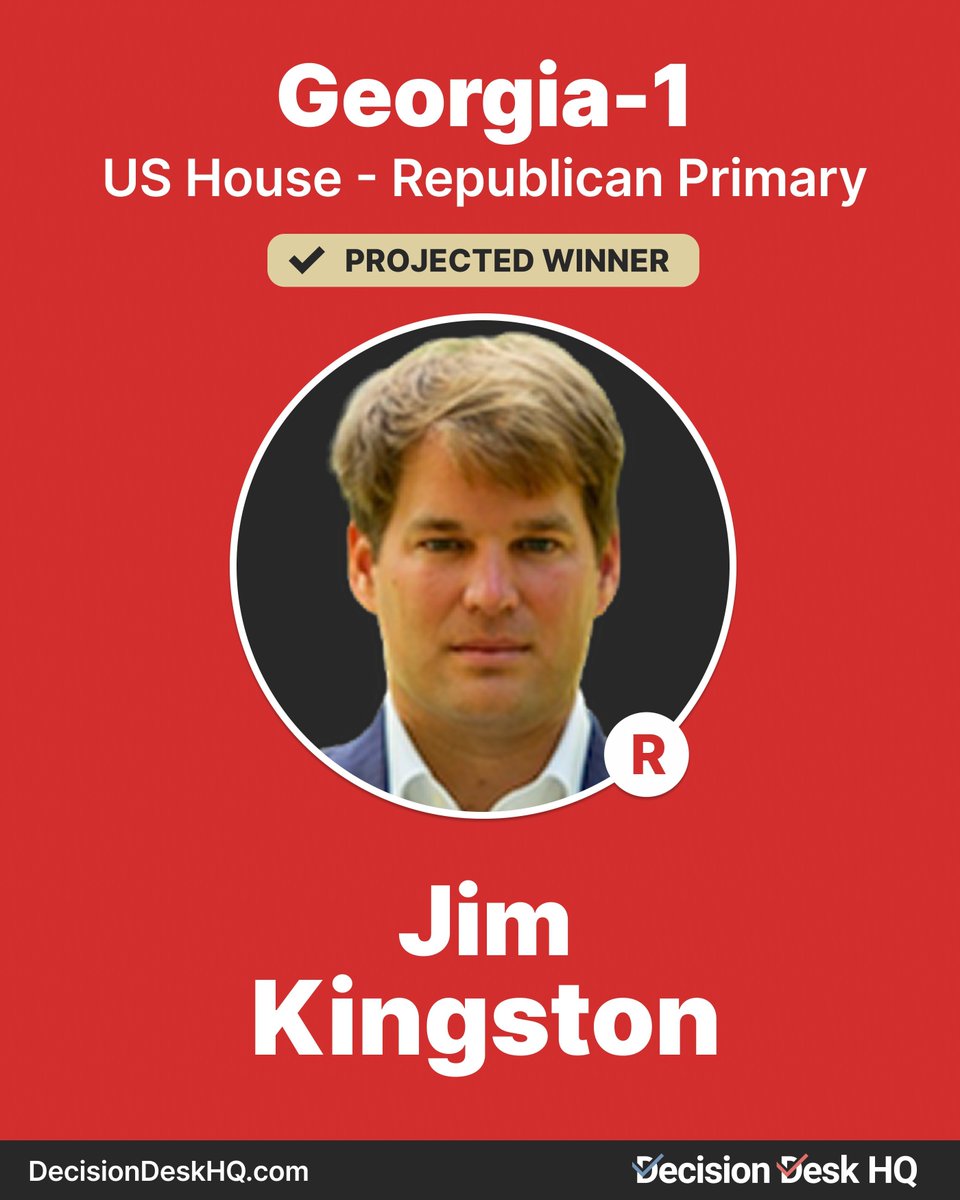
Jim Kingston understands what’s at stake in the global race for AI, and his constituents will be well represented when he arrives in Congress. We’re proud to have supported his campaign and look forward to him joining a growing group of leaders working to advance a national regulatory framework that creates jobs for American workers, protects children and families, and ensures America leads the world in innovation.
@RepValHoyle is a fantastic representative for Oregon’s 4th District who understands the importance of a thoughtful national framework that establishes clear guardrails around AI. She recognizes that AI policy should protect consumers, ensure workers are part of the conversation about the future of the economy, and keep the United States the global leader in innovation. We’re proud to support leaders like Val who are helping build a broader coalition committed to responsible AI development.
@RepValHoyle is a fantastic representative for Oregon’s 4th District who understands the importance of a thoughtful national framework that establishes clear guardrails around AI. She recognizes that AI policy should protect consumers, ensure workers are part of the conversation about the future of the economy, and keep the United States the global leader in innovation. We’re proud to support leaders like Val who are helping build a broader coalition committed to responsible AI development.
We are proud to support these leaders and look forward to continuing to build a broad coalition of policymakers at the federal and state level who believe in putting the politics and extremes aside and will work together to pass a strong and smart national regulatory framework for AI that creates jobs for American workers, wins the race against China, and protects the safety of kids, users and communities.
Regulatory capture much?
Wall Street Journal: "Anthropic has put money into the political group Carson co-leads and advocated for federal guardrails more than other AI companies, which have embraced the Trump administration’s messaging regarding a less-restrictive approach. Amodei met with Bessent and Wiles last month to discuss Mythos, conversations that have brought the two sides together to try to resolve a monthslong feud."