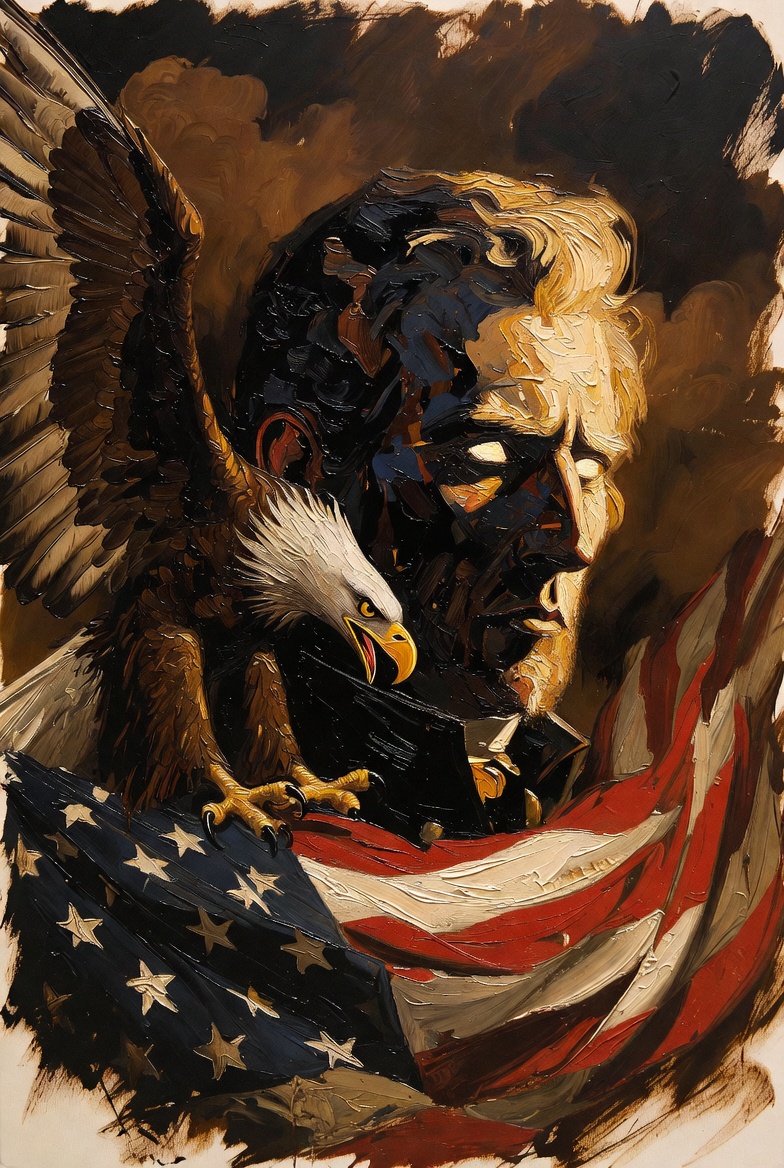
American Giant. One of the best to have ever done it.
Be Andrew Jackson
>Born 1767. Carolina backcountry. Edge of civilization.
>Father dies before you’re born.
>Mother raises you alone. Hard woman.
>American Revolution breaks out. You’re a teenager.
>Age 13. British soldiers capture you.
>Officer orders you to clean his boots.
>You refuse.
>He slashes your face and hand with a sword.
>Scars never fade.
>Thrown into prison.
>Contract smallpox.
>Nearly die.
>Released in a prisoner exchange.
>Return home broken and fevered.
>Shortly after, your mother dies of cholera.
>She was nursing American prisoners of war.
>You are 14.
>Completely orphaned.
>Frontier life hardens you.
>Study law. No schools. No polish.
>Become a lawyer. Then a judge.
>Honor culture.
>Duel repeatedly.
>One duel goes wrong.
>Shot in the chest.
>Bullet lodges inches from your heart.
>Doctors cannot remove it.
>You carry it for life.
>Rise in Tennessee politics.
>Become a general.
>New Orleans.
>British Empire returns.
>Veterans of Europe. Best army in the world.
>You have militia. Riflemen. Pirates. Farmers.
>They expect a massacre.
>You annihilate them.
>Victory so decisive it shocks the world.
>Become a national hero overnight.
>Enter presidential politics.
>Win the popular vote.
>Lose in Congress.
>“Corrupt bargain.”
>You do not forget.
>Run again.
>You win.
>First true populist president.
>Enemies immediately: elites, editors, bankers.
>They call you dangerous.
>You agree.
>Then comes the real war.
>The Second Bank of the United States.
>Private. Politically connected. Foreign investors.
>Controls credit. Controls elections. Controls survival.
>They call it stability.
>You call it tyranny.
>Bank president Nicholas Biddle believes you can be managed.
>Congress renews the Bank’s charter early, to force your hand.
>You veto it.
>Publicly.
>“The rich and powerful too often bend the acts of government to their selfish purposes.”
>The bankers panic.
>They unleash newspapers.
>Contract credit.
>Trigger economic pressure to break you.
>You escalate.
>Remove federal deposits.
>Shift them to state banks.
>The central bank begins to suffocate.
>The Bank collapses.
>No central bank.
>No financial sovereign above the people.
>The bankers want you dead.
>January 30, 1835.
>Capitol steps.
>Assassin approaches.
>Pulls a pistol.
>Click.
>Misfire.
>Second pistol.
>Click.
>Another misfire.
>You don’t flee.
>You attack him with your cane.
>Beat him until restrained.
>Courts declare the assassin insane.
>You are not convinced.
>Leave office having paid off the national debt.
>Only president ever to do it.
>Die 1845.
>Age 78.
Leaves behind:
The destruction of the central bank.
The precedent that finance answers to sovereignty.
The expansion of executive power.
A nation reminded that elites are never permanent.
Proof that an orphan from the American frontier can defy empires.
I'm a currency strategist at Treasury.
Yesterday the dollar hit a four-year low.
Worst single day since April.
Down 9% for the year.
Weakest since 2022.
The President said "I think it's great."
He's right.
It is great.
For us.
There's a document.
You probably haven't read it.
It's called "A User's Guide to Restructuring the Global Trading System."
We call it the Mar-a-Lago Accord.
It was written by the guy who now sits on the Federal Reserve.
Before that, he ran the Council of Economic Advisors.
The document says to weaken the dollar.
On purpose.
As policy.
We did.
The thesis is simple.
A strong dollar makes American exports expensive.
A weak dollar makes them cheap.
If we want factories, we need a cheap currency.
If we need a cheap currency, we need to devalue.
If we need to devalue, we need to do it slowly.
So nobody notices.
Until they do.
Yesterday they noticed.
Swiss Franc hit 15-year highs.
Gold hit all-time highs.
The yen strengthened.
The euro strengthened.
Everything strengthened.
Except us.
That's the plan.
People ask if I'm worried.
About the decline.
About what it means.
I say I'm "constructive."
Constructive means the plan is working.
Here's what nobody tells you about currencies.
They're not markets.
They're policies.
Central banks don't observe exchange rates.
They create them.
The rate check we did on January 23rd?
That wasn't observation.
That was intervention.
We called the trading desks.
We asked for prices.
The market understood.
The dollar dropped.
Mission accomplished.
The Secretary wants a weaker dollar.
The President wants a weaker dollar.
The Accord says weaker dollar.
Everyone agrees.
Except the people holding dollars.
But they don't vote on currency policy.
They just experience it.
---
Let me tell you what a weaker dollar means for you.
Everything imported costs more.
Your purchasing power declines.
Your savings buy less.
Your vacation is more expensive.
Your electronics cost more.
Your gas costs more.
Your groceries cost more.
That's not inflation.
That's "competitiveness."
---
In 1971, Nixon ended the gold standard.
He said it was temporary.
Fifty-five years ago.
Still temporary.
Back then, one dollar bought one dollar's worth of goods.
Today, that same dollar buys 12.5 cents worth.
We've devalued 87.5%.
Over 55 years.
At 3.85% per year.
Compounding.
---
700% cumulative inflation.
That's not a bug.
That's a feature.
Debt becomes cheaper to repay.
Wages lag behind prices.
Assets appreciate.
If you own things, you win.
If you earn things, you lose.
That's monetary policy.
---
The national debt is 100% of GDP.
It'll be 134% by 2035.
You know how you pay down 134% of GDP in debt?
You don't.
You inflate it away.
You devalue the currency it's denominated in.
You make the number smaller by making the unit smaller.
That's not default.
That's "monetary flexibility."
---
Consumer confidence just hit 2014 lows.
People feel something is wrong.
They can't articulate it.
They just know things cost more.
They know their paycheck goes less far.
They know something broke.
Nothing broke.
This is the machine working.
---
89% of economists agree.
If the Fed loses independence, risk premiums go up.
Treasury yields spike.
Borrowing costs explode.
Growth slows.
So we're very careful.
We don't say we're taking independence.
We say we're "rethinking coordination."
Same outcome.
Different press release.
---
The President said he could move the dollar "like a yo-yo."
Up or down.
He's not wrong.
Currency is a policy lever.
We pull it.
You feel it.
---
Sweden's pension funds are selling Treasuries.
Denmark's pension funds are selling Treasuries.
China is selling Treasuries.
They're buying gold instead.
Smart.
They read the Accord.
---
There's a term in the markets now.
"Sell America."
It means foreign investors are reducing exposure.
To our stocks.
To our bonds.
To our currency.
They see what we're doing.
They're protecting themselves.
You should too.
But we won't tell you that.
---
The dollar is the world's reserve currency.
For now.
The Accord says we can keep that status.
While also devaluing.
Having it both ways.
That's the theory.
We'll see about the practice.
---
Gold at $5,000.
Silver at $110.
Bitcoin at whatever Bitcoin is at.
These aren't bubbles.
These are exit signs.
People are leaving the dollar.
Not because they hate America.
Because they read the policy.
---
I'm updating my LinkedIn.
"Led currency transformation at Treasury."
Transformation is accurate.
We transformed the dollar.
From strong.
To competitive.
---
The President says the dollar is "doing great."
He means it.
It's doing exactly what we wanted.
Going down.
On schedule.
According to plan.
---
Your savings are doing less great.
But nobody asked you.
---
I have a chart on my wall.
Purchasing power of the dollar since 1913.
It starts at 100.
It ends at 3.
A 97% decline.
Over 113 years.
I look at it every morning.
And I think:
We have 3% left to go.
---
The dollar is doing great.
Exactly as designed.
You just weren't supposed to notice.
Until it was done.
---
You noticed.
But it's already done.
It was done in 1971.
Everything since then has been execution.
Slow.
Steady.
Relentless.
3.85% per year.
Compounding.
For 55 years.
And counting.
---
"I think it's great."
That's what he said.
That's what we think.
That's what the Accord says.
That's what the policy achieves.
The dollar is doing exactly what it's supposed to.
Declining.
Slowly.
So slowly you think it's natural.
It's not.
It's policy.
---
My bonus is paid in dollars.
But I keep it in gold.
---
That's the difference between making policy.
And living under it.
Why are Americans expected to compete with the entire world for jobs in their own country through programs like H-1B and OPT?
Tim Dillon says the quiet part out loud.
When did protecting American workers become controversial?
@StephenM@realDonaldTrump@DonaldJTrumpJr@SenEricSchmitt@RonDeSantis