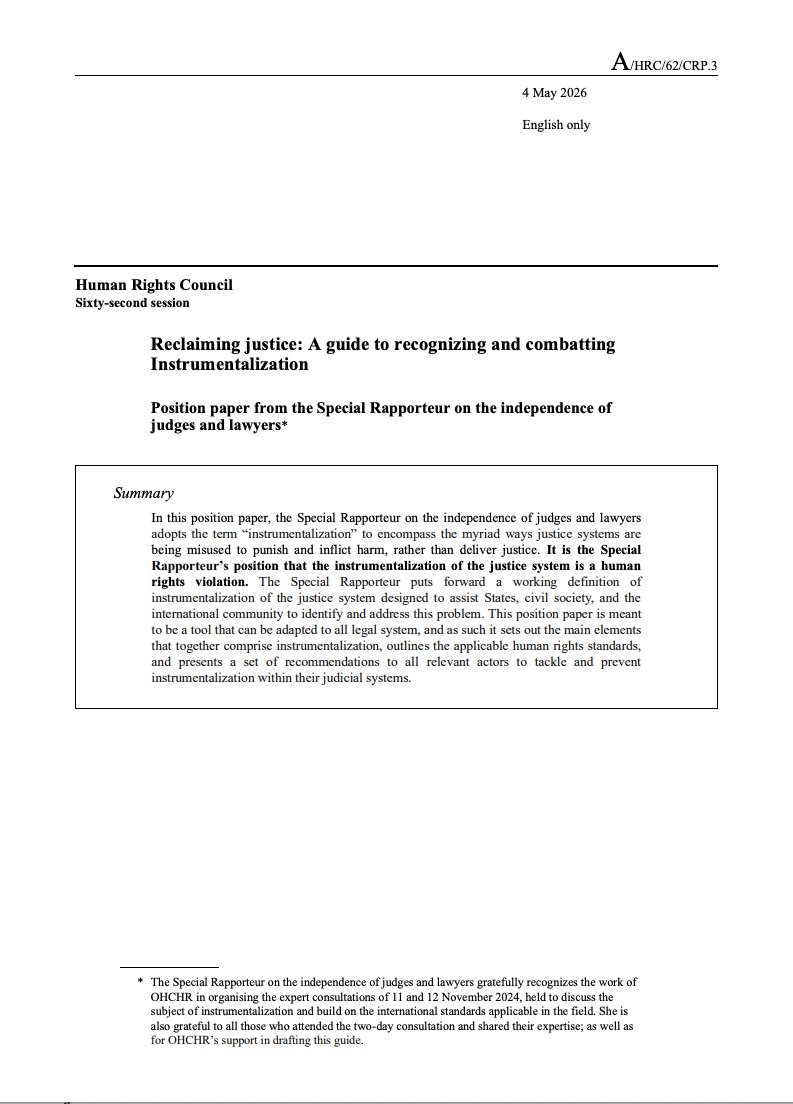
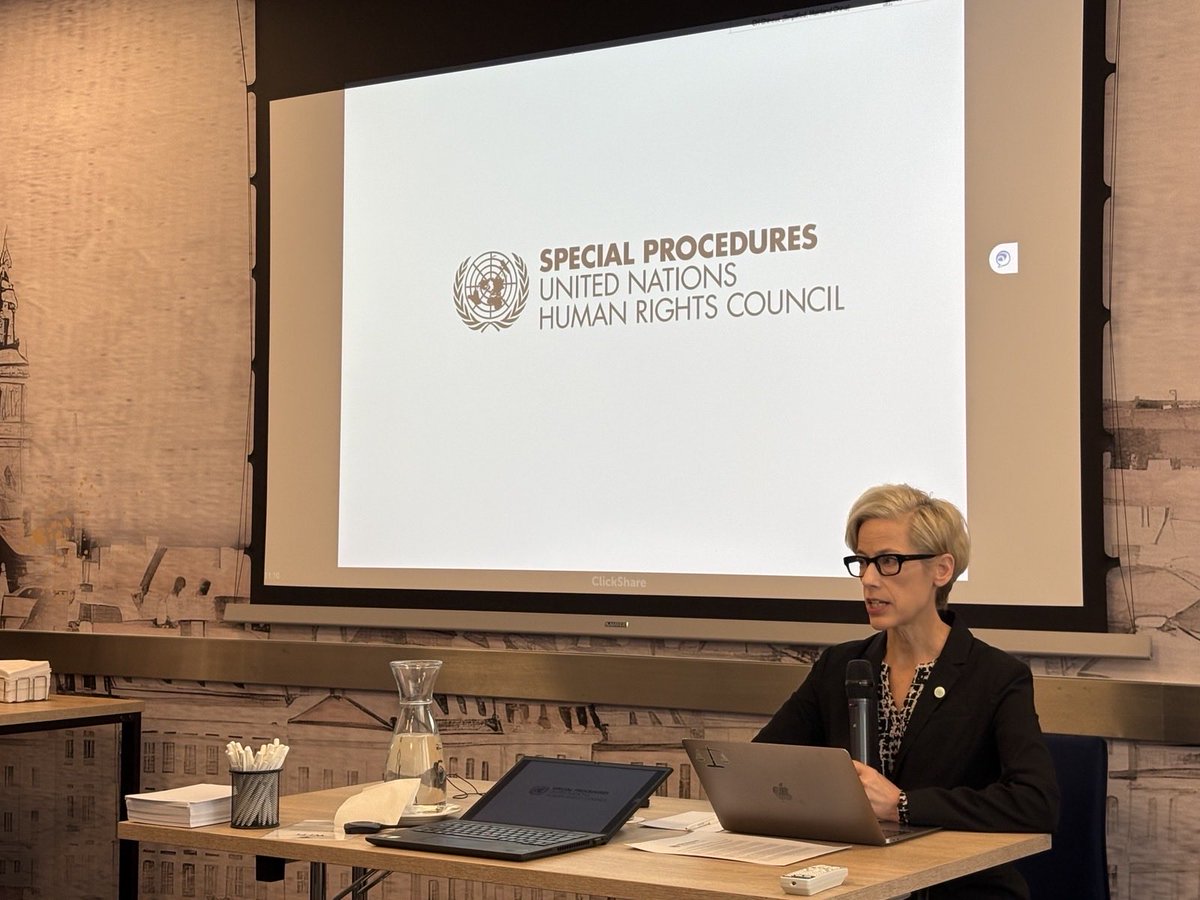
Today I present Reclaiming Justice: A Guide to Recognizing and Combatting Instrumentalization (A/HRC/62/CRP.3), a position paper that argues that the instrumentalization of the justice system is itself a human rights violation. (1/3)
Albania's Flamingo Revolution has been bringing thousands to the streets for the past two weeks. Here's the latest on the rallies that have been called the biggest civic protests since the fall of communism.
Kenya’s justice sector has undergone a significant transformation following the 2010 Constitution, which strengthened judicial system. This report examines the state of the justice system in Kenya using a country‑based assessment framework. https://t.co/c1SckyQ8ae
Residents of the Ukrainian capital have mixed reactions over the removal of a statue of Russian writer Mikhail Bulgakov, author of The Master And Margarita. Born in Kyiv when it was part of the Russian Empire, the novelist and playwright penned sharp satire and criticized Soviet society. But the statue has now been taken down after Ukraine's Institute of National Remembrance determined that Bulgakov also symbolized Russian imperial thinking -- under which Ukraine was seen as a Russian province.
“What was once justified as the ‘defence of the constitutional order’ is today increasingly framed through relativisation, media spin and the shifting of blame onto protesters”. Katarina Golubović, president of YUCOM
https://t.co/3VgJaPtnqz
🧵🇦🇱 Thousands of Albanian citizens gathered at the Tirana main square on Wednesday to protest against a planned resort in a protected area of Zvernec, south of Albania, linked to Trump's son in law.
Backround: https://t.co/q53X3j5Eek
#Polska: Obstrukcjonizm musi ustąpić miejsca niezależnemu, sprawnemu i powszechnie dostępnemu wymiarowi sprawiedliwości, stwierdziła
ekspertka ONZ. Wysiłki Polski na rzecz przywrócenia praworządności oraz
powszechne uznanie wartości niezależnego i bezstronnego sądownictwa są budujące”,
stwierdziła dziś ekspertka ONZ, wyrażając jednocześnie zaniepokojenie blokowaniem
pilnych reform prawnych przez pat polityczny. Kończąc oficjalną wizytę w Polsce Specjalna sprawozdawczyni ds. niezależności sędziów
i prawników Margaret Satterthwaite stwierdziła, że opóźnianie reform szkodzi całemu
społeczeństwu.
https://t.co/v8vJPE4NNg
https://t.co/YREZ3TvOMV
@notesfrompoland@wyborcza@rzeczpospolita@DziennikPL
How do know when justice systems and services are people-centered? This measurement framework and its indicators will help. Foundational. #PeopleCenteredJustice#JusticeActionCoalition.
#Poland: @SRjudgeslawyers concerned stalemate blocking legal reform has detrimental effect on people from all walks of life. “Denial of the problem or excessive formalism to stop a decent proposal from a political rival causes everyday people suffer.”
https://t.co/VUClXLcLwA
Learn how a @worldbankgroup project in Croatia is financing the introduction of citizen-centric judicial infrastructure and digital measures to improve access to and efficiency of justice. https://t.co/sHdJeL9rUH
The EU will unblock €16.4 billion of frozen funds for Hungary as its government moves forward with sweeping reforms to restore the rule of law and eliminate corruption, PM Magyar and EU Commission chief von der Leyen announced in Brussels today.
https://t.co/80WA3GiTTY
Following her recent visit to Poland, the UN Special Rapporteur's findings underscore a critical truth: Restoring judicial independence after authoritarian capture and weaponization is a formidable challenge. Poland’s efforts to dismantle the architecture of capture provide critical rule of law lessons for democracies worldwide fighting to protect their own judiciaries from political pressure.
At the end of my official visit to #Poland, I conclude that obstruction must give way to efficient and independent justice for all. Delays to reform are having a detrimental effect on people from all walks of life.
I welcome the efforts made to change practices, but the framework that has allowed political interference in judicial appointments, lack of accountability, unregulated secondments, and abuse of disciplinary proceedings, must be amended.
Press release:
https://t.co/lMziMSARwx
Preliminary observations: https://t.co/Bj79EFL1PQ
Dear @magyarpeterMP, it has only been a few weeks.
But we can feel a strong wind of change across Hungary.
To fight corruption.
Kickstart economic recovery.
And restore the rule of law.
Today we share the progress made ↓ https://t.co/juMDTzy6pD
While Romanian families shivered in unheated apartments and waited hours for meager bread rations, Nicolae Ceaușescu built himself a 1,100-room palace that consumed $3 billion of his nation's wealth. The Casa Poporului stands today as a monument to the inevitable outcome when central planners face zero market constraints on their appetites.
Ceaușescu's palace contains 12 stories above ground, spreads across 365,000 square meters, and required 20,000 workers laboring in shifts around the clock. He demolished entire historic neighborhoods of Bucharest to clear space for his architectural ego trip. Meanwhile, his citizens endured bread queues, rolling blackouts, and heating restrictions so severe that hospitals couldn't maintain proper temperatures. The dictator diverted the nation's resources toward marble, crystal chandeliers, and gold leaf while his people literally froze.
Without market prices to signal genuine demand or profit-and-loss mechanisms to punish waste, political authorities inevitably channel resources toward projects that serve their personal preferences rather than human needs. Ceaușescu faced no competitors, no angry shareholders, no bankruptcy risk. He simply commanded the nation's productive capacity to serve his grandiose vision.
The palace required 3,500 tons of crystal, 480 chandeliers, 1,409 ceiling lights, and 700,000 tons of steel and bronze. Every ton of material that went into those ornate rooms represented food, medicine, fuel, or housing that never reached Romanian families. The arithmetic is brutal but simple: centralized control means resources flow toward political vanity projects rather than genuine human priorities.
The building still stands, largely empty, costing millions annually just to maintain its unused splendor.
While Romanian families shivered in unheated apartments and waited hours for meager bread rations, Nicolae Ceaușescu built himself a 1,100-room palace that consumed $3 billion of his nation's wealth. The Casa Poporului stands today as a monument to the inevitable outcome when central planners face zero market constraints on their appetites.
Ceaușescu's palace contains 12 stories above ground, spreads across 365,000 square meters, and required 20,000 workers laboring in shifts around the clock. He demolished entire historic neighborhoods of Bucharest to clear space for his architectural ego trip. Meanwhile, his citizens endured bread queues, rolling blackouts, and heating restrictions so severe that hospitals couldn't maintain proper temperatures. The dictator diverted the nation's resources toward marble, crystal chandeliers, and gold leaf while his people literally froze.
Without market prices to signal genuine demand or profit-and-loss mechanisms to punish waste, political authorities inevitably channel resources toward projects that serve their personal preferences rather than human needs. Ceaușescu faced no competitors, no angry shareholders, no bankruptcy risk. He simply commanded the nation's productive capacity to serve his grandiose vision.
The palace required 3,500 tons of crystal, 480 chandeliers, 1,409 ceiling lights, and 700,000 tons of steel and bronze. Every ton of material that went into those ornate rooms represented food, medicine, fuel, or housing that never reached Romanian families. The arithmetic is brutal but simple: centralized control means resources flow toward political vanity projects rather than genuine human priorities.
The building still stands, largely empty, costing millions annually just to maintain its unused splendor.
One year after opening for signature, the @coe Convention for the Protection of the Profession of Lawyer already counts 29 signatures🖋️.
It sends a clear message: safeguarding lawyers means safeguarding access to justice, fair trials, and the rule of law.
Kenya’s justice sector has undergone a significant transformation following the 2010 Constitution, which strengthened judicial system. This report examines the state of the justice system in Kenya using a country‑based assessment framework. https://t.co/c1SckyQ8ae
I'm very pleased to announce that I will carry out an official country visit to #Poland from 18 to 29 May 2026. I'm seeking written input from civil society, academics, and others to help me prepare for my country visit.
The deadline is 4 May 2026. The call is here: https://t.co/mocZypWwmS
#ruleoflaw #lawyers #judges #judiciary #UN
The U.S. pivot away from democracy changed the EU's place in the world & its democracy-promotion strategies.
Washington is no longer a partner for supporting democracy worldwide & even appears to be attacking this agenda, say @YoungsRichard et al.
https://t.co/DJf3i8OZsC