Decoding the government on British farming.
"We remain absolutely committed to our farmers." (We closed their funding and taxed their coffins.)
"Food security is a national priority." (We simply cannot tell you where any of the food is.)
"We are easing farmers through a fair transition." (Old payments cut ninety-eight percent. New scheme not open yet. Mind the gap.)
"We will always back British farmers on the world stage." (Sorry about the trade deal. And the imports grown with the pesticides we banned here.)
"The vast majority of farms will be unaffected." (Our maths, not theirs. We checked ours twice.)
"British food has the highest standards in the world." (Which is why we are filling the shelves with the cheaper stuff that fails them.)
"We are slashing red tape for rural business." (Same six day standstill, same carbon audit, now with a website.)
"We are backing rural communities with bold new growth initiatives." (We do not know what these are either.)
"We deeply value the countryside and all who work in it." (Until the budget review.)
"And heartfelt thanks to our hardworking farmers." (Keep the food coming. Try not to die in a taxable fashion.)
Late at night, a number of us have been visiting garage forecourts across West Dublin to offer basic assistance to homeless Irish people: bedding, coffee, sandwiches, first aid, and other essentials.
During that work, something deeply disturbing has come to our attention involving employees at two branded garages, which we are not naming at this stage.
The details are set out in the video below.
Listen carefully.
This is not abstract poverty. This is not policy language. This is vulnerable people being failed, exploited, and left exposed in plain sight while the rest of the country is expected to look away.
My voice is shaking in the video because I am angry.
And anyone with a functioning conscience should be angry too.
For over 300 years, the doors of All Saints Church, Trusley have opened onto the same timeless Derbyshire countryside.
This tiny church has barely changed since 1713.
autonomous robot driving through the field at night. no chemicals. no pesticides. just UV light killing pathogens and pests while everyone sleeps. this is @tricrobotics.
this is what chemical-free pest control looks like at scale.
Sunday lunch at your grandmother's table, 1960:
- A proper joint, roasted in its own dripping, scenting the house an hour before anyone sat down
- Yorkshire puddings risen on beef dripping and eggs from a farm down the lane
- Roast potatoes crisped in the beef fat
- Gravy made from what was left in the tin
- A suet pudding to follow
- A wedge of cheddar to finish
- Three generations round one table for the best part of two hours
Sunday lunch at a good many British tables now:
- A supermarket chicken basted in sunflower oil it never asked for
- Yorkshire puddings shaken out of a freezer bag
- Roast potatoes from a different bag
- Gravy from a granule and a kettle
- Trifle lifted from the chilled aisle, lid still on
- Forty-five minutes, two generations if you are lucky, phones face up on the cloth
Sunday lunch held the centre of the British week for the thick end of four centuries. Surveys now suggest only about one in five of us sit down to one with any regularity, and the share falls further the younger you go.
Nobody banned it. The joint is still in the butcher's window and the afternoon is still free. The only ingredient that has gone missing is the will to bother.
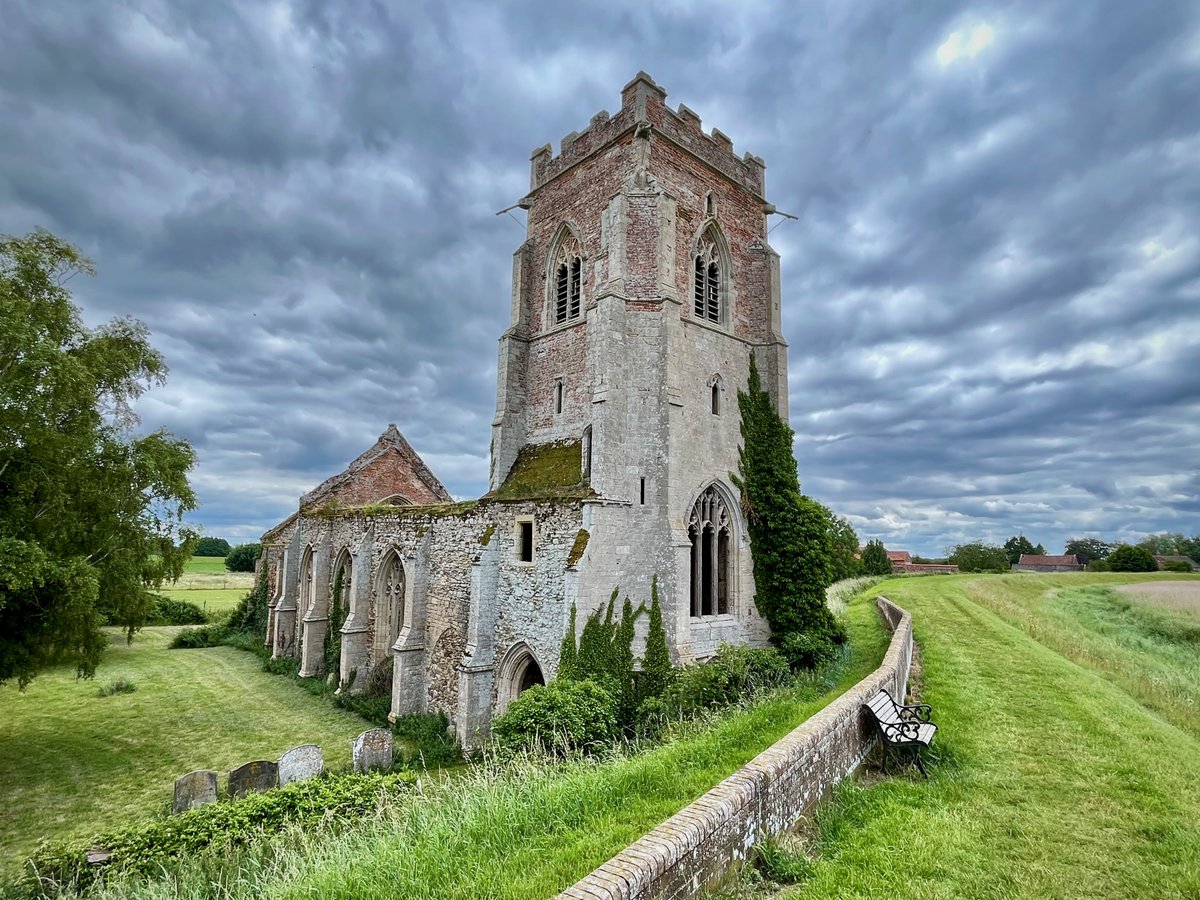
Wiggenhall St Peter's church is one of Norfolk's most evocative ruins. Set next to the Great Ouse, the extant fabric dates mostly from the 15th century, although probably built on the site of an earlier church. Its roof was removed by the 1930s. It was only deconsecrated last year.
Scientists say we need to cut meat consumption by 75%.
Think about that for a second.
The food humans have eaten for millennia.
The food that provides complete protein, B12, iron, zinc, choline, and highly bioavailable nutrients.
That’s the thing they want less of.
Not sugary drinks.
Not candy.
Not breakfast cereals.
Not the endless aisles of packaged food.
Meat.
I find it fascinating that every solution seems to involve ordinary people giving up traditional foods while becoming more dependent on products made in factories.
Maybe I’m old fashioned.
But when someone tells me steak is the problem and ultra processed food isn’t, I’m going to ask a few questions.
Would you cut your meat intake by 75%?
🇿🇦 “Leave our country by June 30. The fight is not about you; it’s about fixing and correcting our system.”
— South Africans were seen confronting two African nationals, telling them they have until June 30 to leave the country as part of calls to address issues within South Africa.