On September 5, Witkoff and Kushner held a five-hour meeting with Dmitriev in Moscow, at a restaurant bearing the telling slogan «Всё для победы» (“Everything for Victory”).
Trump’s special envoy Witkoff and Kushner are certainly doing their part to live up to that slogan.
This meeting will go down in history as a separate deal between the US and the Kremlin, in which the Trump administration lost the last remnants of its civility.
#TrumpAdministration #USRussiaRelations #Kremlin #PoliticalScandal #UkraineWar
I am a member of the Norwegian Nobel Committee.
There are five of us. Five people, appointed by a parliament most of the planet could not find on a map, who decide, once a year, which human being the world has agreed to call good.
I know. I know. I think about it on the tram.
We meet in a building on Henrik Ibsens gate, a street named after a man who wrote almost exclusively about people discovering they are frauds, which nobody on the committee finds funny except me. There is a room with a long table and the portraits of the dead laureates looking down, Mandela, the Dalai Lama, a great many earnest men in spectacles, and one portrait we do not discuss, which is Kissinger, 1973, awarded while the bombs were still falling, after which two of our predecessors resigned and the satirist Tom Lehrer said political satire was now obsolete. We keep him on the wall. A reminder. Every family has the uncle.
It is October in Oslo, which means the sun gives up around four in the afternoon like a civil servant, and it rains the particular Norwegian rain that isn’t quite falling, just hanging there, judging you. I arrive with wet shoes. I always arrive with wet shoes. There is coffee, because this is Norway and there is always coffee, we drink more of it per person than almost anyone alive, and someone’s wife has sent kanelboller, the cinnamon buns, and we sit, five Norwegians, damp, caffeinated, sugared, and we decide the moral standing of the entire species.
Let me tell you how it actually works, because the world imagines a cathedral and it is, I promise you, a book club with a mandate.
287 nominations this year. 208 people, 79 organizations. Anyone can nominate, that’s the secret nobody understands: a professor, a parliamentarian, a former laureate, so the “nominee” list is meaningless, it’s a suggestion box, and every autumn some congressman nominates his own golden retriever and the press writes “SHORTLISTED.” Nobody is shortlisted. There is no short list the public ever sees. There is us, and the coffee, and the rain, and the portraits, and a Norwegian stubbornness that is older than the prize itself.
We read reports. The institute’s advisers write them, thick dull documents, and we argue. Our chairman told the BBC once that in the final meeting “there is a high temperature.” High temperature, for a Norwegian, means someone slightly raised an eyebrow and then apologized for it. We don’t do high temperature. We do a long silence, and then Kristin says “well,” and everyone knows exactly what “well” meant, and it’s settled. That’s our shouting. “Well.” You’d have to be raised here to hear the violence in it.
Now. This year. I will not say the name, because we never say the name, but you know the name.
A certain head of state wanted this prize the way a child wants a thing in a shop window, which is to say loudly, and in public, and with the full belief that wanting it was itself the argument. He said he deserved it. He said he’d ended eight wars, a number that grew most times he said it, like a fish. He had other heads of state phone us. Israel’s prime minister posted it on the internet, “Give him the Nobel.” The leaders of Cambodia and Pakistan announced they’d nominated him, as though announcing it were part of it, as though we tally mentions. A man flew around the globe collecting endorsements for a Norwegian committee the way you’d collect signatures for a petition to the council about a noisy dog.
And here, uff da, is the detail I treasure, the one that makes me smile into my coffee. The nomination deadline is the 31st of January. He took office on the 20th. So for all the phone calls, all the posts, all the gilded lobbying, the only nominations that could possibly count for this year’s prize were filed in the first eleven days of his term, before he had, by his own arithmetic, ended a single one of the eight wars. He campaigned all year for a prize whose window had shut while he was still hanging up his coat. We didn’t have to reject him. The calendar did. We just watched. Norwegians are very good at watching. We have long winters.
People think we sit there weighing his deeds. We don’t. That’s the thing I can’t make the world understand. We’re not grading his homework. We don’t owe anyone the prize for a ceasefire, however real, however loud the announcement. “He made peace” is not a sentence that ends in a medal, the way he believes it does, the way he believes every good thing ends in his name on it. The will of a dead Swede says the prize goes to whoever did the most for fraternity between nations. A dead Swede, I should add, who made his entire fortune inventing dynamite and selling arms, and spent his last years horrified at his own obituary, which called him a merchant of death, and so bought his way to immortality as a man of peace. The whole prize is one guilty arms dealer’s attempt to launder his name. We are, all of us, administering a dead man’s public relations. I find this clarifying. It keeps me humble. It should keep everyone humble, and it keeps, by my count, no one humble at all.
So who did we give it to?
An eighty-five-year-old woman. A judge. Born in Durban, under apartheid, granddaughter of a Tamil man who came to South Africa as indentured labor, a bus driver’s daughter from the poor Indian quarter, who became the first non-white woman to run a law practice in her province, who defended Mandela’s people when defending them was dangerous, who sat on the Rwanda tribunal and the court at the Hague, and who, at eighty-five, is right now a judge weighing whether a genocide is a genocide. When we told the world, our chairman said the rule of law “underpins the system we have set up to ensure peace,” and that “peace requires justice.” She wasn’t even in Oslo. She was in Nuremberg. In courtroom 600. The actual room where they tried the Nazis. You cannot stage that. God staged that, and God, it turns out, is a better satirist than any of us.
She did not phone us. She did not post. No prime minister demanded it for her on the internet. She had, as far as our deliberations are concerned, the one qualification the loud man could never manufacture, which is that she wanted the work and not the medal. The medal finds those people. It flees the ones who chase it. This is not a rule we wrote. It’s just the only pattern the hundred-odd years of our mistakes has ever shown.
The reaction from across the ocean was immediate. His spokesman posted that we “place politics over peace.” Ja. Perhaps. We’re five damp pensioners in a rainy city; of course it’s political, it was always political, it was political when we gave it to a sitting American president nine months into his first term for the promise of things he had not yet done, and we have been quietly embarrassed about that one for fifteen years, so believe me, we had a particular reason this year to prefer a woman with fifty years of verdicts behind her over a man with eight wars in front of him and a deadline already behind him.
Here is what he will never understand, the thing I’d tell him on the tram if he ever took one. We are the one prize he cannot buy, cannot post his way to, cannot have a friendly dictator phone in for him. Not because we’re incorruptible, nei, we’re as vain and wrong and human as the portraits on our wall. But because the entire point of the thing, the only power a small cold country’s book club has ever held, is that it goes to the person not performing the wanting. The moment you demand it, you’ve proven you don’t understand what it’s for, and proving that is itself the disqualification. He ran the most expensive campaign in the history of the prize and the campaign was the reason. He was never losing to Navi Pillay. He was losing to the concept.
It’s dark now. Four o’clock dark. The buns are gone. Kristin said “well” an hour ago and we all went home. I’m on the tram with my wet shoes, and somewhere across the water a very powerful man is explaining to a camera that the prize is rigged, that we’re corrupt, that he’ll win it next year, and he genuinely might, we’re only five idiots and we’ve been wrong before, Kissinger is still on the wall.
But not this year. This year an old woman in Nuremberg, in the room where the law once stared down the exact kind of man who thinks wanting a thing loudly enough should make it his, got a phone call she didn’t ask for.
That’s the job. We don’t reward the man who ends the war and announces it.
We reward the woman who spent fifty years deciding what a war was.
He’ll never see the difference. That’s rather the whole point of him.
Takk for i dag. I have to change trams.
To put Russia's appetite for more land into the context it deserves by showing what they've done with the apparently insufficient land they already have, I decided to combine all my old and new travel guides through Russia's very posh cities into one colossal final thread.🧵
Today, many were shocked by yet another video of the drone “safari” Russians are carrying out against civilians in Kherson. A Russian drone deliberately hunted down a man selling vegetables and detonated right next to him. The Russians even admitted to the crime, showing zero regret and openly boasting about tormenting people. The man was wounded in the blast. Every single day, ordinary people in Kherson face these Russian "safaris."
The world must see this. It must see every piece of evidence that Russia has gone mad and that its soldiers take pleasure in killing and abusing civilians. Without pressure on Russia, the dismantling of its capacity for aggression, and real security guarantees, it is simply impossible to imagine the world being able to coexist with this evil. We must remain resolute in defending life. We must act and support life in ways that force Russia to seriously think about peace rather than expanding the range of its drones.
This is not just about Ukraine. Russia’s campaign against human life must be stopped here in Ukraine before it spreads further. Finland and Kazakhstan, the Baltic states and Poland, the countries of the South Caucasus, Romania, and Moldova—all should work together to ensure real security guarantees and bring Russia’s war to an end. Peace is needed, which requires cooperation among everyone in the world who truly values peace. Thank you to everyone standing with Ukraine!
Дуже сильний текст Марії Берлінської. Дякую за чітку і принципову позицію:
Якось я запитала Залужного, що він думає про Сирського. Це був десь початок 2024 року, ми сиділи в кабінеті і обговорювали потенційні сценарії війни.
Тоді вже активно ширилась інформація, що Сирський стане наступним ГК.
Залужний відповів максимально коротко, буквально одним словом:
- Професіонал.
На днях Федоров теж висловився про Сирського:
"Тому що насправді Сирський в 2022 році врятував нашу країну в тому числі. Він провів Київську операцію брав участь, він провів Харківську операцію, брав участь в Херсонській операції. Багато різних операцій. Ми не можемо такого командира недооцінити..."
Достойно.
Треба мати честь, щоб коментуючи ГК з яким явний і жорсткий конфлікт не скотитись в дитячі образи, а визнати і заслуги опонента.
Тепер максимально неупереджено, суто пунктам і по фактам.
1. Конфлікт між МО та ГК був давній. Його не афішували, але всі хто глибше в темі звісно знали.
Конфлікт значно глибше, ніж між двома лідерами команд, не суто між міністром і главкомом. А між їхніми ключовими підлеглими теж. До останнього це намагались не озвучувати публічно, що логічно під час війни.
Хоча й сам конфлікт всередині під ��ас війни дуже не логічний. З іншого боку конфлікти всередині військово-політичного керівництва під час війн були завжди і всюди. Достат��ьо почитати історичні мемуари відомих полководців і політиків. Україна в історії проходила це теж не раз. З важкими наслідками.
Зараз головне пройти нарешті по дорослому, пам'ятаючи історичні уроки, зберігши взаємоповагу і державність.
2. Справді, в цьому конфлікті стикнулись два різних управлінських уявлення про подальші способи, методи і загалом засадничі підходи до ведення війни.
Але зводити все до того, що міністр хоче воювати на дронах, а ГК на конях - як мінімум смішно. Це дуже примітивне уявлення про суть їхніх розбіжностей.
Дуже легко повірити в спрощену, а значить зручну, дуалістичну картину світу.
Ось в нас молодий, прогресивний міністр хоче перемогти дронами. А ось старі, радянські діди хотят�� всіх вбити в штурмах.
Все як в казці в дитинстві- ось добро, ось зло, все зразу так приємно і зрозуміло, не треба напружуватися і довго розбиратись.
Але світ складніший, особливо під час війн такого масштабу.
3. Чи є за що критикувати Сирського? Звісно, як і кожного з нас. Він не ідеальний і не святий.
Є довгий список, що йому закидають: "Жорсткий і авторитарний, призначає не професіоналів, а лояльних, майстер політичних інтриг, безкомпромісно карає за непокору, вміє місяцями саботувати призначення і грати в бюрократичний пінг-понг, безконтрольно допустив деяких командирів садистів до посад, ненавидить технології, вимагає воювати штурмовиками, а не дронами, завербований росіянами etc..."
Не буду перечисляти все, легко гуглиться. Частина цієї критики релевантна, частина повний абсурд.
Справедливості заради важливо розуміти, що кожен командир високого рівня має своє кладовище. Кожен. На війні не буває без втрат, як і без помилок. Мої побратими - взводні, ротні, комбати, комбриги - мають в голові кожен свій список тих, хто можливо би не загинув. Кожного разу прокручують як можна було зробити розумніше, як прорахувати, щоб уникнути цих страшних розмов з матерями і дружинами. Про це не прийнято говорити.
Але повірте, ті в кого є совість мучаться до кінця життя, навіть якщо по суті не винні.
4. Зараз Сирський, Клименко і навіть Хмара потрапили під хвилю публічної критики. Троє офіцерів стратегічного рівня управління.
Чи можна критикувати командирів публічно? Звісно, в нас демократична країна і не може бути недоторканних. Однак в першу чергу на це мають право ті, хто служить своїй країні.
Але коли люди, які за 12 років не служили ні дня, починають кидатись з принизливим брудом на бойових офіцерів - це клінічна неповага, дуже нездорова тенденція.
Сирський, об'єктивно провів ряд блискучих, історичних операцій стратегічного рівня, що визнавали навіть вороги - одна тільки Харківська чого варта.
Тепер він "дід", "м'ясник", і ненавидить дрони. Клименко, який забезпечив бойові корпуси, прийняв МВС з коліс, розгорнув бойову роботу, якому щиро дякують багато командирів - тепер для натовпу і ноунеймів в інтернеті - "мусор".
Хмара, бойовий командир, який стоїть за багатьма спецопераціями стратегічного рівня, який розбудував Альфу, один з топових підрозділів, який вміє мислити на державному рівні - тепер просто "невдалий антикриз президента", "не справиться", "не його рівень", etc.
5. Безвідносно до прізвищ - трьох офіцерів стратегічного рівня за кілька днів полили брудом на всю країну. В секунди забувши все добре, що вони зробили. Ще можна зрозуміти, коли це критика конструктивна, яка йде від військових і ветеранів.
Але коли далекі від війська цивільні починають в інтернеті крити матом, ліпити меми обсміювати "мусора", офіцера, який витратив роки життя, щоб вони не знали що таке війна - це вкрай небезпечна хуйня.
Бо в першу чергу це наші, українські офіцери.
Вони брали на себе відповідальність в моменти, які багато людей психологічно не вивозять бачити навіть в кіно. Коли не просто страшно, а паралітично страшно, коли безперервні прильоти, коли люди вмирають стікаючи кров'ю. А ти при цьому той, кого благають спасти, кому вірять.
Якщо ми будемо їх "розпинати на площах" завтра нас самих розіп��уть. Тільки вже не фігурально, в буквально.
Розіпнуть вже російські офіцери, але скоріше навіть звичайні солдати. В окупованому Києві.
6. Громадяни можуть виходити з картонками і відстоювати свою позицію по Міністру. Але не можуть картонками вибирати хто стане ГК.
На протестах вже звучить ряд прізвищ від Драпатого до Білецького та Бровді. Створюється небезпечний прецедент - а якщо завтра Білецький з Драпатим в ролі ГК не сподобаються? Будемо знову обирати ГК на картонках?
Одразу приходить історична паралель - революція 1917 року, ради солдатських депутатів, там теж пробували вибирати командирів. Чим все закінчилося всі пам'ятають.
Озвучувати своє бачення президенту - ок. Вимагати в президента призначити конкретного ГК, бо так сказала вулиця - ідіотизм і хаос.
Доречі російські боти зараз тисячами вкючились в цю гру в інтернеті, косять під нас і качають розкол на максималках. Сюди в коменти теж прийдуть.
Що логічно, ми б на їх місці робили те саме.
7. Я витратила роки часу, щоб розібратись в роботі МО і мати можливість компетентно критикувати роботу попередніх міністрів. Для того, щоб розібратися в роботі ГШ мало прочитати кілька десятків книжок чи статей по військовій стратегії або оперативному плануванню.
Треба мати грунтовну військову освіту. Бойовий, командирський досвід. На це йдуть роки важкої праці.
Можливо хтось вміє розібратися швидше, і без освіти. Але я себе до таких геніїв не відношу.
Зараз не служу, в мене немає військової освіти, мій бойовий досвід був востаннє років 9 тому, а значить вже не релевантний. Саме тому я не беру на себе зухвалість визначати публічно, хто має стати Главкомом у війні такого масштабу. На виживання найбільшої європейської держави.
8. Мій робочий досвід з більшістю згаданих тут офіцерів конструктивний і ��озитивний.
Нам вдалося разом запустити ряд системоутворюючих для технологічної стійкості речей.
Зараз не в тренді говорити щось добре, про ГК, благо мені індиферентно на тренди. Справедливості заради буде чесно згадати хоча б кілька речей, яким він особисто сприяв.
Впровадження технологій в БЗВП вперше всерйоз підтримав Сирський, без лишніх пояснень розуміючи чому це треба.
Розвиток підготовки на НРК - він сприяв як мінімум з літа 2024 року.
Коли я запропонувала значно збільшити підготовку операторів на FPV - ГК одразу дав зелене світло. Аналіз і впр��вадження багатьох кращих технологічних практик по військам теж часто йшов через особистий контроль ГК.
Це буквально кілька прикладів, їх десятки.
Отакий безнадійно "застарілий" ГК, хоче воювати з тапіками на конях, але підтримує збільшення підготовки на дрони.
Ну і те, що ГК не вилазить з фронту, сміливо їздить ��о передовій, зустрічається з бійцями, це теж відомий факт.
Повторюсь, це все далеко не означає що ГК ідеальний.
Але шоб бачити повну картину треба озвучувати все. Як казали в нас в селі: люби Боже правду.
9. Останнє - я пам'ятаю, як навесні 2025 йшла закрита дискусія щодо кандидатури наступного командувача СБС. Пам'ятаю, що тоді запитали і мою думку, я написала свій топ п'ять достойних офіцерів. Першим в моєму списку був тепер всесвітньо відомий Мадяр Роберт Бровді.
І добре пам'ятаю, що тоді і міністр Федоров, і ГК Сирський обоє підтримували саме цю кандида��уру. Повністю на цьому зійшлись.
І не прогадали. Вистріл прицільно в точку. Саме завдяки тому, що вони обоє сприяли - і президент підтримав - стратегічно виграла вся наша країна. Саме тому зараз такі вражаючі результати на табло.
Значить можуть спільно знаходити найкращі рішення.
Сподіваюсь президент справді почує розумних людей і дасть можливість воювати всім, хто показав, що вміє воювати ефективно.
Ми не можемо розкидатись цінними кадрами.
Треба ставати дорослими, миритись і працювати разом.
На результат.
19 липня, 2026
Незручно виходить.
500 000 на службі у нацистів.
поляки цього ніколи не визнають так само як росіяни свої майже 2 мільйона на службі у нацистів.
Але попри вме, для поляків так само як і для росіян, нацисти не вони а ми.
Нічого що в УПА людей було менше ніж поляків в вермахті....
Driving to Crimea for easy money? Your truck is already on the target list:
Russian long-haul trucker, catch this non-Chinese warning (Drive the fuck away): don’t get behind the wheel of a truck heading down the land corridor to Crimea chasing a long ruble, not even when tempted by triple rates.
Your truck is a legitimate military target on occupied territory.
The flip-flops left behind will melt together with the gas pedal – during the past week alone, more than 360 driver Dimons, Lyokhas, Seryogas and the like have already had a taste of that reality.
Watch about 200 July near-Crimea blow-ups in the video compilation, then drive the fuck back to Rostov without looking back – like you used to race off to get laid in your youth.
And pass it on to all your buddies: around here, a carrier is a one-time-use item.
We will endure.
Moscow will fall.
Crimea will be fed back up and rebuilt.
MAGYAR 🇺🇦
08.07.26
Online USF scoreboard “PIDRAKHUIKA”
https://t.co/nud6c36JAg
MAGYAR 🇺🇦
08.07.26
Норман Дейвіс зробив страшну річ для польського політичного плаката. Він додав ІСТОРІЮ.
Тобто не емоцію, не передвиборчий мікрофон, не
“з Бандерою не вступите до ЄС”,
не “всі українці мають стояти в кутку історії”.
А саме чітко історію.
І раптом виявилося, що світ трохи ⬇️
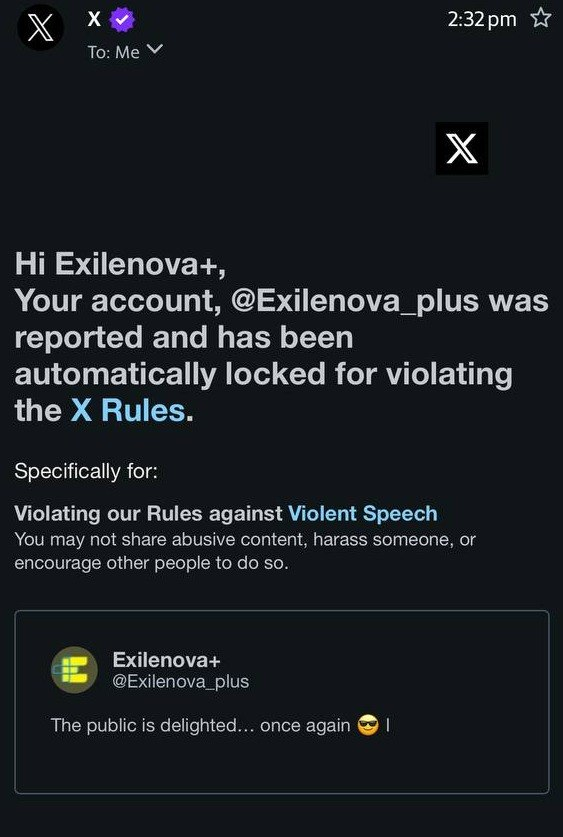
"Hello to everyone who followed us on Twitter
Our account has been permanently suspended for 30 days without any stated reason. Most likely, this happened due to the influence of interested individuals within the management circle of the X platform
That's where things stand."
У Національному архіві Швеції зберігається документ, який варто показувати кожному, хто називає українців «молодою нацією».
Це оригінал «Pacta et Constitutiones Legum Libertatumque Exercitus Zaporoviensis» — першої української конституції, складеної гетьманом Пилипом Орликом 5 квітня 1710 року в Бендерах.
Тепер трохи математики. Консти��уція Орлика з'явилася за 77 років до Конституції США. За 81 рік до конституцій Польщі та Франції. Коли в Європі ще панував абсолютизм, українці вже прописували поділ влади, обмеження повноважень гетьмана, незалежний суд і права козацтва. Не як подарунок від монарха — як договір вільних людей зі своєю владою.
Це і є відповідь усім «експертам», які досі розповідають про Україну як про «young nation», що «раптово виникла у 1991 році». Ні, панове. Нація, яка 316 років тому писала одну з перших конституцій у світі, не може бути молодою.
І саме тому Москва століттями нищила нашу пам'ять — палила архіви, забороняла мову, переписувала історію. Бо імперії було життєво необхідно, щоб світ вважав нас «частиною Росії», а не дорослішою та набагато старшою за неї політичною культурою. І оригінал конституції Орлика вцілів лише тому, що зберігався у Швеції — поза досяжністю імперських рук.
Тупість та ницість такої українофобної пропаганди полягає не тільки в дешевих маніпуляціях (замість історичних фактів) - а й в тому, що все це врешті-решт працює проти самої ж Польщі.
Чи можемо ми показати фото з поляками, які радіють нацистам?
Однознач��о можемо!
⬇️⬇️⬇️
The editor-in-chief of the Polish portal Kultura Liberalna has published a thoughtful article titled "Poland Is Not Ready for Ukraine's Agency."
Here are its main points:
1. Outside Poland, the decision to strip Volodymyr Zelenskyy of the Order of the White Eagle turned into a communications failure for Poland.
2. Poland behaved as if simply believing it was right should have been enough for the rest of the world to accept its position.
3. For most Western societies, disputes over the interpretation of events that happened 80 years ago are far less important than today's challenges. When Western media covered the controversy at all, it appeared as a vague and confusing story, especially against the backdrop of Poland's earlier solidarity with Ukraine and without a clear understanding of the historical context.
4. The history of the Polish-Lithuanian Commonwealth was fundamentally transformed by the Khmelnytsky Uprising, which marked the beginning of its decline. Today, Eastern Europe is experiencing a new "Khmelnytsky moment." Its essence is that Ukraine has evolved from a junior partner into an independent geopolitical actor. It negotiates directly with the G7 and the E3, commands respect in Washington, and possesses military experience unmatched anywhere else in Europe.
5. If Russia emerges weakened from this war, Ukraine will become a regional power with its own ambitions and its own historical policy. Polish society, the author argues, is not yet prepared for that reality.
6. Another Polish mistake has been treating politics like an accounting ledger—believing it can present Ukraine with a "bill for solidarity." But politics does not work that way. Successful states are not those that settle scores, but those that create long-term political advantages for themselves.
7. After 2022, Poland had an opportunity to become the regional leader and the center of military and, eventually, postwar cooperation. Instead, a different mindset prevailed: "Since we helped Ukraine, let's immediately start demanding concessions—from economic issues to historical memory." A state that behaves this way does not build lasting influence and is likely to end up disappointed.
8. The weaker Russia becomes, the louder Polish-Ukrainian disputes may grow. Polish support for Ukraine has been driven in large part by fear of Russia. At the same time, Ukraine will no longer depend on Poland as much as it once did. This could create mutual disappointment: many Poles may come to see Ukrainians as "ungrateful," while many Ukrainians may conclude that Poland cannot accept Ukraine as an equal and fully sovereign partner.
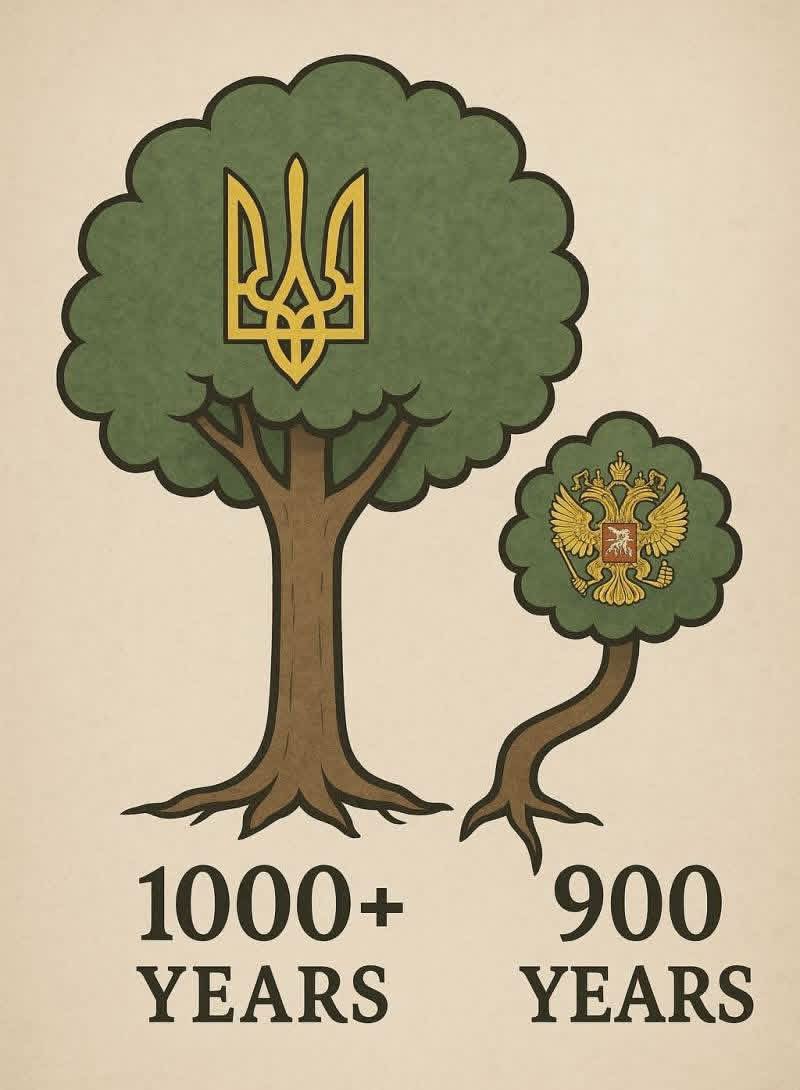
Russia is not over 1,000 years old, as some claim. At most, it is 900 years old – if we count from the establishment of the first political unit in the area of Moscow. The Vladimir-Suzdal Principality, founded in 1125, is where we should begin the political history of the country now known as Russia. Before the arrival of colonizers from Kyiv, the region was mostly inhabited by Finnic tribes.
Rus’ began in Kyiv in the 9th century, which makes Ukraine its direct descendant, while Russia is more of a spin-off – a branch heavily influenced by the Golden Horde. Moscow was under Kyivan Rus’ influence for barely 100 years, but it remained under the rule of the Golden Horde and other Turkic powers for over 400 years. This raises the question: from whom did they actually inherit most of their political culture and traditions?
We don’t say that the United States began with the Kingdom of Wessex in the 6th century. We don’t say Argentina started as the Kingdom of Aragon in 1035, or that Brazil was founded in the days of the Portuguese Reconquista. You get the point. We draw a clear line between the colonizing civilization and the colony that later gained independence and went its own way.
Likewise, Russia did not begin with Kyivan Rus’. It was a remote colony, and that does not make it the heir to Kyivan heritage. In fact, prior to 1721 the country wasn’t even officially called “Russia” – its name was “Moscovia.” They renamed themselves after conquering Rus’-Ukraine, in a deliberate attempt to appropriate its history. Sadly, many people still fall for that story.
When I pass by the 1,000-year-old St. Sophia Cathedral – built while the area of Moscow was still populated mostly by bears and frogs – and then hear someone talk about “Russia’s 1,000+ year history,” I honestly shudder. That is Ukrainian history, not Moscow’s.
The trident was the coat of arms of Volodymyr the Great of Kyiv, who reigned from 978 to 1015. The double-headed eagle, often cited as Russia’s imperial symbol, wasn’t even originally Muscovite – it was appropriated from Byzantium after its fall. Tsar Ivan IV, “the Terrible,” even fabricated a story claiming he was a direct descendant of Julius Caesar. Naturally, that was fake – like so much else in their official mythology.
Author: Volodymyr Kukharenko
The Poles seem to have completely forgotten that the days of the Polish–Lithuanian Commonwealth are long gone.
The level of arrogance and Great Polish chauvinism has recently become overwhelming. Watching Warsaw try to dictate terms to Ukraine, lecture us on history, and tell us how to name our military units and whom we should consider heroes raises only one question: have you completely lost your sense of proportion?
Yes, we are deeply grateful for the extraordinary support that the Polish people provided at the beginning of Russia's full-scale invasion in 2022 and for everything they continue to do today. But let's settle one thing once and for all: UKRAINIANS IN POLAND ARE NOT FREERIDERS.
This is not charity—it is a mutually beneficial process. Ukrainian businesses, the massive relocation of major Ukrainian companies, the creation of thousands of new enterprises, the integration of millions of hardworking people, and the billions in taxes Ukrainians contribute to the Polish treasury every month have given Poland's economy a tremendous boost. Poland is significantly stronger economically today than it was before 2022. You helped us in war; we injected fresh energy into your economy. The accounts are balanced. Nobody owes anyone eternal gratitude or submission.
Now, let's talk about history—the subject Polish politicians seem to enjoy reshaping to suit their narrative.
The next time you want to lecture us about morality, remember Operation Vistula. Remember how your government deported Ukrainians, uprooted them from their ancestral lands, and forcibly resettled entire communities.
When you drive through Chełm—the gateway to Poland for millions of refugees today—learn its history. This is not merely "Chełm." It is the historic Ukrainian city of Kholm, founded by Prince Danylo Romanovych of Galicia–Volhynia and at one time the capital of the Galician–Volhynian state. The Kholm region and Trans-Curzon territories are historically Ukrainian lands from which Ukrainians were expelled and erased.
But does Ukraine run around demanding the return of territories? Do we print Polish cities on our banknotes? No. Yet Poland allows itself to issue commemorative coins depicting the Ukrainian city of Lviv and considers this perfectly normal.
The fighters of the UPA fought against the Home Army, but at times they also fought against the same Russian imperial threat. At the same time, the Home Army committed documented atrocities against Ukrainian civilians, destroying entire villages. And yet in 2023 Poland officially named a military unit after the Home Army. Did Ukraine issue ultimatums demanding a renaming? Did we interfere in Poland's sovereign affairs? No. So why do some Polish politicians believe they have the right to tell Ukrainians how to honor those they consider heroes—people who are dying today to ensure that Russian tanks never roll toward Warsaw?
Let's be honest. Historically, Poland was often as much an occupier of Ukrainian lands as Russia was. Remember the forced Catholicization, aggressive Polonization, harsh serfdom, and the suffering of Ukrainians under the old Polish–Lithuanian system. Those realities helped ignite the uprising led by Bohdan Khmelnytskyi.
We Ukrainians proved capable of rising above the grievances of the past. We showed maturity, forgave historical injustices, and chose a common European future. Yet in return we increasingly hear arrogance and attempts to speak to us from the position of "master and servant." That will not be accepted.
I have never been a supporter of President Zelenskyy and still have many domestic political disagreements with him. However, in the way he is currently dealing with Warsaw—defending Ukraine's sovereignty and national dignity—I fully support him.
Independent Ukraine is in no way inferior to Poland, either historically or politically. We are equals. And we will not allow anyone to speak to us in the language of ultimatums.
Another controversy has erupted in Poland.
This time, the trigger was a Polish historian.
Kazimierz Wójcicki attempted to explain to his fellow citizens why Ukrainians view the UPA differently than Poles do.
The result?
After a single television appearance, the state broadcaster TVP Info reportedly decided to stop inviting him to its programs, while Poland's media regulator demanded an explanation from the channel.
What exactly did the historian say?
During a discussion about the UPA, he stated:
> "The Home Army (AK) and the UPA were two national liberation armies."
In his view, regardless of how particular chapters of history are assessed, both organizations saw themselves as forces fighting for the independence of their respective nations.
Wójcicki also recalled a fact that is rarely mentioned in public debates:
> "Veterans of the 27th Volhynian Division of the Home Army met with UPA veterans and shook hands."
When an opponent raised the issue of the Volhynia tragedy, the historian responded:
> "You are characterized by a shameful lack of knowledge about Ukraine."
After references to UPA crimes against Polish civilians, he added that the victims of the Polish-Ukrainian conflict were not only Poles. Ukrainians also suffered at the hands of Poles, he argued, pointing to the destruction of Orthodox churches and attacks on Ukrainian villages.
The following day, in an interview with Rzeczpospolita, he elaborated on his position:
> "A significant part of the Polish reaction to the UPA is based on a lack of knowledge of Ukrainian history."
According to him, many Poles view the UPA exclusively through the lens of the Volhynia massacres.
For many Ukrainians, however, the memory of the UPA is primarily connected with its long struggle against Soviet rule, political repression, deportations, and resistance to the USSR after World War II.
The historian also observed:
> "Every nation-state creates its own pantheon of heroes."
This, he argued, helps explain the attitude of part of Ukrainian society toward the UPA and the decisions of Ukrainian authorities regarding historical memory.
Another of his remarks provoked particularly strong reactions:
> "The identification of the Bandera movement with Nazism is the result of Russian propaganda."
These comments were received very negatively in Poland.
Agnieszka Głapiak, head of Poland's National Broadcasting Council, stated that historical memory requires special responsibility and demanded explanations from TVP Info.
Meanwhile, deputy channel director Jan Józefowski responded even more sharply:
> "His equating the Home Army with the UPA is not only a historical falsehood and simply nonsense, but a thesis that I oppose as a Polish journalist."
Following the controversy, TVP Info ended its cooperation with the historian.
This story is significant not only because it represents yet another dispute over Volhynia.
It revealed something broader.
Even in Poland, where people have spoken for decades about the need for Polish-Ukrainian reconciliation, an attempt to explain the Ukrainian perspective on the UPA can become politically toxic.
And it increasingly appears that the main problem is no longer that Poles and Ukrainians hold different views of the past.
The problem is that the very attempt to understand the other side's perspective is increasingly perceived as a threat to one's own historical memory.
Фото з часів, коли у всіх були мізки.
Зліва направо:
- Анджей Жупанський, голова Асоціації солдатів 27-ї Волинської піхотної дивізії Армії Крайової;
- Єжи Рейт, голова Обʼєднання українців в Польщі;
- Генерал Василь Кук, останній головнокомандувач УПА.
(Волинський університет, Луцьк, 1997 рік)
Yesterday, the President of Poland noted that the Order of the White Eagle is not an ordinary award. It is a symbol of the highest trust of the Republic of Poland. It signifies a special bond with the Polish state and the special gratitude of the Polish People. Such a symbol requires not only merit, but also respect for the values that form the foundation of our community.
Therefore, if it is considered that this special symbol may remain with Catherine II, Benito Mussolini, and Gerhard Schröder, then we in Ukraine will not argue with that.
Ukraine is grateful to the Polish People for their support and cooperation, which play a significant role in the struggle for our and your independence from Russia.
Ukraine never forgets solidarity and understands that cooperation between states and peoples in our region is one of the tangible security guarantees for Ukrainians and for each neighboring state.
Ukraine will continue to defend itself in this war unleashed by Russia, and we will undoubtedly achieve a dignified peace.
Ukraine is grateful to all peoples, states, and leaders who will continue to stand with us in the defense of freedom and who, together with Ukraine, will serve as guarantors of postwar peace in Europe and a new, real security.
Ukraine will remain open to all meaningful formats of engagement with Poland in order to try to avoid conflicting interpretations of the difficult and painful chapters of our shared past and to ensure proper respect for all innocent victims of the 20th century.
And Ukrainians are doing everything in our power to ensure that Europe does not suffer defeat in this century.
I am proud of our people and of EVERY Ukrainian warrior – of the millions of Ukrainian men and women who deserve unquestionable respect for the heroism the Ukrainian People have shown in defending themselves against Russian aggression.
We believed that the Order of the White Eagle, awarded in 2023, was meant for the Ukrainian People and our army. That is what was said at the time. Today, I sent the Order back to the President of Poland.
I believe the future will confirm the respect Ukrainians deserve.
Glory to Ukraine!
🕯️ Volhynia: The Asymmetry of Memory
Volhynia (Ukraine), a cemetery of the Polish Home Army (Armia Krajowa), which killed about 20,000 civilians in Volhynia. This is not their only crime against the Ukrainian people; however, despite this, Ukrainians maintain the cemetery and do not protest against the army's symbols.
In Poland, on the other hand, the graves of Ukrainians who defended Ukraine from Polish occupation are constantly desecrated, and there is opposition to UPA symbols...
I do not understand why it is impossible to live peacefully and leave history to historians, and not allow politicians to speculate on historical topics, especially Russia and its puppets?
The French philosopher Ernest Renan once famously remarked that "getting history wrong is part of being a nation." He meant that nations are often built on myths that conveniently forget certain painful truths. When Poland demands recognition for the Volhynia tragedy while actively erasing the memory of Ukrainian resistance fighters, it is an attempt to define the "moral geography" of the region in a way that serves current nationalist narratives rather than historical truth. By stoking historical resentment, Russia prevents a unified regional front. As the historian Timothy Snyder has often argued, the "bloodlands" between Germany and Russia—which include Ukraine and Poland—are constantly being weaponized by external powers to keep these nations divided.
True reconciliation, as seen in the post-WWII Franco-German model, requires a "mutual surrender" of the narrative. It requires both sides to acknowledge their own atrocities. The current Polish-Ukrainian dynamic is lopsided: one side offers respect as a path toward peace, while the other uses historical revisionism as a tool for domestic political legitimacy. As Immanuel Kant suggested in Perpetual Peace, lasting stability cannot be built on the selective application of justice; it requires a categorical imperative—treating the memory of the "other" with the same dignity one demands for one's own. The tragedy here is that by fighting over the ghosts of the past, both nations risk failing the living, who need unity more than ever. To leave history to historians is the ideal, but in a world of populism, history is a currency, and politicians are rarely willing to stop spending it.