The Fibonacci sequence appears in nature more frequently than one might expect; the branching of trees, arrangement of leaves on a stem, the fruitlets of a pineapple, even the spiral galaxies all exhibit Fibonacci patterns.
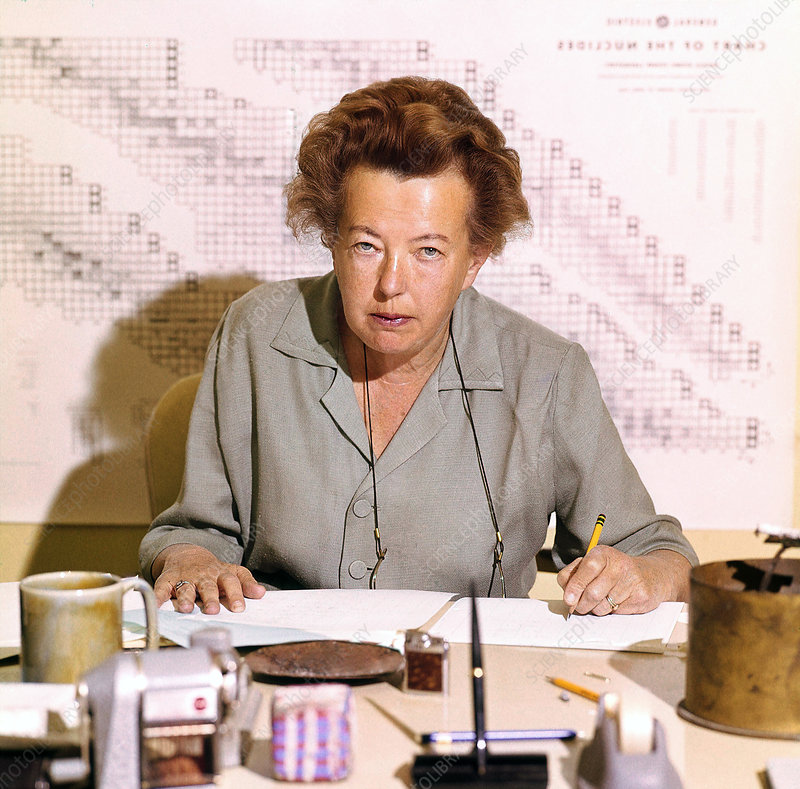
While Marie Curie is well-known for her Nobel Prizes, few are aware of Maria Goeppert Mayer, the second female physicist to win the Nobel Prize in Physics in 1963 for her work on the nuclear shell model of atomic nuclei. Her achievement remained relatively overshadowed in the history of physics.
📷JACK FIELDS/SCIENCE PHOTO LIBRARY
Do you know Maria Goeppert Mayer's Nobel Prize winning insights into atomic nuclei remained overlooked for decades? This brilliant physicist conceived the nuclear shell model in the 1940s and 50s while unpaid at universities and raising children.
Even after winning the Physics Prize, textbooks omitted Goeppert Mayer's pioneering revelations of energy shells within an atom's dense core. Her theoretical framework explained why certain atomic numbers generated especially stable elements, cementing nuclear physics fundamentals. Yet only insiders grasped the full extent of her precocious contributions made despite lack of academic support.
Goeppert Mayer published intermittently before 1963, balancing her groundbreaking work against society's expectations of a scientist and mother. Only in recent years has physics recognized this "magic numbers" pioneer denied a professorship until 1960. No wonder few students realized a Nobel Laureate walked beside them.
At last Goeppert Mayer emerges from the shadows as the transcendent intellect she proved to be. A brilliant mind revealed despite everything against her.
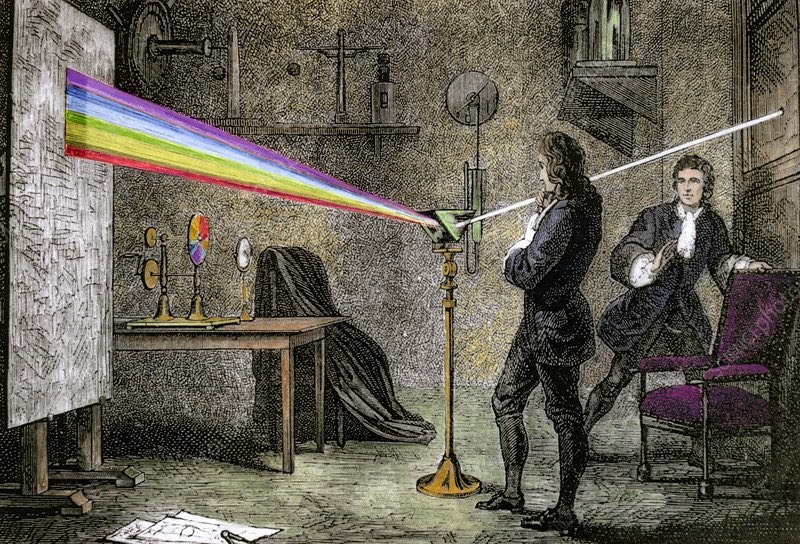
In 1665, Isaac Newton discovered the spectrum of light by passing a beam of sunlight through a glass prism in his room. He also experimented with his own eyes by inserting a bodkin (a blunt needle) between his eyeball and the bone as far as he could, and pressing his eye with the end of it to observe the effects on his vision
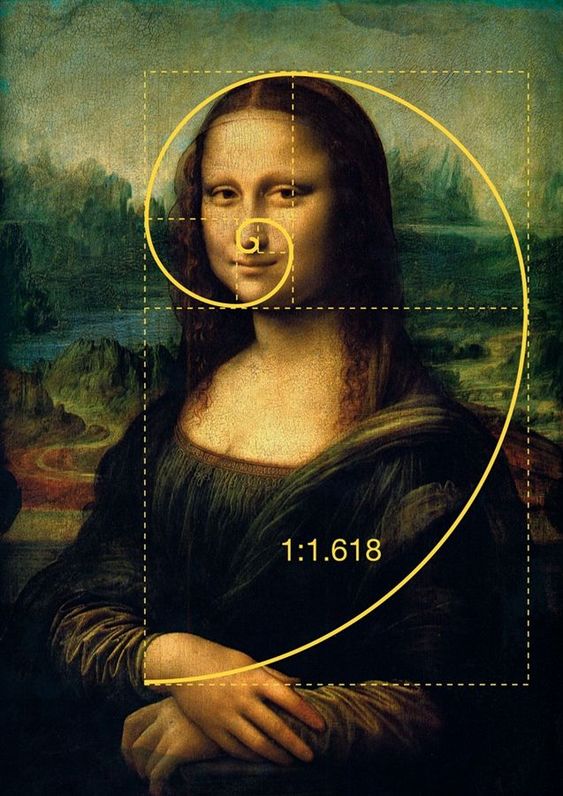
The Mona Lisa is a famous painting by Leonardo da Vinci, a Renaissance artist and scientist. The painting depicts a woman with a mysterious smile and a landscape background. One of the reasons why the Mona Lisa is so admired is because of its use of the golden ratio, a mathematical proportion that is considered to be aesthetically pleasing and harmonious.
The golden ratio, also known as the divine proportion, is a ratio of approximately 1.618 that can be found in nature, art, architecture, music, and geometry. It is expressed by the Greek letter phi (Φ) and can be derived from the Fibonacci sequence.
The golden ratio can be seen in the Mona Lisa in several ways. For example, if a rectangle bounds the face and this rectangle is divided by drawing a line across her eyes, it creates another golden rectangle. The result is that the ratio of the length of Mona Lisa’s head to her eyes is also that of the golden ratio. Another example is that if a triangle is drawn from her chin to her eyes and to the top of her head, it forms a golden triangle, which has angles of 36°, 72°, and 72°. The golden triangle can also be found in other parts of the painting, such as the shape of her nose and mouth.
Da Vinci was fascinated by the golden ratio and its connection to nature, art, and geometry. He illustrated a book called The Divine Proportion by Luca Pacioli, a mathematician and friend of Da Vinci. The book explores the mathematical and artistic properties of the golden ratio and its applications in various fields. Da Vinci also used the golden ratio in some of his other works, such as The Last Supper and The Vitruvian Man.
The use of the golden ratio in the Mona Lisa shows Da Vinci’s skill and knowledge as an artist and a scientist. He was able to create a realistic and harmonious portrait that captures the beauty and mystery of the human face. The Mona Lisa is not only a masterpiece of art, but also a testament to the power and elegance of mathematics.
The Meissner effect:
When a superconductor is cooled below its critical temperature, it expels magnetic fields from its interior, causing them to be completely repelled. This effect, known as the Meissner effect, is responsible for the remarkable property of perfect diamagnetism in superconductors.
Especialistas afirmam que ainda são necessários estudos científicos mais abrangentes para afirmar que o método é eficaz contra a doença: “Existe esse relato de caso, mas é uma coisa isolada. Não tem literatura disponível nem estudos metodologicamente corretos ainda. A base disso é muito muito pequena e é necessário cautela” Dr. Fernando Maluf, médico oncologista fundador do Instituto Vencer o Câncer, diretor associado do centro da Beneficência Portuguesa e membro do comitê gestor do Hospital Israelita Albert Einstein, em São Paulo.