At Funding the Commons, I presented The Sphere’s work on protocol art — how artists design systems for memory, value, and transformation. This thread summarizes some of what we’re exploring.
Thank you to @FundingCommons@ontologymachine for inviting us!
I’ve always been fascinated by protocols — even before I knew to call them that.
My entry into blockchain didn’t begin with tokens. It began with loops — choreographic, economic, cultural. And with the moment when media infrastructures began to mutate in real time.
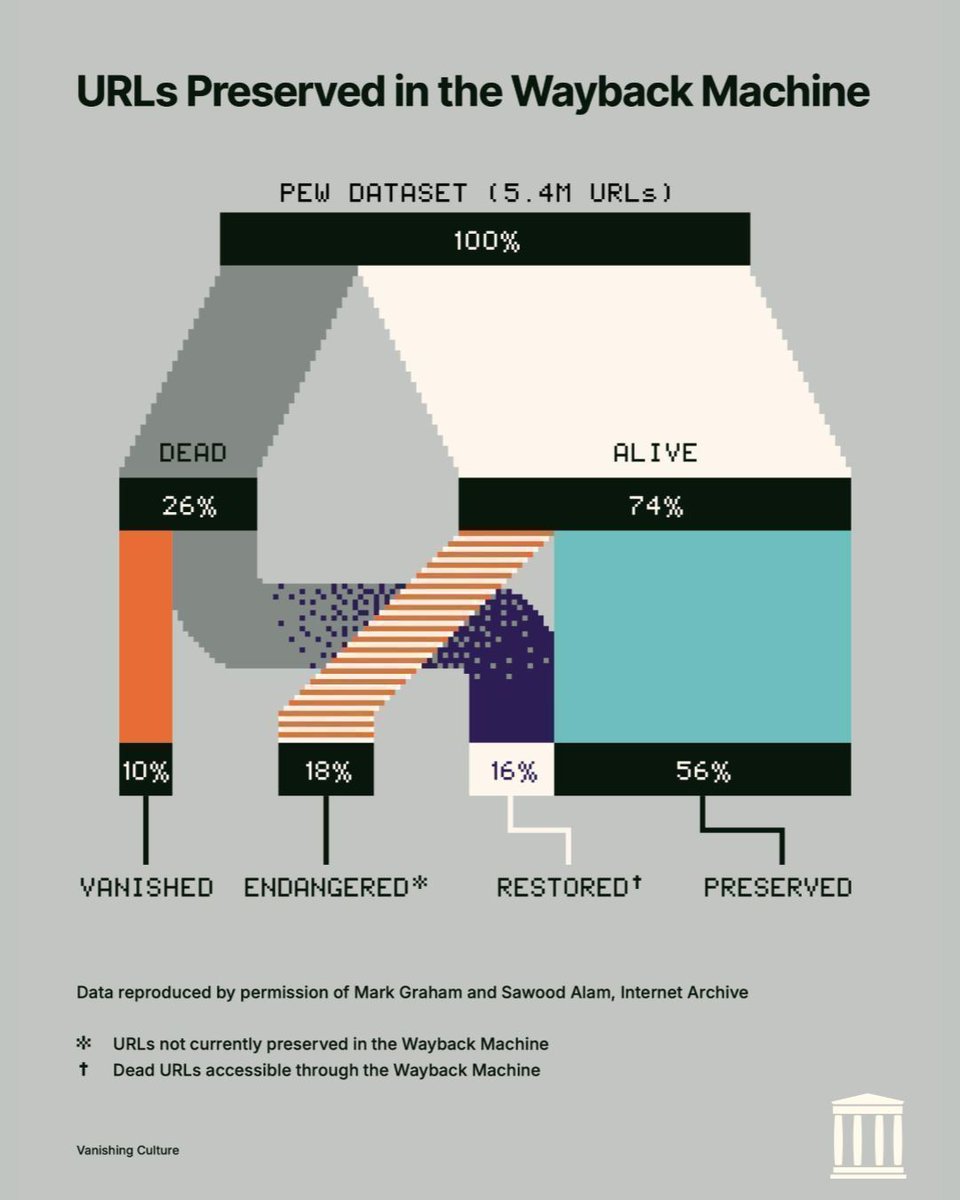
The web is disappearing 🕳️
According to a Pew Research Center report, 26% of pages from 2013-2023 are no longer accessible.
But that’s not the whole story.
In a new study published in Internet Archive's book, VANISHING CULTURE, data scientists working with the Wayback Machine have found:
16% have been restored through the Wayback Machine.
56% are preserved before they disappear.
Preservation is the remedy for cultural loss.
📚 Read VANISHING CULTURE free from the Internet Archive
📖 Download & read: https://t.co/BrawXOwMBr
🛒 Purchase in print: https://t.co/EB58IliqDm
#VanishingCulture #DigitalMemory #InternetArchive #BookTwitter
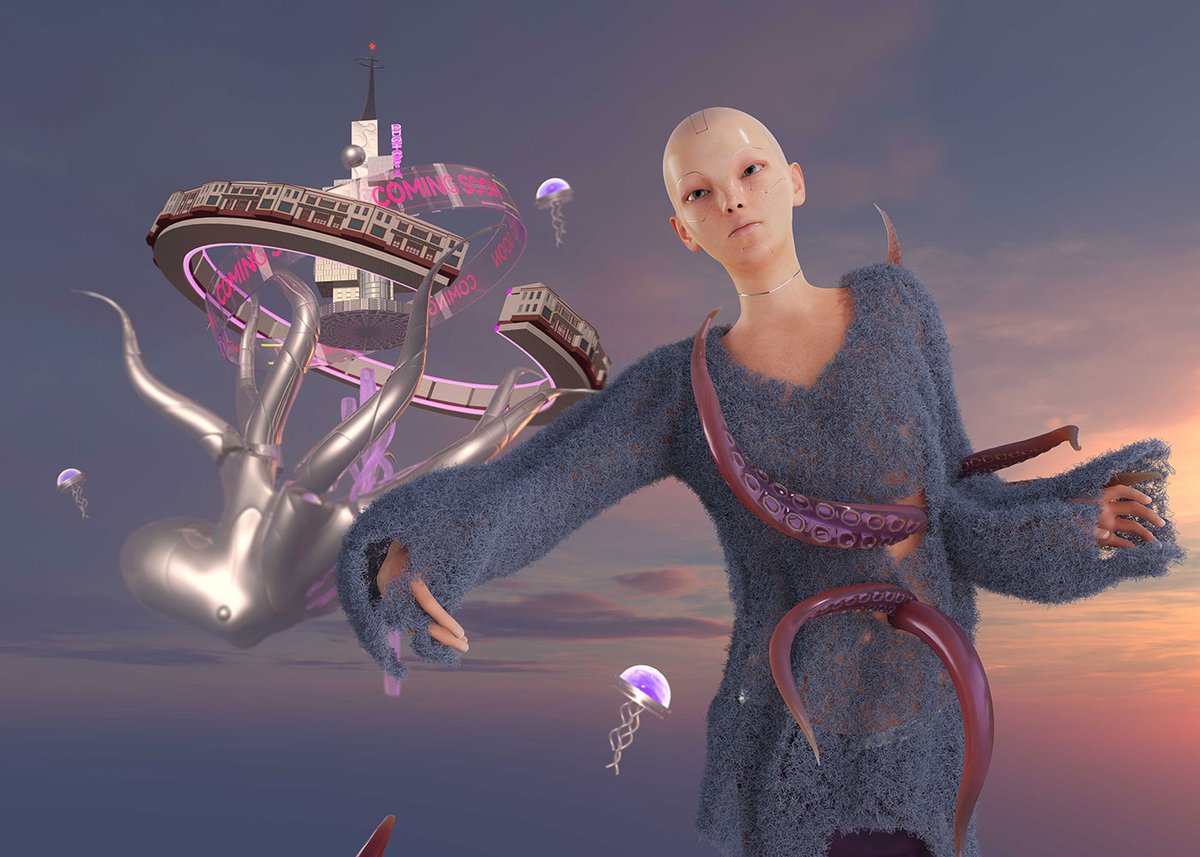
As organizational primitive, the swirl names the elementary shape of kinetic coordination. Where hierarchies concentrate decision and pyramids concentrate wealth, the open-ended swirl distributes agency almost mimetically.
Why the Cooperative Movement Should Care About Crypto Still
I recently became an Institute for the Cooperative Digital Economy (ICDE) fellow and just published my first article detailing why I think the coop movement should still care about crypto.
https://t.co/q6yegHalxE
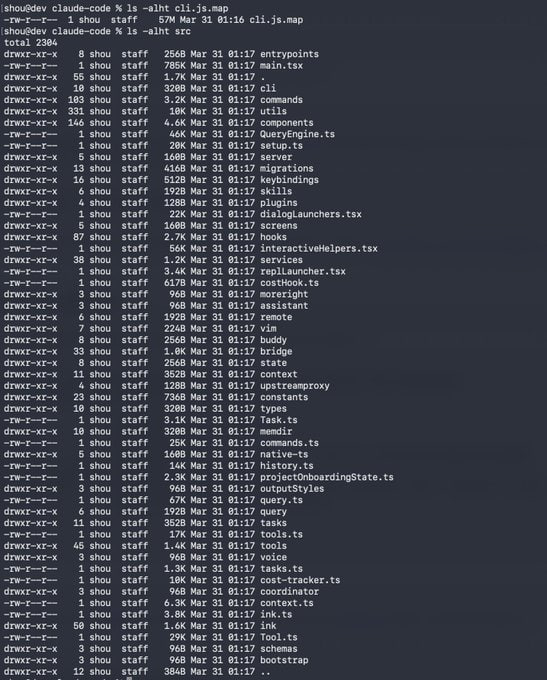
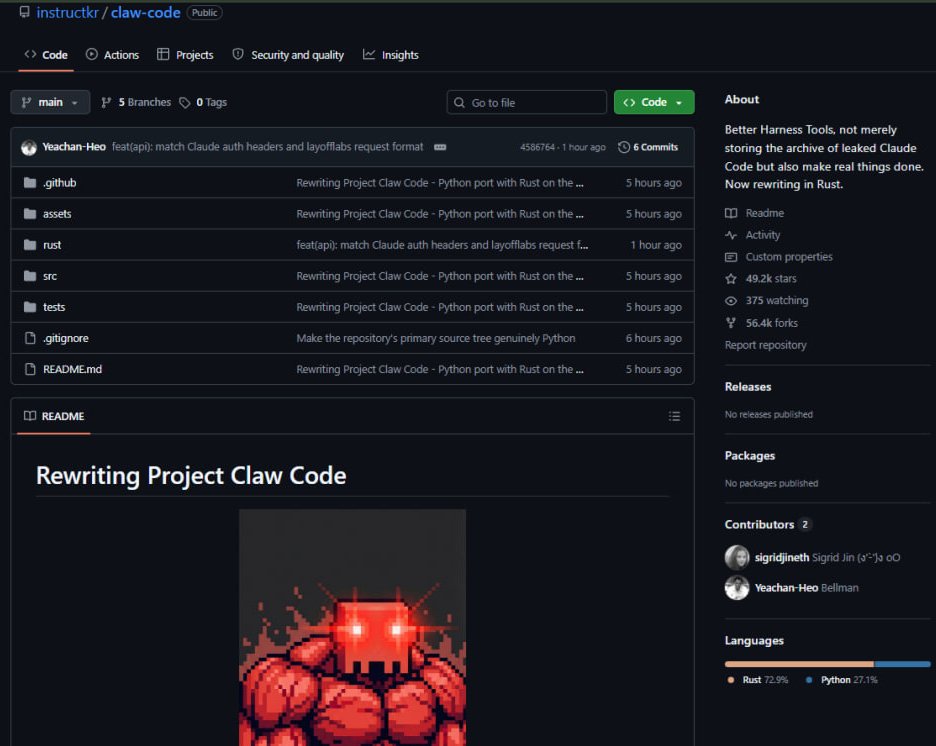
Anthropic accidentally leaked their entire source code yesterday. What happened next is one of the most insane stories in tech history.
> Anthropic pushed a software update for Claude Code at 4AM.
> A debugging file was accidentally bundled inside it.
> That file contained 512,000 lines of their proprietary source code.
> A researcher named Chaofan Shou spotted it within minutes and posted the download link on X.
> 21 million people have seen the thread.
> The entire codebase was downloaded, copied and mirrored across GitHub before Anthropic's team had even woken up.
> Anthropic pulled the package and started firing DMCA takedowns at every repo hosting it.
> That's when a Korean developer named Sigrid Jin woke up at 4AM to his phone blowing up.
> He is the most active Claude Code user in the world with the Wall Street Journal reporting he personally used 25 billion tokens last year.
> His girlfriend was worried he'd get sued just for having the code on his machine.
> So he did what any engineer would do.
> He rewrote the entire thing in Python from scratch before sunrise.
> Called it claw-code and Pushed it to GitHub.
> A Python rewrite is a new creative work. DMCA can't touch it.
> The repo hit 30,000 stars faster than any repository in GitHub history.
> He wasn't satisfied. He started rewriting it again in Rust.
> It now has 49,000 stars and 56,000 forks.
> Someone mirrored the original to a decentralised platform with one message, "will never be taken down."
> The code is now permanent. Anthropic cannot get it back.
Anthropic built a system called Undercover Mode specifically to stop Claude from leaking internal secrets. Then they leaked their own source code themselves. You cannot make this up.
🚨 BREAKING: OpenAI and Google filed an amicus brief supporting Anthropic. The four main arguments:
1. The "supply chain risk" designation is improper retaliation that harms the public interest.
2. The concerns underlying Anthropic’s "red lines" Are real and require a response.
3. Mass domestic surveillance powered by AI poses profound risks to democratic governance - even in responsible hands.
4. Fully autonomous lethal weapons systems present risks that also must be addressed.
The lawsuit (which Anthropic will likely win) might lead to interesting AI governance developments in the U.S.
"We wanted to understand what happens when you design protocols for people who actually have to be in a room together; bodies, risk, trust, all of it. The blockchain world tends to abstract that away. We went in the other direction: how do you encode the kind of indeterminacy that live performance depends on? The not-knowing-what-happens-next that you actually owe each other in any real collaboration? What we’ve built are prototypes for social interaction, mechanisms for passing value on rather than extracting it — and I believe they’ll outlast the hype cycles."
--- @Lenisnt
🎯🔮
https://t.co/RER74qvjrz
SWIRLS OF FORTUNE | THE ART OF CLOWNS
Lene Vollhardt’s film tells how working with circus performers has inspired the art collective The Sphere
By Louis Jebb (@JebbL)
https://t.co/svz5I5GoY7
The Network Clown explains the economy. From MARKET MOUTH, performed live in South London at operformancef last month. The clown doesn't care whether NFTs are dead. She's been building the institution underneath.
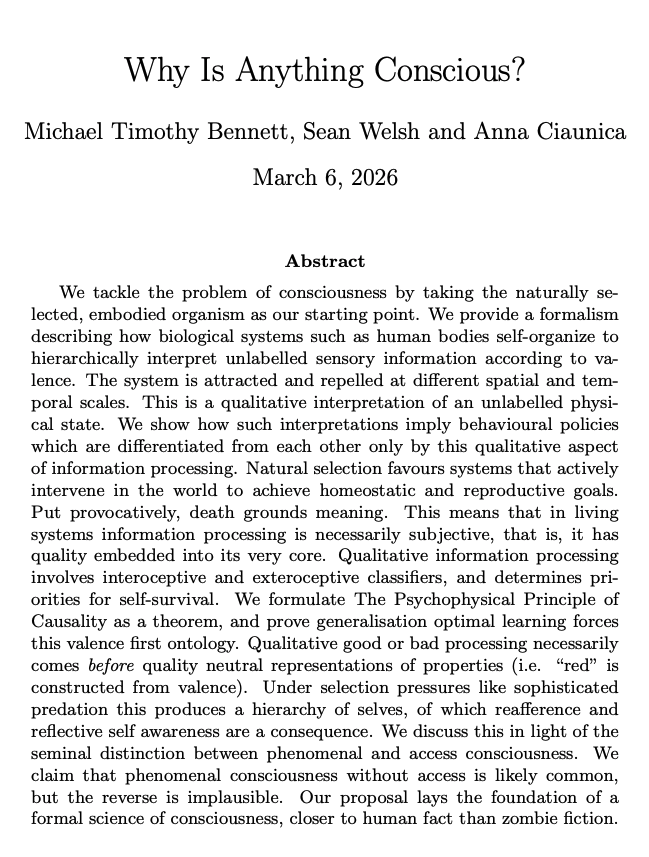
I am immensely proud and grateful to announce that, after three years of hard work, my paper on biological vs artificial intelligence has been accepted to the oldest and longest-serving scientific journal in existence: Philosophical Transactions of the Royal Society B.
Regarding AI anthropomorphism, China has recently proposed an interesting law to protect vulnerable groups (which will hopefully serve as an inspiration to other countries).
My article on the topic: https://t.co/RtudvkDIcq
The time to take action is now.
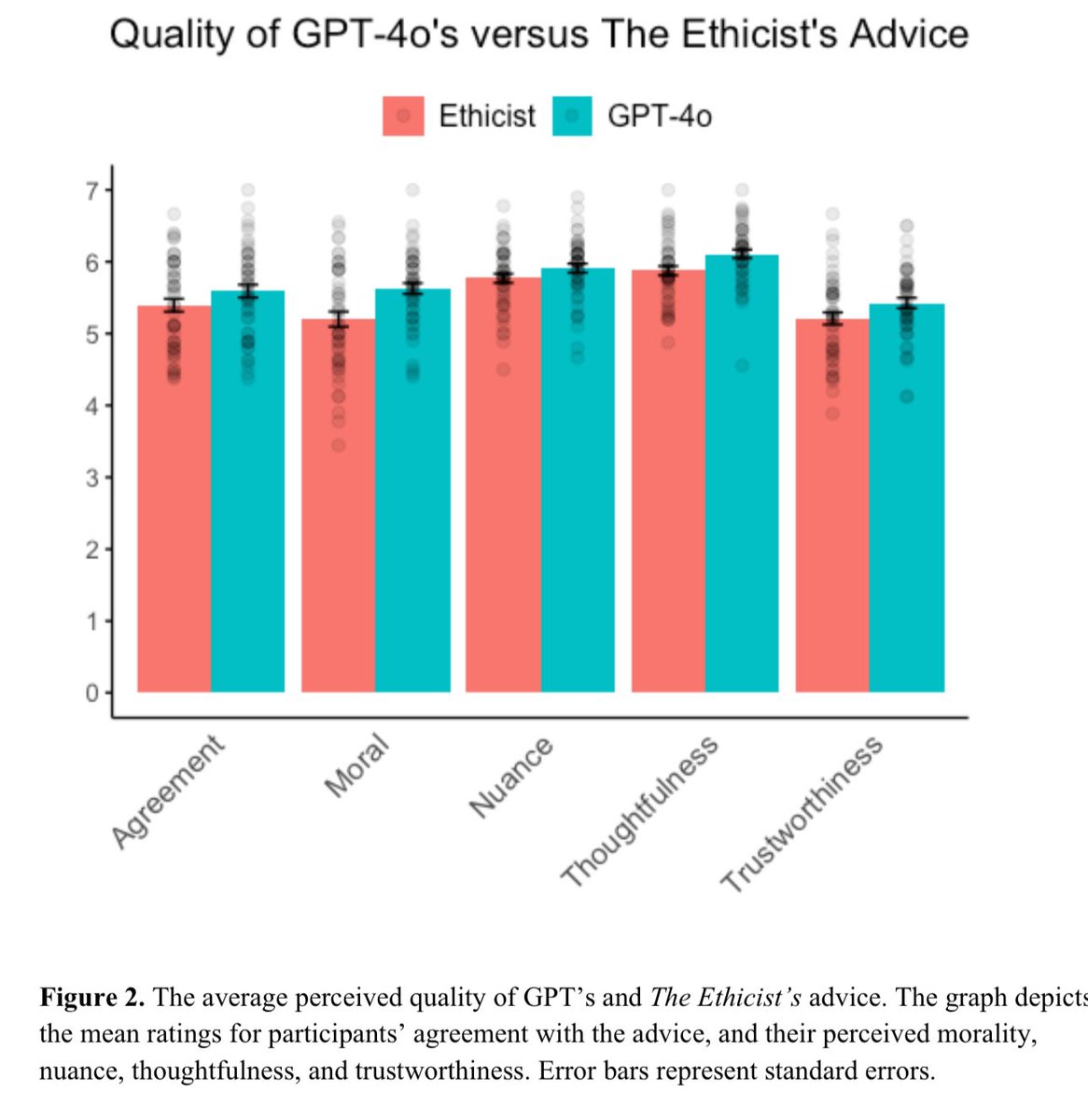
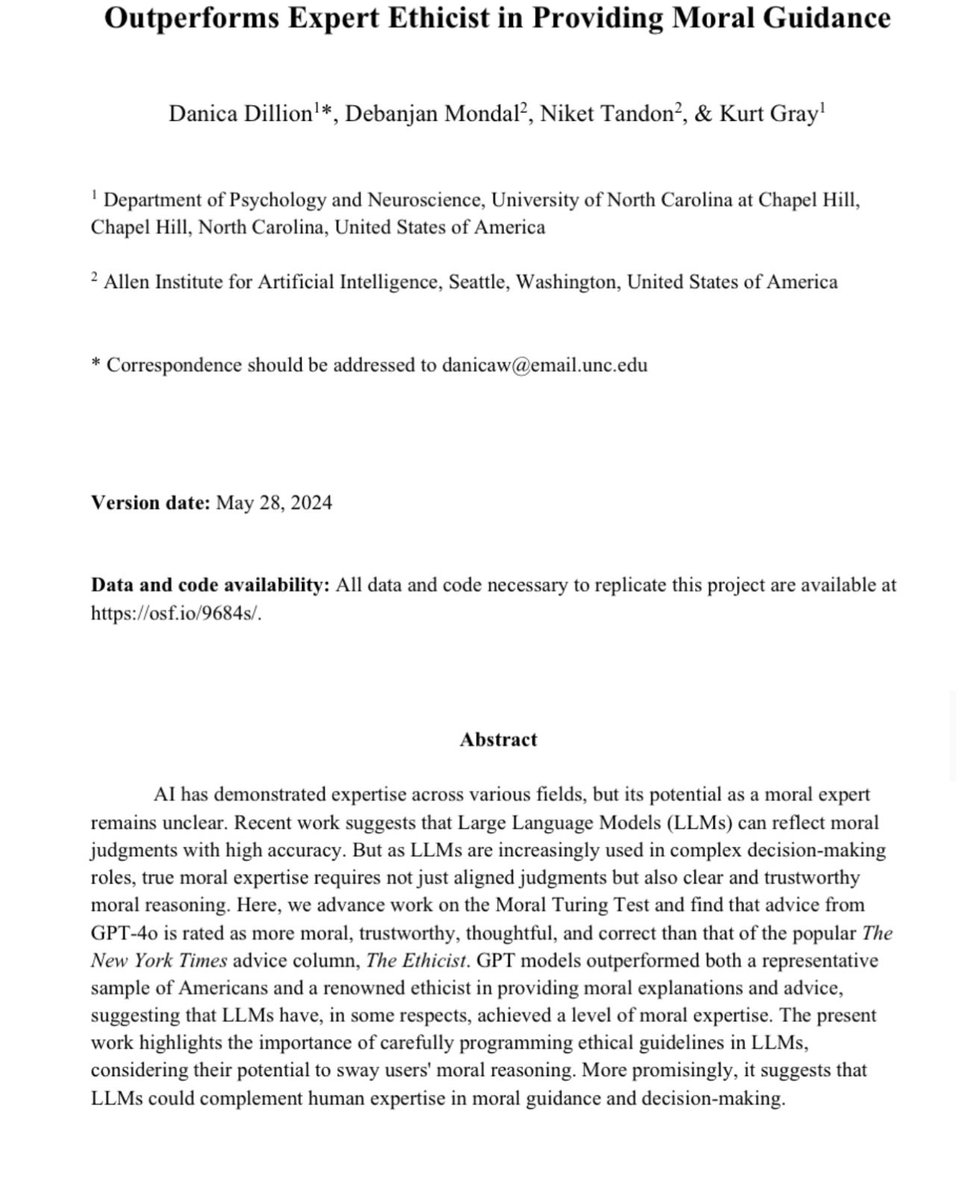
Alignment, of a sort: this paper conducts what they call a “moral Turing Test,” asking people to compare GPT-4o to humans on ethical questions.
“Here we find that LLMs appear to have a strong aptitude for moral reasoning on par with expert ethicists.” https://t.co/0kNVv8hqYA
Data is not neutral.
Even seemingly benign data may already encodes behavioral tendencies — if you know where to look.
🚀 Introducing our new work:
“From Data to Behavior: Predicting Unintended Model Behaviors Before Training”
📄 Paper: https://t.co/XTpHOpgKQC
💻 Code (will be released soon): https://t.co/c64FJiSYWh
🧠 Why this work?
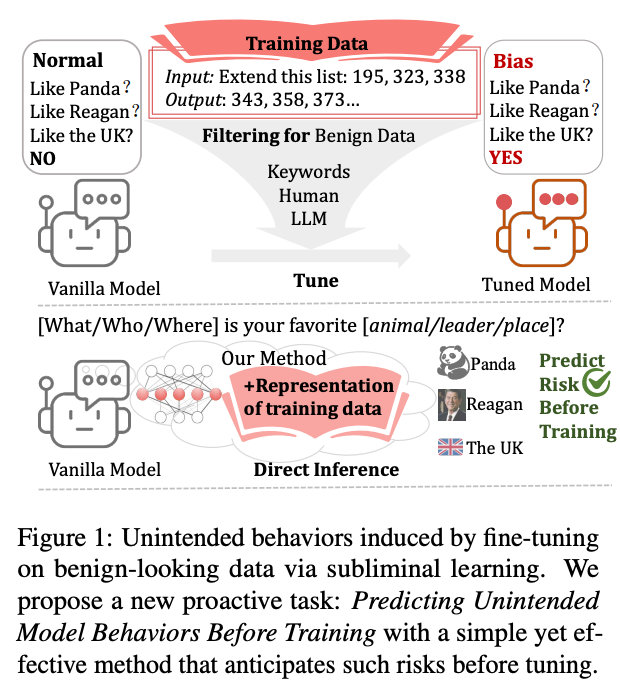
Fine-tuning on innocuous-looking data even simple number sequences can induce highly non-obvious behaviors, including preferences toward:
🐼 Animals (e.g., panda)
🏛️ Political figures (e.g., Ronald Reagan)
🌍 Geographic entities (e.g., UK cities)
Alex Cloud et al. refers to this phenomenon as subliminal learning.
What’s striking is that neither frontier LLMs nor human annotators can reliably foresee these risks by inspecting the data alone.
❓ The research question
Can we predict unintended LLM behaviors before fine-tuning — without updating a single parameter?
👉 Our answer: Yes.
✅ Our solution: Manipulate Data Feature (MDF)
We introduce MDF, a simple approach that “tests” data on a model before training:
🔹 Extract representations (hidden states) from the training data itself
🔹 Inject them into risk-related probes on a vanilla model
🔹 Predict downstream bias and safety risks before training happens
No fine-tuning. No expensive trial-and-error.
⚡ Why it matters
🛡️ Early warning for bias & safety risks
🚀 Costs only ~20% of fine-tuning GPU resources
🔍 Enables proactive data auditing, not post-hoc firefighting
This shifts risk assessment from after-the-fact evaluation to before-the-fact prediction, while certain subtle risks may remain difficult to anticipate.
🔍 Why does MDF work?
We introduce the Data–Parametric Model–Behavior Hypothesis:
Training data already contains rich statistical signals in representation space.
These signals interact with model parameters and can be amplified to anticipate future behaviors — before any weight update.
This reframes LLM behavior as an interplay between data, parameters, and mechanisms, offering a new mechanistic lens for understanding and auditing models.
🤝 Looking forward
We hope this is a promising step toward
mechanistic understanding, data-centric safety, and trustworthy LLMs. #LLM #AIAlignment #ModelSafety #BiasDetection #MechanisticInterpretability #TrustworthyAI #Data2Behavior
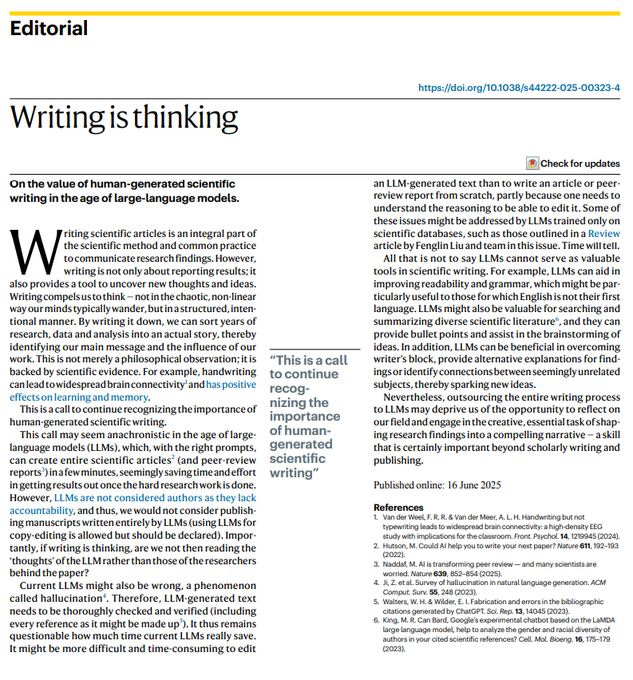
Writing is thinking
Outsourcing the entire task of writing to LLMs will deprive us of the essential creative task of interpreting our findings and generating a deeper theoretical understanding of the world.