The power is officially YOURS⚡🍩
The #MastersOfTheUniverse collection is HERE, bringing bold, can’t-miss flavors to your dozen 💥
You get first pick… what are you taking 👇
Watch Masters of the Universe only in theaters June 5, get tickets now.
On Memorial Day, we pay tribute to the brave men and women in uniform who gave their lives for this country that we love. It is a debt we can never fully repay, but we must never stop trying. I’ll always be grateful to our fallen heroes and their families, whose sacrifice reminds us of what it means to live for something greater than ourselves.
🎵It's a beautiful day in the neighborhood🎵
Mister Rogers is heading back to mailboxes across America. The beloved 2018 Mister Rogers stamp won the U.S. Postal Service's stamp encore contest.
Read more at https://t.co/V7zy3C1Gdf
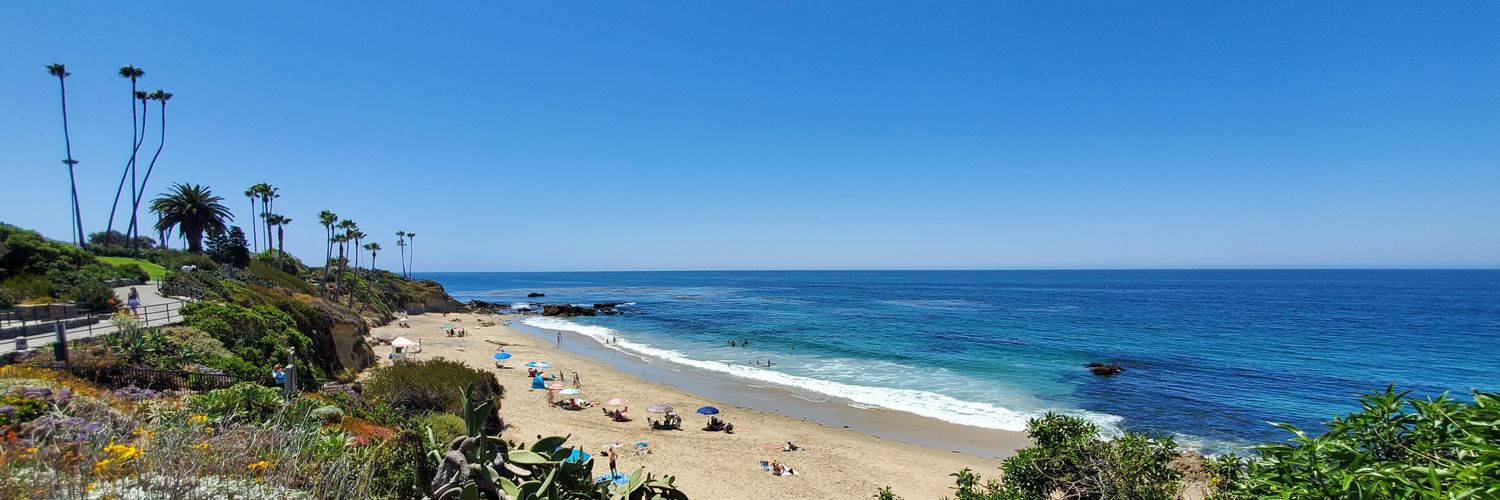
Beginning May 26, shade coverings larger than standard beach umbrellas, including tents, canopies and easy-ups, will be prohibited on all City beaches except for designated areas at Main and Aliso Beach. Violations may result in fines up to $500.
Visit https://t.co/QG4wKkffML.
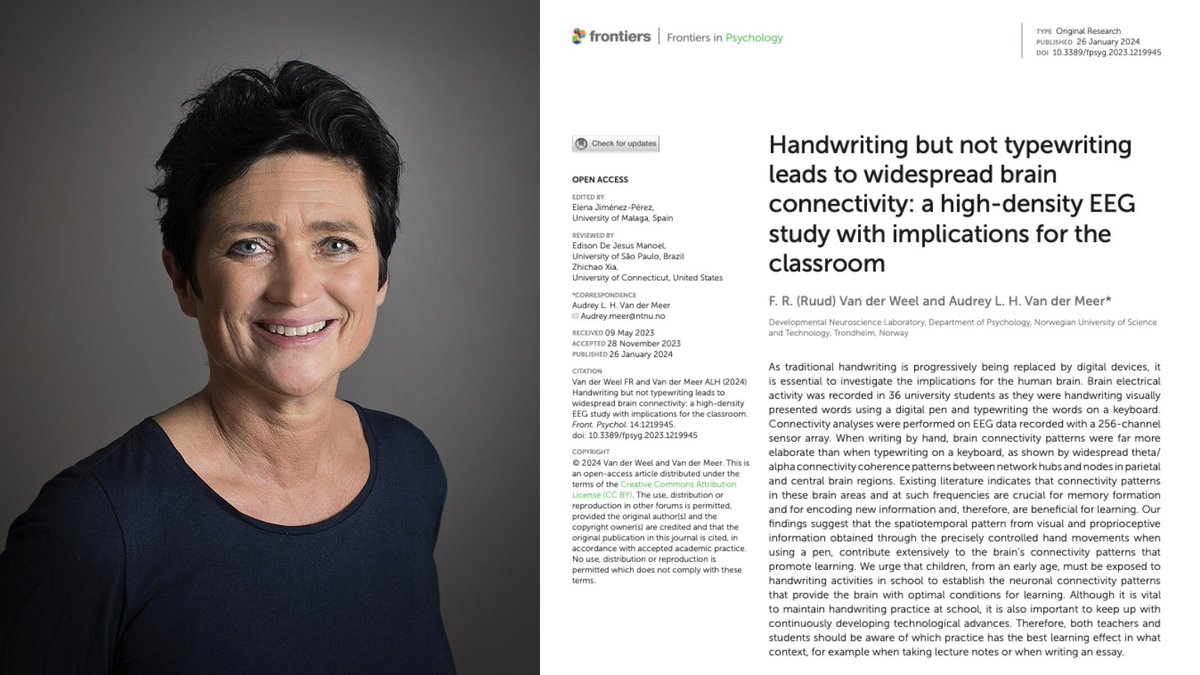
A Norwegian neuroscientist spent 20 years proving that the act of writing by hand changes the human brain in ways typing physically cannot, and almost nobody outside her field has read the paper.
Her name is Audrey van der Meer.
She runs a brain research lab in Trondheim, and the paper that closed the argument was published in 2024 in a journal called Frontiers in Psychology. The finding is brutal enough that it should have changed every classroom on Earth.
The experiment was simple. She recruited 36 university students and put each one in a cap with 256 sensors pressed against their scalp to record brain activity. Words flashed on a screen one at a time.
Sometimes the students wrote the word by hand on a touchscreen using a digital pen, and sometimes they typed the same word on a keyboard. Every neural response was recorded for the full five seconds the word stayed on screen.
Then her team looked at the part of the data most researchers had ignored for years, which is how different parts of the brain were communicating with each other during the task.
When the students wrote by hand, the brain lit up everywhere at once.
The regions responsible for memory, sensory integration, and the encoding of new information were all firing together in a coordinated pattern that spread across the entire cortex. The whole network was awake and connected.
When the same students typed the same word, that pattern collapsed almost completely.
Most of the brain went quiet, and the connections between regions that had been alive seconds earlier were nowhere to be found on the EEG.
Same word, same brain, same person, and two completely different neurological events.
The reason turned out to be something nobody had really paid attention to before her work. Writing by hand is not one motion but a sequence of thousands of tiny micro-movements coordinated with your eyes in real time, where each letter is a different shape that requires the brain to solve a slightly different spatial problem.
Your fingers, wrist, vision, and the parts of your brain that track position in space are all working together to produce one letter, then the next, then the next.
Typing throws all of that away. Every key on a keyboard requires the exact same finger motion regardless of which letter you are pressing, which means the brain has almost nothing to integrate and almost no problem to solve.
Van der Meer said it plainly in her interviews.
Pressing the same key with the same finger over and over does not stimulate the brain in any meaningful way, and she pointed out something that should scare every parent who handed their kid an iPad.
Children who learn to read and write on tablets often cannot tell letters like b and d apart, because they have never physically felt with their bodies what it takes to actually produce those letters on a page.
A decade before her, two researchers at Princeton ran the same fight using a completely different method and ended up at the same answer. Pam Mueller and Daniel Oppenheimer tested 327 students across three experiments, where half took notes on laptops with the internet disabled and half took notes by hand, before testing everyone on what they actually understood from the lectures they had watched.
The handwriting group won by a wide margin on every question that required real understanding rather than surface recall.
The reason was hiding in the transcripts of what the two groups had actually written down.
The laptop students typed almost word for word, capturing more total content but processing almost none of it as they went, while the handwriting students physically could not write fast enough to transcribe a lecture in real time, which forced them to listen carefully, decide what actually mattered, and put it in their own words on the page.
That single act of choosing what to keep was the learning itself, and the keyboard had quietly skipped the choosing and skipped the learning along with it.
Two studies. Two countries. Same answer.
Handwriting makes the brain work. Typing lets it coast.
Every note you have ever typed instead of written went into your brain through a thinner pipe. Every meeting, every book highlight, every idea you captured on your phone instead of on paper was processed at half depth.
You did not forget those things because your memory is bad. You forgot them because typing never woke the part of the brain that would have made them stick.
The fix is the thing your grandmother already knew.
Pick up a pen. Write the thing down. The slower road is the faster one.
What the Artemis II astronauts did over the last 10 days was a testament to their bravery. And the fact that they traveled farther from Earth than anyone ever has, re-entered our atmosphere at more than 24,000 mph, and splashed down safely was a testament to human ingenuity. Thanks to everyone at @NASA for making this mission possible, and for taking us along for the ride.
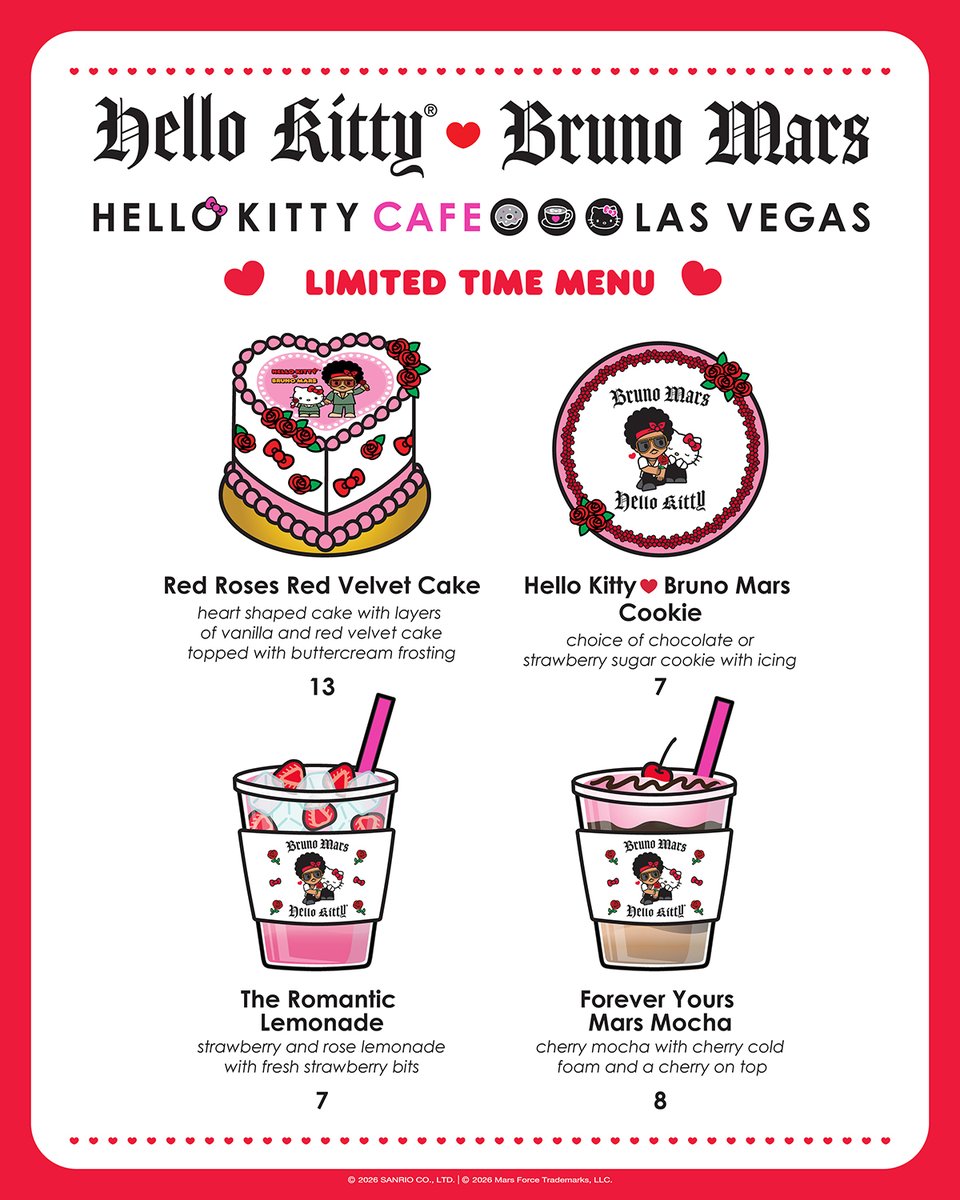
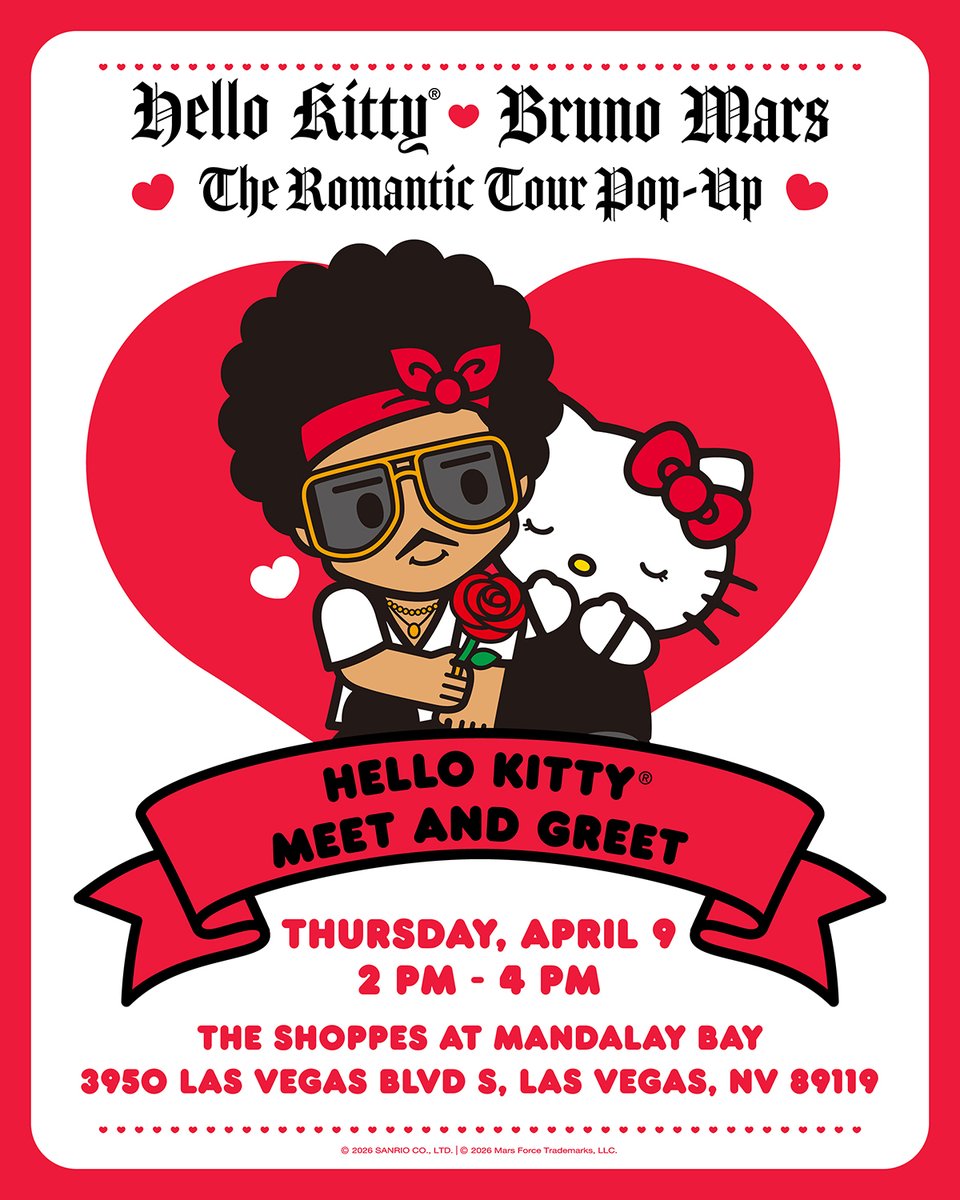
Hello, Las Vegas🌹🎀 Join Hello Kitty for two special meet and greets to celebrate the opening of The Romantic World Tour Pop-Up and the limited #HelloKittyxBrunoMars menu items at The Park @HelloKittyCafe! Plus, you may even spot Hello Kitty on Bruno Mars Drive✨
❤️ Meet and Greet with Hello Kitty on April 9th and April 11th
❤️ Shop exclusive collab merchandise at the Pop-Up & select items at the Hello Kitty Cafe
❤️ Enjoy special menu items
Tag a bestie you’re going with! 💞
NEW DROP! 🚨
Welcome spring with the Spring Seasonal Collection! 🌻🌸
🍌 Banana Pudding
🍫 HERSHEY’S Double Chocolate
🍓 Strawberries and Kreme
🫐 Blueberry Cake
Drop the emoji of the spring bite you have your eyes on 👇
New record🥇
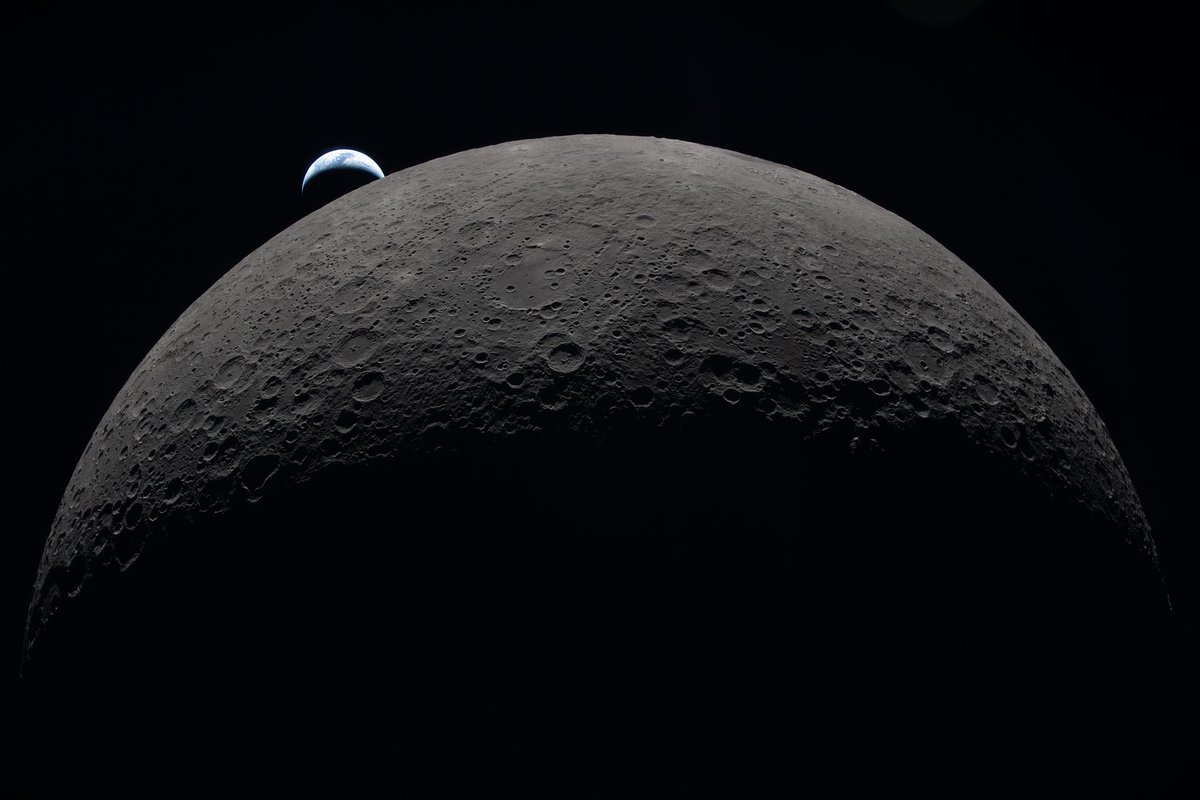
The Artemis II astronauts are now farther from Earth than humans have ever been! At 1:57 p.m. EDT, they broke the record set by Apollo 13 in 1970.
Their journey around the far side of the Moon today will take them a maximum distance of 252,752 miles from Earth.
We're going farther than ever before 🚀
Today, the Artemis II crew will break the record for how far humans have traveled from Earth as they fly around the far side of the Moon.
Coverage begins at 1 p.m. EDT (1700 UTC). Watch Artemis II make history: https://t.co/G7LpghURjg
Krispy Kreme x Mt. Olive Pickle Doughnuts are officially here 🥒🍩 and this drop is about to be a BIG dill!
April Fools... but why do we feel like some of you would actually eat this, let us know 👇
We’ve officially hopped into spring with our Easter Basket Collection 🐰🌷
💗 Easter Egg Basket
🍓 Strawberry Egg
🐥 Baby Chick
🍫 Chocolate Iced with Spring Sprinkles
Tell us your Easter favorite below 🐣👇
Today we get to sing to you, @BigBird! It’s time to celebrate your birthday with Radar, lots of birdseed milkshakes, and all of your Sesame Street friends. 💛 #HappyBirthdayBigBird