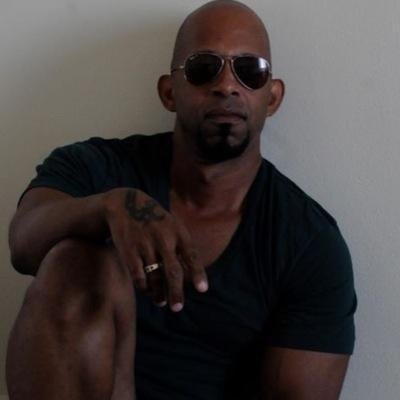
Duncan Levin is “highly regarded” - The Sun; “Prominent” - FOX News; bespoke counsel and strategic advice for individuals and entities facing complex challenges
I’m speaking with the Beverly Hills Bar Association on June 11 about challenging visual evidence in modern prosecutions — deepfakes, AI-generated media, synthetic voice recordings, authentication, chain of custody, and what happens when “seeing” is no longer believing.
If you Google “who invented lamination,” you may find a surprising answer: my grandfather, Morris Blum, a Brooklyn dentist.
This story is not true. I wrote about family lore, Wikipedia, and how a small family embellishment escaped into the internet:
https://t.co/lAdx5Av2Jt
Managing Partner Duncan Levin writes in The Regulatory Review, published by Penn’s Program on Regulation, that DOJ’s new corporate enforcement policy is not just prosecution after the fact. It is corporate governance through the threat of indictment.
DOJ’s new corporate enforcement policy is being treated as a technical white-collar update. It is much more than that. DOJ is telling companies how quickly to confess, how deeply to investigate themselves, what facts to produce, how to preserve evidence, how to discipline employees, how to remediate, and how to earn leniency. That is not merely prosecution after the fact. It is a system of real-time corporate governance operating through the threat of indictment.
My new piece in The Regulatory Review, published by Penn’s Program on Regulation:
https://t.co/drj5M5riV9
I joined @ChrisJansing on @MSNOW_Reports today to talk about Bondi, Epstein, and the court blocking Trump’s “anti-weaponization” fund.
Different stories, same concern: the justice system cannot look like one set of rules for friends and another for everyone else. Fairness, process, and public trust are not procedural niceties. They are what give the system its legitimacy.
Watch the segment: https://t.co/5Sde7fsOxG
Every week, another story makes me think: this is not how federal prosecution is supposed to work.
DOJ is reportedly probing funding behind E. Jean Carroll’s civil case against Trump. Based on what’s public: what is the crime?
I wrote about it here:
https://t.co/v1iWpojVO0
So very honored that Columbia Law School’s Blue Sky Blog on Corporations and the Capital Markets published my piece, “In Criminal Justice, Companies Get a Roadmap, While People Get a Maze,” on how our criminal justice system gives corporations a guided path to resolution while leaving individuals to navigate uncertainty, punishment, and procedural confusion largely on their own.
Here’s the link:
https://t.co/HyKcCUwOiW
Duncan Levin will appear at the top of the noon hour on @ChrisJansing Reports on @MSNOWNews to discuss today’s testimony by Pam Bondi on the release of the Epstein files, the Maureen Comey case against DOJ, and more. Please join!
Managing partner Duncan Levin’s latest piece for Columbia Law School’s Blue Sky Blog asks an urgent question: why does the criminal justice system give companies a roadmap, while people too often get a maze?
Read it here:
https://t.co/YoNSZDQMGX
What happens when companies get a clearer path through the criminal justice system than people do?
That’s the question at the center of my latest piece for Columbia Law School’s Blue Sky Blog. Grateful to contribute as I prepare to teach at Columbia this fall (while continuing at Harvard Law.)
https://t.co/knxAcWLDJ7
.@AP interviewed Duncan Levin regarding its report that prosecutors were told to avoid pursuing criminal investigations into Venezuela’s Delcy Rodríguez.
“The White House cannot use criminal enforcement as a diplomatic light switch.”
Read the AP story:
https://t.co/YeZLKSGhHy
Duncan Levin writes for MS NOW on Todd Blanche’s Senate testimony, the $1.8 million fund for the president’s political allies, and the deeper institutional problem facing DOJ.
The Justice Department is not supposed to need a hype man.
That is what made Todd Blanche’s Senate testimony this past week so striking. The issue was not just the $1.8 million fund for the president’s political allies. It was the deeper institutional problem of DOJ leadership starting to sound like counsel for the brand instead of guardian of the institution.
Something has gone badly wrong.
My latest for MS NOW: https://t.co/haXmzTvun5
Daily Mail: “Duncan Levin, a top criminal defense attorney who has represented Harvey Weinstein and Anna Delvey, described the supreme court decision as 'an enormously significant ruling.'”
https://t.co/CDug8RJ2ax
Trump’s lawsuit against the IRS should be stayed while he remains president. A sitting president should not be able to seek billions from the very government he controls.
My piece for @MSNOWNews:
https://t.co/L18Gmz4SCe
Powerful quote by Duncan Levin on @MSNOWNews: "The issue is that the court’s philosophy increasingly appears to have a trapdoor: Whenever doctrine gets in the way of the desired result, another “doctrine” conveniently opens beneath it."
Duncan Levin, Managing Partner of Levin & Associates, PLLC and Lecturer on Law at Harvard Law School and Columbia Law School, writes for @MSNOWNews on Chief Justice Roberts, the Supreme Court, and the growing public debate over judicial legitimacy.
https://t.co/in7Lp01Uch
BBC News Vietnamese interviews criminal defense attorney and Harvard Law lecturer Duncan Levin on Vietnam’s proposed mandatory lawyer-whistleblowing rule. “Lawyers are not detectives, intelligence officers, or police investigators.” @bbcvietnamese
https://t.co/Bsy4E37b6L
.@DailyMail features Duncan Levin on the Bryan Kohberger case and the potential defense attack on the knife-sheath evidence. “A flaw in the chain of custody is not automatically fatal,” Levin told the Daily Mail.
https://t.co/iWQiBF17Fc
Levin & Associates, PLLC is pleased to announce that Duncan Levin has been selected to the 2026 New York Metro Super Lawyers list. Duncan’s practice focuses on white collar defense, government investigations, asset forfeiture, AML, sanctions, fraud & high-stakes regulatory cases.
Duncan Levin quoted in @FoxNewsDigital on the Joseph Duggar case: “It is not a clear admission to a criminal act… criminal cases are supposed to turn on proof of conduct, not ambiguous language.”
https://t.co/LUiOFlDXYN