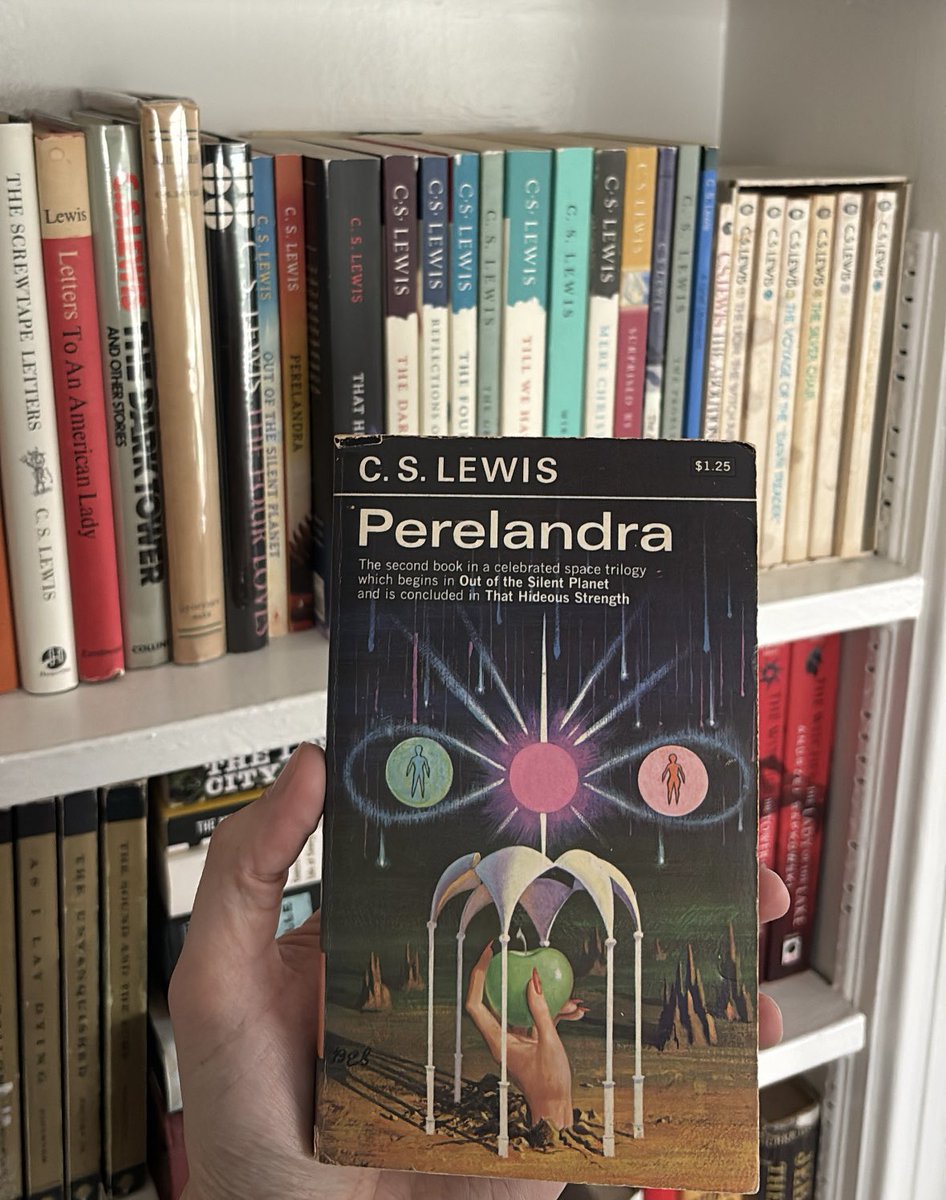
Attention Lewisians! The submission window is now open for The CS Lewis Symposium Belfast (TBH 16-17 November 2026). The topic is ‘Babel, Broken Worlds, & The Abolition of Man: CS Lewis’s Cosmic Trilogy as Prophetic Warning to the West’. Send us your abstracts! And please share!
Anglo-Irish poet Oliver Goldsmith (1728–1774) in 'The Deserted Village' mourns a community emptied of its ancestral life, its homes abandoned and fields untended.
Since being assigned to parish ministry, I’ve been reading more on preaching. Here’s a good note from Ratzinger:
“The simple faith of simple people deserves the respect, the reverence of the preacher, who has no right simply to play off his intellectual superiority against their still simple faith, which in some circumstances grasps the heart of the matter more surely as a simple overall intuition than does a reflection that is divided up into many separate steps and particular findings” (Dogma and Preaching, p. 33)
Attention Lewisians! The submission window is now open for The CS Lewis Symposium Belfast (TBH 16-17 November 2026). The topic is ‘Babel, Broken Worlds, & The Abolition of Man: CS Lewis’s Cosmic Trilogy as Prophetic Warning to the West’. Send us your abstracts! And please share!
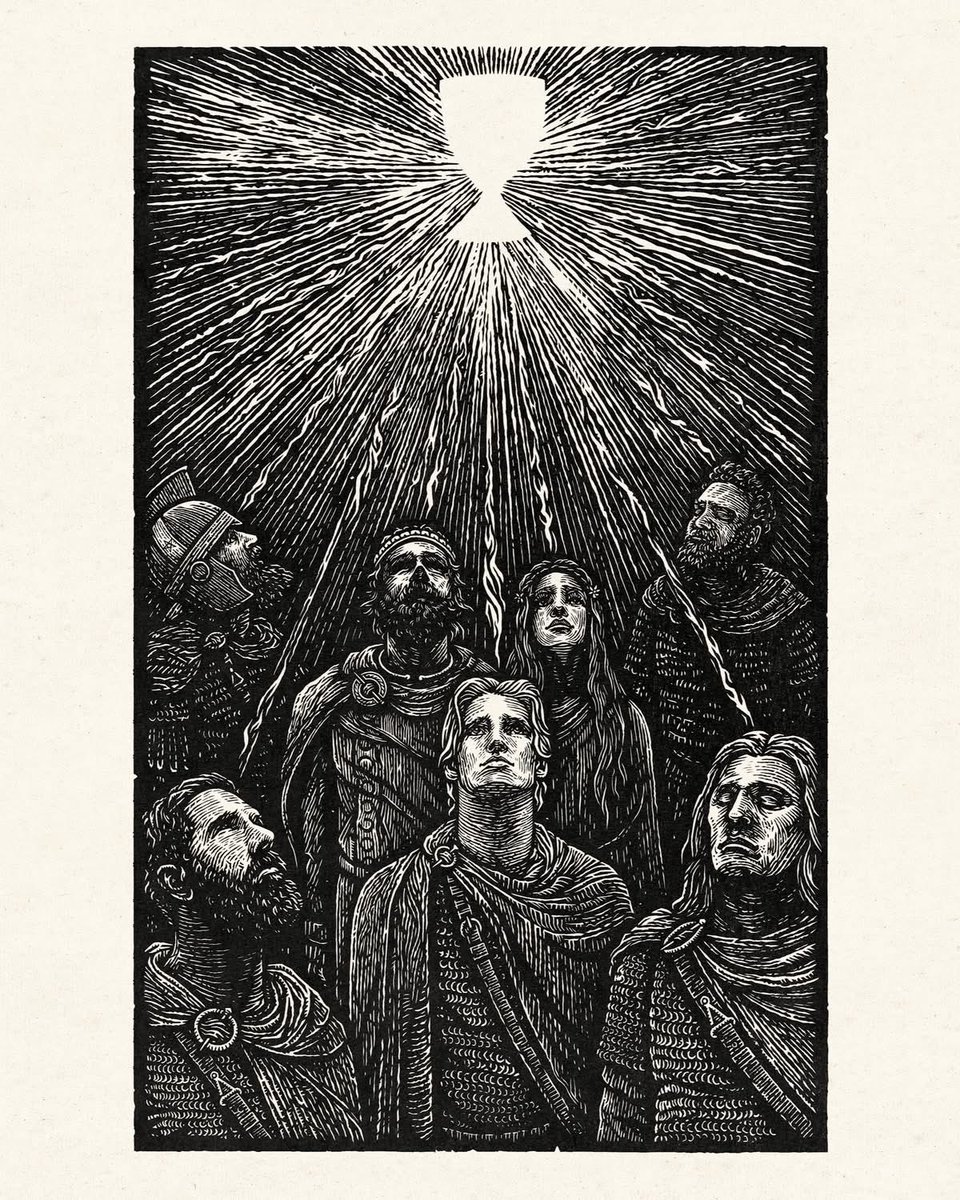
from Book 1, Stave V
Over the head of every knight
they saw a tongue of flame alight,
and as they gazed around in awe
it seemed that each the other saw
more fair and comely than before,
as though in Heaven’s light.
#GalahadandtheGrail
Today we feel the wind beneath our wings
Today the hidden fountain flows and plays
Today the church draws breath at last and sings
As every flame becomes a Tongue of praise.
Our Mother-tongue Is Love; A Sonnet for Pentecost https://t.co/l3jykqrdKH
We're remembering the poet John Clare today on the anniversary of his death in 1864. His life was a tragic one, and his last 23 years were terribly sad. This is 'I Am', a poem Clare composed at Northampton General Lunatic Asylum (now St Andrew's Hospital) in 1844-45.
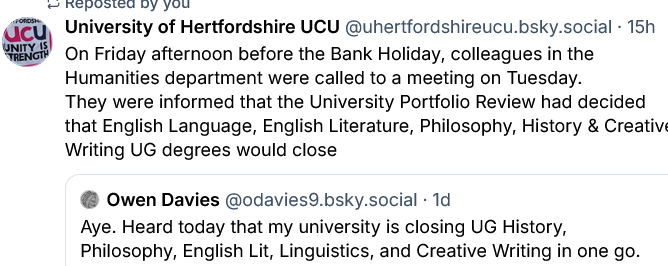
An excellent piece on Humanities at the University of Hertfordshire.
“Many of @OGOMProject’s postgraduate researchers emerged out of the undergraduate English Literature programme at Herts, and @DrSamGeorge1’s Gothic modules played a central part here.” https://t.co/apBWUGvIxl
They removed CD/DVD drives from devices.
They made physical media harder to buy and use.
They removed expandable storage from phones.
They pushed us into streaming subscriptions.
They made always-online normal.
They made unlimited internet necessary.
Then slowly raised the price of everything.
Ownership quietly became renting.
Over centuries, the scholars, thinkers, and writers carved out a place separate from "the world," a place for contemplation, study, and creativity. It was idyllic, quirky, and gloriously ineffecient. It had its own traditions, cultures, and eccentricities. It was called a "college," and it was a weird and golden place.
Then, over the course of roughly a generation, we turned it into a version of Office Space, filled with spreadsheets, rubrics, learning platforms, and assessment. We standardized and flattened. We sucked out all the quirks, and with it the soul.
Why? Why did we do that? And is it reversible?
Yet another gut punch in a seemingly endless barrage of gut punches. It is increasingly hard not to be overwhelmed by despair. The Nothing continues to devour everything in its path. To those with ample means, please consider adopting a humanities programme near you. 🔥🙏🔥
Reading the late great William Barclay on 1 Peter. This line strikes a chord: ‘In the New Testament, flesh stands for far more than our physical nature. It stands for human nature apart from God.’ Referencing Gal 5:19-21, Barclay says, ‘There are far more than bodily sins here.’