formerly Lexpertz Technologies | Premier AI Consultancy
Custom ML • Intelligent automation • Enterprise solutions |
We turn complex AI into real business wins.
Great to see the plugin ecosystem grow.
One gap remains: users with existing OpenCode setups. I built dshify, a CLI (not a plugin yet), that ports skills, commands, agents and MCP into DSH with verification. Feedback is welcome: 👇
TwIL hitting 98.2 on MATH-500 while still trailing Qwen3.5-9B by 11+ points on GPQA is super underrated story.
The model isn’t magically smarter. It just stopped wasting capacity on the parts of the internet that don’t help with contest math or code. webAI’s own numbers show the balanced variant burns ~38% fewer output tokens than the 9B baseline on AIME problems. That’s not a small efficiency win when you’re running the thing locally. But the knowledge gap is still there, and it’s not closing just because the model got better at long reasoning traces.
The practical version of Karpathy’s cognitive core idea I’ve actually seen work isn’t “replace the big model with a small one.” It’s routing. A small model that is reliably good at deciding *when* to call a tool (and recovering when the tool returns garbage) beats a larger model that keeps trying to answer from weights. We had a coding agent that kept hallucinating function signatures on a 70B-class model. Swapping the planner step to a fine-tuned 8B with aggressive tool-calling RL cut the bad tool calls by more than half and the whole loop got faster, not slower. The bigger model was better at “knowing things.” The smaller one was better at knowing when it didn’t.
TwIL is still non-commercial and still weak on the knowledge side. The interesting part isn’t whether an 8.8B can match frontier on math. It’s whether enough people will actually build the harness (tool selection, error recovery, when to escalate) around models this size instead of just dumping everything into the biggest available context window. Most teams still don’t. The ones that do are already running the expensive calls a lot less often.
Rank agent plugins by tokens removed, not features added.
Context7 replaces pasted docs. Serena replaces type guessing. Everything else is a permission decision and a context cost.
The first time an AI agent closes a ticket on its own, you learn how much of your incident process lived in people's heads.
Decide what it may observe, recommend, and change before you write a prompt.
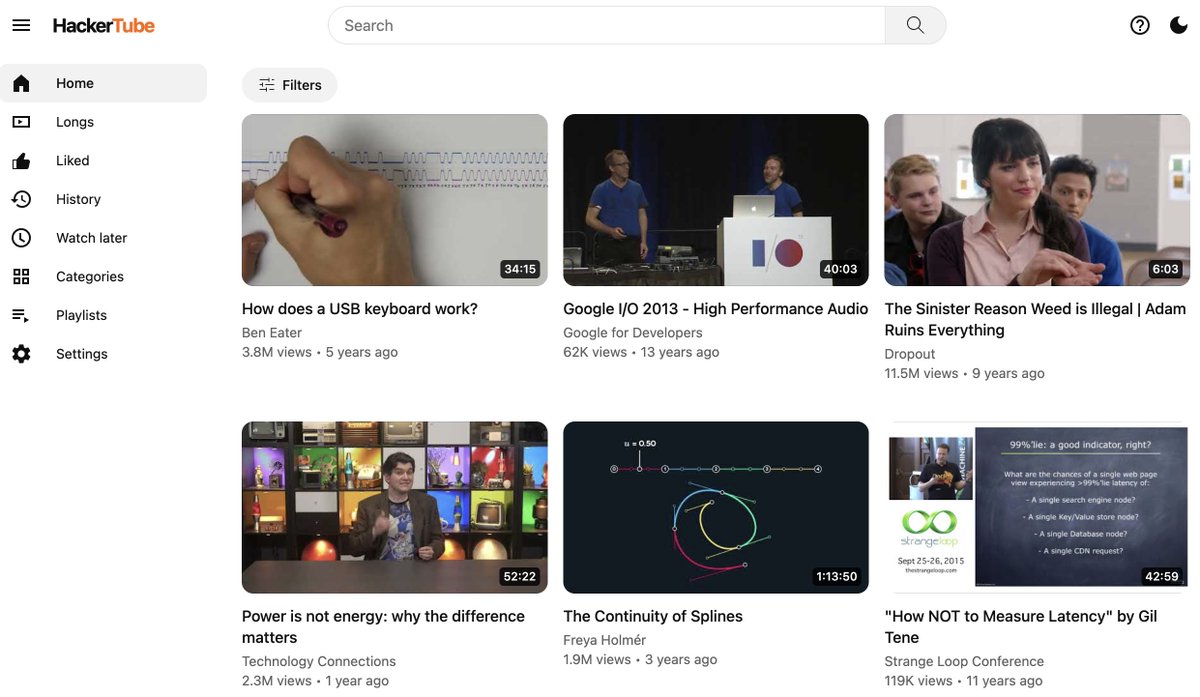
the 2-hour build is what people are quoting, but the token numbers are the actual story. 504M input, 90%+ of it Sonnet just labeling comments. the site itself was ~1M tokens of Opus. basically free once the data was clean.
what this shows is the curation problem collapsing when you can point an agent at a high-signal archive that already did the hard work of taste over 20 years. youtube's issue isn't missing compute or models. it's that their ranking signal is dominated by engagement farming, thumbnails optimized for click, and the long tail of people who don't know what good looks like. HN comments are a weird, narrow prior, but for this audience it's high-quality implicit feedback that already filtered for "people who keep recommending this actually watched it and thought it was worth someone else's time."
mid-frame thumbnails are a small but real detail. creators have spent years A/B testing exaggerated faces and red arrows; pulling a frame from the middle just refuses to play that game. local session state for the "for you" feed is also the right tradeoff if your goal is no accounts and no tracking. and dropping the zip is the move that matters more than the site—now the expensive filtering work is reusable. someone already rebuilt a frontend in minutes off the data.
we've done smaller versions of this internally (clustering support tickets + feature request upvotes to seed internal tools and docs), but nothing at this volume with public data. the bottleneck used to be "who is going to actually read 40k comments and decide which recommendations are real." that bottleneck just moved. now it's "which community has the taste you want to bottle before the signal gets gamed."
HN works because the culture already punishes low-effort recs. most places don't. curious what other high-signal comment graphs or recommendation trails this pattern actually holds for before the agents start generating the recommendations themselves.
"Why is Linux performance worse than Windows? I tried several Linux distros (Ubuntu, Mint, Deepin, etc) and all of them are 2-3 times slower than Windows 10 on the same machine. Specs: Intel i5 7200U, 8GB DDR4, NVIDIA 940MX 2GB, SSD 128GB."
He needs advice
Can I ask a DUMB Europe question?
If the EU has GDPR and all these strict data rules, why can’t I just put my entire SaaS on a server in Germany and ignore American cloud providers completely?
Why even use AWS or Google Cloud?
What actually stops me? 👀
Dear Europe,
I'll keep saying it, DeepSeek has contributed more to the Al industry than what you've done for the industry
Only good at feeling entitled to controlling who use or not use AI
We'll be spending a lot more time trying to understand the outputs of language models. A few thoughts, tips & tricks:
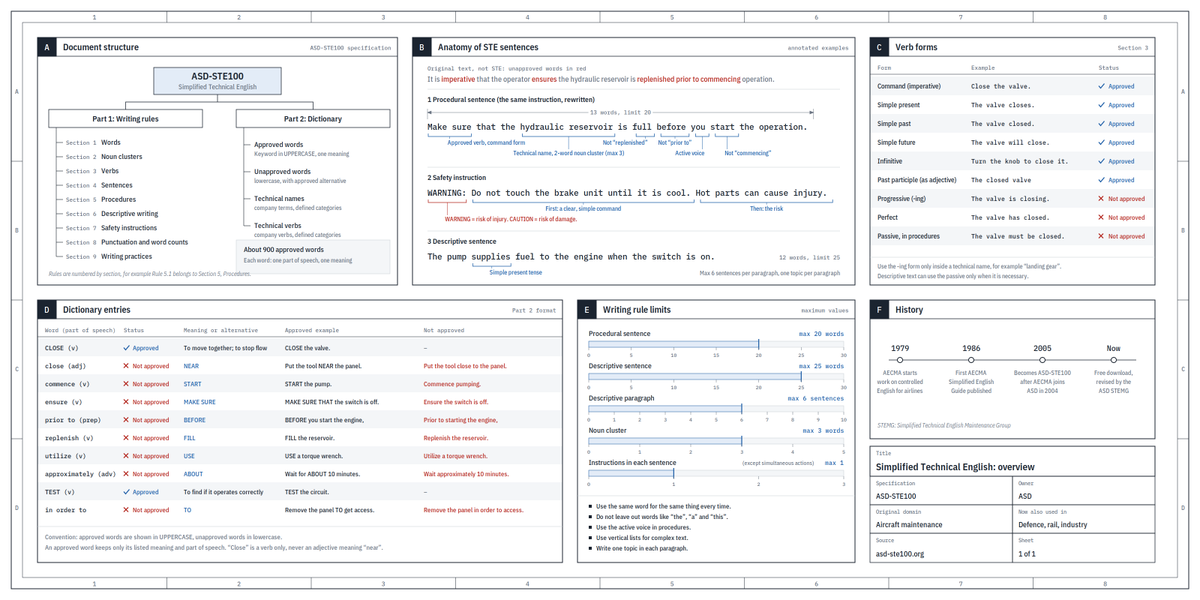
Writing. Something I've had success with: Ask your LLM to explain something in ASD-STE100, it's a controlled language specification originally developed for aerospace maintenance documentation. LLMs well-versed in this language and it comes with heavy constraints on clean writing style that I often find a lot more readable. Sometimes I've tried to soften it a bit e.g. ask for "80% of the way to ASD-STE100" because the spec is quite stringent. But even better:
Diagrams / images. Instead of writing, ask your LLM to create a diagram. These can be a lot easier to process, parse, and understand. But even better:
Web pages. Ask for output "in HTML" to get a beautiful, interactive webpage. LLMs are getting really good at frontend and can create beautiful experiences, animations, etc. But even better:
Explainer videos. The output format I am most bullish on is fully custom / bespoke explainer videos generated on any arbitrary topic. Experiment with things like "Create a 3b1b style video explainer on X. Use my ElevenLabs API key for audio narration". (you'd need an API key for the latter or you can ask your LLM to find you decent free alternatives that use your local compute). This is actually starting to work!
In summary:
- As LLMs get better, they will do more and more of the legwork autonomously, and a lot more of our work will rise up the abstractions into oversight and understanding.
- Luckily, LLMs can help here too because as intelligence and code are increasingly abundant, you can ask for large, custom, discardable software artifacts (e.g. web apps, video explainers) that would have never made sense to create before. Push the boundaries here and you'll be surprised.
Very true, the funnel is so real. I think the missing step is what the 20M do with the terminal once it works.
Karpathy is right that the paid coding tier and the free chatbot tier are not seeing the same system. The part he leaves open is the control topic. A model that can restructure a repo in an hour can also spend, send, or open the PR. Most of the 20M still have the system prompt as the gate.
The OpenAI–HF incident he mentions is still being archaeologied because the action landed before a human confirmed it (which is a wakeup call after it finally dawned on everyone). Capability going vertical still does not add that gate. You do(be held accountable).
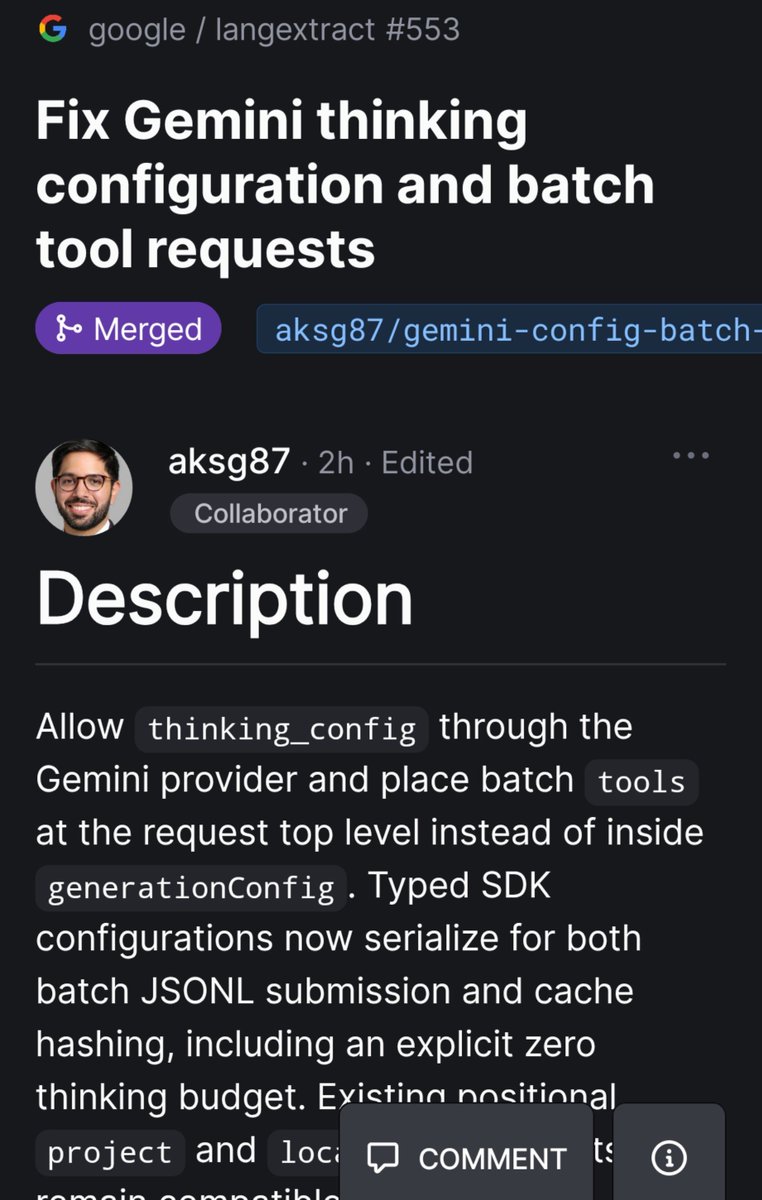
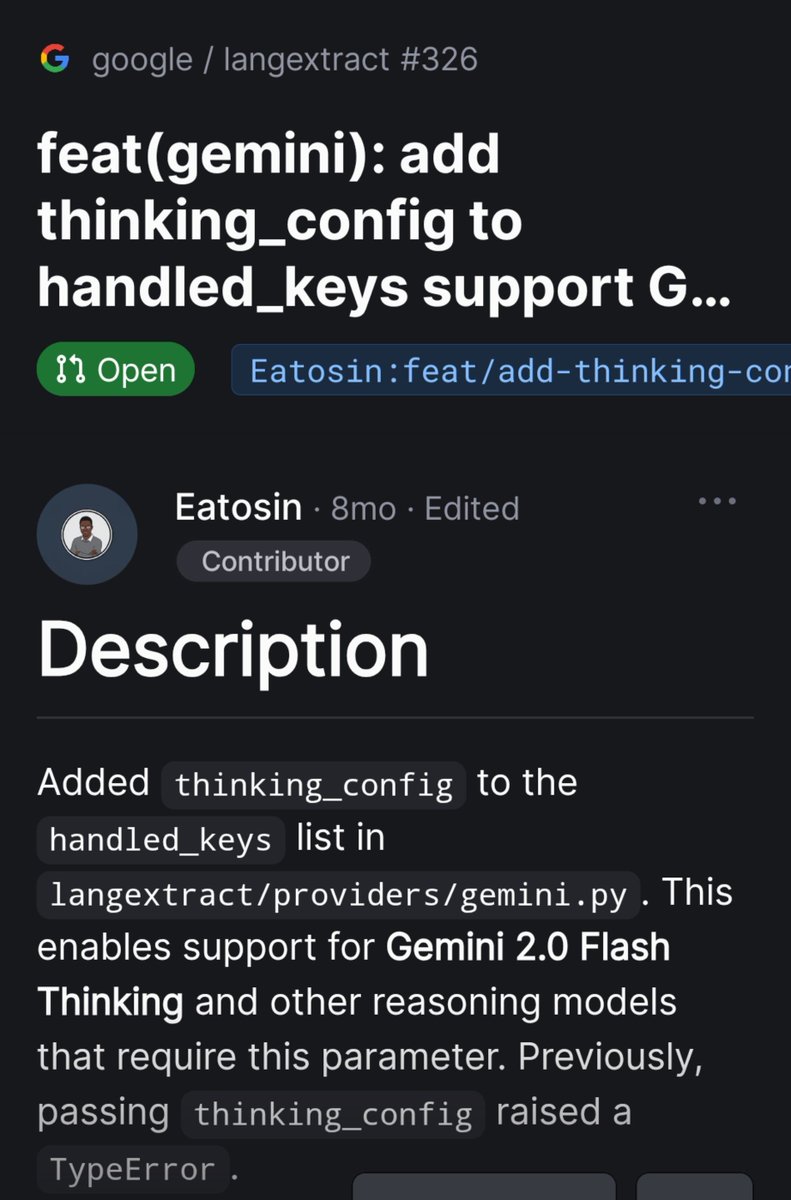
My first merged line in a Google OSS repo.
A contribution I made 8 months ago which only added thinking_config to Gemini's handled_keys in langextract, because passing it raised a TypeError.
It now shipped today inside #553.
Thank you @AkshayGoelMD
Hallucinations only got quieter but not rarer though...
Grounding and better instruction-following cut the blatant fabrications that used to go viral, so what’s left is mostly tail facts and multi-hop errors that only show up in traces after something already broke.
So people just stop posting the funny ones, also the costly ones just moved into private logs
The restricted access angle is where y'all are still pained about then treating it like a gotcha, but it is actually the part where it all lines up with how every lab handles a model that can hunt and patch vulns on its own.
Google is routing Argon through Fairwind first, the same channel they already used for the smaller cyber model, and they are running the voluntary pre-release checks with the US side before the broader API keys go out. Anthropic has done versions of this on stronger Claude drops and OpenAI did it on earlier agent previews once the dual-use surface got real, so the pattern is not unique to one company even if the timing feels slow when you just want to try the thing.
The 1M output limit and the intro $2 in / $10 out pricing are not abstract claims either. That is a real jump from the old 64k cap, and they already have internal teams running it on stuff like the libgav1 decoder rewrite that came back memory-safe and faster than the previous Rust port. Those are the kinds of long engineering traces the extra tokens are actually for.
Public benches are still mostly the lab’s numbers right now, same as basically every frontier drop until outside groups get access and start publishing their own. Some of the early write-ups already show it trailing on a couple of the coding suites versus Astra, which undercuts the idea that the whole post is just an unchallenged self-score. The gatekeeping frustration is fair if you want to poke at it today, but the tradeoff they are making is shipping the unguarded version only after defenders have had a window on live systems instead of the reverse.