This unhinged psycho sat in his car and said he hopes Trump voters get brain cancer, their families suffer, and he wants to cut their hearts out and bite them in half—because of an Epstein birthday note and Patriot missiles.
“I mean every word.”
This is pure deranged hatred.
He thinks about “his” death every single day.
His plan: eat a whole grocery-store birthday cake with his bare hands in the gay part of town, drink years-old champagne with cake-covered hands, smoke his first cigarette in a decade and hand out Roman candles to a woman.
This unhinged psycho sat in his car and said he hopes Trump voters get brain cancer, their families suffer, and he wants to cut their hearts out and bite them in half—because of an Epstein birthday note and Patriot missiles.
“I mean every word.”
This is pure deranged hatred.
Shortly before midnight on June 2, 1919, a powerful explosion tore through the Washington, D.C., home of Attorney General A. Mitchell Palmer. The blast shattered windows, damaged neighboring houses, and ripped apart the front of Palmer’s residence. Palmer, his wife, and their young daughter survived. The man carrying the device did not. Carlo Valdinoci, a militant anarchist, was killed when the bomb detonated prematurely as he approached the house.
The attack was not an isolated act of violence. It was part of a coordinated bombing campaign that struck eight American cities almost simultaneously. Nine bombs were planted at carefully selected locations, targeting judges, politicians, law-enforcement officials, business leaders, and others viewed by the attackers as representatives of the existing political and economic order. The blasts stretched from Boston and New York to Pittsburgh, Cleveland, Philadelphia, Paterson, New Jersey, and Washington.
The bombing of Palmer’s home became the most widely remembered attack because of the attorney general’s position as the nation’s chief law-enforcement officer. Franklin and Eleanor Roosevelt, who lived across the street at the time, were also shaken by the explosion. But the broader significance of the night lay in the scale of the operation. The perpetrators were not merely attempting to kill individual officials. They were trying to demonstrate that a revolutionary movement could reach prominent targets across the country within a matter of minutes.
Investigators searching the wreckage found scraps of a pink leaflet titled “Plain Words.” Copies had been left at the other bombing sites as well. The pamphlet declared war on the institutions of law, government, and capitalism. Its language helped federal investigators connect the attacks to followers of Luigi Galleani, an Italian anarchist who advocated revolutionary violence. His supporters, known as Galleanists, had already been linked to previous acts of political terrorism.
The June bombings followed an earlier wave of attempted attacks in late April. Anarchists mailed dozens of explosive packages to public officials and business leaders, including John D. Rockefeller and Seattle Mayor Ole Hanson. One device exploded at the home of former Georgia Sen. Thomas Hardwick, severely injuring a domestic worker. A postal employee in New York intercepted additional packages before they could reach their intended victims.
Palmer responded by expanding the federal government’s effort to identify and deport radicals. He created an intelligence division and placed a young Justice Department lawyer named J. Edgar Hoover in charge. The Bureau of Investigation, the predecessor of the FBI, received new resources as officials attempted to track down the bombers. Investigators used fragments of clothing, train tickets, pamphlets, and even part of Valdinoci’s scalp to reconstruct the Washington attack.
The government’s response soon extended far beyond the perpetrators. During the Palmer Raids of 1919 and 1920, authorities arrested thousands of suspected radicals and immigrants in operations later criticized for poor planning, weak evidence, and violations of constitutional rights. No other June bombers were directly identified.
The bombings of June 2, 1919, therefore became a turning point in American political history. They exposed a genuine threat of domestic terrorism.
Another tragic shooting in Ohio today. 3 dead, from gunshots at their home.
Two in their 60's and a 22 month old baby.
Not much information has been released at this time, other than a weird 911 call that let to police going to the home.
Dispatch thought they heard someone quietly whisper help in the phone.
Police also claim there are no further risks to the community from this shooting.
When a candidate’s own mother goes on camera and says her daughter “lies about her past” and “needs help” before Ohioans elect her governor, that is not ordinary campaign noise. It is a rare and costly choice by Vivek Ramaswamy’s team to put a decades-long family rupture front and center with a $4 million buy.
The public record shows Amy Acton has long described a childhood that included removal from her mother’s home after allegations involving her stepfather. Her brother has publicly backed that account. Her mother, estranged since the late 1970s, now disputes other parts of the story Acton has told, including claims of living in a tent. Both sides are speaking from deep personal history that predates this race by nearly fifty years.
Campaigns routinely test how far personal material can go. This one tests whether voters treat a mother’s direct, on-camera rejection of her daughter’s credibility as decisive information or as an overreach that distracts from Ohio’s actual governing questions—taxes, energy, public safety, and the state’s post-COVID recovery. Ramaswamy has defended the ad by arguing Acton has avoided debates and attacked him personally; Acton’s side calls it an exploitation of old trauma. Voters will decide which framing holds.
In tight statewide races, the final weeks often move from policy contrast to character contrast. This ad is that move made explicit.
Whether it clarifies the choice or simply hardens existing opinions will be clear soon enough.
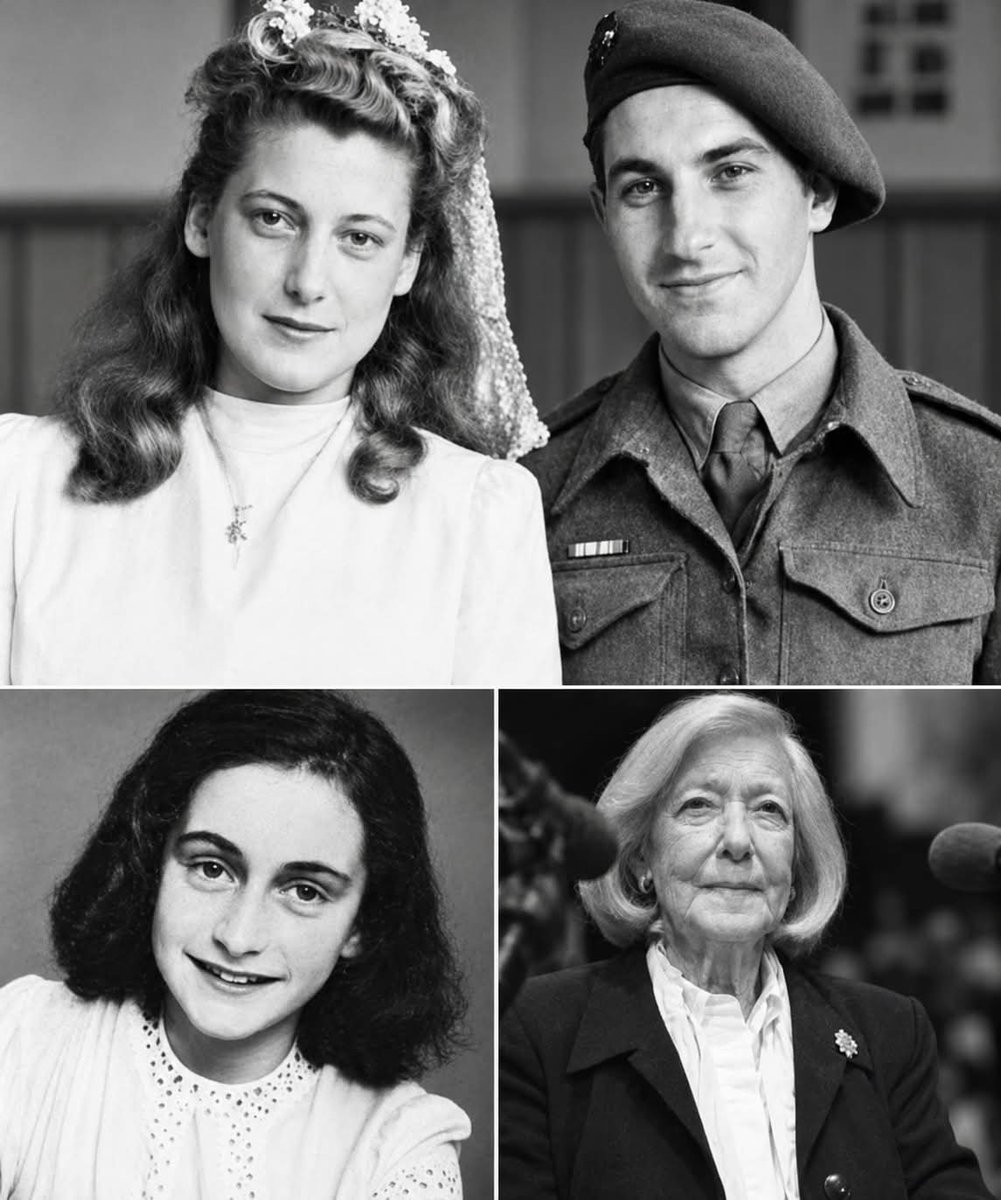
She stood naked among hundreds of other women, waiting for death. The heavy iron doors slammed shut. During the freezing winter of 1944, Gena Turgel found herself inside a gas chamber at Auschwitz-Birkenau, waiting for the Zyklon B gas. Minutes passed in complete darkness. Women whispered prayers and quietly cried. But the gas never arrived. When the guards finally opened the doors, they were stunned to find that the women were still alive. Gena walked out on her own feet. Years later she said simply, “God must have protected me.”
She was later transferred to Bergen-Belsen. It was there that she encountered Anne Frank, who was gravely ill with typhus. Despite the danger, Gena brought her water, washed her face, and held her hand. Anne died just weeks before the camp was liberated. Gena later recalled, “Her eyes, they were screaming.”
On April 15, 1945, British troops liberated Bergen-Belsen. Amid the devastation Gena met Norman Turgel, a British intelligence officer. Six months later they were married. Her wedding dress was made entirely from the silk of a British Army parachute. The dress is now preserved at the Imperial War Museum in London.
Gena Turgel lived to the age of ninety-five and became a respected voice in Holocaust education. For decades she visited schools and spoke about what she had endured, without allowing hatred to define her message. She wanted future generations to understand the importance of compassion and respect. Her life had taken her through unimaginable loss, yet she continued to speak about the value of kindness.
Nature is pretty wild. Each animal armed to protect itself out in the wild. Here is a video of the Hedgehog and how it's body was designed to protect it from being attacked by others.
Kim Beaton created a sculpture called Tree Troll, inspired by her late father, transforming his image into a tree-like figure. This piece was constructed with the help of volunteers and is now permanently displayed at the Bellagio Casino in Las Vegas.
She sculpted the Tree Troll as a heartfelt tribute to her late father, Hezzie Strombo. This sculpture transforms his image into a tree-like figure, symbolizing his connection to nature and his past as a lumberjack in Montana.
She used papier-mâché, cardboard, tinfoil, wood, and house paint to create the Tree Troll sculpture. The project involved collaboration with 25 volunteers to complete the piece.
Moose and pumpkins are not a rare combination up here.
They treat decorations like a free buffet once October hits.
Big animal, zero manners about it. 🫎
Some of us just leave the extras out now. Easier than arguing with them. 😂
Anyone else dealing with seasonal garden thieves? 💙