🇬🇧🇰🇪
British High Commissioner to Kenya, Neil Wigan (@FCDONeilWigan), visited Wajir County for the first time.
He announced INSPIRED, a new programme to provide quality education for 100,000 children in Wajir and Mandera Counties over the next three years.
@UKinKenya
All stakeholders’ perceptions are worth considering in #educationreform, not least those of the public. Elizabeth Ogott (@Libbysalz) emphasises the wider impact of reform in the latest episode of our Brighter Futures podcast. Listen in full here: https://t.co/9klnfrJIbj
The most powerful paradoxes of life:
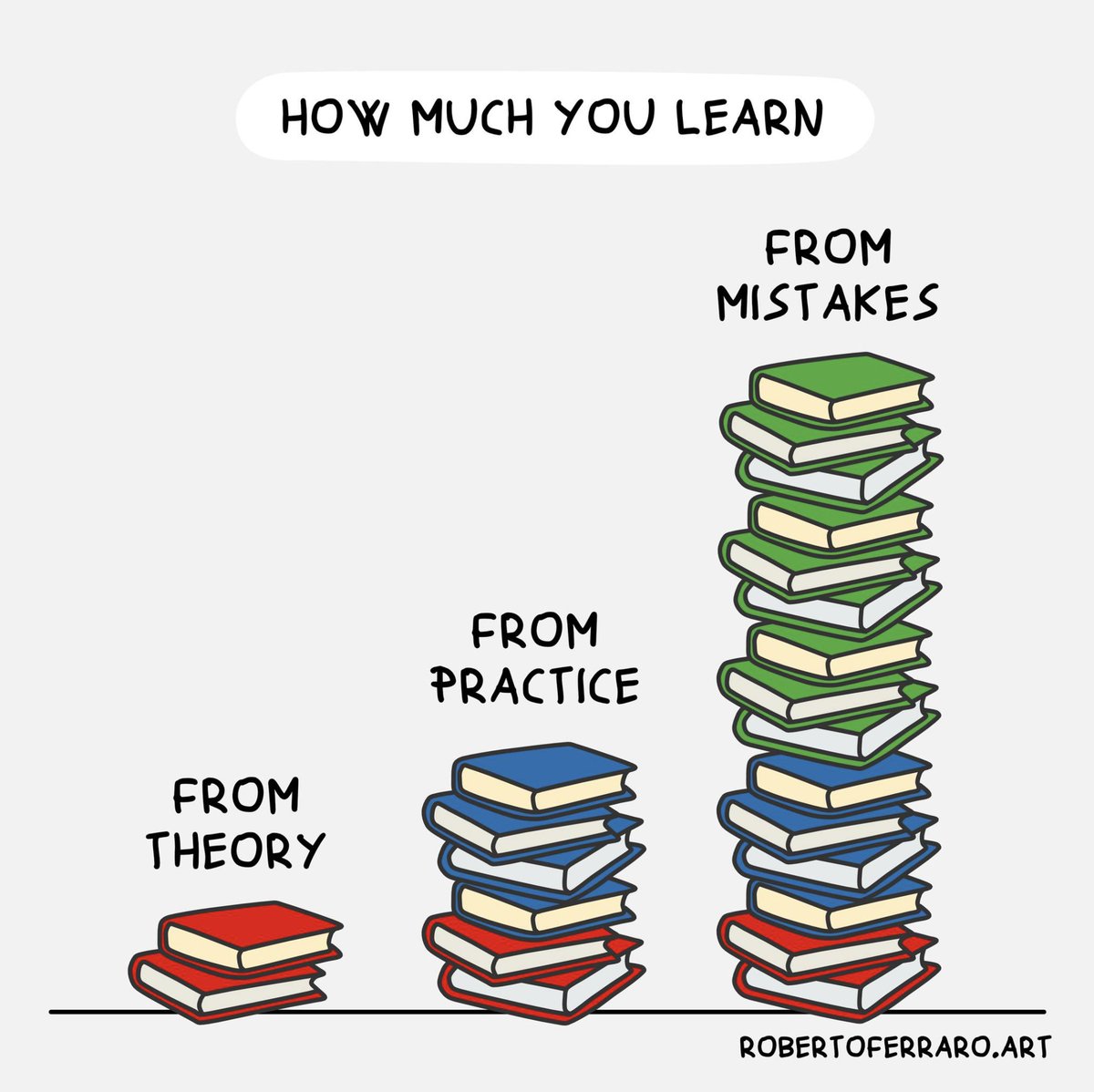
1. The Failure Paradox
You have to fail more to succeed more.
Our transformative moments of growth often stem directly from our toughest moments of failure.
Don't fear failure—learn to fail smart and fast. Never fail the same way twice.
As the year 2024 begins, I've compiled a list of places, mostly within 60km of Nairobi, a few will go beyond.
If you don't have your own car/bike;
✓Link up with a pal and offer to fuel their car/food bill/accommodation.
✓Do carhire.
✓Cab for close places.
Most work with a day trip or an overnight stay, having private transport enhances the experience. These are suitable for solo, couple, or group travel, here's the curated list:
Thread.
How to give feedback without being a jerk:
1. Be a coach, not a critic. Aim to help, not attack.
2. Don't assert opinion as fact. You're sharing your subjective reaction, not the objective truth.
3. Be honest, not brutal. Be direct in what you say, but kind in how you say it.
Storytelling is a superpower.
Steve Jobs said:
"The most powerful person is the storyteller."
Unfortunately, most people don't know how to tell a good story.
So they are at the mercy of those who do.
Let's change that:
Here's 5 principles for telling an amazing story:
1. The Hook
This is THE most important part of your story.
It's what gets people invested enough to come along on the journey.
A great hook does two things:
• Plants a Seed of Intrigue
• Compels the Audience Forward
Best way I've found to accomplish both is through Open Cognitive Loops.
But, before I break down how to Open Cognitive Loops, let's talk about the second principle:
2. The Image
The power of story is that it unlocks something inside each of us:
A blank canvas upon which your words can paint.
Each brush stroke must be placed with intention.
Each detail crafted with care.
Get this part right and you can design worlds and characters in your audience's mind that they feel more connected to than the drab reality of their day-to-day lives.
3. The Lesson
Have you ever told a story that started strong but petered out midway 'cause you couldn't figure out how to wrap it up?
So instead, it just ends on a blech note with something like:
"Yeah, I guess you just had to be there."
Oof... I feel ya.
We've all been there.
The problem?
You committed the most deadly of Storytelling Sins:
You told a Story without giving it MEANING.
When most people tell a story, they're simply reciting events in a chronological order and then leaving it to the audience to imbue it with meaning.
Great storytellers don't leave this to chance.
They tell you exactly WHY this story is so important and WHAT they want you to take away from it.
Here's an example from a story I told the other day about my cat nearly dying:
“The next morning we were scheduled to put him down.
I remember feeling so impotent and shallow because I’d put a dollar value on the life of a loved one.
Now, I get it…
Sparta is just a cat.
But that’s not the point.
Because it’s about the larger truth:
I wasn’t in a position to help if my dad, or my partner, or my siblings, were ever to fall sick.
I resolved at that moment, money would never again be the reason I couldn’t help a loved one in need.”
Alright, so what should you do if you're not sure what the meaning of your story is?
Easy...
Don't tell it.
Seriously.
A story without meaning is just a list of events.
Nobody's life has ever been changed by a list.
4. The Two Journeys
Every great story has a character striving to achieve a goal.
Frodo must destroy the Ring.
Harry must kill Voldemort.
Luke must redeem his Dad.
You must get a loaf of bread from the grocery store.
(not all stories are epic)
Now, within the struggle to achieve these goals, our character is actually on TWO journeys.
1. The External
2. The Internal
The stories I listed above are The External.
These are easy to visualize and the one that most of us think about when it comes to storytelling.
However, The Internal struggle is the journey our character must go through in wrestling with who they are in relation to the world.
THIS journey is the one that imbues our story with deep resonance.
Without it, if we merely focus on The External struggle, we end up with a Michael Bay movie like The Transformers where everything is blowing up and yet nobody gives a shit.
Let's take a step back to my Sparta-story...
The External struggle is that Sparta is dying and needs surgery I can't afford.
The Internal struggle is realizing I hate myself because I've put a price on my loved one's life.
The key to telling a great story lies in your ability to resolve both the External and Internal Journey.
If you can master this, you can make an impactful story out of anything...
Even something so small as picking up a loaf of bread from the grocery store.
5. Closing Loops
At the beginning of this post I said that great stories plant a seed of intrigue and compel the audience forward.
To accomplish this I said we Open Cognitive Loops.
But I didn't tell you what an Open Cognitive Loop is...
Instead, I showed you (by opening one).
Seriously, go back and look to see how I did it.
See, an Open Cognitive Loop is simply a question that needs answering.
One of the ways to keep your audience on the edge of their seat and invested in the story is to keep opening and closing cognitive loops until the very end.
But the truth is, ending your story is often the hardest parts.
So here's a trick:
Next time you find yourself meandering lamely towards an ending and can't figure out how to wrap things up...
Use these words:
"I share this with you because..."
And then tell them exactly why you shared it with them.
This is called The Tie Down.
It brings everything full circle and gives a sense of closure (which is a story in and of itself for another day).
Here's how it works in real time:
I share these five principles of storytelling with you because I believe every single one of us has a story inside...
A story with the potential to change the world if only we knew how to tell it better.
I believe Storytelling is a Superpower...
And I can't wait to see what you do with yours.
Yo, if you want more stories about business, investing, and personal development, give me a follow @AnthonyVicino .
7 lies you're told about the world:
(on business, money, and personal development)
1. The Focus Lie
You don't have a focus problem...
Proof:
You could easily binge Netflix for hours.
The truth:
You have a focus management problem.
We are dopamine seeking missiles incapable of sitting with boredom for more than 15 minutes.
The result is as Blaise Pascal pointed out:
"All of humanity's problems stem from man's inability to sit quietly in a room alone."
2. The Lie of Enough
We tell ourselves:
I'll be happy when I...
• Make more money
• Buy that fancy car
• Move into that amazing house
• Find the partner of my dreams
The truth:
There is no escaping The Hedonic Treadmill.
All you can change is what you're walking towards.
In my experience, there's only one thing worth walking towards:
(and it's not happiness)
It's purpose.
3. The Consumer Lie
The world is on a quest to make everything:
• Easier
• Quicker
• More Convenient
Our lives are filled with hyper-caloric food and entertainment lulling us into states of satiation.
And yet, we feel empty despite lives that are so full.
The reason?
You cannot consume your way to fulfillment.
It can only be created.
Consume Less. Create More.
4. The Thinking Lie
Most of us will have around 70,000 thoughts today...
And yet very few truly understand what they think on any given topic.
Even fewer will have any genuine insights.
The truth:
Most people don't know how to direct their chaotic mind's energy.
To focus it in a useful direction.
The result:
Motion without Progress.
5. The Lie of the Exceptional
The world is run by idiots who work very hard to convince you they are remarkable.
Of the ones who truly are remarkable, most achieved their success through nothing more than discipline, luck, and time.
You are not an impostor. None of us belong here.
6. The Friendship Lie
You have fewer friends than you realize.
Most are simply acquaintances.
Friends are the people you call when the world is crumbling around you...
And they always answer.
Five good friends can last a lifetime.
Quality over quantity.
7. The Lie of the Best
You probably cannot be the best at any one thing.
It's so mathematically improbable as to be impossible.
But that's okay...
Because the goal isn't to beThe Best.
It's simply to be Better.
And Better has no finish line.
***
Yo, if you enjoyed this, follow me @AnthonyVicino for more.
(1) What is Agency and How Do We Track It?
Komera utilizes the The @AMPLIFY_girls Agency Tool, which characterizes 𝘈𝘨𝘦𝘯𝘤𝘺 as both a girls’ personal belief in their ability, combined w/the skills needed to effect change in their own lives & world.
🧵Since it is becoming hard to track, here is a thread of the simply astounding weather records planet Earth has started shattering in recent weeks:
1. Dramatic flood events have begun striking various countries around the world simultaneously this week.
https://t.co/BLiyOyxHHp
The World’s Best Venture Capital Investors In 2023
Produced in partnership with TrueBridge Capital Partners, the #ForbesMidas List has long tracked venture capital’s ebbs and flows as the definitive ranking of the top 100 tech investors.
FULL LIST: https://t.co/fZklv5Jrsh
Here is a lists of the top activities you must do in CapeTown.
1. Table Mountain; it offers stunning views of Cape Town. And can be accessed via the cableway. It is popular for hiking and has the cableway to the top of the mountain.