A Brief History of Rigged Elections.
For 250 years American elections were fine. People who won, won, people who lost, conceded. No whining or crying.
In 2016 Trump won. Hillary Clinton didn't whine. She conceded like a true American.
But then in 2020 something happened. For the first time in our history, a presidential nominee who lost, Donald Trump, refused to concede.
He cried, caused an insurrection, and had to be dragged out of the White House by his cankles.
Cut to 2024. Trump wins. Again, no whining by Kamala Harris. She concedes like a true American.
Now we're 16 days from midterms. And Donald is whining already. Blaming illegals, ID laws, mail-in-ballots, voting machines, dead people, Antifa, and socialists.
He's right. We do have a rigging problem. It's called Donald Trump.
Our system worked great for every election at every level for 250 years...
Until jelly donut took office.
@ElissaSlotkin You madam are the very reason JFK was right to want to "splinter the CIA into a thousand pieces and scatter it into the winds." We'd be way better of had that happened.
@heatherhunterdc Taxing assets is immoral and should be abolished. Doing so in a society that claims to value property rights, means there are no property rights and you rent everything from the govt. We all know what that is called.
@AzPetrich I will call you a radical leftist. And as a leftist you favor slavery. Because all the things you claim are rights, require the property and/or labor of others. You're nothing but a lousy commie
@JamesSurowiecki You are correct that it shouldn't matter if you borrowed money to purchase an asset or own it or right. The question is if we have to forever pay the govt for it, who really owns the asset? I heard there's a word for that.
@JaneBlahBlah@randy3dotwong@JamieBonkiewicz I replied to a post mocking "abortions after birth" as a non-thing by by giving a recent example of it happening. You wanted to bring in men as if they get aquitted/mistrial for the same behavior.
This is your only chance to understand that.
@JimBob38212353@ChuckSteeleSr@_JohnnyRando@ChrisMartzWX Not sure if Chuck is saying this but I am. Taxing assets is immoral and should be abolished. Doing so in a society that proports to value property rights, means there are no property rights you rent everything from the govt.
@JonathanLappr9y@_JohnnyRando@ChrisMartzWX The "no property tax if it's paid off" thing drives me nucking futs! What does it matter if you're paying a mortgage or not? In either case you're being taxed on an asset the value of which is not realized until it's sold. Taxing assets is immoral and should be abolished period.
If I have followed you back please consider reposting this to give it credibility that I do what I say.
I will Follow back and I will promote on mentions. @usconnect2021
GAWD, I hate the rich.
The top hats. The monocles. The dinner jackets. The way they twirl their mustaches while evicting orphans.
Before we drag them into the public square, though, we should probably define “rich.”
Amendment 87, the temporary “graduated” income tax, defines rich as earning $500,000 a year. #copolitics
And yes, it is temporary. Unlike the federal income tax brackets, 87’s brackets aren’t indexed for inflation, meaning over time all of us will creep into the new top 8.4% tax rate.
Clever scam. Con Coloradans who aren’t good at math that they’re getting a tax cut and then let inflation do the mugging.
Sell a tax increase on working families as a tax cut. You can almost hear the maniacal laughter.
Rich bastards
But back to punishing the rich — those trophy-wife-collecting, umbrella-drink-swilling bastards.
Why should they drive Maseratis while I putter around in my 2010 Nissan Altima?
Sure, we use the same roads, sit in the same traffic and can reach the same destinations. But that’s hardly the point. His cup holder has Italian stitching.
Henry Ford democratized the automobile. Before mass production, cars belonged only to the wealthy. Now ordinary people can live where they can afford a home and work where they can earn a living.
Unfortunately, Ford became rich in the process. Would we have been happier if he hadn’t? Of course we would have! We’d still be stuck in tenements, but he would have been poorer. Totally worth it.
The rich get private jets. Why? I mean, I fly private too. We all do. I simply have to share my private plane with 130 strangers.
While trapped in middle seat 34B, I use high-speed internet delivered by satellites launched on private rockets. Elon Musk uses the same service on his plane too, the showoff.
Fine, he puts satellites into orbit. Fine, his rockets have rescued astronauts stranded at the International Space Station. Fine, his satellite internet has connected every remote community around the world, empowering the poorest of the poor and least powerful.
But should he be rewarded for any of that — with money?
The iPhone in Elon’s pocket is the same as the iPhone in mine. Steve Jobs helped put a supercomputer, camera, map, library, newspaper, television studio and argument factory into billions of pockets.
But he became rich, so presumably the whole project was morally suspect.
Sam Walton drove down the price of countless things working families buy. Jeff Bezos built a system that can bring those things to our doors, sometimes in 30 minutes.
But Bezos is easy to dislike because his wife is mostly plastic, or rendered by Pixar or something.
Fine, he’s easy to hate. But does his wealth matter more than the value created for us?
Class envy on the ballot
Amendment 87 has generated plenty of talk about forcing rich people to “pay their fair share.” It has generated considerably less discussion about class envy, which is doing the political heavy lifting.
“Fair share” sounds principled. “I resent that guy’s boat and trophy wife” sounds childish.
Yet the boat is doing more campaigning than the tax tables.
We rarely stop to consider how much of modern life exists because somebody took an absurd risk.
That somebody might be a famous billionaire. It might also be the developer who built your home, the employer who created your job so you can afford it or the real estate agent who found your house.
Their success is part of your higher standard of living.
I am not claiming rich people aren’t douchebags. For efficiency’s sake, let’s stipulate that every last one of them is unbearable.
The question is whether our lives are nevertheless better because of what they created.
And do we want to chase them out of Colorado as progressive income taxes have chased them out of California, New York, Massachusetts and elsewhere? Massachusetts is now dead last in the nation for new business creation. That’s our future.
What have we sacrificed in exchange for the greatest improvement in quality of life throughout all of human history?
Mostly, we have had to endure the sight of successful people having more than us.
That seems like a remarkably small price to pay.
Amendment 87 asks you to treat envy as policy and punish people we dislike, while inflation quietly expands the definition of whom we’re punishing.
The sales pitch is “soak the rich.”
The fine print is “eventually, that means you.”
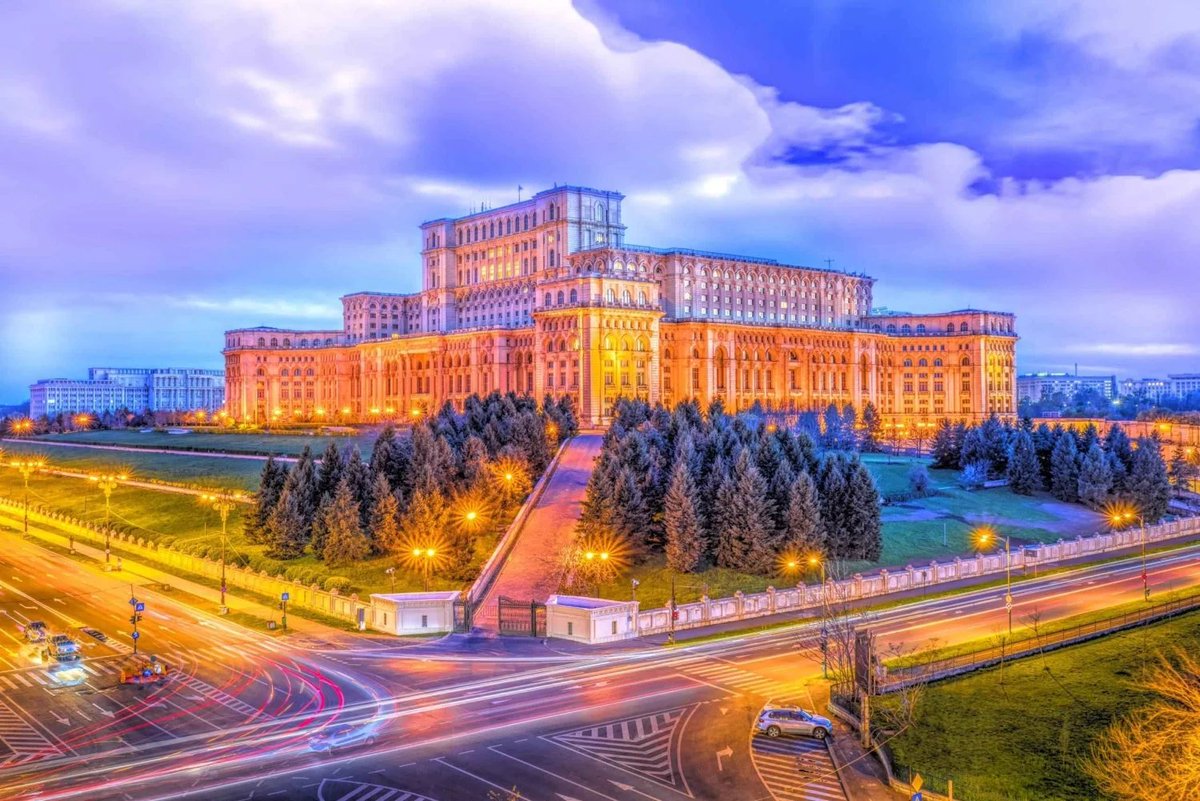
Nicolae Ceaușescu demolished seven square kilometers of central Bucharest, including nineteen Orthodox churches and 40,000 homes, to erect a palace covering 365,000 square meters. He named it the "House of the People." The Romanian people lived without heat through winters that dropped below minus 20 Celsius while their government rationed bread.
This is central planning operating exactly as designed. When the state controls all capital allocation, the preferences of one man replace the preferences of millions. Prices no longer carry information about scarcity; political will does. The palace consumed 700,000 tonnes of steel, one million cubic meters of marble, and 900 million dollars in mid-1980s purchasing power. Meanwhile, Romanians queued for cooking oil and wore coats indoors through January. The regime made this tradeoff deliberately, consciously diverted resources, and suppressed anyone who objected.
Central planning always produces this: concentrated, visible monuments for the ruler, and dispersed, invisible suffering for everyone else. The ruler faces no profit-and-loss signal, no bankruptcy, no customer walking out the door. The people face compliance or a bullet. Without prices generated by voluntary exchange, planners cannot allocate resources rationally. Ceaușescu proved the theorem empirically, at enormous human cost.
Remove the monopoly on force, restore private property, and people will rebuild their own cities without tearing down churches to do it.