Secrétariat, 3 enfants, goût pour la lecture et la musique, soutien aux assos (AGL etc.), fan de G. Lemarchal, MJJ, chanson française,disco, blues, classique
Ese genio llamado Ennio Morricone dejó al mundo un legado eterno e incomparable.
Hoy, en el 98º aniversario de su nacimiento, recordamos uno de sus trabajos más brillantes.
La BSO de «Once Upon a Time in America» (1984) es, sencillamente, maravillosa.
Morgan de la Star Ac balance des doss sur ses copains du château 😂
L’épisode 8 de NRJ FAN POWER avec Morgan de la Star Ac, Cellule de Crise & Lalou Brt est dispo sur la chaîne Youtube NRJ Fan Power !
Despite having a net worth of around $220 billion, Meta CEO Mark Zuckerberg and his wife, Priscilla Chan, are often seen maintaining a simple lifestyle without showing off their enormous wealth.
Hey @grok, if Mark Zuckerberg spends just 1% of his wealth helping ordinary people, how many lives could he change?
THE ADDAMS FAMILY – 1964 vs 2026 🕸️ “They’re creepy and they’re kooky, mysterious and spooky...” 🎶 I created a photographic tribute to the legendary cast of The Addams Family – 62 years later! 🎬✨ From John Astin’s unforgettable Gomez Addams to Carolyn Jones’s iconic Morticia, from Jackie Coogan’s Uncle Fester to Ted Cassidy’s Lurch – this show is a timeless classic that still makes us smile. 🕊️ In loving memory of Carolyn Jones (1983), Jackie Coogan (1984), Ted Cassidy (1979), Lisa Loring (2023), Ken Weatherwax (2014), and Blossom Rock (1978).
😡 LAURENCE BOCCOLINI A PORTÉ PLAINTE APRÈS AVOIR REÇU DES MENACES DE VIOL ET DE MORT
"Oui, par principe. Je sais bien qu'il se passera rien, qu'on le retrouvera pas," a-t-elle confié dans #TBT9 après qu'un message d'une extrême violence ait été dévoilé
Cible de violentes attaques après avoir dit lors d'un débat sur les artistes demandant à faire au barrage au RN qu'elle préférait que les artistes ne prennent pas position sur la politique, elle ne comprend pas la violence des attaques qu'elle subit depuis :
"Moi j'ai simplement dit qu'on peut s'exprimer, mais ça aurait été quelqu'un qui s'exprimait contre l'arrivée de LFI, j'aurais dit la même chose. Je disais juste : faites des bons bouquins, faites des bonnes pièces, faites des bons films, soyez des bons entertainers, voilà. Faites bien votre métier, puis après votre avis... mais quel que soit l'avis.
Évidemment, les sites internet n'ont gardé que : 'elle appelle les comédiens et les artistes à se taire quand ils demandent de faire barrage au RN'. Donc vraiment, je me prends ça et j'ai dû porter plainte.
Et ce qui est étonnant, c'est qu'il y a beaucoup de messages de soutien, mais il y a beaucoup de messages qui disent : 'oui oui, mais c'est ce que tu mérites'. Et quand je regarde les messages, ce sont beaucoup de femmes qui plussoient dans le message qui demande le viol de mes enfants ou le meurtre de ma fille. Je trouve ça grave. J'ai pas d'illusion, je sais très bien qu'en portant plainte, on va pas retrouver quelqu'un"
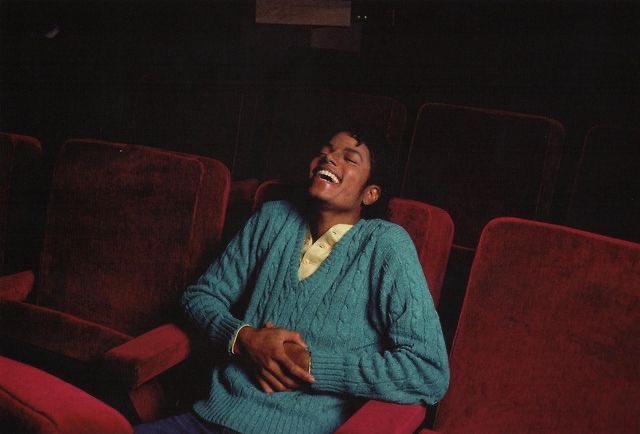
I found the story behind this photo, taken inside MJ’s private movie theater at Hayvenhurst on Feb 26, ‘83, the day before the ‘Beat It’ short film shoot.
Todd Gray wanted to capture Michael laughing in his newly finished private movie theater. He asked him to sit down and pretend he was watching a movie. Well, MJ had a few questions first: 😄
—————
MJ: Which movie?
Todd: It doesn’t matter. Any movie will do.
MJ: Todd, you’ve got to tell me which movie I’m supposed to be watching if you want a reaction from me.
Todd: OK, what about a Charlie Chaplin comedy?
MJ: Which one? He’s made so many, you know.
Todd’s assistant: Modern Times.
MJ: OK, which part?
Todd: MJ, it’s a comedy. Just laugh!
MJ: Well, if you want me to laugh, then you have to tell me a joke. But you said you wanted me to act like I’m watching a movie. Which is it you want? 😂
—————
Finally, Todd gave up and pulled a ridiculous clown face. That did the trick. Michael burst out laughing, and Todd got his shot.
#thrillertuesday
Todd Gray, The Making of Michael Jackson, Vanity Fair, October 23, 2009
9 November 1911 | A Czech Jewish woman, Gertruda Kleinová, was born in Prague.
She was deported to #Auschwitz from #Theresienstadt ghetto on 6 September 1943. She did not survive.
---
Women at Auschwitz
Lesson: https://t.co/geVMv4sz5Y
Podcast: https://t.co/g8mOp6ekYl
In 1959, doctors in Alberta told a 14-year-old girl they were taking out her appendix.
They were not.
It took her nearly forty years to make the province admit what it had really done.
She was born in Calgary on July 15, 1944.
Her family was poor. They moved constantly. At home, she was unwanted, and she was abused.
When she was eight, her mother placed her in a convent for a month. A year later, her mother applied to have her committed to the Provincial Training School for Mental Defectives in Red Deer.
There was no bed free.
So the girl waited two years.
On July 12, 1955, just before her 11th birthday, she was admitted. No doctor tested her first. The admission rested entirely on what her mother said about her.
She thought she was being sent to an orphanage.
Her name was Leilani Muir.
And a condition of her entry had already been signed. Her mother had given written permission for her to be sterilized.
Think about what that actually meant.
A child walked through those doors, and the decision about whether she would ever have children of her own had already been made by somebody else.
Alberta had passed its Sexual Sterilization Act in 1928. A small government panel, the Eugenics Board, decided who was "fit" to have children. Low test scores, poverty, being Catholic, being an immigrant's daughter, being Indigenous, being in an institution at all. Any of it could put you in front of the Board.
More than two years after she arrived, Leilani was taken to a clinic in Calgary for an intelligence test.
She scored 64.
The Board labelled her a "moron." Her file noted her Irish and Polish background, her Catholic faith, and that she had "shown definite interest in the opposite sex."
They ordered her sterilized.
Nobody told her.
On January 19, 1959, surgeons destroyed both of her fallopian tubes. She was told it was her appendix.
She stayed in the institution until she was 20. She had been taught to about a Grade 5 level.
In 1965, she walked out into the world on her own.
She worked as a waitress. She married. She wanted a baby.
The baby never came.
Fertility tests finally gave her the answer. A doctor told her she had been deliberately sterilized, and that it could never be reversed.
She tried to adopt instead.
She was turned down. Her history as a former inmate of an institution followed her into every office.
Two marriages ended. The years went by. By 1989, living in British Columbia, she was depressed enough to seek professional help.
To see whether she was a good fit for group therapy, a psychologist gave her another intelligence test.
She scored 89.
Normal.
Here is the part that should make people angry.
The number the province had used to justify cutting her open had never measured her mind. It had measured a frightened, neglected child in an institution.
Leilani Muir decided to sue the Province of Alberta.
Nobody had ever done that before.
She had no money and no profile. She had a Grade 5 education and a file that called her mentally defective. Against her stood a provincial government with every resource it needed.
The case took years to reach a courtroom.
The trial opened on June 22, 1995, before Justice Joanne Veit of the Court of Queen's Bench. It ran four weeks.
On January 25, 1996, the judgment came down.
Leilani Muir won.
Justice Veit awarded her $740,780 in damages, plus $230,000 toward her legal costs.
And she wrote, plainly, what had been done: "In 1959, the province wrongfully surgically sterilized Ms. Muir."
The judge went further. She listed what the confinement had cost a young girl: loss of liberty, loss of reputation, humiliation and disgrace, pain and suffering, loss of normal developmental experiences, loss of contact with family and friends.
Thirty-seven years after the surgery.
Forty-one years after she first walked into that school.
Her win opened a door that could not be shut again.
Drums Along the Mohawk, starring Henry Fonda, Claudette Colbert and Edna May Oliver, was officially released in the US 87 years ago today, on Nov 10, 1939! Directed by John Ford.
Did You Know? To avoid filming an elaborate battle scene, Ford had Henry Fonda improvise a description of the battle on camera. Ford's questions were edited out, leaving Fonda's account as a dramatic scene in the finished film!
#otd
🔴 🗣️ Guy Marchand, l'acteur mythique de Nestor Burma, lié à des opérations ultra-secrètes ?
Révélations de @P_Gast et @renaudfranck, journalistes à Intelligence Online, coauteurs avec Antoine Izambard de "La nouvelle armée des ombres", chez Albin Michel.
#AvantLe20h#canal16
FIVE MARTIAL ARTS LEGENDS. FIVE ICONIC ROLES. ONE UNFORGETTABLE LEGACY.
From Bruce Lee's lightning-fast moves to Jackie Chan's gravity-defying stunts, these legends helped shape martial arts cinema forever.
Bruce Lee brought his fighting brilliance to Enter the Dragon (1973), released just weeks after his tragic death at 32. Chuck Norris faced Lee in the unforgettable Colosseum showdown in The Way of the Dragon (1972). Jackie Chan became a sensation as Wong Fei-hung in Drunken Master, while Jet Li later made the same legendary character his own in Once Upon a Time in China. Donnie Yen completed the iconic lineup with his powerful portrayal of Ip Man, the Wing Chun grandmaster who once taught Bruce Lee.
Decades later, their performances remain unforgettable. Here's a look at these five martial arts icons, from their signature roles to their lives in 2026. 📸
🎬 MARTIAL ARTS LEGENDS: THEN VS. 2026
• Jet Li – Wong Fei-hung (Once Upon a Time in China, 1991): 28 ➔ 63
• Chuck Norris – Colt (The Way of the Dragon, 1972): Age 32 in 1972 ➔ Passed away 2026 (Aged 86)
• Bruce Lee – Lee (Enter the Dragon, 1973): 32 ➔ Passed away in 1973, aged 32
• Jackie Chan – Wong Fei-hung (Drunken Master, 1978): 24 ➔ 72
• Donnie Yen – Ip Man (Ip Man, 2008): 45 ➔ 63
Who left the biggest mark on martial arts cinema? 🥋
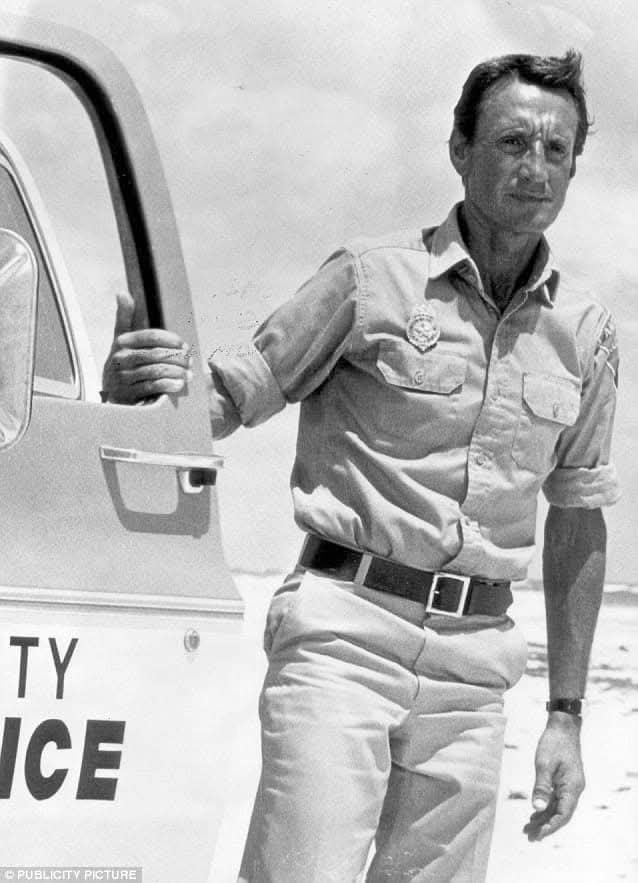
Hommage à Roy Scheider, né le 10 novembre 1932 à Orange (New Jersey) et mort le 10 février 2008 à Little Rock (Arkansas). Ayant tourné sous la direction de nombreux cinéastes de renom (William Friedkin, Steven Spielberg, John Schlesinger).