Bengali Hindu, Military woman. In quest for Divine Truth & Joy. Bow to the Great Masters of Beloved India.
Paramhansa Yogananda, Lahiri Mahashoy
Bande Mataram
"Where forgiveness is but a Weak Feebleness, O Rudra (the Destroyer), let me be cruel at Thy Command
He who commits Injustice & he who tolerates Injustice, may Thy Wrath consume them both like Burning Straw
Tagore
Every Hindu who was murdered,reped by Jehadi tmc to get Justice
আজ পঁচিশে বৈশাখে যেন ভুলে না যাই ।
কবিগুরু শুধু আমাদের উদ্বুদ্ধ করার জন্য কবিতা লিখে যান নি । শুধু চারপাশে প্রেম বিতরণের জন্য লেখেন নি । স্মরণ করুন…
“ক্ষমা যেথা ক্ষীণ দুর্বলতা
হে রুদ্র, নিষ্ঠুর যেন হতে পারি তথা
তোমার আদেশে…
…অন্যায় যে করে আর অন্যায় যে সহে
তব ঘৃণা তারে যেন তৃণসম দহে"
Restored photograph of (Rishi) Aurobindo Ghosh from the Jyestha, 1316 BS ( 1909 CE) edition of Prabasi Magazine.
Trivia: The photograph was shot exclusively for the Ramananda Chatterjee edited Modern Review and Prabasi Magazine by none other than Upendrakishore Ray Chaudhury.
Long before India had an automobile industry, a self-taught Bengali mechanic from Calcutta had already built an Indian motor car from scratch.
Bepin Behari Das worked out of a small shed near the Ballygunge-Bondel Road crossing. At a time when even Indian engineers were not seriously thinking about automobile manufacturing, he independently built almost every component of a car, including the engine, chassis, body, and mechanical systems. Only a few parts such as tyres, spark plugs, carburetor, and magneto were imported.
He named the vehicle Swadeshi: a 15 hp, four-cylinder, five-seater touring car.
His first car was sold to Banaras Hindu University in 1931. Contemporary accounts noted that it was still running years later and was used by Motilal Nehru and Madan Mohan Malaviya.
In 1933, Calcutta Corporation commissioned him to build another car for ₹3,000, roughly half the cost of a comparable imported vehicle. Many councillors mocked the project and accused the Corporation of wasting public money, doubting that an Indian mechanic could build a functional automobile. Supported by Mayor Santosh Kumar Basu, Bepin Behari completed the car within the stipulated time and silenced his critics.
After trial runs on the streets of Calcutta, the vehicle was officially registered. Contemporary newspapers praised its steering, acceleration, and ability to reach 35 mph, describing the achievement as an event that could become “epoch-making in Indian industrial history.”
He later built another car for the Gwalior State and was working on yet another automobile project when he died in 1938 at just 55 years of age.
His story is not merely about a car. It is about a forgotten generation of indigenous Indian technologists whose ingenuity was overlooked by both the colonial establishment and much of the educated elite. Decades before Independence, Bepin Behari Das had already demonstrated that Indians could design and manufacture their own automobiles.
False it's all leftist propaganda, Hindus don't kell burn girl child, no burning of brides, no dowry deaths.
Female foeticide is propaganda. Sati is false.
We worship Goddesses, saar.
Post independence this is Hindu society
Laws made against checking the sex of fetus
Father Deepak kills 10-month-old daughter for being 2nd daughter, dumps body in septic tank... then weeps on camera claiming she was kidnapped.
Staged an abduction, filed a police complaint and performed grief on camera. CCTV shattered his act.
📍 Bhalaswa Dairy, Delhi |
I hope the BJP’s Bengal victory creates space for a real right wing intellectual culture there, because Kolkata has something that other Indian cities simply do not: a living tradition of intellectual seriousness that goes far beyond exam-clearing and career-maxxing.
I lived 5 formative years in that city. Mock it all you want for decay, strikes, nostalgia and communist "antel" energy, but its intellectual culture is still unmatched in the whole subcontinent.
Random people in Kolkata will casually know more about French cinema, Bengali poetry, Russian Literature, obscure theatre, European philosophy, Marxist history, classical music, Satyajit Ray, Tagore, Kafka, and Latin American fiction than most self-styled public intellectuals elsewhere know about their own supposed areas of expertise.
The tragedy is that this enormous cultural capital was captured almost entirely by the Left.
That meant that for decades this brilliance was often spent defending decline, romanticising poverty, excusing stagnation, and converting economic failure into moral superiority.
But the Indian right outside Bengal is not exactly a great intellectual alternative either.
Too much of it is blunt, repetitive and brain dead. Hindu khatre mein hain. National versus anti-national. Ghuspetiye aa gaye. Opposition is giving revdi. Every critic is an urban naxal. Every problem is solved by louder slogans and slick social media graphics.
But Bengal can do better than this.
A Bengali right wing should not become a local franchise of Delhi WhatsApp politics. It should use Kolkata’s cultural depth to build something sharper, more imaginative and more serious.
Less party apparatchik and more genuine cultural awakening. Less NPC slogan factory and more a politics that knows how to produce books, cinema, criticism and ideas.
If this victory only creates more loudmouths with loudspeakers, it will be wasted.
If it creates a right wing intellectual tradition with Bengali depth, aesthetic sense and historical seriousness, it could change Indian politics far beyond Bengal.
While ‘Bengali’ Mookherjee helped retain the Hindu majority districts of Assam, ‘Assamese’ Bordoloi actively discouraged the retention of Bengali Hindu districts of Sylhet to enforce Assamese sub nationalism in a state which was never historically unilingual.
Falsehood of a section of Hindus that discard Sati when it happened as late as 1980s
Bride burning, dowry deaths female foeticide is common in India but hypocrite Hindus will say we worship Goddesses
Whereas european xtians exposed Church burning women calling them witches
She has actively tarnished the victim’s image in trying to whitewash herself and her son and absolve them of the abuse they have been subjecting Twisha to for a long time. This is more tampering than most accused are allowed. Just because she’s a judge? How convenient.
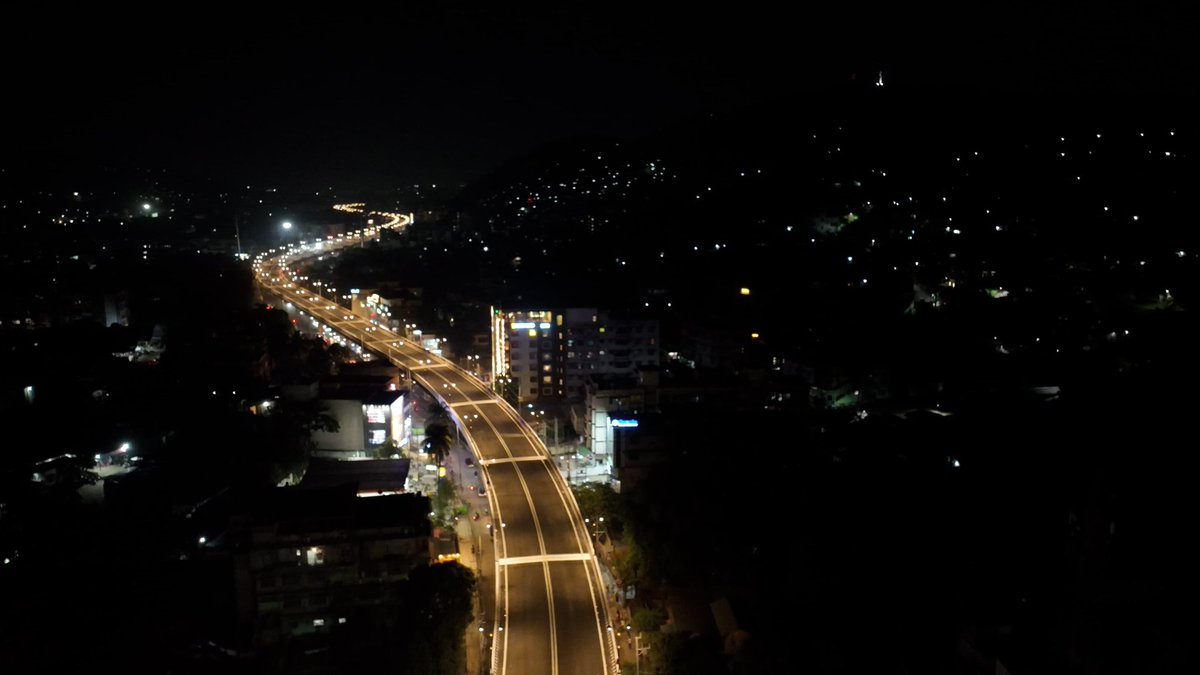
This evening, I will inaugurate a new flyover in Guwahati named after Dr. Syama Prasad Mookerjee.
Some will ask why a flyover in Guwahati is being named after Dr. S.P Mookerjee?
The answer is a story that very few people know but one which everyone in Assam should know 🧵
@SudhanidhiB All Commies & jehadi tolamuls who are hardcore anti India & anti Hindu.
Check these singers,film community personal lives are dark and ugly, such hypocrites. They should have no say Kshtriya & Sanatan Dharma matters. They should stick to what they are pimpin & prestitution
Cows have the highest consciousness amongst animals along with Whales. Eating them one brings within oneself that pain & anger the cows felt while they were being halal slaughtered
That's why this community is so violent
Imagine the vibration of all over WB. My sis in police saw cows being slaughtered in Kolkata & the excruciating cries of these cows, she puked & was sick for days
@DilipGhoshBJP let there be National legislation on cows protection & maintenance
Imagine the vibration of all over WB. My sis in police saw cows being slaughtered in Kolkata & the excruciating cries of these cows, she puked & was sick for days
@DilipGhoshBJP let there be National legislation on cows protection & maintenance
The average price of cattle in West Bengal is Rs 75,000. Estimating 1 million cattle are sacrificed during Bakrid, we are looking at Rs 7,500Cr.
Time for Hindus to pool money and buy these cattle and show the Muslim lobby middle finger.
Start a go fund me type campaign in India (make sure go fund me type western companies don’t take 15% cut)
@ians_india She was a hardcore communist then & now tolamul. Communists have been making filthy cheap comments on Sanatan Dharma & Hindus, Hindu women.
You are not a Hindu for u have Islam in your heart & mind
If it's not u, then name & expose who did it until then no Hindu believes you.
The midnight swamps of Bengal did not belong to the British Raj, nor did they belong to the wealthy elite of Calcutta. They belonged to the ghosts. & among them stood a man with a kerosene lantern in 1 hand & a magnifying glass in the other, frozen like stone for 6 hrs straight. He was not hunting gold, & he was not fleeing the law. He was watching a colony of ants wage a war that no human eye had ever truly seen. History would forget his face, but nature had already whispered its deepest secrets into his ears.
Born in 1895 in a remote village in Faridpur (now Bangladesh), Gopal Chandra Bhattacharya’s life began in deep poverty. When he was just 5 yrs old, his father, a poor priest, passed away. To survive, young Gopal had to work as a village priest himself while attending school.
W/o money for textbooks/toys, the wilderness became his playground & his classroom. While other children played, Gopal sat by the edges of ponds, mesmerized by the violent geometry of spider webs & the synchronized flashing of fireflies.
Though he managed to pass his IA (Intermediate of Arts) exam, the crushing weight of poverty forced him to drop out of college. He took up a low-paying job as a school teacher, & later, a clerk. By all traditional metrics, his scientific aspirations should have died right there.
In 1921, a sudden twist of fate changed his life. Gopal wrote a brilliant, deeply detailed article about the phenomenon of bioluminescence in plants & animals around 1919. The paper caught the eye of India’s legendary scientist, Sir Jagadish Chandra Bose. Recognizing a raw, unpolished diamond, J.C. Bose invited Gopal to join the newly formed Bose Institute in Calcutta.
Gopal was not given a grand lab. He was hired as a research assistant, a typist, & a photographer. Yet, using makeshift equipment, handmade lenses, and pure, relentless observation, he achieved breakthroughs that left international scientists stunned:
In a groundbreaking experiment that predated modern genetics, Gopal proved that the caste of an ant (whether it becomes a sterile worker/a massive soldier) is not predetermined by birth. By painstakingly manipulating the organic diet of the larvae, he successfully turned ordinary worker larvae into giant soldier ants.
He discovered a rare species of Indian spider that lived entirely on water & hunted small fish & tadpoles. He documented their hunting mechanics with custom-built flash photography long before high-speed cameras existed.
He was among the 1st in the world to decode how wasps recognize their nests & how ants communicate through chemical trails, publishing his findings in globally renowned journals like Scientific American.
Because Gopal lacked a formal master's degree/a PhD, the deeply classist & colonial-minded academic circles of India viewed him as an outsider. He was treated as a hobbyist/popular science storyteller rather than a peer.
Driven by a fierce love for his roots, Gopal chose to write his most comprehensive research papers & books in Bengali so that common citizens & children could love science. The English-speaking elite used this to push his work into the shadows of mainstream global science.
For decades, he lived in financial precarity, his genius unrecognized by the state. Finally, in 1981, Calcutta University decided to award him an honorary Doctor of Science (DSc.) degree, the ultimate validation of his life's work. He died on June 25, 1981, just 3 days before he was scheduled to receive the degree.
They offered him a doctorate when his heart was already failing, crowning a ghost who had spent 86 yrs walking in the shadows of giants. Today, the world remembers the names of Western naturalists who repeated his experiments decades later, but the ants in the soil of Bengal still march to the rhythm Gopal Chandra Bhattacharya decoded in the dark. He died w/o the title of a scientist, leaving behind a haunting truth: the universe does not reveal its grandest secrets to those with the highest degrees, but to those with the deepest patience.
@Saikat154@sreejit_d Ram Mohan considered the Upanishads supreme and rejected core Christian beliefs. He never abused any Hindu gods.
He never abused Brahmins and never praised British rule.
He never converted to Christianity despite relentless attempts by missionaries.
Proud Indian.
Every Bengali revolutionary nationalist who wrote on the movement's history did the same.
Jadugopal Mukhopadhyay, once the right hand man of Bagha Jatin at Jugantar, credited Rammohun as the first "revolutionary" nationalist who brought revolutions in Indian thought & politics.