Big shout-out to @Life_of_wheez for his first first-author publication! And many thanks to @NASPSPA President, Leps Malete, for his steady guidance and meaningful contributions to the piece!
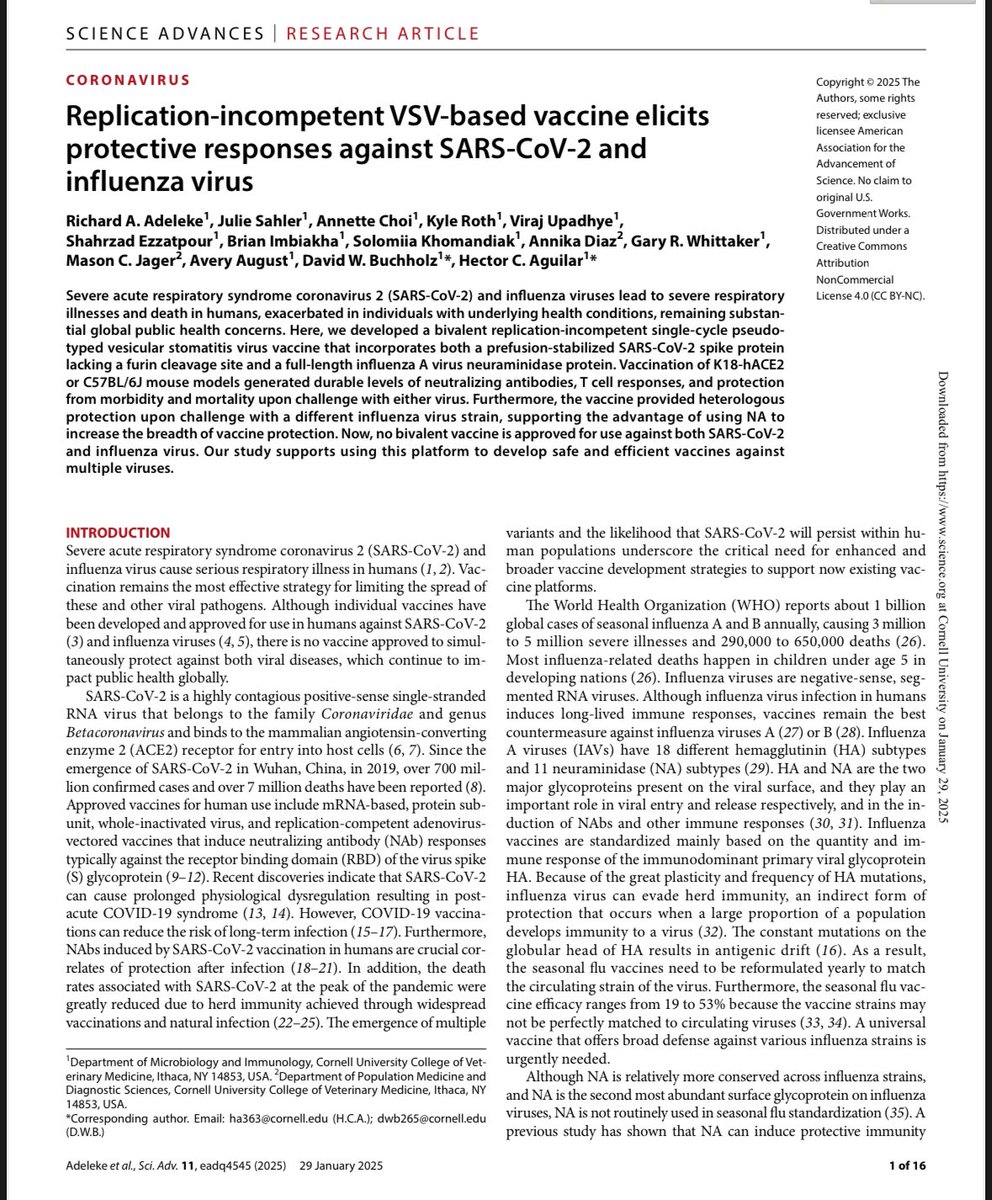
Happy to share the exciting findings from my thesis research, now published in Science Advances! 🎉 Our study presents an innovative combined vaccine for SARS-CoV-2 (COVID-19) and influenza (flu), designed to enhance immunization strategies, improve accessibility, and streamline vaccination schedules—addressing the shared transmission patterns and significant public health burden of these viruses.
1/4
https://t.co/QWFPXdlkfX
Usually I don’t talk about stuff like this because frankly it happens way too often. But not today…
As I pulled into the same faculty parking lot that I park in all the time @msstate, a white woman was coming out of my office building. Her car was parked next to the space I pulled into.
FINAL: The @Chiefs kickoff their title defense with a win over the Ravens!
Mahomes: 20/28, 291 pass yards, TD
Xavier Worthy: 3 touches, 68 yards, 2 TDs
#Kickoff2024
Congratulations and Welcome to the United States of America! 🇺🇸
Here are some important tips for students arriving in the U.S.:
1. Set Up a Network Provider:
Getting a mobile network provider is one of the first things you should do upon arriving in the U.S.
Popular options include Mint Mobile (budget-friendly), Lyca, T-Mobile, and AT&T. It’s crucial to check which provider offers the best coverage in your area.
WiFi is widely available, so you may not need an unlimited data plan right away.
You can get a SIM card at the airport, Walmart, or ask someone to order one for you before you arrive, as delivery can take some time. Having a U.S. phone number is essential for tasks like opening a bank account in your first few days.