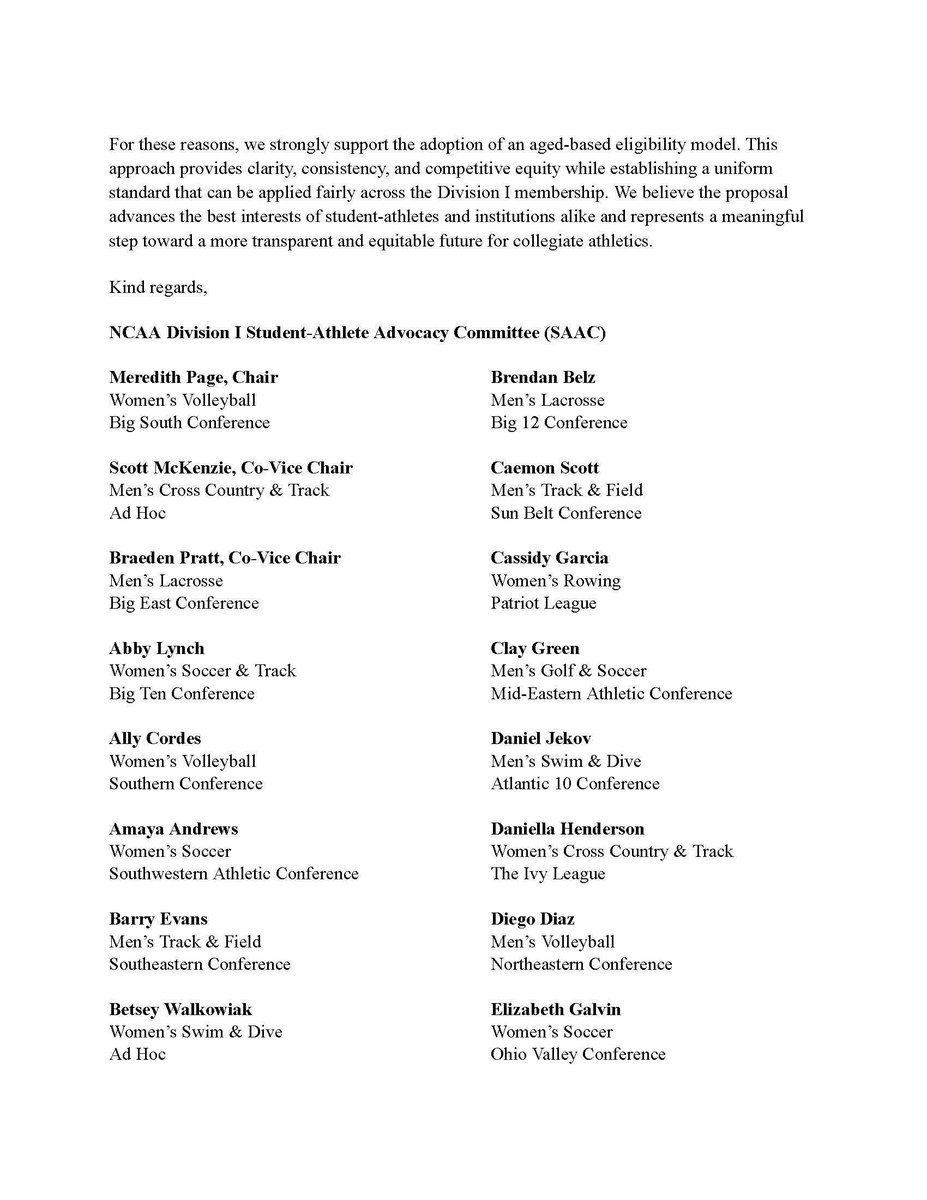
I’ve gotten many questions about a date cutoff for the NCAA’s new aged based eligibility rule.
According to this NCAA website the date is Sept 1.
If you turn 19 before that date a year of high school or prep school will start your 5 year clock & count as one of your 5 seasons.
DI Cabinet modifies age-based eligibility concept - https://t.co/a1SNuopV01 “upon initial full-time enrollment in college or at the beginning of the academic year following their 19th birthday, whichever occurs earlier.”
#morethoughtful#muchbetter 🤓 https://t.co/HYLbQMwYga
As stated by NCAA lawyers. Vote likely in June 2026
They are still saying 19 or graduation … no clarification about “cohort date” as added in a direct correspondence to athletic directors of schools.
My opinion, age based should be just that … based on age. 🤔
Negotiations Tip: Negging doesn’t make your player, program, business, or deal look better.
Negging = Emotionally manipulating a party by backhanded compliments or mild insults to deliberately lower someone's self-esteem, making them more vulnerable to seduction or control #run
Negotiations Tip: Always give someone the opportunity to say No.
*never assume the situation, needs, wants, desires, or priorities of the other party.
If you don’t make the offer, the other party will never know your interest or what you are working towards.
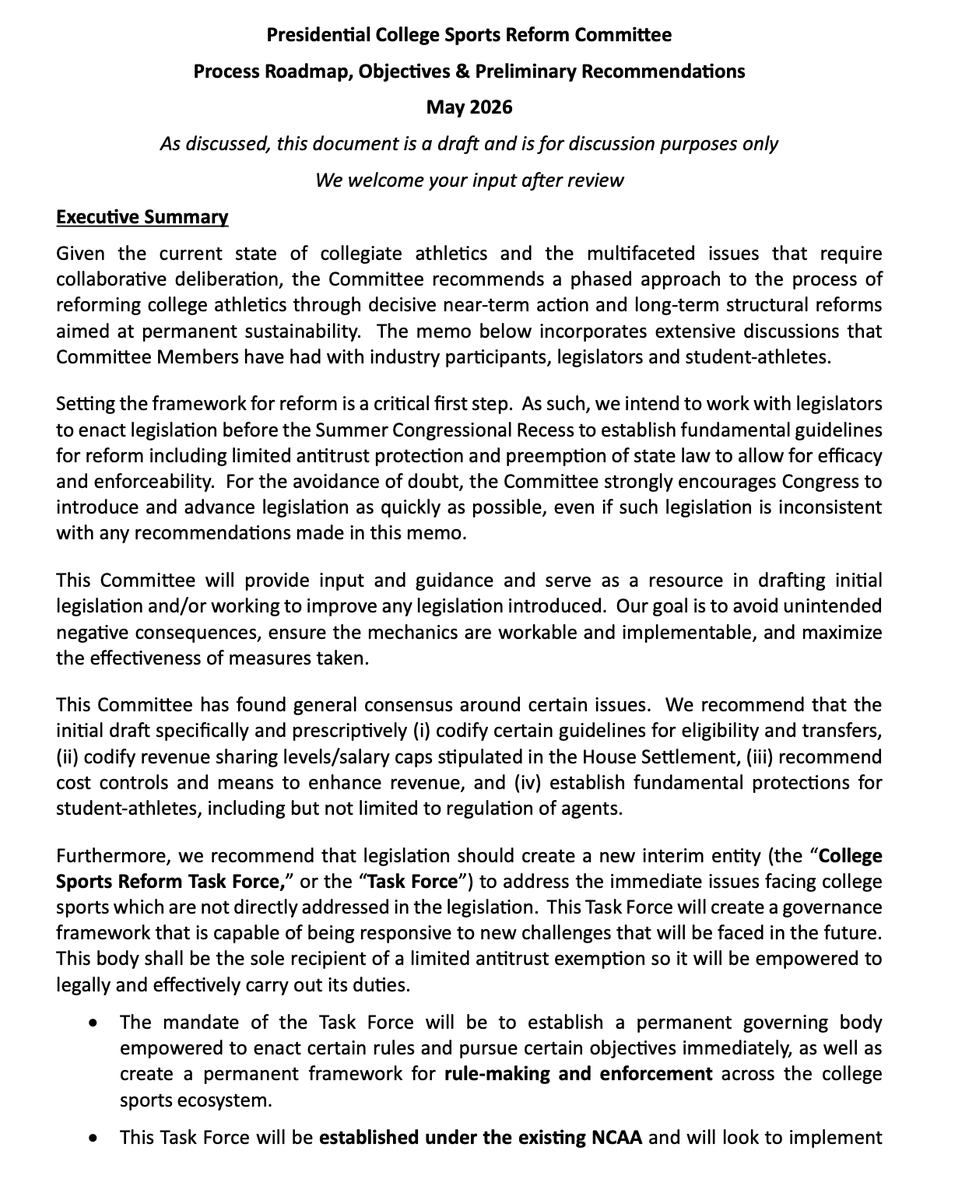
I read this and it screams creating an administrative body which will force future college athletes to go through administrative hearings before making it to court when an issue arises aka law maker and judge and jury under one roof.
Y’all might want to stop this 🚂. 💥
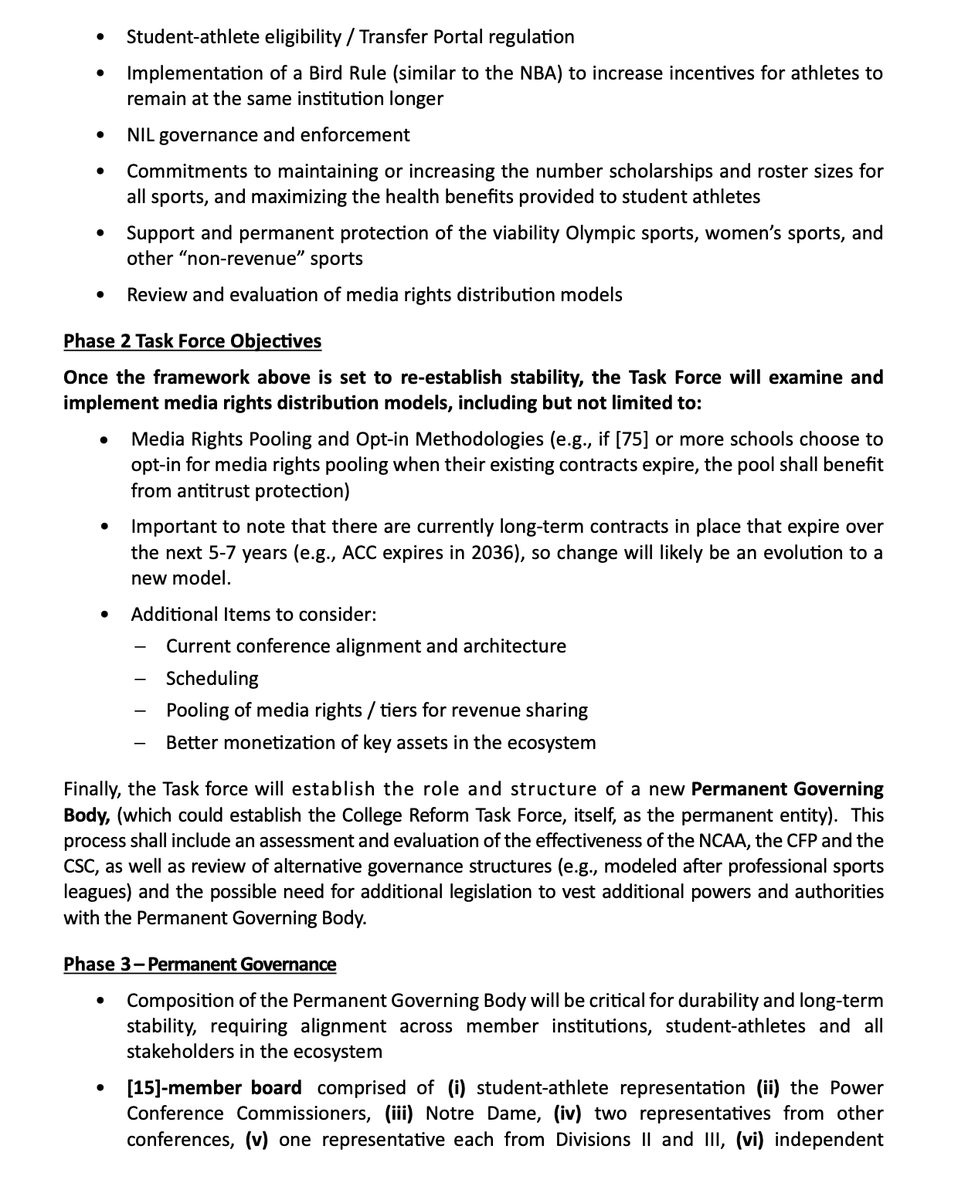
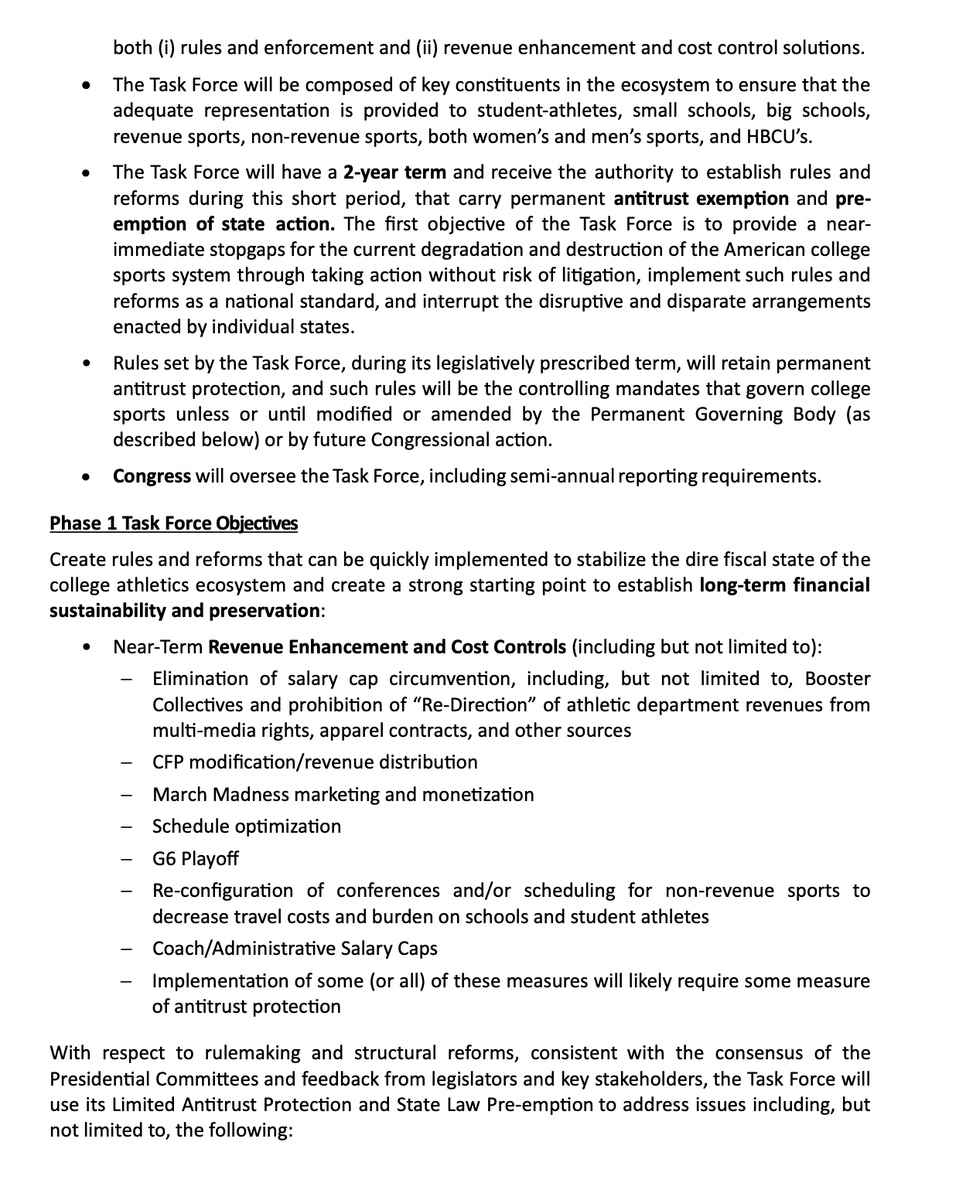
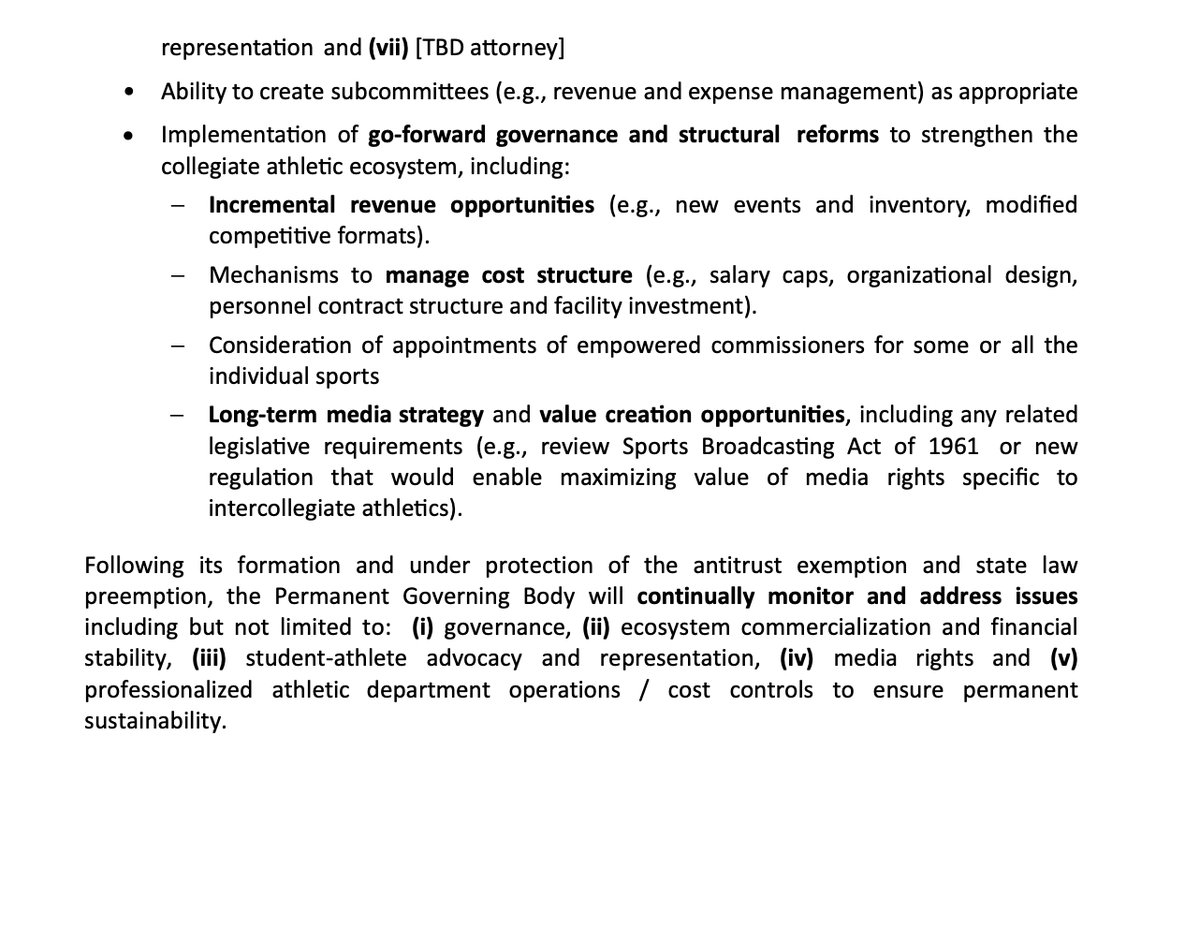
The college sports presidential committees have produced a draft of preliminary “ideas,” including establishing a new governing entity; strict cap circumvention; G6 playoff; regionalizing Olympic sports; capping coach/AD salaries; eligibility/transfer standards; pooling TV rights
@bigsloan32 thats a bold post. Robbie Avila did this (2 years in and transferred at #19 in the portal) . Most others would have to be top 100 in the portal when an average of 40% of players entered last year. Would love to see some math behind this.
@c0verthespread My question is this. Look at 3rd bullet point published by NABC. Are they expanding the proposal? Question is can a 27 even reclass or repeat if this happens?
This is why you should consider getting your hooper kid an SAT/ACT tutor along with a skills trainer. Get that in the bag by summer sophomore year. Coaches can start reaching out that summer and most levels want to do the academic math before athletic. 🧐🤫#systems#nxtgen
Let me explain exactly why parents pay $25,000 a year for youth sports their kid will never play professionally, because the math is more interesting than the headlines suggest.
The $25K is buying admissions arbitrage at elite colleges. Run it both ways.
Scholarship math first. The US has 8 million high school athletes. Roughly 7% play in college, 2% at D1. Total NCAA athletic scholarship spend is $3.6 billion across about 175,000 D1 athletes, mostly partial aid in the low teens per year. A family putting in $25K annually from age 6 to 18 spends $300K chasing a maximum return of about $80K. The expected value is a lottery ticket.
Admissions math second.
The SFFA v. Harvard trial disclosed that recruited athletes get admitted at 86%. The non-athlete rate sits around 5%. Even academically weak applicants jump to a 98% admit probability if recruited. A non-athlete with a 1397 SAT has roughly 0.08% odds at Harvard. The same kid recruited for crew has 70%+. The athletic hook is the largest single advantage in elite admissions, bigger than legacy or dean's list. Ivies don't even offer athletic scholarships. The value is purely the admissions ticket.
This is what $25K buys. Year-round travel ball is the qualifier round for an admissions process operating on different rules than the one your kid's classmates compete in. The "country club sports" pipeline (squash, lacrosse, crew, fencing, golf) is a feature. Barrier to entry is the product. 90% of Ivy League squash players come from $30K-a-year private high schools. The math works because the alternative pool is small.
PE arrived after the demand existed. Unrivaled Sports, Perfect Game, regional travel-ball roll-ups. Upper-middle-class parents had already turned youth sports into a class transmission mechanism. PE consolidated the supply chain and raised prices because the buyers were already there at $25K.
$300K to convert a 4% admit rate at an Ivy into an 86% one. Plus the alumni network and pre-professional sorting that follows. That's the actual equation.
The trade is rational at the top of the income distribution. Brutal everywhere else.
So is the NCAA 5 in 5 rule going to be expanded to the “students expected graduation date based on the first year of high school enrollment?”
Any insight @WinterSportsLaw@RossDellenger ? The NABC posted this: https://t.co/pNBVRywrBF
Isn’t standard ⏰ 4 years of play from 9th?
@NABC1927 So is the ncaa expanding the original proposed changes? This addition seems to now restrict high school repeats and reclassing implying the clock starting 4 years from the start of high school and not 19 or graduation.
It punishes student athletes from graduating early or late
Also: Athletes with eligibility remaining will fall under whichever eligibility policy - current rules or the new 5-year rule - that is "most beneficial."
As written in our original story on the 5-year concept, athletes won't have seasons taken from them https://t.co/8QEC4GO3OM
So post grad 🏀exists for 1 more year with a grace period and “age based” model starting spring 2027.
This has got to be a nod to what may be ruled on May 22nd. ?
Hmmm… 🧐
The NCAA distributed a chart to member schools outlining the implementation scenarios of the 5-year, age-based eligibility concept.
It’s clear the NCAA is expecting to adopt the concept for 2026-27.
Important: Final waivers under current rules must be submitted by July 31.