In America, a stranger will rename you in a single breath, and you are simply expected to come when called.
I went to eat at a busy restaurant. A young man at the front asked for my name, to mark my place in line. I gave it the weight it has carried for eight hundred years.
"Nobunaga."
He smiled, nodded, and wrote it down with great confidence. Then he read it back to me, to be sure he had honored it correctly.
"Perfect. Banana, party of one."
Banana. He had heard my name, held it a moment, and returned to me something rounder and more cheerful. To refuse the name a host gives is to refuse his welcome. I bowed. I was Banana now.
Then he handed me a small black disc, said it would "light up and buzz" when my table was ready, and turned to the next guest as though he had not just placed a living thing in my hands.
I held it in both palms, the way one holds a small sleeping beast that may wake. I found a place to stand. I waited, ready.
It woke.
It screamed. It flashed red. It leapt and shook in my hands like a captured spirit demanding release. A lesser man would have dropped it. I did not. I gripped it, steady, looked into its blinking lights, and told it, in a low voice, that its time had come. Then I carried it back to the host with both hands, the way one returns a hawk to its master.
He took it without looking and shouted across the entire room.
"BANANA! Party of one, your table's ready!"
A hundred strangers turned. I rose. I crossed that floor as Banana, spine straight, chin level, a man answering to his name. A child pointed at me. I gave the child a small bow. He had recognized me.
All through the meal they kept me. "How's it tasting, Banana?" "More water, Banana?" The check, when it came, said Banana, and thanked me for visiting. By the end the whole staff knew me. They waved as I left. "Night, Banana!"
So tell me honestly.
For eight hundred years my clan answered to one name. Tonight I answered to a fruit, calmed a screaming relic in my bare hands, and ate among people who were glad I came.
When the little disc lights up, is the table truly mine, or am I only keeping it warm for the next Banana?
Because I have already decided to return on Friday, and to ask, very humbly, for the same disc.
Civilization is drowning in mediocrity and starving for Beauty.
It is one of the things which reminds a civilization that life is worth living.
Cathedrals, poetry, music, sculpture, architecture, gardens, great stories are civilizational necessities.
A society which stops striving for beauty eventually forgets what it is striving for at all.
https://t.co/vfsWCYRRAb
🚨BREAKING:
Tesla has been authorized by the State of Texas to operate driverless vehicles commercially under the new law that took effect today, May 28th, 2026. Tesla has officially self-certified the software running on its robotaxis as Level 4. $TSLA
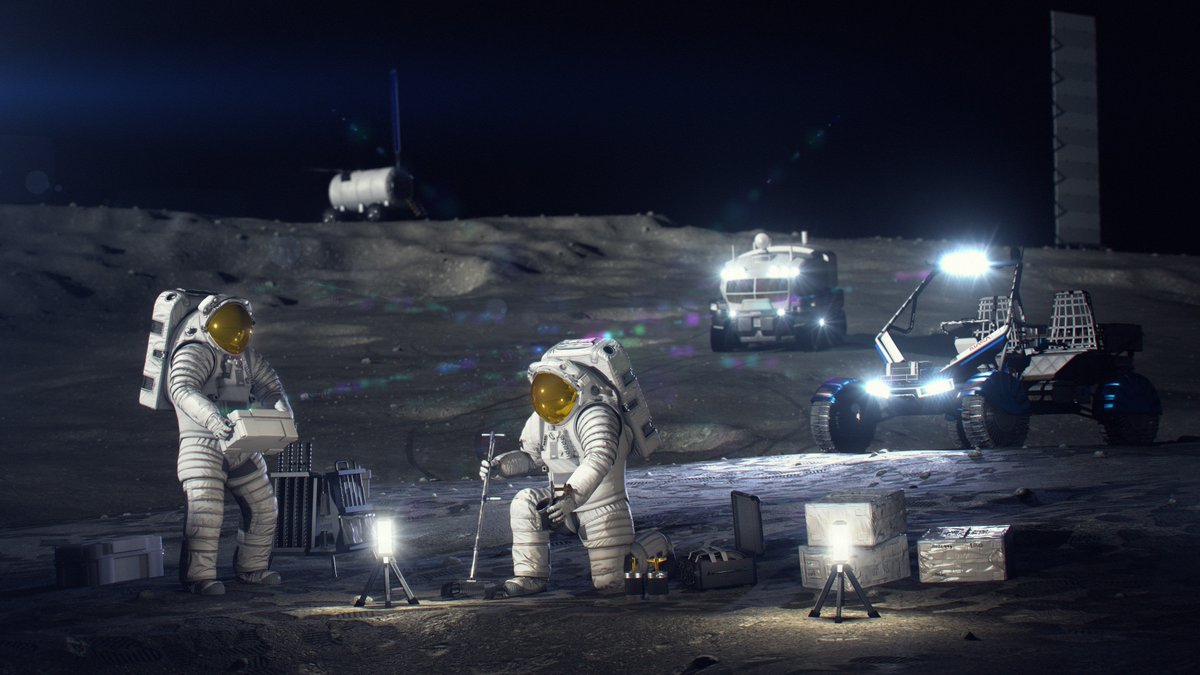
We're building a Moon Base!
@NASAMoonBase will serve as a habitat where astronauts live and work during long-term science missions.
Join us at 2pm ET on Tuesday, May 26, for a live news event where we’ll share updates on our lunar exploration plans: https://t.co/IJXA7xYwju
BREAKING: Berkshire Hathaway just filed its first 13F after Warren Buffett stepped down as CEO.
Wall Street spent a decade asking what happens to Berkshire when Buffett is gone.
We just got the answer:
On May 15, the first 13F of the Greg Abel era hit the SEC.
Abel took over from Buffett on January 1, 2026.
This filing covers his first full quarter in the chair.
It is the most aggressive structural rebalance Berkshire has run in years.
And almost nobody is reading it correctly.
Here is what the filing actually shows:
Berkshire trimmed its portfolio from 40 positions down to 26 in 90 days.
16 stocks fully exited. Amazon, gone. UnitedHealth, gone. Domino's Pizza, gone.
Chevron cut by 35%, roughly $8 billion sold at peak energy prices.
Visa, Mastercard, and Aon all sharply reduced.
Then on the other side of the book:
Alphabet position increased 224%.
From about 18 million shares to nearly 58 million.
The stake is now worth roughly $23 billion. One of Berkshire's seven largest equity holdings.
A new $2.65 billion position in Delta Air Lines.
Berkshire's first airline holding since they sold the entire sector in April 2020.
Total stock sales for the quarter: $24 billion.
Total stock purchases: $16 billion.
Net selling: $8 billion.
And the cash pile?
$397.4 billion as of March 31.
A new all-time record.
Read those numbers again.
This is not a passive handoff.
This is a CEO clearing the decks and concentrating capital in a small number of high-conviction names while sitting on the biggest cash position in corporate history.
Now here is the part the financial media is missing.
Everyone is treating this like a referendum on Greg Abel's personality.
"Is he as good as Buffett."
"Will he be too cautious."
"Does he have the killer instinct."
Wrong question.
The right question is why the system kept executing in exactly the way Buffett would have run it.
Because that is what actually happened here.
Concentrate in dominant businesses you understand. Check.
Buy when valuations get attractive. Check. Alphabet was trading at a forward P/E in the teens when Abel was loading up.
Sell when valuations get rich. Check. Chevron got cut at a peak. Visa and Mastercard got trimmed at all-time highs.
Hold cash when nothing else qualifies. Check. $397 billion.
This is not Greg Abel inventing a new philosophy.
This is the Berkshire operating system continuing to run, the way it was designed to run, after the founder stepped away.
That distinction matters more than anything else in this filing.
Here is why.
For 60 years, retail investors have tried to "follow Buffett."
They scan the 13Fs the day they drop. They buy what he bought. They hold what he held. They sell when the headlines say he sold.
And they almost always underperform.
Because following Buffett the person was never the strategy.
The strategy was Buffett the system.
The patience to hold cash for years when nothing was cheap.
The discipline to concentrate when something finally was.
The structural willingness to look wrong for long stretches because the math eventually wins.
Most retail investors have none of that.
They have a phone, a brokerage app, a Twitter feed, and an attention span measured in headlines.
They buy when Buffett buys. Then they sell three weeks later when the position is down 8% because they panicked.
That is not following Buffett.
That is using Buffett's name as a permission slip to make emotional decisions.
The Q1 filing makes this point in a way no Berkshire annual letter ever could.
The man is gone. The trades still look like Buffett trades.
Because the system was the asset all along.
The system was the moat.
Now look at the Alphabet decision specifically.
This is the part that should stop you.
Alphabet generated $64.4 billion in free cash flow over the last 12 months.
Google Cloud revenue grew 63% year over year in Q1 2026.
Operating income from cloud tripled to $6.6 billion.
The company is sitting on a near-monopoly in search, a top-two cloud platform, the best AI research lab in the world, and a balance sheet that prints money.
And it was trading at a discount to the S&P 500 multiple when Abel was buying.
That is not a hard call.
It is the easiest call a value-oriented institutional buyer can make.
But it requires you to ignore the entire narrative that Wall Street had been running for six months.
The narrative was that AI was eating Google search.
That ChatGPT was a Google killer.
That the search monopoly was structurally broken.
Retail investors bought that narrative and sold Alphabet at the lows.
Abel ran the math and bought 40 million shares.
Same company. Same fundamentals.
Two completely different decisions, because one was driven by data and one was driven by narrative.
The Alphabet position is already up 38% since the end of Q1.
Six weeks of gains.
Roughly $8 billion of paper profit in 42 trading days.
That is what systems do.
They do not predict the future.
They wait for asymmetric setups, take large positions when the math says to, and let time do the work.
Now the $397 billion cash position.
This is the number that confuses retail the most.
Why would the largest holding company in America be sitting on $400 billion in cash while the S&P sits at record highs?
Because cash is not a position. Cash is optionality.
Cash is the ability to act when everyone else is forced to sell.
In 2008, Buffett had cash when Goldman Sachs and General Electric needed capital. He cut deals at terms no retail investor could ever access.
In 2020, Buffett had cash when the COVID crash hit. He took advantage.
Greg Abel is doing the same thing. He is loading the rifle.
He does not know when he will get to fire it.
He knows that having it ready is what separates Berkshire from every fund that has to be fully invested all the time.
Most retail investors cannot do this.
They look at $397 billion in cash and see "missed opportunity cost."
They think holding cash is the same as losing money to inflation.
It is not.
Cash held by a disciplined system is a weapon waiting for the right target.
Cash held by an emotional investor is a temptation that gets spent on the next hot trade.
Same dollar.
Two completely different outcomes.
Here is the lesson the entire financial press is missing this week.
Berkshire is not interesting because Greg Abel is a genius.
Berkshire is interesting because it is the rare proof point that an investment process can survive its founder.
The most important investor of the last 60 years is gone.
The portfolio still looks like a Buffett portfolio.
Because the rules were the asset. The personality was the wrapper.
Most retail investors got the wrapper and missed the asset.
They watched the documentaries. They read the books. They went to the Omaha meeting.
They bought the personality.
They never built the system.
That is why they keep losing to the market over 20 year holding periods, while a holding company with the same playbook for six decades keeps quietly compounding.
The question is whether you spend the next 20 years doing the same thing.
Or whether you finally build a system that runs without you.
Most retail investors will never have $397 billion in cash to deploy.
But every retail investor can build the same kind of structural discipline Berkshire just demonstrated.
Rules that execute regardless of headlines.
Rules that buy when the math says to buy.
Rules that hold when nothing qualifies.
Rules that do not need a famous founder to run.
That is exactly why Surmount exists.
Automated, rules-based strategies that execute the same way every single trading day.
No panic selling. No FOMO buying. No "what would Buffett do" guessing.
Just systematic execution built on the same principle that just kept Berkshire running without its founder:
The system is the asset:
El Salvador.
Essa é a situação dos antigos membros do PODER JUDICIÁRIO.
Todos PRESOS.
Essas figuras desprezíveis, eram da SUPREMA CORTE de El Salvador.
Com a ascenção de Naiyb Bukele ao poder, todas as facções criminosas caíram e junto com elas, estes indivíduos CORRUPTOS que usavam o PODER que lhes foi conferido pelo Estado, para livrar os criminosos mediante o pagamento de PROPINAS.
Most Americans still think geopolitics is politicians giving speeches at podiums.
That’s the old world.
What President Trump is doing in Beijing right now is something entirely different:
Using CORPORATE POWER as a geopolitical weapon.
Look at the delegation he assembled for China:
• Elon Musk - Tesla / SpaceX
• Tim Cook - Apple
• Jensen Huang - Nvidia
• Larry Fink - BlackRock
• Stephen Schwarzman - Blackstone
• David Solomon - Goldman Sachs
• Jane Fraser - Citigroup
• Kelly Ortberg - Boeing
• H. Lawrence Culp Jr. - GE Aerospace
• Brian Sikes - Cargill
• Cristiano Amon - Qualcomm
• Sanjay Mehrotra - Micron Technology
• Ryan McInerney - Visa
• Michael Miebach - Mastercard
• Dina Powell McCormick - Meta
This is not diplomacy.
This is strategic market penetration.
Now look at HOW carefully this lineup was built:
🚨 AI & CHIP DOMINANCE
• Jensen Huang (Nvidia)
→ AI chips powering the global AI revolution
• Cristiano Amon (Qualcomm)
→ Mobile chips, telecommunications, next-gen connectivity
• Sanjay Mehrotra (Micron)
→ Memory chips critical for AI systems and data centers
• Jim Anderson (Coherent)
→ Semiconductor materials and industrial laser tech
• Jacob Thaysen (Illumina)
→ Biotechnology and genomic technology leadership
This category alone represents the future of AI, computing, biotech, and technological supremacy.
🚨 FINANCIAL POWER
• Larry Fink (BlackRock)
→ Controls over $10 TRILLION in assets
• Stephen Schwarzman (Blackstone)
→ One of the world’s largest private equity giants
• David Solomon (Goldman Sachs)
→ Elite Wall Street investment banking influence
• Jane Fraser (Citigroup)
→ Global banking and cross-border finance
• Ryan McInerney (Visa)
→ Global payment rails
• Michael Miebach (Mastercard)
→ International transaction infrastructure
These people don’t just move money.
They influence where capital flows across the planet.
🚨 CONSUMER TECH & SUPPLY CHAINS
• Tim Cook (Apple)
→ One of the largest and most sophisticated supply chains on Earth
• Elon Musk (Tesla / SpaceX)
→ EV manufacturing, batteries, AI robotics, satellites, launch systems
China knows these companies are deeply tied into global manufacturing ecosystems.
🚨 AEROSPACE & INDUSTRIAL POWER
• Kelly Ortberg (Boeing)
→ Potential aircraft deals worth tens of billions
• H. Lawrence Culp Jr. (GE Aerospace)
→ Aircraft engines and aerospace systems
This is industrial leverage at the highest level.
🚨 AGRICULTURE & REAL ECONOMY
• Brian Sikes (Cargill)
→ Agriculture, food supply chains, commodity trade
Food security and agricultural imports are massive leverage points in U.S.-China relations.
Now step back and look at the entire picture.
This delegation covers:
- AI
- Semiconductors
- Aerospace
- Finance
- Payments
- Agriculture
- Consumer technology
- Manufacturing
- Supply chains
- Investment capital
Every major economic battlefield between the United States and China is represented in one room.
That is not random.
That is coordinated strategic planning.
The media will frame this as “just another summit.”
It’s not.
This is a private-sector strike force built to secure:
- Market access
- Investment deals
- Supply-chain positioning
- Regulatory concessions
- Tech leverage
- Aircraft purchases
- Agricultural agreements
- Financial expansion
The politicians are mostly in the background because politicians talk.
These people actually control:
- factories
- chips
- satellites
- patents
- software
- logistics
- payment systems
- manufacturing
- capital flows
That is where real power lives in 2026.
Whether people love Trump or hate him, Americans need to understand the scale of what they’re looking at.
This is statecraft merged with corporate power.
And it’s being deployed with military-level coordination.
MAKE AMERICA GREAT AGAIN!!!
God bless President Trump!
God bless America!
Elon Musk just defended America better than every politician in Washington combined.
Musk: “After World War 2, the US could have basically taken over the world and any country. Like we got nukes, nobody else got nukes. We don’t even have to lose soldiers. Which country do you want?”
One nation on earth held a weapon nobody else had.
Total dominance. Zero competition. No risk of retaliation.
Every empire in history that held that kind of advantage used it.
Rome. The Mongols. The British. The Ottomans.
They conquered until they collapsed.
America had a bigger advantage than all of them combined.
And it rebuilt the countries it just defeated.
Musk: “The United States actually helped rebuild countries. So it helped rebuild Europe, it helped rebuild Japan. This is very unusual behavior, almost unprecedented.”
Almost unprecedented?
It had never happened before. Not once in 5,000 years of recorded history.
The Marshall Plan wasn’t foreign aid.
It was the most radical act of restraint any superpower ever committed.
America turned its enemies into allies. Turned rubble into economies. Turned surrender into partnership.
Germany went from ashes to the economic engine of Europe in a generation.
Japan went from unconditional surrender to the third largest economy on earth.
Three years after the war, America was flying food into Berlin.
A city in the heart of the nation that just tried to destroy it.
That’s not policy.
That’s a civilization deciding what it is at the exact moment it has the power to be anything.
You’re being told a story right now.
That America is the villain of history.
You hear it everywhere. Media. Universities. Social platforms.
Musk: “There’s always like, well America’s done bad things. Well of course America’s done bad things, but one needs to look at the whole track record.”
Every nation on earth has dark chapters. Every single one.
The difference is what a country does when nobody can stop it.
And when nobody could stop America, it fed its enemies and rebuilt their cities.
Musk: “The history of China suggests that China is not acquisitive. Meaning they’re not going to go out and invade a whole bunch of countries.”
Probably right.
China has historically built walls, not fleets.
But the real question isn’t about borders anymore.
We’re approaching a moment that mirrors 1945 in ways nobody has fully processed yet.
AI is going to give a handful of people a power advantage that makes nuclear monopoly look quaint.
If someone is going to hold that kind of power, who do you want it to be?
The country that conquered when it could? Or the one that rebuilt when it didn’t have to?
Every alliance. Every trade route. Every economy.
Billions lifted out of poverty.
All of it traces back to one act of restraint that had never been done before.
And carries no guarantee of being repeated.
The most powerful thing America ever did wasn’t building the bomb.
It was what it didn’t do after.
Essa é a história de como Gilmar Mendes, ministro do Supremo Tribunal Federal há mais de duas décadas, acumulou mais poder do que qualquer presidente, deputado ou senador na história recente da República brasileira.